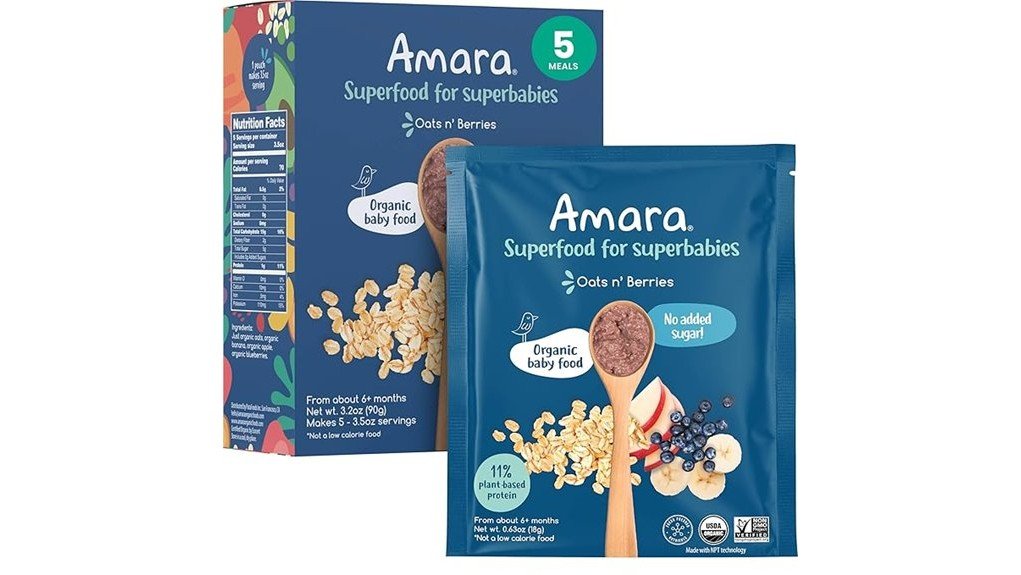
Amara Organic Baby Food’s Stage 2 Oats & Berries is a simple-looking pouch with a more careful formula than most. It blends organic oats with mango, strawberry, and banana, and it avoids added sugar. The shelf-stable format adds convenience, while the mix instructions let caregivers adjust texture as needed. The question is whether that fresh, homemade style holds up in practice, and whether the price matches what is inside.
Key Takeaways
- Amara Organic Baby Food Stage 2 Oats & Berries is a shelf-stable cereal for mixing with breastmilk, formula, or water.
- It uses whole organic ingredients like oats, mango, strawberry, banana, and amaranth, with no added sugars.
- The texture is easy to adjust, making it suitable for babies starting solids or needing thicker consistency later.
- Minimal processing helps preserve a fresh, homemade-like taste rather than a heavily cooked flavor.
- It offers good convenience and ingredient quality, though the premium price may be higher than standard baby cereals.
What Is Amara Oats & Berries?
Amara Organic Baby Food Stage 2 Oats & Berries is a shelf-stable baby cereal made for mixing with breastmilk, formula, or water.
It is positioned as a stage 2 option for families shaping baby nutrition with adaptable textures and a simple preparation method. The flavor profile leans on oats and mixed berries, offering a mild, fruit-forward taste suited to early solids.
The format supports controlled consistency, which can help caregivers match developmental readiness without excess effort. Its organic, non-GMO positioning reflects a preference for cleaner choices and more independent feeding routines.
What’s in Amara Oats & Berries?
Its ingredient list is built around whole, organic components rather than heavily processed fillers. Amara Oats & Berries includes organic oats, mango, strawberry, banana, and amaranth, giving the blend a straightforward profile with visible ingredient benefits and solid nutritional value. The formula avoids added sugars and unnecessary additives, keeping the composition clean and transparent.
- Organic oats for a familiar grain base
- Mango, strawberry, and banana for fruit content
- Amaranth for added plant-based nourishment
- Non-GMO, 100% organic sourcing supports ingredient integrity
How Do You Mix Amara Oats & Berries?
Mixing Amara Oats & Berries is designed to be simple and flexible: the shelf-stable cereal can be blended with breastmilk, formula, or water to achieve the desired consistency.
A small amount of liquid may be added first, then the powder stirred until smooth, with more liquid introduced gradually for thinner textures. These mixing techniques allow caregivers to adjust thickness as a baby’s needs change.
Serving suggestions include offering it warm or room temperature, depending on preference.
The result is a customizable bowl that supports independent feeding choices while keeping preparation straightforward, efficient, and controlled.
Why Does Amara Taste So Fresh?
The fresh taste comes from Amara’s focus on whole, organic ingredients and a processing method designed to preserve the character of the food. It relies on fresh food principles, using oats, mango, strawberry, banana, and amaranth with no added sugar or filler.
Taste preservation is supported by patented processing that avoids repeated high heat, helping the blend keep a more natural profile.
- Whole ingredients
- Organic sourcing
- Minimal processing
- Natural flavor retention
This approach gives the cereal a clean, homemade-like taste that feels less manufactured and more free from unnecessary alteration, while remaining suitable for babies beginning solids.
Is Amara Oats & Berries Worth It?
Amara Oats & Berries appears worth considering for families who prioritize organic ingredients, minimal processing, and a baby food option that feels closer to homemade than conventional cereal.
Its shelf-stable pouches, simple fruit-and-grain blend, and customizable mixing make it adaptable to different feeding stages.
In a value comparison, the price may seem higher than standard cereals, yet the premium reflects organic sourcing and gentler processing.
For households seeking liberated choices around feeding, that tradeoff can feel justified.
Still, baby preferences matter: some infants may prefer sweeter, smoother options, while others respond well to its fresher taste and flexible texture.
Frequently Asked Questions
Is Amara Oats & Berries Suitable for Eight-Month-Olds?
Yes, Amara Oats & Berries appears suitable for many eight-month-olds, depending on baby food nutrition needs and flavor preferences. Its smooth, customizable texture and organic ingredients can support early solids, though pediatric guidance remains wise.
Does Amara Oats & Berries Contain Allergens?
It may contain common allergens through oats and possible cross-contact, so allergen awareness and ingredient transparency matter. The label should be checked carefully for manufacturing notes, and a pediatrician should be consulted before feeding.
How Many Servings Are in Each Pouch?
Each pouch contains one serving size, making portioning straightforward. The pouch benefits include shelf stability and easy mixing with breastmilk, formula, or water, supporting flexible feeding while preserving freshness, texture, and nutrient quality.
Can Amara Oats & Berries Be Served Cold?
Yes, Amara Oats & Berries can be served cold if mixed with breastmilk, formula, or water and chilled afterward. Baby food temperature is flexible, and serving suggestions may include room-temperature or cooled textures.
Does Amara Need Refrigeration After Opening?
Yes, Amara should be refrigerated after opening; like a fresh chapter unfolding, its storage tips emphasize sealing the pouch promptly and chilling leftovers to protect product shelf life, flavor, and nutrient integrity.
Conclusion
Amara Organic Baby Food’s Stage 2 Oats & Berries stands out as a clean, convenient option for early eaters. With organic oats, mango, strawberry, and banana, it offers a simple ingredient list and a naturally fresh flavor. The shelf-stable pouch adds practicality, while the flexible mixing method lets caregivers adjust texture as needed. For families seeking wholesome, minimally processed baby food, it appears to be a worthwhile choice. It is not just food, but a careful beginning.