Disclosure: As an Amazon Associate, we earn from qualifying purchases. If you buy through links on this page, we may earn a small commission at no extra cost to you.
By Editorial Team | Updated October 9, 2026 | Research-based product review
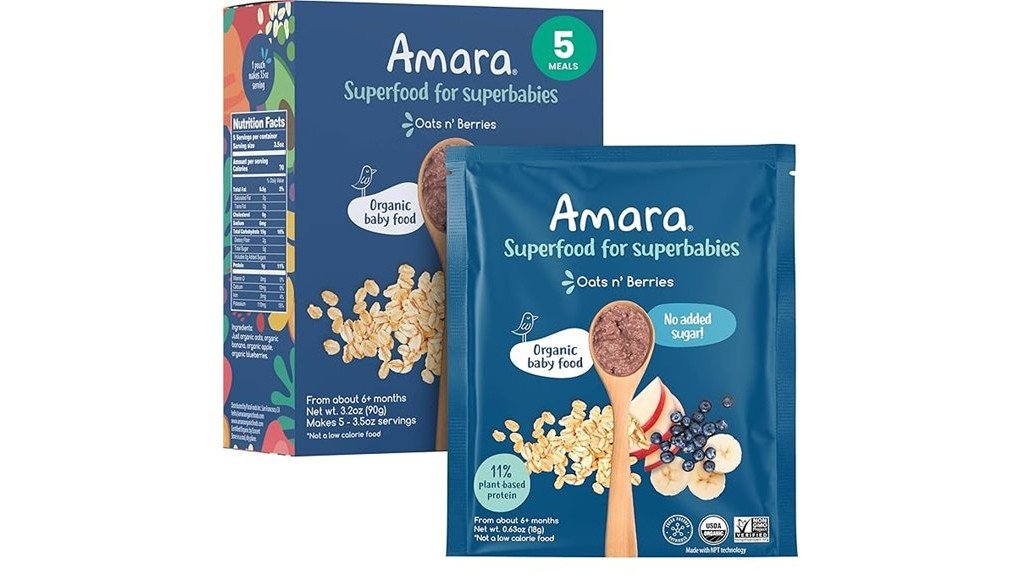
Amara Organic Baby Food Stage 2 Oats & Berries is a powdered baby cereal made with four organic ingredients: oats, apples, bananas, and blueberries. Unlike ready-to-eat baby food pouches, it requires mixing with breast milk, infant formula, or water before serving. This gives you control over the texture while keeping unopened portions easy to store.
Its simple ingredient list and flexible preparation make it appealing for families introducing solid foods. However, the extra preparation, serving cost, and lack of a clearly verified iron-fortification claim are worth considering before buying.
Quick Verdict: 8/10
Editorial assessment based on published product information, not independent hands-on testing.
Best for: Families who want a fruit-and-oat baby cereal with simple ingredients and customizable consistency.
Skip if: You need a ready-to-eat pouch, an explicitly iron-fortified cereal, or the lowest-cost everyday breakfast.
Bottom line: Amara Oats & Berries is a convenient dry-food option for travel and flexible meal preparation. Its strongest features are ingredient simplicity and texture control, rather than being a complete nutritional solution.
Key Takeaways
- Four organic ingredients: Oats, apples, bananas, and blueberries, with no added sugars or preservatives according to Amara.
- Customizable consistency: Mix with breast milk, formula, or water to suit your baby’s feeding skills.
- Verified serving information: The linked five-pouch version lists 60 calories and 2 grams of dietary fiber per dry pouch.
- Convenient storage: Unopened pouches are shelf-stable, but prepared food requires safe handling and refrigeration.
- Main trade-off: It costs more than some basic cereal options and requires liquid, a bowl, and a spoon.
- Nutrition consideration: It should complement a varied infant diet, including appropriate iron-rich foods.
What Is Amara Oats & Berries?
Amara Organic Baby Food Stage 2 Oats & Berries is a dried, fruit-and-grain baby food that you turn into a soft cereal or puree by adding liquid. It combines organic oats with fruit rather than relying on a long list of flavorings or added sugars.
The dry format is different from the wet puree found in a standard squeeze pouch. You need to prepare it before feeding, but you can control how thick or thin the finished food becomes.
Amara markets its baby food as suitable for different stages of solid feeding because the consistency can be changed. Your baby’s developmental readiness matters more than the stage number printed on a package.
According to the CDC’s infant feeding guidance, most babies begin complementary foods at around six months when they show appropriate readiness signs.
Before You Buy: Four Things to Know
1. It is a powder, not a ready-made puree. You must add liquid and stir before serving. A bowl and spoon are needed.
2. Oats & Berries is not the Ancient Grain flavor. The Ancient Grain recipe contains mango, strawberry, and amaranth. The Oats & Berries recipe contains oats, apple, banana, and blueberries.
3. Do not assume it is iron-fortified. The product information reviewed does not establish an added-iron fortification claim comparable to those made by some infant cereals.
4. Shelf-stable does not mean shelf-stable after mixing. Prepared baby food should be refrigerated promptly and handled according to the manufacturer’s storage instructions.
In This Review
Jump to a section
Amara Oats & Berries Specifications and Nutrition
The Amazon-linked product is the five-pouch version of Amara Stage 2 Oats & Berries. Its listing describes single-serving packets that produce a soft cereal after water, formula, or breast milk is added.
| Specification | Verified detail |
|---|---|
| Brand | Amara Organic Foods |
| Product | Stage 2 Oats & Berries |
| Form | Dried baby food powder |
| Ingredients | Organic oats, apple, banana, blueberries |
| Linked pack size | 5 individual pouches |
| Dry serving size | 18 grams per pouch |
| Calories | 60 per dry pouch |
| Dietary fiber | 2 grams per dry pouch |
| Total sugars | 5 grams per dry pouch |
| Protein | 1 gram per dry pouch |
| Recommended mixing liquid | 4 to 5 tablespoons per pouch |
| Prepared yield | Approximately 3 to 4 fluid ounces |
| Storage | Cool, dry storage before preparation |
These figures reflect the product information available during this review. The actual packaging should take priority if its nutrition panel or directions differ.
What’s in the Box?
The linked five-count version contains five individual packets of dry Oats & Berries baby food. Each packet is intended to be prepared with liquid.
A mixing bowl, feeding spoon, and breast milk, infant formula, or water are not included. Those items are required to prepare the food.
What’s in Amara Oats & Berries?
Amara Oats & Berries contains four organic ingredients: oats, apples, bananas, and blueberries. This is confirmed by both the official Amara product page and the ingredient information displayed on the linked Amazon listing.
- Organic oats: Provide the grain base and help create a cereal-like consistency.
- Organic apples: Add fruit flavor and natural sweetness.
- Organic bananas: Contribute sweetness and body to the mixture.
- Organic blueberries: Add berry flavor and naturally occurring plant compounds.
Amara states that this recipe contains no added sugars, preservatives, or fillers. The sugar shown on the nutrition label comes from ingredients rather than separately added sweeteners.
Organic certification describes how ingredients are produced. It does not automatically make a product nutritionally complete, free from naturally occurring contaminants, or suitable for every child.
Does It Provide Enough Iron?
Amara Oats & Berries should not be treated as your baby’s main source of iron without reviewing its nutrition label and the rest of their diet. The current product information does not clearly establish that this cereal is fortified with added iron.
Iron becomes especially important during the transition to solid foods. The American Academy of Pediatrics’ feeding guidance recommends offering iron-rich foods, including appropriately prepared meats and iron-fortified infant cereals.
This fruit-and-oat blend can be part of a varied feeding routine, but it should not replace other nutrient-rich foods.
How Do You Mix Amara Oats & Berries?
Preparing Amara Oats & Berries involves adding liquid to its dry contents and stirring until the consistency suits your baby. Amara generally recommends 4 to 5 tablespoons of breast milk, prepared infant formula, or water per packet.
- Wash your hands and prepare a clean bowl and spoon.
- Open one packet and empty its contents into the bowl.
- Add liquid gradually, using the manufacturer’s recommended amount as a starting point.
- Stir thoroughly until the powder is evenly mixed and no dry patches remain.
- Check the consistency and add more liquid if a thinner puree is needed.
- Serve with a spoon while your baby sits upright and is supervised.
For babies new to solids, a thinner, smooth consistency may be easier to handle. As feeding skills improve, you can gradually offer thicker textures.
Always follow the feeding directions on the package. Do not put cereal into a feeding bottle unless specifically directed by your child’s healthcare professional.
Common Preparation Mistakes to Avoid
- Using too little liquid: Dry pockets or an overly thick mixture may be difficult for a beginner to manage.
- Making it too thin: Excess liquid can make spoon-feeding messy and reduce the amount of food in each spoonful.
- Using improperly prepared formula: Prepare infant formula according to its own instructions before mixing it with the cereal.
- Saving food from a used bowl: Once your baby’s spoon has entered the food, discard uneaten portions rather than storing them for another feeding.
Why Does Amara Taste So Fresh?
Amara attributes its fresh-food flavor and texture to its ingredients and proprietary Nutrition Protection Technology. The company says the method removes water without relying on the repeated high-heat treatment used in some conventional baby food processing.
According to Amara, this helps retain the food’s original flavor, color, texture, and nutritional characteristics. These are manufacturer claims, not findings from independent laboratory tests conducted for this review.
The practical difference is the form of the finished food. Instead of opening a ready-made wet puree, you rehydrate the dry mixture immediately before serving.
However, babies respond differently to flavors and textures. The ingredient list alone cannot establish that a baby will prefer this product over homemade oatmeal or another baby cereal.
Amara Oats & Berries Pros and Cons
Pros
- Only four listed organic ingredients
- No added sugars or preservatives according to the brand
- Adjustable texture for different feeding skills
- Unopened packets are shelf-stable
- Individual portions simplify packing and preparation
Cons
- Requires liquid, mixing, and a feeding bowl
- May cost more per serving than basic cereal
- Not clearly verified as an iron-fortified cereal
- Mixed food is perishable
- Fruit-and-oat flavor may not appeal to every baby
The main advantage is flexibility. You can prepare the texture your baby needs without refrigerating the unopened packets. The main drawback is that this is not an instant, ready-to-eat feeding solution.
Who Should Buy Amara Oats & Berries?
Amara Oats & Berries is most suitable for caregivers who value short ingredient lists, portioned dry foods, and control over consistency.
It May Be a Good Choice If You:
- Prefer organic grain-and-fruit combinations without added sugar.
- Want to make a thin puree or thicker cereal from the same packet.
- Need shelf-stable food packets for travel or occasional meals.
- Already offer a varied diet with other suitable sources of iron and protein.
Consider Another Option If You:
- Want food that can be served straight from its package.
- Need an infant cereal specifically fortified with iron.
- Prefer preparing larger batches of oatmeal at home.
- Want to introduce individual ingredients separately before trying a mixed recipe.
Best Uses for Amara Oats & Berries
For Early Solid Feeding
When your baby is developmentally ready for solids, this cereal can be prepared as a soft, smooth mixture. Introduce its individual ingredients separately when appropriate so that you can identify possible reactions.
Readiness includes good head control, sitting with support, and the ability to swallow food rather than consistently pushing it out of the mouth.
For Travel and Daycare
The dry packets are convenient to carry because they do not need refrigeration before preparation. They can reduce the need to transport a pre-mixed puree.
You still need clean utensils and a safe liquid source. Once mixed, handle the food as a perishable item and follow applicable daycare food-storage policies.
For Older Babies and Toddlers
As feeding skills develop, Amara Oats & Berries can be mixed into a thicker cereal. The same ingredients may also work as part of a varied breakfast routine for older children.
Serving texture, portion size, and the rest of the meal should match your child’s needs rather than the stage label alone.
What Do Owners Report?
Retailer feedback on Amara’s broader baby food range frequently discusses portability, convenient preparation, and the ability to adjust texture. Some caregivers also mention that the cost can be higher than they would prefer.
However, many available retail reviews combine multiple Amara flavors or package variations. They do not provide enough clearly separated, independently verified feedback to establish a reliable satisfaction pattern for this exact Oats & Berries recipe.
For that reason, this review does not claim that most babies love its flavor, that its texture consistently beats competing cereals, or that it performs better in feeding tests. Those outcomes would require product-specific evidence.
Amara Oats & Berries vs. Alternatives
Amara’s main advantage over traditional infant cereals is its combination of fruit ingredients and flexible powder preparation. Other products may be more suitable if your priority is added iron, immediate serving, or a different fruit blend.
| Product | Format | Key difference | Best for |
|---|---|---|---|
| Amara Oats & Berries | Dry powder | Four organic fruit-and-oat ingredients | Adjustable fruit cereal |
| Earth’s Best Organic Baby Oatmeal | Dry cereal | Iron-fortified oat cereal; label declares wheat | Families prioritizing iron fortification |
| Happy Baby Apples, Blueberries & Oats | Prepared puree pouch | Ready-to-eat fruit-and-oat puree | Feeding without mixing |
| Amara Oats, Mango n’ Strawberry | Dry powder | Oats, mango, strawberry, banana, and amaranth | A different fruit-and-grain combination |
Earth’s Best Organic Baby Oatmeal
Earth’s Best Organic Baby Oatmeal is a more direct alternative if you specifically want a cereal with added iron. Its manufacturer confirms iron fortification and lists wheat in its allergen information.
The trade-off is that it does not provide the same built-in fruit combination as Amara Oats & Berries. It is better suited to families who want to choose fruit additions separately.
Happy Baby Apples, Blueberries & Oats
Happy Baby Apples, Blueberries & Oats comes as an already prepared fruit-and-grain puree. It avoids the need to measure and mix liquid before feeding.
Choose it when immediate serving matters more than being able to control the texture from a dry base. It also has a different recipe and nutrition profile.
Amara Oats, Mango n’ Strawberry
Amara’s Ancient Grain cereal is the closest alternative within the same brand’s dry-food range. It contains organic oats, mango, strawberry, banana, and amaranth.
Its preparation method is similar, but its ingredient list and fruit flavors differ from Oats & Berries. This distinction matters when checking allergies, ingredients, or a preferred flavor.
Is Amara Oats & Berries Worth It?
Amara Oats & Berries is worth considering if you place a high value on organic ingredients, shelf-stable individual portions, and adjustable consistency. It is less compelling if your main priorities are iron fortification or the lowest possible cost per meal.
Its main benefits are clear from the product design. Each packet offers a measured amount of dry baby food, and you can choose how much liquid to mix into it.
However, those benefits do not automatically make it more nutritious than an iron-fortified cereal or a properly prepared homemade meal. What matters most is whether the product fills a useful role in your baby’s overall diet.
How to Judge Its Value
Instead of comparing package prices alone, compare the cost per prepared serving and the features you actually use.
- Ingredient value: Does the organic fruit-and-oat blend match your feeding preferences?
- Convenience value: Are individual dry packets useful for your routine?
- Nutrition value: Does it complement the iron, protein, and other nutrients your child gets elsewhere?
- Preparation value: Is adjustable texture worth the extra mixing and cleanup?
For families who regularly make inexpensive oatmeal at home, Amara may make more sense as a travel option or occasional meal than as an everyday replacement.
How We Evaluated Amara Oats & Berries
This review is based on publicly available product information rather than a hands-on feeding trial. We examined Amara’s official product description, preparation and storage guidance, the Amazon-linked product details, and infant feeding recommendations from health authorities.
We focused on the criteria most useful to caregivers:
- Ingredient accuracy: Matching the exact Oats & Berries recipe to the correct product.
- Nutrition: Reviewing the serving information and limits of its nutritional claims.
- Preparation: Assessing how much mixing and equipment are required.
- Storage and safety: Distinguishing unopened shelf-stable food from prepared perishable food.
- Practical value: Comparing the format and features with other infant cereals and purees.
The editorial score reflects these documented advantages and limitations. We did not conduct laboratory nutrient testing, independent taste testing, or controlled comparisons involving infants.
Frequently Asked Questions
Is Amara Oats & Berries Suitable for Eight-Month-Olds?
Yes, Amara Oats & Berries can be suitable for many eight-month-old babies who are already eating solid foods. Prepare the texture according to your baby’s feeding skills and introduce new ingredients carefully. Continue offering breast milk or infant formula and a varied selection of complementary foods.
Does Amara Oats & Berries Contain Allergens?
The listed ingredients are organic oats, apples, bananas, and blueberries. Amara states that its baby food recipes do not contain the FDA’s nine major food allergens. However, individual food allergies and manufacturing cross-contact concerns can still matter. Review the current package label and consult your pediatrician if your baby has known allergies.
How Many Servings Are in Each Pouch?
Each dry Amara Oats & Berries pouch is labeled as one serving. The Amazon-linked version contains five individual pouches, each holding 18 grams of powder. When mixed with the recommended liquid, one packet produces approximately three to four fluid ounces of prepared food. Your baby may eat less than a full serving.
Can Amara Oats & Berries Be Served Cold?
Yes, Amara Oats & Berries can be served cool or at room temperature after proper preparation. Heating is not required by the manufacturer’s basic mixing instructions. Use safe, appropriately prepared liquid, follow formula handling requirements when applicable, and avoid serving food that has been left unrefrigerated too long.
Does Amara Need Refrigeration After Opening?
Unopened Amara baby food packets should be stored in a cool, dry place. Once the powder is mixed with liquid, Amara recommends refrigerating unused, uncontaminated portions in an airtight container and using them within 24 hours. Discard food left in your baby’s feeding bowl, and follow any shorter storage limit required by the formula used.
When Can Babies Start Eating Amara Oats & Berries?
Many babies can begin eating appropriate solid foods at around six months when they show developmental readiness. This includes good head control and the ability to swallow food. Because Oats & Berries contains multiple ingredients, it may be easier to introduce after your baby has tolerated its individual components.
How Much Liquid Should I Add to One Pouch?
Amara generally recommends mixing one pouch of baby food powder with four to five tablespoons of breast milk, properly prepared infant formula, or water. Adjust the amount gradually to create the texture your baby can manage. Always follow the package directions and stir thoroughly before serving.
Is Amara Oats & Berries Iron-Fortified?
Iron fortification is not clearly established in the product information reviewed for Amara Oats & Berries. Do not assume it provides the same added iron as a cereal specifically labeled iron-fortified. If iron intake is a priority, compare nutrition labels and offer other age-appropriate iron-rich foods.
Can Amara Oats & Berries Replace Breast Milk or Formula?
No, Amara Oats & Berries is a complementary food, not a replacement for breast milk or infant formula during the first year. It can contribute grain, fruit, and fiber to a varied diet. Keep offering appropriate milk feeds and discuss individual feeding or growth concerns with your child’s pediatrician.
Conclusion: Should You Buy Amara Oats & Berries?
Amara Organic Baby Food Stage 2 Oats & Berries offers a simple ingredient list, adjustable consistency, and the convenience of shelf-stable individual packets. Its organic oat, apple, banana, and blueberry recipe makes it a practical option for caregivers who want a fruit-based cereal that can be prepared as needed.
Its limitations are equally important. It needs mixing, may cost more than basic cereals, and should not be relied on as a primary source of iron. If those trade-offs fit your routine, it is a reasonable addition to a varied solid-food menu.
Final Verdict: 8/10
A flexible organic fruit-and-oat cereal for families who prefer simple ingredients and portioned dry meals.
Before buying, check the current product label, package size, and preparation directions.