Disclosure: As an Amazon Associate, we earn from qualifying purchases. If you buy through links on this page, we may earn a small commission at no extra cost to you.
By Editorial Team | Updated October 8, 2026
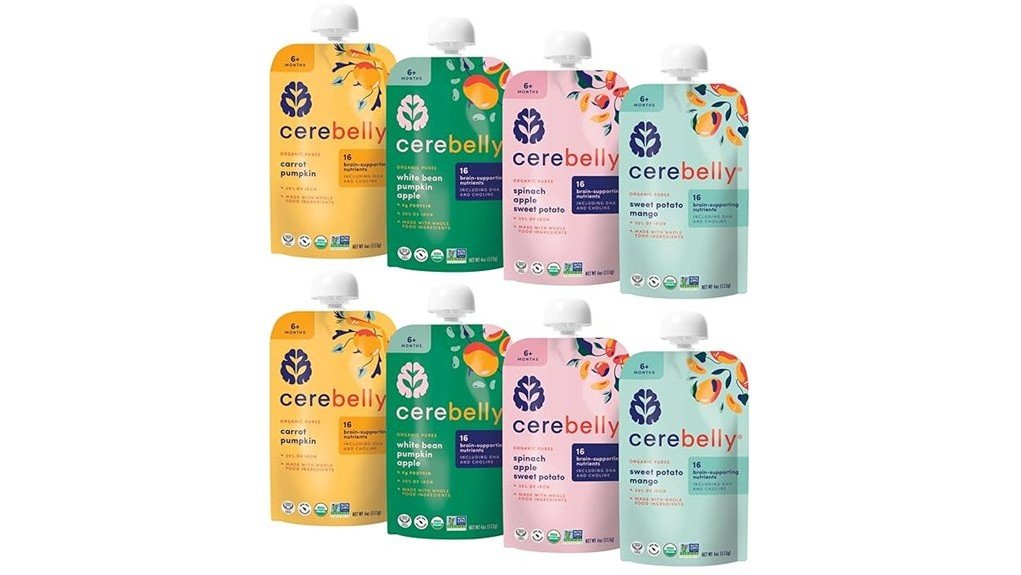
Cerebelly Organic Baby Food Pouches combine vegetable-first recipes, fruit, and 16 brain-supporting nutrients in convenient 4-ounce servings. This review focuses on the Veggie & Fruit Variety Pack (ASIN B0B8B1VR34), which contains eight shelf-stable pouches with no added sugar.
The main appeal is simple: organic ingredients, an emphasis on nutrient variety, and additional contaminant testing. The trade-offs are a potentially higher cost than basic baby food, a smooth texture that cannot replace every feeding experience, and flavor preferences that differ from child to child.
QUICK VERDICT
Cerebelly Organic Baby Food Pouches
Editorial rating: 8.2/10 (based on published product information, ingredient approach, convenience, and limitations; not hands-on testing).
Best for: Families who want portable, organic vegetable-and-fruit purees with additional attention to nutrient content and contaminant testing.
Skip if: You need the lowest-cost puree, a textured finger-food meal, or a complete replacement for breast milk, formula, and other foods.
Bottom line: A useful, nutrient-focused puree option, provided you consider the full diet, the cost per pouch, and your baby’s feeding skills.
Before You Buy
- Confirm the variety: This review covers the eight-pouch Veggie & Fruit pack, not Cerebelly’s bean, bone broth, smoothie, or age-based bundles.
- Check the ingredient label: Nutrient amounts and ingredients can differ by flavor. Do not assume every pouch provides the same amount of iron or vitamin D.
- Plan for texture practice: Purees are useful, but babies also need developmentally appropriate thicker foods and finger foods as they become ready.
- Follow storage instructions: Refrigerate opened puree and use within 48 hours. Never microwave the pouch, and keep its cap away from children.
Review Contents
Key Takeaways
- Cerebelly’s Veggie & Fruit Variety Pack contains eight 4-ounce organic baby food pouches.
- The recipes use vegetables and fruits, with no added sugar and a brand-described blend of 16 brain-supporting nutrients.
- Cerebelly reports batch testing for heavy metals and has received Clean Label Project Purity Award recognition. Testing does not mean that all contaminants are completely absent.
- The purees can suit babies beginning solids and older children who still enjoy smooth foods. They do not replace exposure to different food textures.
- Unopened pouches are shelf-stable. Opened puree must be refrigerated and used within 48 hours.
- The strongest reasons to choose Cerebelly are ingredient preferences, convenience, and the company’s testing approach, rather than a proven advantage in developmental outcomes.
Cerebelly Specifications and What’s in the Pack
The reviewed product is the Cerebelly Organic Baby Food Pouches Veggie & Fruit Variety Pack. Each retail pack contains eight individual 4-ounce pouches, for a total of 32 ounces of puree.
| Specification | Details |
|---|---|
| Brand | Cerebelly |
| Product | Veggie & Fruit Purees Variety Pack |
| ASIN | B0B8B1VR34 |
| Pack quantity | 8 pouches |
| Pouch size | 4 oz (113 g) |
| Total puree | 32 oz |
| Food type | Smooth vegetable-and-fruit purees |
| Certifications and claims | USDA Organic, Non-GMO Project Verified, no added sugar, Clean Label Project recognition |
| Storage unopened | Shelf-stable until the printed Enjoy By date, when stored properly |
| Storage opened | Refrigerate and use within 48 hours |
What’s in the Box?
The reviewed retail pack provides eight sealed, ready-to-serve baby food pouches. The Veggie & Fruit assortment features blends built around ingredients such as pumpkin, mango, apple, and sweet potato.
Check the current product images and assortment description before ordering. Cerebelly sells several packs with similar names, but their ingredients, flavor selection, and intended uses are not identical.
What’s in Cerebelly Organic Baby Food Pouches?
Cerebelly uses vegetable-first organic recipes rather than relying only on sweet fruit purees. The reviewed assortment features familiar produce, including pumpkin, mango, apple, and sweet potato, combined into smooth blends.
Its ingredient approach offers a way to introduce vegetables alongside naturally sweet flavors. However, the nutritional profile still depends on the specific pouch.
Ingredients and Flavor
Sweet potato, pumpkin, and fruit can create a naturally sweet taste without added sugar. Some vegetable ingredients add earthy notes that make the blends taste different from plain apple or banana puree.
The label’s no added sugar claim does not mean the food contains no sugar. Fruit and vegetables naturally contain sugars, which appear in the Nutrition Facts panel.
Parents should also distinguish between ingredients and nutrients. A blend may contain several vegetables, but that alone does not establish how much iron, protein, or other nutrients it provides.
What Makes the Ingredients Different?
Cerebelly emphasizes organic sourcing, vegetable variety, and a nutrient blend developed around early childhood nutritional needs. These are useful features for families who want more than a basic fruit puree.
Still, the full label matters more than the front-of-package claims. Check serving size, protein, fiber, iron, vitamin D, and the complete ingredient list for each flavor.
How Cerebelly Supports Brain Development
Cerebelly markets its formulas around 16 nutrients involved in normal brain and nervous system development. Its focus is broader than simply providing calories from fruit and vegetables.
The brand identifies nutrients such as iron, vitamin D, zinc, iodine, choline, DHA, and several vitamins in its nutrition approach. These nutrients have different roles in growth, development, and normal body function.
Cerebelly explains its formulation approach in its published discussion of its nutrient formulation.
What Does the 16-Nutrient Claim Mean?
The claim describes the range of nutrients Cerebelly aims to provide through its recipes and formulations. It does not mean every nutrient supplies the same percentage of a baby’s daily needs.
For example, iron is important for normal development, while DHA is a fat involved in brain and eye development. The amount supplied by an individual pouch depends on its recipe and serving size.
Important distinction: A product can contain brain-supporting nutrients without clinical proof that children who eat it develop faster or achieve better cognitive outcomes than children eating other balanced diets.
Can Cerebelly Replace Other Nutritious Foods?
No. Cerebelly can contribute fruit, vegetables, and other nutrients, but babies need a variety of food groups as their diets expand.
For babies from 6 to 12 months, breast milk or infant formula remains an important primary nutrition source while solid foods are introduced. The CDC’s feeding guidance recommends gradually increasing solid foods while following the child’s hunger and fullness cues.
Purees should complement iron-rich foods, protein sources, healthy fats, and developmentally suitable family foods rather than become the entire diet.
How Safe Are Cerebelly Pouches?
Cerebelly places unusual emphasis on contaminant testing for a packaged baby food brand. It says it tests ingredients and finished batches for heavy metals and other unwanted substances.
The company also received Clean Label Project Purity Award recognition. According to Cerebelly’s certification announcement, independent testing assessed hundreds of potential contaminants.
| Safety Check | What It Means | Buyer Consideration |
|---|---|---|
| Batch testing | Cerebelly says finished batches undergo contaminant testing before release. | Useful additional oversight; ask for current product-specific information when needed. |
| Clean Label recognition | Independent recognition under the organization’s testing program. | Not a promise of zero contaminants. |
| Printed lot codes | Helps identify production batches. | Useful when contacting the manufacturer or checking a recall. |
| Shelf-stable packaging | Unopened products do not require refrigeration. | Reject swollen, leaking, or damaged pouches. |
| No added sugar | Sugar is not added as an ingredient. | Natural sugars remain present. |
Does Heavy-Metal Testing Mean Zero Heavy Metals?
No. Heavy metals can occur naturally in soil, water, and crops. Even organic ingredients may contain trace amounts from the environment.
The FDA’s Closer to Zero initiative focuses on reducing children’s exposure to contaminants such as lead, arsenic, cadmium, and mercury as much as possible.
Cerebelly’s testing policy can be a meaningful purchasing consideration, but it should not be interpreted as proof that every pouch contains no detectable contaminants.
Packaging and Choking Safety
Check the seal, expiration date, and packaging condition before serving. Discard any pouch that is leaking, swollen, damaged, or otherwise appears unsafe.
Keep the pouch cap out of reach of babies and toddlers. Caps can present a choking hazard. Children should also remain seated and supervised while eating.
Which Cerebelly Stages Fit Your Baby?
Cerebelly purees can fit different points in a child’s feeding journey, but choosing the correct texture matters more than relying on a stage number alone.
The brand says its purees can be introduced when babies are developmentally ready for solids, generally around 5 to 6 months. Public health guidance typically recommends beginning solids at about 6 months.
Beginning Solids
At the start, babies usually manage very smooth purees best. Offer a small amount on a spoon and watch for signs that your baby can swallow it comfortably.
You can make a puree thinner with a little breast milk or prepared formula if needed. Follow your baby’s readiness cues rather than assuming a specific date guarantees feeding readiness.
Developing Feeding Skills
As babies become more experienced, they need opportunities to explore thicker mashed foods and different flavors. Cerebelly can remain part of those meals, but smooth pouches alone do not teach every eating skill.
The CDC’s guidance on tastes and textures explains why introducing mashed, lumpy, and finely chopped foods helps support chewing and self-feeding development.
Older Babies and Toddlers
Older children can still enjoy Cerebelly as a snack or part of a meal. However, a product described as suitable for several feeding stages is not necessarily available in separate chunky versions for each stage.
Continue offering suitable soft finger foods and family foods while using purees for convenience.
Are Cerebelly Pouches Good for Travel?
Yes. Travel convenience is one of Cerebelly’s strongest practical features. Unopened 4-ounce pouches are compact, shelf-stable, and easy to carry in a diaper bag.
They can be useful for outings, visits, daycare meal preparation, and trips where refrigerated food is difficult to manage.
Best Travel Uses
- Daycare: Provide a sealed pouch with feeding instructions and follow the center’s food policy.
- Family outings: Pack an unopened pouch and a clean spoon for a supervised meal or snack.
- Road trips: Serve food while stopped, with your child seated safely, rather than feeding while the vehicle is moving.
- Flights: The sealed format is convenient, but keep the child’s feeding needs and security screening rules in mind.
Travel Storage Considerations
Once opened, a pouch loses its shelf-stable advantage. Refrigerate leftovers promptly and follow Cerebelly’s 48-hour limit.
Do not leave opened food sitting in a warm car or diaper bag. A cooler with a cold source is useful if you plan to save leftovers.
The main convenience benefit is avoiding refrigeration before opening, not unlimited storage after feeding begins.
Who Should Buy Cerebelly, and Who Should Skip It?
Cerebelly is most appealing if you value organic ingredients, portable nutrition, and documented attention to contaminant testing.
Good Choice If You:
- Prefer USDA Organic baby food.
- Want vegetable-and-fruit combinations.
- Need easy-to-pack puree snacks.
- Value a brand’s published testing program.
- Want to explore several flavors in one pack.
Consider Another Option If You:
- Need the lowest cost per serving.
- Want whole or mashed homemade food.
- Need a specific high-protein or iron-rich meal.
- Prefer food with noticeable pieces for texture practice.
- Need complete control over every ingredient.
Cerebelly Pros and Cons
The main strengths are convenience, a varied ingredient approach, and additional quality-control claims. The limitations involve price, texture, and the risk of treating a puree as a complete meal.
Pros
- Organic vegetable-and-fruit recipes with no added sugar.
- Shelf-stable pouches are convenient for travel and daycare.
- Published contaminant-testing policy and third-party recognition.
- Multiple flavors help provide variety.
Cons
- Can cost more than basic baby food purees.
- Smooth pouches cannot replace texture and self-feeding practice.
- Individual flavor preferences vary.
- Nutrient amounts differ by recipe, so labels still need checking.
How to Serve Cerebelly Pouches Safely
Cerebelly purees are ready to eat and require little preparation. Serving them in a bowl or on a spoon also gives you more control over portions and helps younger babies practice eating.
- Inspect the pouch. Check the seal, printed date, and packaging condition.
- Wash your hands. Use a clean spoon and bowl if needed.
- Shake the pouch. Follow the product’s directions before opening.
- Serve a small amount. Squeeze puree onto a spoon or into a clean bowl. Start with an amount suited to your child’s appetite and feeding skills.
- Supervise feeding. Keep your child upright and seated while eating.
- Store leftovers promptly. Refrigerate unused puree and use it within 48 hours, following the manufacturer’s instructions.
Can You Warm the Puree?
Yes, you can serve the food gently warmed if your child prefers it. Warming is optional because the puree is ready to eat.
For better temperature control, transfer the desired portion to a suitable bowl and warm it gently. Stir well and test the temperature before feeding.
Do not microwave the pouch. Cerebelly’s product instructions specifically warn against doing so.
What If Your Baby Refuses a Flavor?
Offer a small amount without pressure and try again on another day. Babies may need repeated exposure to a new taste before accepting it.
Rather than forcing a full pouch, combine small tasting opportunities with foods your baby already accepts. Watch for allergic reactions when introducing unfamiliar ingredients.
What Do Parents Report About Cerebelly?
Public customer feedback for the Veggie & Fruit eight-pack is generally positive about flavor acceptance and convenience. However, the visible review samples are limited, and some customer comments were incentivized.
On Walmart’s listing for the same eight-pack, one caregiver reported that her granddaughter enjoyed the assortment but felt it cost more than competing baby foods. Other customers praised flavor acceptance, including one who said her child liked all the flavors tried.
Feedback on individual Cerebelly flavors also suggests that acceptance varies. Some caregivers praise the texture and taste, while others find specific flavors less appealing or feel the product costs too much.
Owner Feedback Summary
What owners appreciate: Convenient pouches, organic ingredient choices, vegetable-and-fruit variety, and good flavor acceptance in their children.
What to watch: A higher cost per pouch than simpler options, mixed reactions to certain flavors, and differences in texture between Cerebelly product varieties.
These are reported experiences, not results from controlled testing. They do not establish that Cerebelly improves development or will be accepted by every child.
Cerebelly vs. Other Organic Baby Food Options
Cerebelly is not the only organic puree available. Other brands may suit you better depending on whether you want savory vegetables, added grains, or refrigerated cold-pressed food.
| Product | Key Feature | Storage | Best For |
|---|---|---|---|
| Cerebelly Veggie & Fruit Variety Pack | 4 oz; organic vegetable-and-fruit blends; 16-nutrient formulation claim | Shelf-stable unopened | Families prioritizing nutrient variety and contaminant testing |
| Happy Baby Clearly Crafted Carrots, Strawberries & Chickpeas | 4 oz; organic fruit, vegetables, and chickpeas | Shelf-stable unopened | A straightforward organic vegetable-and-fruit blend |
| Serenity Kids Organic Roots with Olive Oil | Organic carrots, sweet potatoes, beets, and olive oil | Shelf-stable unopened | Families seeking a savory vegetable-focused flavor |
| Once Upon a Farm Apple Baby Oatmeal Blend | 3.2 oz; organic apple-and-oat blend, cold-pressure protected | Refrigerated | Families who prefer refrigerated organic blends with oats |
Cerebelly vs. Happy Baby Organics
Happy Baby Clearly Crafted offers organic fruit-and-vegetable purees in a similar pouch format. Its Carrots, Strawberries & Chickpeas recipe is another option for babies exploring blended vegetables and fruit.
Cerebelly is more focused on promoting its 16-nutrient formulation and published testing program. Compare actual Nutrition Facts panels rather than assuming one recipe is automatically more nutritious.
Cerebelly vs. Serenity Kids
Serenity Kids Organic Roots provides a more savory combination of root vegetables with olive oil. It can be appealing if you want a less fruit-forward ingredient profile.
Cerebelly’s variety pack is better suited to trying several fruit-and-vegetable combinations without committing to one flavor.
Cerebelly vs. Once Upon a Farm
Once Upon a Farm’s Apple Baby Oatmeal Blend uses organic fruit and oats in a refrigerated, cold-pressure-protected puree.
The major practical difference is storage. Cerebelly’s unopened shelf-stable pouches are more convenient for situations where reliable refrigeration is not available.
Are Cerebelly Organic Baby Food Pouches Worth the Price?
Cerebelly can be worth the extra cost for parents who value its combination of organic recipes, portability, and testing practices. However, the benefits should be weighed against your child’s actual needs and how often you use prepared baby food.
An eight-pack contains 32 ounces of puree. To compare offers fairly, divide the total pack price by eight for the cost per pouch, or by 32 for the cost per ounce.
Also consider food waste. If your baby typically eats only a small amount at a sitting, an opened 4-ounce pouch may require refrigerated storage for the next serving.
Value verdict: Cerebelly makes the most sense as a convenient part of a varied diet, not as an expensive replacement for every homemade meal, mashed food, or fresh ingredient.
Check the Current 8-Pack Offer
Review the flavor assortment, seller, expiration information, and current cost before purchasing.
How We Evaluated Cerebelly
We evaluated the Veggie & Fruit Variety Pack using publicly available product details, the manufacturer’s storage and safety information, independent food-safety guidance, and accessible customer feedback.
The editorial assessment considered four main factors: ingredient and nutrient information, contaminant-testing transparency, serving convenience, and practical limitations. The rating is an editorial judgment, not a laboratory score or a direct measure of nutritional superiority.
We did not perform independent contaminant testing, conduct a controlled feeding trial, or personally measure the nutrients in these pouches. Brand statements are identified as claims, and owner feedback is treated as individual experience rather than proof of performance.
Frequently Asked Questions
Are Cerebelly pouches suitable for picky eaters?
Yes, Cerebelly pouches may suit picky eaters because the brand offers several vegetable-and-fruit combinations with smooth textures. Some parents report that their children enjoy the flavors, but preferences vary. Introduce small portions without pressure and continue offering a range of foods and textures.
How long do opened Cerebelly pouches last?
Cerebelly says opened puree must be refrigerated and consumed within 48 hours. Close the pouch securely, refrigerate leftovers promptly, and avoid saving food contaminated by direct contact with a child’s mouth. Discard food left unrefrigerated too long, even if the printed expiration date has not passed.
Can Cerebelly pouches be warmed before serving?
Yes, you can gently warm a serving of Cerebelly puree, although warming is not required. Transfer the portion into an appropriate bowl, warm it gently, stir, and test the temperature before feeding. Do not microwave the pouch because Cerebelly’s packaging instructions warn against it.
Where are Cerebelly ingredients sourced from?
Cerebelly says it works with selected ingredient suppliers and tests incoming ingredients as part of its quality-control program. The brand describes its organic sourcing and screening practices, but complete farm-by-farm origins are not established for every ingredient in this variety pack. Contact the manufacturer for product-specific sourcing information.
Do unopened Cerebelly pouches need refrigeration?
No, unopened Cerebelly puree pouches are shelf-stable and do not normally require refrigeration. Store them according to the package directions and use them before the printed Enjoy By date. Once a pouch is opened, refrigerate any remaining puree and use it within 48 hours.
What age can babies start Cerebelly pouches?
Cerebelly describes its purees as suitable for babies who are ready for solid foods, generally around 5 to 6 months. The CDC recommends introducing solids at about 6 months. Your baby should show appropriate head control, sitting support, and swallowing readiness before you offer puree.
Can a Cerebelly pouch replace a full meal?
A Cerebelly pouch can form part of a meal, but it should not automatically be treated as a complete meal for every baby. Nutrient and calorie needs differ by age and growth stage. Breast milk, formula, and a variety of suitable foods remain important, especially during the first year.
Are Cerebelly pouches free from heavy metals?
No baby food brand can reasonably guarantee that every food contains absolutely no naturally occurring heavy metals. Cerebelly reports ingredient and batch testing and has received independent purity recognition. Those measures provide information about its quality-control approach, but they are not proof of zero contamination.
Do Cerebelly pouches contain added sugar or allergens?
The reviewed Veggie & Fruit assortment is marketed as having no added sugar, and its listing describes it as free from gluten, dairy, and nuts. Natural fruit sugars are still present. Check the exact ingredient and allergen label for each flavor, especially if your child has a diagnosed food allergy.
Conclusion: Should You Buy Cerebelly Organic Baby Food Pouches?
Cerebelly Organic Baby Food Pouches offer a practical combination of vegetable-first recipes, organic ingredients, shelf-stable packaging, and published contaminant-testing practices. The Veggie & Fruit Variety Pack is particularly useful for parents who want several ready-to-serve puree flavors in one purchase.
The limitations are equally important. These pouches may cost more than simpler options, and they cannot replace the variety of textures, foods, and feeding experiences children need as they grow.
Final verdict: Cerebelly is a strong option for convenient puree feeding, as long as it supports a broader diet rather than replacing one. Compare the current cost, check the ingredients, and choose portions and textures suited to your child.
Cerebelly Organic Baby Food Pouches
Veggie & Fruit Variety Pack | 8 × 4 oz | Organic Purees