Quick Answer
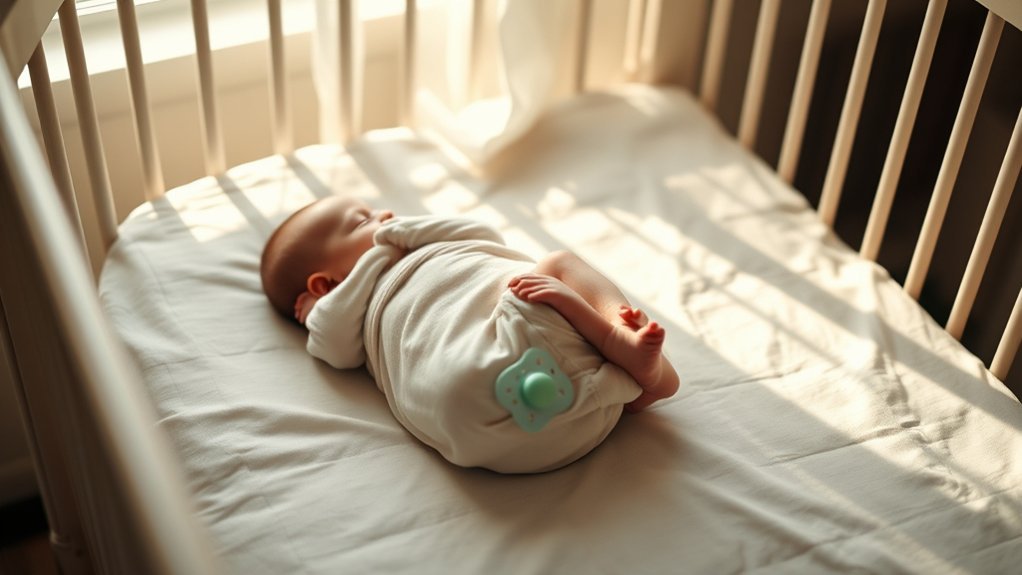
Yes. Offering a pacifier when you place your baby down for naps and bedtime is linked to a lower SIDS risk. Use it alongside back sleeping, a firm flat sleep surface, a clear crib or bassinet, and room sharing without bed sharing. If it falls out after sleep begins, you do not need to replace it.
Last checked: October 7, 2026. Dates and figures were verified against official sources.
Key Takeaways
- The AAP recommends offering a pacifier at nap time and bedtime as one part of a complete safe-sleep routine.
- For directly breastfed babies, wait until breastfeeding is well established; the exact timing varies from family to family.
- Do not force a pacifier, reinsert it after it falls out during sleep, or attach it to clothing, blankets, toys, cords, or a baby’s neck.
- The often-cited 2005 meta-analysis found a stronger association with lower SIDS odds when a pacifier was used for the last sleep than with usual pacifier use.
- Pacifier use after 12 months is linked with more acute ear infections, and prolonged use beyond 18 months can affect developing teeth and jaw alignment.
What Is the Pacifier-SIDS Link?
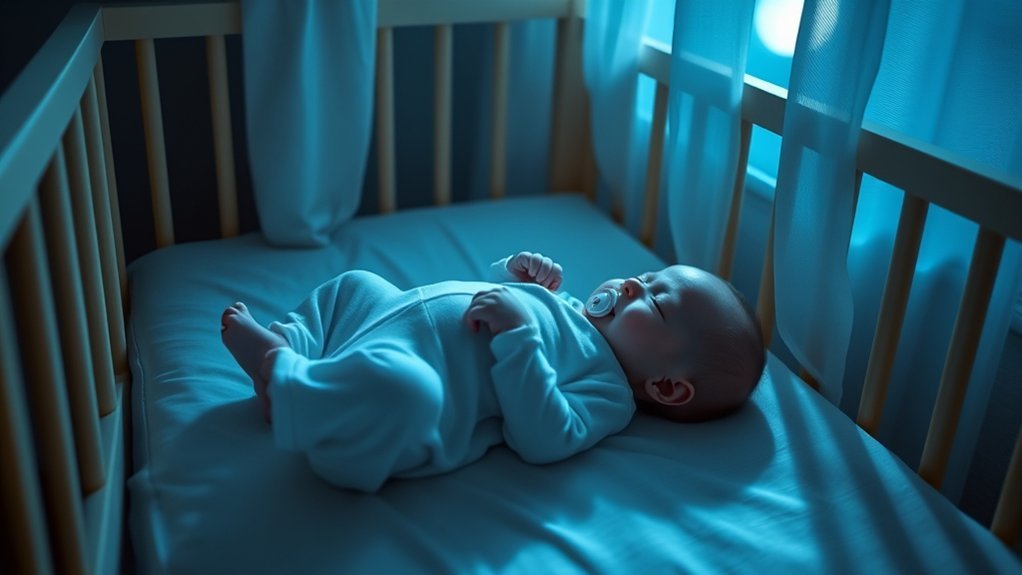
The pacifier-SIDS link is a consistent association between pacifier use during sleep and lower observed SIDS risk. Current AAP safe-sleep guidance recommends offering a pacifier at nap time and bedtime, while also making clear that the exact protective mechanism is not known.
This does not mean a pacifier makes an unsafe sleep environment safe. Your baby should still start every sleep on their back, on a firm, flat, level surface with only a fitted sheet and no loose bedding or soft objects.
Think of the pacifier as one optional layer in a larger routine. Consistent positive sleep cues can make bedtime predictable, but the safety benefit comes from following the full safe-sleep plan rather than relying on one item.
How Strong Is the Evidence for Pacifiers and SIDS?
The evidence is strong enough for the AAP to recommend offering a pacifier for sleep, but it is mainly observational evidence. That distinction matters because case-control studies can show a consistent association, while they cannot prove that the pacifier itself causes the lower risk.
A 2017 Cochrane review found no eligible randomized controlled trials testing pacifiers specifically for SIDS prevention. Randomizing families to a SIDS-prevention strategy is also difficult because SIDS is rare and safe-sleep practices must not be withheld.
| Evidence | What it tells you |
|---|---|
| Multiple case-control studies | Pacifier use during sleep is repeatedly associated with lower SIDS risk. |
| 2005 meta-analysis | The strongest association appeared when a pacifier was used during the last sleep. |
| Randomized trials | No eligible trials directly testing SIDS prevention were found in the Cochrane review. |
| Current guidance | AAP and NIH Safe to Sleep guidance recommend offering a pacifier at naps and bedtime. |
For families, the practical message is simple: a pacifier is reasonable to offer, but it should sit beside proven safe sleep practices, not replace them.
What Did the Pacifier Meta-Analysis Find?
The landmark 2005 meta-analysis found that pacifier use during the last sleep had a stronger association with lower SIDS odds than “usual” pacifier use. The study screened 384 abstracts and included seven case-control studies in the pooled analysis.
The published meta-analysis reported summary odds ratios of 0.90 for usual use in univariate analyses and 0.71 after multivariable adjustment. For pacifier use during the last sleep, the summary odds ratios were 0.47 and 0.39, respectively.
Study Scope And Methods
The researchers searched studies published from January 1966 through May 2004. They limited the pooled analysis to original case-control studies because suitable prospective studies were not available.
That design can identify a strong and consistent pattern, but it cannot fully rule out confounding. For example, families who use a pacifier at sleep may differ in other sleep or caregiving habits that also affect risk.
Risk Reduction Results
The strongest result was for the last sleep: the adjusted summary odds ratio was 0.39. An odds ratio below 1 means the exposed group had lower observed odds of the outcome, but it should not be translated directly into an individual baby’s percentage risk reduction.
The study also estimated that one SIDS death might be prevented for every 2,733 infants offered a pacifier for sleep. That was a model-based estimate using the U.S. SIDS rate available at the time, so it should not be treated as a current universal number-needed-to-treat.
Sleep-Time Use Matters
The evidence is most relevant to pacifier use when the baby is placed for sleep, not simply whether the baby uses one at other times. Current NIH guidance says to offer it for naps and at night, without forcing it.
If the pacifier falls out after your baby falls asleep, leave it out. You do not need to wake your baby or repeatedly put it back in.
The original 2005 paper described its recommendation as “level B” using a grading scale adopted from the U.S. Preventive Services Task Force. That wording was the study authors’ grading method, not a separate pacifier recommendation issued by the USPSTF.
Why Might Pacifiers Lower SIDS Risk?
Researchers still do not know exactly why pacifiers are associated with lower SIDS risk. Proposed explanations include helping maintain airway openness and changing aspects of autonomic control during sleep, but none has been proven as the single mechanism.
The AAP also notes that studies of arousal are mixed. For that reason, it is better not to claim that a pacifier works by making a baby sleep “deeper” or “lighter.” The observed association is real enough to support guidance, while the biology remains uncertain.
That uncertainty is another reason to keep the rest of the sleep environment safe. Review the main safe sleep practices instead of treating a pacifier as a protective device on its own.
When Should Parents Offer a Pacifier?
Offer a pacifier when you place your baby down for naps and nighttime sleep. If your baby is directly breastfed, wait until breastfeeding is well established; if not, current AAP guidance says pacifier use can begin as soon as you like.
| Situation | What to do |
|---|---|
| Directly breastfed baby | Wait until milk supply is sufficient, latch and milk transfer are comfortable and effective, and weight gain is appropriate. This often takes about 3 to 4 weeks, but timing varies. |
| Not directly breastfeeding | You can offer a pacifier as soon as desired. |
| Nap or bedtime | Offer it when placing your baby down to sleep. |
| Baby refuses it | Do not force it. You can try again another time. |
| Pacifier falls out | Leave it out once your baby is asleep; reinsertion is not needed. |
The AAP’s parent guidance says breastfeeding is often established at around 3 to 4 weeks, but its formal safe-sleep policy stresses that the timing is individual. If you are unsure, your pediatrician or lactation professional can help you judge feeding effectiveness and weight gain.
How Do Pacifiers Fit Safe Sleep?
A pacifier is an add-on to safe sleep, not a substitute for it. The safest routine combines a back-sleep position, a separate infant sleep space, a firm and flat surface, a clear sleep area, and avoidance of smoke and overheating.
The NIH Safe to Sleep guidance recommends room sharing with a separate crib, bassinet, or portable play yard for at least the first six months. It also says to keep soft objects, loose bedding, and toys out of the sleep area.
Pacifiers And SIDS Risk
The practical benefit is tied to offering the pacifier as your baby is placed down for sleep. You do not need to monitor whether it stays in the mouth all night, and you do not need to replace it after it falls out.
Most SIDS deaths occur before 6 months, but SIDS can occur anytime during the first year. That is why safe-sleep recommendations should continue through your baby’s first birthday.
If worries about sleep safety are becoming overwhelming, this guide to postpartum anxiety may help you recognize when to seek additional support.
Safe Sleep Guidelines
Start every sleep with your baby on their back. Use a firm, flat, level surface designed for infant sleep, covered only by a fitted sheet, and keep the crib or bassinet free of pillows, blankets, bumpers, toys, and other soft items.
- Share a room, not a bed, for at least the first 6 months.
- Keep smoke and nicotine away during pregnancy and after birth.
- Avoid alcohol, marijuana, opioids, and illicit drugs during pregnancy and while caring for the baby.
- Avoid overheating and keep the baby’s head and face uncovered.
- Follow routine immunization and well-child care guidance.
These steps matter more than any single product. A pacifier can be part of the routine, but no pacifier, monitor, positioner, or other device can make SIDS impossible.
What Are the Risks of Pacifier Use?
Pacifiers are generally safe when used correctly, but prolonged use can create problems. The main concerns are acute middle ear infections after infancy, dental or jaw changes with longer use, sleep dependence, and unsafe attachments that can cause strangulation or choking.
The American Academy of Pediatric Dentistry policy says pacifier use after 12 months can increase the risk of acute otitis media. Use beyond 18 months can influence the developing mouth and jaw, including open bite and crossbite.
A baby who depends on a pacifier to settle may also wake when it falls out. That is a sleep-routine issue, not a reason to keep reinserting it after the baby is asleep.
If crying seems driven by discomfort rather than a need to suck, look for feeding or illness cues and know when excessive crying needs medical attention.
Should Breastfed Babies Use Pacifiers?
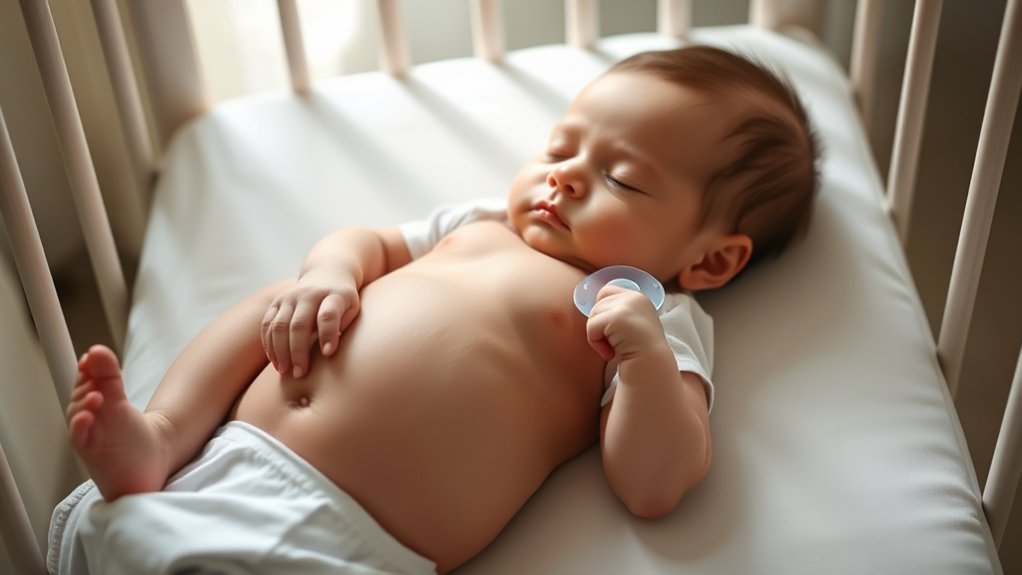
Yes. Breastfed babies can use pacifiers once breastfeeding is well established. The AAP defines that by effective milk transfer, a comfortable and consistent latch, sufficient milk supply, and appropriate infant weight gain rather than by one fixed number of days.
The AAP’s HealthyChildren guidance notes that this often takes about 3 to 4 weeks. If breastfeeding is already going smoothly, a pacifier offered at sleep does not need to replace feeds or shorten nursing sessions.
- Feed first when your baby shows hunger cues.
- Do not use a pacifier to delay a needed feeding.
- Wait for breastfeeding to be established before introducing it for sleep.
- Watch weight gain and feeding effectiveness if you have any concerns.
Note: If breastfeeding is painful, milk transfer seems poor, or your baby is not gaining weight as expected, talk with your pediatrician or a qualified lactation professional before using a pacifier to stretch time between feeds.
How Do You Use a Pacifier Safely?
Use a pacifier safely by choosing an intact, age-appropriate model, cleaning it as directed, and keeping all cords, clips, blankets, and toys away from it during sleep. Never sweeten it with honey or other substances, and replace it if the nipple or shield becomes damaged.
U.S. pacifiers must meet federal safety requirements for shield size, ventilation, structural integrity, and attachments. The Consumer Product Safety Commission also prohibits pacifiers from being sold with ribbons, strings, cords, chains, or similar attachments.
Warning: Never hang a pacifier around a baby’s neck or attach it to clothing, a blanket, stuffed toy, lovey, crib, or other object during sleep. These attachments can create strangulation, choking, or suffocation hazards.
- Offer it at sleep time. Give it when placing your baby down for a nap or at bedtime.
- Do not force it. Some babies do not like pacifiers, and that is fine.
- Leave it out if it falls out. Reinsertion is not needed after sleep begins.
- Keep it plain. Do not coat it with honey, sugar, or sweetened liquid.
- Clean it properly. Follow the manufacturer’s directions; AAP parent guidance recommends frequent boiling or dishwasher cleaning for younger infants when the product allows it.
- Inspect it often. Replace a pacifier that is torn, cracked, discolored, sticky, or otherwise damaged.
If normal startle movements are waking your baby, understanding the Moro reflex can help you separate normal infant behavior from a need to replace the pacifier.
When Should You Wean Off a Pacifier?
There is no single age when every child must stop, but the balance changes after infancy. The SIDS-related rationale applies during the first year, while the risk of ear infections rises with use after 12 months and dental effects become more concerning with prolonged use beyond 18 months.
A gradual plan is usually easiest: keep the pacifier mainly for sleep during infancy, then reduce daytime and sleep use as your child approaches and passes the first birthday. The AAPD encourages ending nonnutritive sucking habits by 36 months.
Why Weaning Timing Matters
Weaning matters because pacifier benefits and risks change with age. The period of greatest SIDS risk is early infancy, while persistent use later can contribute to ear infections, bite changes, and dependence.
You do not need to rush a young infant who uses a pacifier safely for sleep. Instead, reassess the habit after the first birthday, especially if your child has recurrent ear infections or a dentist notices bite changes.
Best Age to Stop
A practical goal is to start reducing use after the first birthday and avoid allowing the habit to persist for years. Current AAPD policy notes increased otitis-media risk after 12 months, possible orofacial effects beyond 18 months, and recommends discontinuing nonnutritive sucking habits by 36 months.
Your pediatrician or pediatric dentist may suggest earlier weaning if your child has repeated ear infections, visible dental changes, or other individual concerns.
Gentle Ways to Wean
Gentle weaning works best when you remove the pacifier in stages rather than turning every use into a struggle. Start with low-stress daytime periods, then keep it only for sleep before gradually reducing sleep use.
- Praise time spent without the pacifier.
- Use cuddling, a song, or another age-appropriate calming routine.
- Keep the rule consistent once you remove it from a part of the day.
- Avoid punishment or shaming.
For younger babies, alternative soothing methods still have to follow safe-sleep rules. If you use swaddling before your baby starts rolling, follow safe swaddling techniques and materials and stop swaddling once rolling begins.
Frequently Asked Questions
Do Pacifiers Actually Reduce SIDS?
Pacifier use during naps and nighttime sleep is associated with a lower risk of SIDS, and the AAP recommends offering one. The evidence is mainly from observational studies rather than randomized trials, so a pacifier should be viewed as one risk-reduction step within a complete safe-sleep routine.
What Are Three Ways to Reduce SIDS Risk?
Place your baby on their back for every sleep, use a firm and flat infant sleep surface with only a fitted sheet, and keep the sleep space free of loose bedding and soft objects. Room sharing without bed sharing, avoiding smoke exposure, and offering a pacifier at sleep also support safer sleep.
What Is the Number One Cause of SIDS?
There is no single proven “number one cause” of SIDS. SIDS is the sudden death of an infant younger than 1 year that remains unexplained after a complete investigation, and risk appears to reflect a combination of infant vulnerability, developmental stage, and environmental factors.
Is It Okay to Let Baby Sleep With a Pacifier?
Yes. You can offer a pacifier when placing your baby down for naps and bedtime. Do not attach it to clothing, cords, blankets, or toys, and do not force it if your baby refuses. If it falls out after your baby falls asleep, you do not need to put it back in.
When Can a Breastfed Newborn Start Using a Pacifier?
A directly breastfed newborn can start once breastfeeding is well established. That means milk supply is sufficient, latch and milk transfer are effective and comfortable, and weight gain is appropriate. This often takes around 3 to 4 weeks, but the timing varies for each parent and baby.
Should I Put the Pacifier Back In if It Falls Out?
No. Once your baby is asleep, you do not need to reinsert a pacifier that falls out. The AAP notes that the observed protective association persists through the sleep period even when the pacifier falls from the baby’s mouth.
Conclusion
A pacifier can be a useful part of safer infant sleep because sleep-time use is consistently associated with lower SIDS risk and is recommended by the AAP. Offer it at naps and bedtime, wait until breastfeeding is established if your baby is directly breastfed, and never let it replace back sleeping, a firm clear sleep space, or other core safety steps.
Sources
- American Academy of Pediatrics: 2022 Safe Sleep Recommendations: Pacifier use, breastfeeding timing, safe-sleep practices, and attachment warnings.
- NIH Safe to Sleep: Ways to Reduce Baby’s Risk: Back sleeping, sleep surface, room sharing, pacifier use, and first-year guidance.
- Hauck et al., Pediatrics 2005 meta-analysis: Study methods, odds ratios, and the historical 2,733 estimate.
- Cochrane Review: Infant Pacifiers and SIDS: Lack of eligible randomized controlled trials.
- HealthyChildren.org: Pacifiers and Thumb Sucking: Breastfeeding timing, cleaning, inspection, and pacifier safety tips.
- American Academy of Pediatric Dentistry: Policy on Pacifiers: Ear-infection and dental risks with prolonged use.
- U.S. Consumer Product Safety Commission: Pacifiers: Federal design, structural, ventilation, and attachment requirements.