
If you have placenta previa, whether vaginal delivery is possible depends on the placenta’s exact position near the cervix late in pregnancy. A placenta that still reaches or covers the cervical opening usually requires a C-section, while some people with a low-lying placenta may be candidates for a carefully planned vaginal birth.
Quick Answer
Persistent placenta previa that reaches or covers the cervical opening generally requires a C-section because labor can cause severe bleeding. A vaginal birth may be considered when the placenta is low-lying but does not cover the cervix, especially when its edge is 11–20 mm away after 36 weeks. Your final plan depends on ultrasound findings and bleeding history.
Key Takeaways
- Current guidance describes a placenta that reaches or covers the cervical opening as placenta previa; a placental edge less than 20 mm away without covering it is low-lying.
- A transvaginal ultrasound is safe and gives a more accurate measurement of the placental edge than an abdominal scan when previa or a low-lying placenta is suspected.
- Any significant or recurrent bleeding needs prompt assessment because hemorrhage can become severe without much warning.
- For stable persistent placenta previa, delivery is commonly planned in the late-preterm or early-term period rather than waiting for spontaneous labor.
What Is Placenta Previa?

Placenta previa means the placenta reaches or covers the internal opening of the cervix. The cervix is the lower opening of the uterus through which the baby would pass during vaginal birth.
Current RCOG placenta previa guidance uses a more precise ultrasound-based classification. After 16 weeks, a placenta is described as low-lying when its edge is less than 20 mm from the cervical opening but does not cover it. If the edge reaches or covers the opening, it is placenta previa.
You may still see older terms such as marginal, partial, and complete previa in older records and articles. These terms can be confusing because delivery decisions are better based on the measured distance between the placental edge and the cervix.
Placenta previa often causes painless, bright-red vaginal bleeding in the second half of pregnancy, although some people have no bleeding before delivery. Your clinician will use repeat ultrasound examinations to see whether the placenta remains near the cervix as your uterus grows.
Many placentas identified as low at the mid-pregnancy scan move farther from the cervix later in pregnancy. That is why an early diagnosis does not automatically determine how you will give birth. Follow-up monitoring is essential before the final birth plan is made.
Can You Deliver Vaginally With Placenta Previa?
True placenta previa that still reaches or covers the cervix late in pregnancy is generally not compatible with a planned vaginal delivery. Opening of the cervix can disrupt the placenta and cause severe hemorrhage.
A vaginal birth may still be an option if follow-up imaging shows that the placenta no longer covers the cervix and is instead classified as low-lying. The exact distance from the placental edge to the internal cervical opening becomes an important part of that decision.
Placenta Location Matters
The measurement that matters most is the distance between the lower edge of the placenta and the internal cervical os, meaning the opening of the cervix inside the uterus.
| Ultrasound finding | What it usually means for delivery |
|---|---|
| Placenta reaches or covers the cervical opening | Placenta previa; planned C-section is generally required if it persists. |
| Placental edge 1–10 mm from the opening | Low-lying placenta; vaginal birth is less likely to succeed and the plan needs individual specialist assessment. |
| Placental edge 11–20 mm from the opening after 36 weeks | Low-lying placenta; a trial of labor may be discussed in an asymptomatic pregnancy. |
| Placental edge 20 mm or more from the opening | Not considered low-lying under current RCOG criteria; vaginal birth may be an option unless another condition requires cesarean delivery. |
A systematic review of low-lying placenta found successful vaginal birth in about 43% of women with a placental edge 1–10 mm from the cervical opening and about 85% when the distance was 11–20 mm. These figures come from selected pregnancies and should not be used to predict an individual outcome.
Marginal Vs Complete
The terms marginal, partial, and complete placenta previa are older classifications. They can still appear in medical records, but current ultrasound guidance favors describing whether the placenta covers the cervix and measuring its distance from the opening.
What used to be called marginal previa may now be described as a low-lying placenta if the placental edge is close to, but not covering, the cervix. A placenta that partially or completely covers the opening remains placenta previa.
This distinction matters because a low-lying placenta can sometimes permit vaginal birth, while persistent coverage of the cervix makes labor much more dangerous. You can read more about the types and risk factors for placenta previa.
When C-Section Is Needed
A C-section is generally needed when placenta previa persists and the placenta still reaches or covers the cervical opening near delivery. Cesarean delivery may also become necessary earlier if bleeding is heavy, recurrent, or threatens you or your baby.
For a stable pregnancy with placenta previa and no active bleeding or other complications, SMFM guidance recommends delivery between 36 weeks and 37 weeks 6 days. The exact date should be individualized according to bleeding history, ultrasound findings, and other pregnancy complications.
- Your team confirms placental position with follow-up imaging.
- They review any previous bleeding and your risk of another hemorrhage.
- They decide whether a planned vaginal birth is reasonable or a C-section is safer.
- If significant bleeding develops, urgent delivery may be needed regardless of the original plan.
Note: Your obstetrician or maternal-fetal medicine specialist should make the final delivery recommendation. The ultrasound distance alone does not capture your bleeding history, fetal position, previous cesareans, possible placenta accreta spectrum, or access to emergency obstetric care.
Types of Placenta Previa and Delivery Options
Older descriptions divide previa into marginal, partial, and complete types. Understanding those terms can help you interpret an older ultrasound report, but current care relies more heavily on the placenta’s measured relationship to the cervix.
Marginal Previa And Vaginal Birth
A placenta that sits close to the cervix without covering it may now be called a low-lying placenta rather than marginal previa. Vaginal birth can be considered in selected cases, particularly when the placental edge has moved farther from the cervical opening and you have no significant bleeding.
Current RCOG guidance specifically recommends discussing a trial of labor with women who have an asymptomatic low-lying placenta whose edge is 11–20 mm from the internal opening after 36 weeks.
Your team will also consider fetal position, your previous births, bleeding episodes, and whether immediate cesarean delivery and blood transfusion are available if hemorrhage develops.
Partial Previa Delivery Risks
Under the older classification, partial placenta previa meant that the placenta covered part of the cervical opening. If the placenta still covers any part of the opening late in pregnancy, it is considered placenta previa under current guidance and a planned vaginal delivery is generally avoided.
| Factor | Clinical note |
|---|---|
| Placental position | Repeat ultrasound shows whether the placenta still reaches or covers the cervix |
| Bleeding history | Recurrent or heavy bleeding can make earlier delivery necessary |
| Gestational age | Helps balance the risks of bleeding against those of early birth |
| Previous cesareans | Increase concern for placenta accreta spectrum when previa is present |
| Hospital resources | Rapid access to surgery and blood products is important when bleeding risk is high |
The safest plan may change during pregnancy. Repeat imaging is therefore more useful than relying on the label used at the first ultrasound.
Complete Previa Requires Cesarean
Complete placenta previa is the older term for a placenta that completely covers the cervical opening. If that coverage persists near birth, vaginal delivery is unsafe because cervical opening and labor can cause major bleeding.
Your care team will plan delivery before spontaneous labor when possible. The exact timing may change if you develop bleeding, contractions, rupture of membranes, fetal concerns, or another complication.
- Attend every scheduled ultrasound and prenatal visit.
- Know where to go if bleeding begins.
- Discuss the planned delivery date and hospital with your obstetric team.
- Tell the team immediately if bleeding, contractions, or significant pain develops.
Placenta Previa Symptoms and Warning Signs

The classic symptom of placenta previa is sudden, painless, bright-red vaginal bleeding in the second half of pregnancy. Bleeding can range from spotting to a severe hemorrhage, and it may stop and then return.
Some people also have contractions or discomfort. Because bleeding later in pregnancy can have several serious causes, ACOG guidance on bleeding during pregnancy supports prompt medical assessment rather than assuming placenta previa is the cause.
Warning: Contact your maternity team promptly for vaginal bleeding in the second or third trimester. Seek emergency care for heavy bleeding, faintness, weakness, severe pain, regular contractions, or any situation in which you feel acutely unwell.
Placenta previa can also be found on a routine ultrasound before you have any symptoms. If you have already had one bleeding episode, another can occur without much warning, so follow the emergency plan given by your obstetric team.
You can also review common placenta previa symptoms and signs and placenta previa myths and facts when preparing questions for your next appointment.
How Placenta Previa Is Diagnosed
Ultrasound is the main way doctors diagnose placenta previa and low-lying placenta. Placental location is normally assessed during the mid-pregnancy anatomy scan, with follow-up imaging when the placenta is close to the cervix.
Current RCOG guidance recommends follow-up around 32 weeks when a low-lying placenta or previa was found earlier. If it remains low, another transvaginal scan around 36 weeks can help plan the mode of birth.
A transvaginal ultrasound places an ultrasound probe in the vagina but does not enter the cervix. It is considered safe for evaluating placenta previa and provides a more accurate view of the placental edge and cervical opening than an abdominal scan alone.
- The scan confirms whether the placenta reaches or covers the cervical opening.
- It measures the distance between the placental edge and the opening when the placenta is low-lying.
- Repeat scans show whether that distance changes as pregnancy progresses.
- The final measurement helps your team plan vaginal birth or cesarean delivery.
A digital cervical examination is different from a transvaginal ultrasound. Clinicians avoid a digital vaginal examination when placenta previa has not been excluded because touching the placenta can trigger severe bleeding. Prompt assessment is especially important if bleeding develops; see this guide on when to call a doctor for placenta previa.
Placenta Previa Risks for Mother and Baby
The main maternal risk from placenta previa is serious bleeding before, during, or after birth. Severe hemorrhage can require urgent cesarean delivery, blood transfusion, and additional procedures to control bleeding.
Placenta previa also raises the chance of preterm birth. Sometimes labor starts early, while in other cases doctors recommend early delivery because continued pregnancy poses a greater bleeding risk.
Previous cesarean birth is especially relevant because placenta previa together with a uterine scar increases concern for placenta accreta spectrum, in which the placenta attaches too deeply to the uterine wall. Suspected accreta changes where and how delivery should be planned.
For your baby, an important concern is complications related to being born early. Your team balances those risks against the danger of continuing the pregnancy if bleeding becomes severe or recurrent.
Routine prenatal care still matters alongside previa monitoring. For example, your clinician will address other pregnancy needs such as GBS testing when appropriate.
How Doctors Manage Placenta Previa
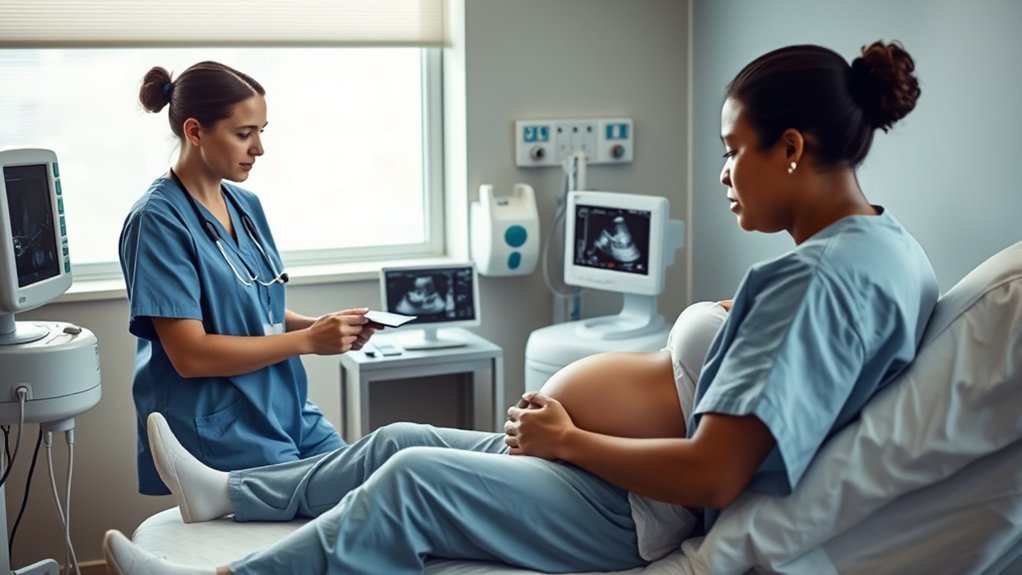
Management depends on how much you are bleeding, gestational age, placental position, and the health of you and your baby. Someone who is stable and has never bled may need a different plan from someone with repeated heavy bleeding.
According to Mayo Clinic guidance on placenta previa treatment, significant bleeding may require hospital monitoring, blood replacement, or emergency delivery. When bleeding stops and the pregnancy is still preterm, continued observation may sometimes be appropriate.
- Repeat ultrasound: confirms whether the placenta remains previa or becomes low-lying.
- Bleeding assessment: helps determine whether outpatient monitoring, hospital care, or delivery is safer.
- Maternal and fetal monitoring: checks your condition and your baby’s well-being during significant bleeding.
- Birth planning: ensures the appropriate obstetric, anesthesia, surgical, and blood-bank resources are available when needed.
Your treatment may also include medicines used when preterm delivery is expected, depending on your gestational age and clinical situation. The details should be individualized rather than started without medical supervision.
Regular placenta previa follow-up gives your team repeated opportunities to update the plan as the pregnancy progresses.
What to Avoid With Placenta Previa
There is no single activity-restriction plan that fits every placenta previa pregnancy. Your clinician may recommend pelvic rest or limits on strenuous activity, especially if you have experienced bleeding, but the exact restrictions should match your individual risk.
Sex can sometimes trigger bleeding when the placenta lies close to the cervix. If your obstetric team has advised pelvic rest, follow its instructions about intercourse and anything inserted into the vagina, including tampons.
Avoid douching during pregnancy. Do not assume that strict bed rest is necessary unless your medical team specifically recommends it, because prolonged inactivity also has risks.
Travel is another individualized decision. If you have persistent previa or previous bleeding, your clinician may consider how far you would be from a hospital capable of emergency cesarean delivery and blood transfusion.
Do not confuse a clinician-performed transvaginal ultrasound, which is considered safe for diagnosing placenta previa, with a digital cervical examination, which is generally avoided until previa has been excluded.
Other cervical conditions can cause different pregnancy concerns, so a diagnosis should be based on imaging and examination rather than symptoms alone. This overview of cervical insufficiency explains one separate condition that may affect pregnancy management.
Frequently Asked Questions
What Shouldn’t I Do With Placenta Previa?
Follow the activity and pelvic-rest instructions given by your obstetric team rather than using a one-size-fits-all restriction plan. Depending on your bleeding history, you may be told to avoid intercourse, vaginal insertion, heavy exertion, or travel far from emergency maternity care.
How Early Can You Go Into Labor With Placenta Previa?
Placenta previa can be associated with labor or medically necessary delivery before 37 weeks, so there is no single earliest week that applies to everyone. Bleeding, contractions, ruptured membranes, fetal concerns, and your gestational age can all change the timing of delivery.
How Likely Is It for Placenta Previa to Go Away?
Many low placentas found at the mid-pregnancy scan move farther from the cervix as the uterus grows, but the chance depends on how much the placenta overlaps the cervix and how early it was diagnosed. Repeat ultrasound around 32 weeks, and sometimes again near 36 weeks, shows whether it has resolved.
Is a Transvaginal Ultrasound Safe With Placenta Previa?
Yes, transvaginal ultrasound is considered safe for diagnosing placenta previa and low-lying placenta. It provides a clearer measurement of the placental edge than an abdominal scan and is different from a digital cervical examination.
Conclusion
If the placenta still reaches or covers the cervix late in pregnancy, vaginal delivery with placenta previa is generally unsafe and a planned C-section is usually recommended. If follow-up ultrasound shows a low-lying placenta instead, selected people may be able to attempt vaginal birth. Keep every ultrasound appointment and seek prompt care for bleeding so your delivery plan can change safely if needed.
Sources
- Royal College of Obstetricians and Gynaecologists, Green-top Guideline No. 27a, 2026: Supports current placenta previa and low-lying placenta definitions, ultrasound follow-up, and trial-of-labor guidance.
- PubMed: Vaginal delivery in women with a low-lying placenta: Supports vaginal-birth outcomes by placental-edge distance.
- Society for Maternal-Fetal Medicine Consult Series #44: Supports delivery timing for stable placenta previa.
- American College of Obstetricians and Gynecologists: Bleeding During Pregnancy: Supports evaluation of later-pregnancy bleeding and placenta previa as a cause.
- Mayo Clinic: Placenta previa diagnosis and treatment: Supports bleeding management, monitoring, and emergency delivery considerations.