
Swelling during pregnancy, also called edema, is common, especially in the feet and ankles later in pregnancy. Gradual swelling on both sides is usually part of normal pregnancy changes, but sudden, severe, or one-sided swelling can signal a problem. Knowing the pattern matters more than swelling alone.
Quick Answer
Mild swelling that develops gradually in both feet or ankles is usually normal during pregnancy. Contact your maternity care provider promptly for a sudden increase in swelling, especially in the face or hands. One swollen, painful, red, or warm leg also needs urgent assessment because it can be a blood clot.
Key Takeaways
- Normal pregnancy swelling usually develops gradually and is often worse after standing, in hot weather, and later in the day.
- Sudden swelling of the face, hands, or feet with headache, vision changes, upper abdominal pain, nausea, or breathing trouble can occur with preeclampsia.
- Swelling mainly in one leg, particularly with pain, redness, warmth, or tenderness, can indicate deep vein thrombosis (DVT).
- Elevating your legs, staying active, wearing comfortable clothing and footwear, and staying hydrated can make routine swelling more comfortable.
What Causes Swelling During Pregnancy?
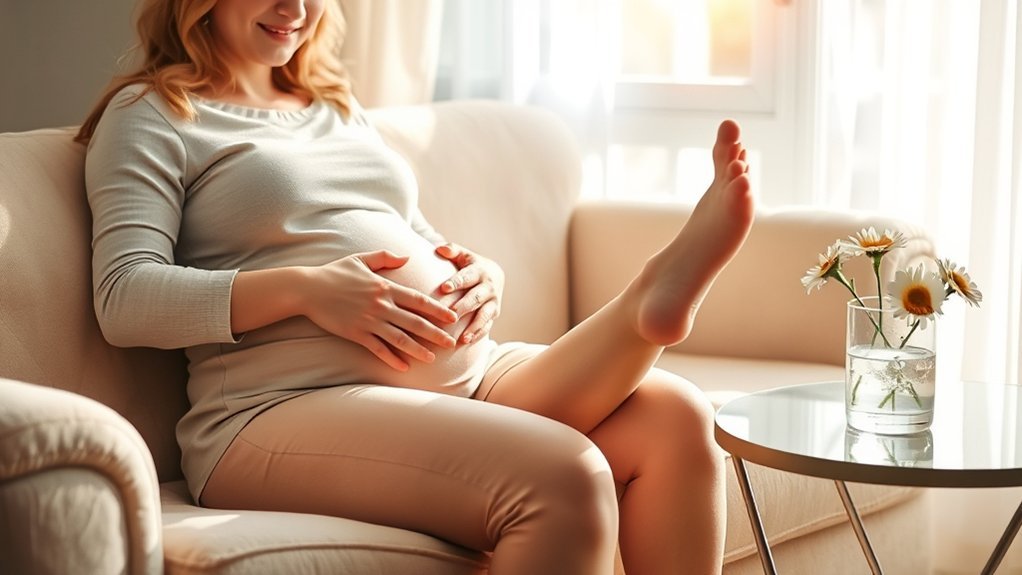
Pregnancy changes how fluid and blood move through your body. Your body holds more water, while your growing uterus can press on veins returning blood from your legs. This makes fluid more likely to collect in your feet, ankles, and lower legs.
Swelling during pregnancy, known as edema, is influenced by fluid retention, circulation changes, and pressure from the growing uterus.
Gravity also matters. Fluid tends to settle in the lower parts of your body throughout the day, so swelling may be worse after you have been standing for a long time or during hot weather.
The NHS guidance on pregnancy swelling notes that gradual swelling commonly affects the legs, ankles, feet, and fingers and tends to become more noticeable later in pregnancy.
Is Swelling Normal in Pregnancy?

Yes. Mild swelling that develops gradually, especially in both feet and ankles, is usually normal during pregnancy. It often becomes more noticeable toward the end of the day and as pregnancy progresses.
Normal swelling may improve after you rest, raise your feet, or change position. It should not automatically be treated as harmless, however, if the pattern changes suddenly or other symptoms appear.
| Common Area | What It Can Mean |
|---|---|
| Feet and Ankles | Gradual, similar swelling on both sides is common as fluid collects in the lower body. |
| Hands and Fingers | Mild puffiness can occur, but a sudden increase deserves prompt medical advice. |
| Face | Sudden or marked facial swelling can be a warning sign and should be assessed. |
Gradual pregnancy edema itself is not usually harmful to your baby. What matters is recognizing when swelling may be part of another condition.
When Should I Be Concerned About Swelling?

Be concerned when swelling appears suddenly, becomes severe, affects one side much more than the other, or comes with other warning symptoms. These patterns need medical assessment rather than home treatment.
ACOG’s preeclampsia guidance lists swelling of the face or hands, a headache that will not go away, vision changes, upper abdominal or shoulder pain, nausea or vomiting later in pregnancy, sudden weight gain, and difficulty breathing among symptoms that require attention.
Warning: Seek urgent medical care for sudden or extreme swelling with a severe or persistent headache, vision changes, severe upper abdominal pain, chest pain, trouble breathing, or a painful, red, warm, swollen leg. These symptoms can occur with serious pregnancy complications.
Normal vs. Abnormal Swelling
Normal pregnancy swelling usually builds gradually and commonly affects both feet or ankles. Abnormal swelling is more likely to appear suddenly, become severe, involve the face or hands noticeably, or occur mainly on one side.
Preeclampsia is a serious pregnancy-related high blood pressure disorder that most often develops after 20 weeks, although it can also occur after childbirth. Swelling alone does not diagnose it, which is why routine blood pressure and prenatal checks remain important.
Warning Signs to Watch
Do not judge swelling only by how uncomfortable it feels. Pay attention to where it is, how quickly it appeared, and whether another symptom started at the same time.
| Warning Sign | Action Required |
|---|---|
| Sudden facial or hand swelling | Contact your maternity care provider promptly |
| One swollen, painful, red, or warm leg | Seek urgent medical assessment |
| Persistent or severe headache with swelling | Contact your healthcare provider immediately |
| Blurred vision, flashing lights, or other vision changes | Get urgent medical care |
| Upper abdominal pain with swelling | Get urgent medical care |
| Chest pain or sudden trouble breathing | Seek emergency medical care |
Could One-Sided Leg Swelling Be a Blood Clot?
Yes. Pregnancy increases the risk of deep vein thrombosis, or DVT, and its symptoms usually affect one leg. According to the Royal College of Obstetricians and Gynaecologists, warning signs can include a red or hot swollen leg, swelling of part or all of one leg, and pain or tenderness.
A clot can travel to the lungs and cause a pulmonary embolism. Sudden unexplained shortness of breath, chest pain, coughing up blood, or collapse requires immediate emergency care.
The CDC’s urgent maternal warning signs also include extreme swelling of the hands or face and severe swelling, redness, or pain in a leg or arm.
How Can I Manage Swelling at Home?
Home care can help mild, gradual swelling feel better. The goal is to reduce prolonged pressure on your legs and encourage comfortable movement rather than trying to force fluid out of your body.
Elevating your feet and changing position regularly can make routine pregnancy swelling more comfortable.
- Raise your feet when resting. Sit or lie down with your legs supported rather than leaving your feet hanging down for long periods.
- Avoid standing still for long stretches. Change position regularly when possible.
- Keep moving gently. Short walks and simple ankle movements can help circulation if your pregnancy care provider has not advised activity restriction.
- Wear comfortable shoes and clothing. Avoid tight straps, socks, or bands that dig into swollen areas.
- Ask about compression stockings. They may improve comfort for some people, particularly when they spend long periods sitting or standing.
- Use cool water or a cool compress for comfort. Avoid extreme temperatures.
- Stay hydrated. Do not cut back on fluids simply because you are retaining fluid.
ACOG recommends about 8 to 12 cups of water a day during pregnancy. Your individual needs can differ with activity, weather, medical conditions, and your clinician’s advice.
Are There Specific Areas Where Swelling Occurs?
Routine pregnancy edema is most noticeable in the feet, ankles, lower legs, and sometimes the fingers. Location is useful because swelling that is symmetrical and gradual is different from new swelling mainly affecting one leg.
Your pattern may also change during the day. Lower-body swelling often becomes more noticeable after prolonged standing and may ease after rest.
Common Swelling Locations
These are the areas where pregnancy-related fluid retention is commonly noticed:
- Feet and Ankles: Gravity encourages fluid to collect here, especially later in the day.
- Lower Legs: Pressure from the growing uterus can slow the return of blood from the legs.
- Hands and Fingers: Mild puffiness can occur, making rings feel tighter. Remove tight rings before swelling makes them difficult to take off.
Sudden marked swelling of the face or hands is different from ordinary gradual puffiness and should be reported promptly.
Causes of Localized Swelling
Pregnancy changes circulation and fluid balance, but location helps identify whether swelling fits the usual pattern. Mild swelling on both sides is commonly related to pregnancy itself, heat, gravity, or prolonged standing.
In contrast, one-sided swelling with pain, warmth, redness, or tenderness is not something to manage as ordinary edema. It needs medical assessment for possible DVT.
What Lifestyle Changes Can Help Reduce Swelling?
Simple daily habits can make routine pregnancy swelling easier to manage. Focus on movement, hydration, comfortable positioning, and avoiding anything that tightly constricts the legs or ankles.
- Stay Hydrated: Drink regularly throughout the day instead of reducing fluids because your feet look swollen.
- Elevate Your Legs: Support your feet and legs when resting to reduce prolonged pooling in the lower body.
- Keep Moving: Walking and other pregnancy-appropriate activity can support circulation. ACOG notes that regular physical activity is safe for most uncomplicated pregnancies, but individual restrictions may apply.
- Choose Comfortable Footwear: Shoes should allow for temporary changes in foot size without tight pressure points.
- Avoid Excessively Salty Foods: A balanced diet is preferable to aggressive salt restriction unless your healthcare professional has given you specific dietary instructions.
If your pregnancy is uncomplicated, you can discuss suitable activity with your clinician and review ACOG’s pregnancy exercise guidance.
Can Swelling Indicate a More Serious Condition?
Yes. Most gradual swelling is harmless, but a change in its pattern can accompany preeclampsia, DVT, or other medical problems. Swelling should therefore be considered together with blood pressure, pain, breathing symptoms, headaches, vision changes, and how quickly it developed.
Preeclampsia may cause high blood pressure without obvious symptoms, which is one reason prenatal appointments matter. A sudden increase in swelling is more concerning when it affects your face or hands or occurs with a persistent headache, vision changes, upper abdominal pain, nausea or vomiting, or difficulty breathing.
DVT is different. It usually causes symptoms mainly in one leg, such as swelling, pain, tenderness, redness, warmth, or a heavy feeling.
Note: Do not start a diuretic, supplement, or over-the-counter medicine simply to treat pregnancy swelling unless your obstetric healthcare professional recommends it. Normal pregnancy edema is usually managed with comfort measures, while abnormal swelling needs evaluation of its cause.
Acetaminophen is used during pregnancy for pain and fever when appropriate; it is not a treatment for edema itself. If you need medicine while pregnant, discuss it with your maternity care professional. See ACOG’s acetaminophen guidance.
Frequently Asked Questions
Can swelling affect my baby’s development during pregnancy?
Mild, gradual pregnancy swelling itself is not usually harmful to your baby. The concern is when swelling is linked to a condition such as preeclampsia. Sudden or severe swelling, especially with headache, vision changes, upper abdominal pain, or breathing problems, should be assessed promptly.
Are there safe medications for swelling relief during pregnancy?
Medication is not normally needed for ordinary pregnancy edema. Acetaminophen may be appropriate for pain or fever, but it does not remove pregnancy swelling. Do not start water pills, supplements, or other medicines for edema unless your obstetric healthcare professional has recommended them for your specific situation.
How long does swelling typically last postpartum?
Pregnancy-related swelling often improves during the days and weeks after delivery as your body removes extra fluid. Seek medical advice if swelling is worsening, unusually severe, or accompanied by headache, vision changes, chest pain, breathing trouble, or a painful swollen leg because serious complications can also occur after birth.
Is swelling more common in certain pregnancy trimesters?
Yes. Gradual swelling tends to become more noticeable as pregnancy progresses and is especially common later in pregnancy. The growing uterus puts increasing pressure on veins in the lower body. However, sudden swelling at any stage should not be dismissed simply because edema can be common.
Can diet changes help prevent swelling during pregnancy?
A balanced diet and adequate hydration can support general pregnancy health, but no food reliably prevents normal pregnancy edema. Avoid excessive amounts of very salty foods rather than following a severe salt-restricted diet on your own. Ask your prenatal care professional about dietary changes if swelling is persistent or you have another medical condition.
Why is pregnancy swelling often worse at the end of the day?
Pregnancy swelling can be worse later in the day because gravity allows more fluid to collect in the feet, ankles, and lower legs while you are upright. Long periods of standing and hot weather can make this more noticeable. Resting with your feet raised may improve ordinary swelling.
Is swelling in only one leg normal during pregnancy?
One-sided leg swelling should not automatically be treated as normal pregnancy edema. A DVT usually affects one leg and may also cause pain, tenderness, redness, warmth, or heaviness. Contact your healthcare professional urgently if you develop these symptoms, and seek emergency care for chest pain or sudden breathing difficulty.
Conclusion
Most gradual swelling during pregnancy is uncomfortable rather than dangerous, especially when it affects both feet and ankles. The key is recognizing a change: sudden facial or hand swelling, severe symptoms, or one-sided painful leg swelling needs prompt medical attention. Keep your prenatal appointments and contact your maternity care team whenever the pattern does not feel normal for you.
Sources
- NHS: Normal pregnancy swelling, causes, warning signs, and comfort measures.
- American College of Obstetricians and Gynecologists: Preeclampsia symptoms and pregnancy high blood pressure guidance.
- CDC Hear Her Campaign: Urgent maternal warning signs during pregnancy and after delivery.
- Royal College of Obstetricians and Gynaecologists: DVT and pulmonary embolism symptoms during pregnancy and after birth.
- ACOG hydration guidance: Recommended water intake during pregnancy.
- ACOG exercise guidance: Physical activity and exercise during uncomplicated pregnancy.
- ACOG acetaminophen guidance: Appropriate use of acetaminophen for pain and fever during pregnancy.