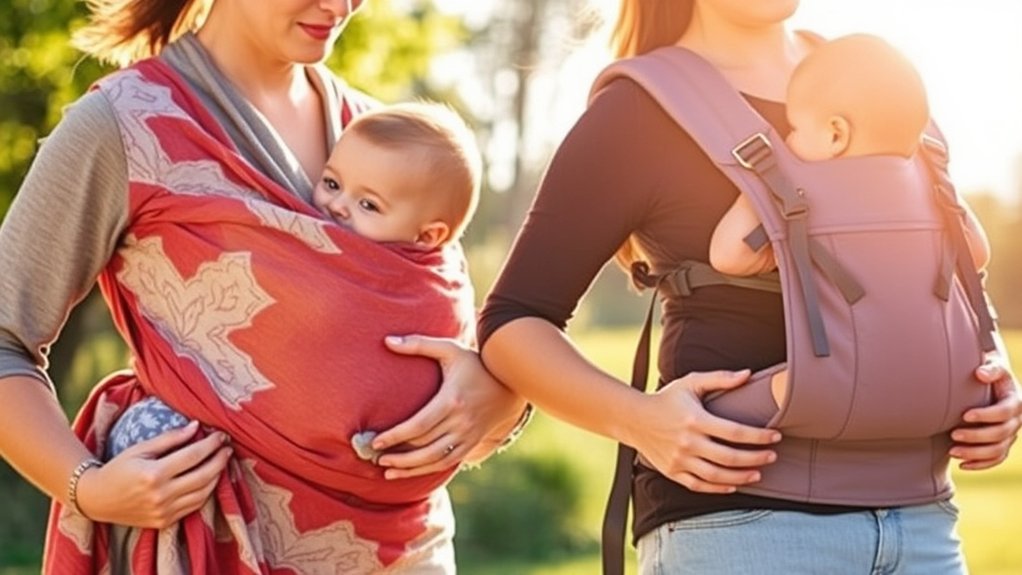
Choosing between a wrap and a carrier is one of the first decisions new parents face with babywearing. Both keep your baby close and your hands free, but they work differently and suit different lifestyles. A snug fit matters above all else, and so does finding a style that works for your body and your routine.
Quick Answer
- Wraps offer a customized, even fit and are great for extended wear, but they take practice to tie correctly.
- Structured carriers are faster to put on and easier to adjust, making them convenient for shorter trips.
- Both options are safe for newborns when used correctly and within the manufacturer’s weight and age guidelines.
- Always check that your baby’s airway is clear, their back is supported, and they are positioned in the natural “M” shape (knees above bottom).
Understanding Baby Wraps
A baby wrap is a long piece of fabric you tie around your body to hold your baby against you. It’s a versatile and close carry option that many parents love for the bond it builds.
Wrap styles vary widely. Stretchy wraps are soft and forgiving, making them popular for newborns. Woven wraps are sturdier and better suited for older or heavier babies. Traditional wraps fall somewhere in between.
Learning a few different carries, like the cradle carry or hip carry, helps you get the most out of a wrap. The key is always checking that your baby’s airways are clear and that the fabric is snug without being restrictive.
A well-tied wrap keeps your baby secure and your hands free, without sacrificing closeness.
Exploring Baby Carriers
Structured carriers offer a more ready-to-go approach to babywearing. They use buckles, straps, and padded panels to support both you and your baby with less setup time.
The main benefits of using a carrier include:
- Enhanced bonding: Close physical contact strengthens your connection with your baby.
- Versatile styles: Options include soft-structured carriers, meh dais, ring slings, and more.
- Comfort and support: Good carriers keep your baby’s spine and hips properly aligned for healthy development.
- Freedom of movement: You can move through your day easily, whether at home or out.
Try a few different styles if you can before committing. What works well for one parent may not suit another’s body or routine.
Comfort and Fit: Wraps vs. Carriers
Wraps distribute weight across a wide area of your torso, which many parents find more comfortable during long wear sessions. The fabric molds to both your body and your baby’s, giving a truly customized fit.
Structured carriers are easier to put on and take off, especially for quick outings. The tradeoff is that they can be less adaptable for different body types, and some parents find the weight distribution less even than a well-tied wrap.
Your choice depends on how often you babywear, how long each session tends to be, and how much setup time you’re willing to spend. There’s no single right answer.
Safety Considerations for Babywearing
Safe babywearing comes down to three things: correct positioning, staying within the product’s age and weight limits, and using materials that meet safety standards.
Proper Positioning Essentials
Your baby’s position affects both their comfort and their safety. Getting it right also protects your back over time.
Keep these points in mind every time you wear your baby:
- The baby’s knees should be higher than their bottom (the natural “M” position).
- Their back should maintain a gentle, natural curve.
- Their head should be supported and fully visible to you at all times.
- The fabric should be snug against your baby’s body with no loose sections.
The TICKS Safety Rule
The TICKS guidelines are a simple checklist used by babywearing educators worldwide. Before and during every carry, run through each point:
- T – Tight: The carrier or wrap should be snug, with no slack.
- I – In view at all times: You should be able to see your baby’s face by simply looking down.
- C – Close enough to kiss: Your baby’s head should be close enough that you can kiss their forehead without bending down.
- K – Keep chin off chest: There should always be a finger-width gap between your baby’s chin and their chest to keep the airway open.
- S – Supported back: Your baby’s back should be fully supported in a natural position, not slumped.
For more guidance, The Lullaby Trust offers detailed TICKS guidelines for safe sling and carrier use.
Age and Weight Limits
Every wrap and carrier has specific age recommendations and weight limits. Check these before choosing a product, and review them again as your baby grows.
Newborns need carriers that fully support the head and neck. As babies get heavier, the weight capacity of your wrap or carrier becomes a real safety factor. Exceeding it puts both of you at risk.
Always follow the manufacturer’s guidelines. A well-fitted wrap or carrier gives you freedom and connection, but safety has to come first at every stage.
Material Safety Standards
The materials in your wrap or carrier matter. Before buying, look for products that use:
- Organic or non-toxic fabrics for material sourcing
- Safety certifications from recognized organizations
- Compliance with child safety regulations in your country
- Transparent manufacturing processes
Checking certifications before you buy helps ensure your baby isn’t exposed to harmful substances. Babywearing International is a reliable nonprofit resource for safety standards and educator referrals.
Tips for Using Wraps Effectively
Wraps have a learning curve, but a little practice goes a long way. Here’s how to get the most out of them:
- Start with a stretchy wrap for newborns. They’re forgiving while you’re learning to tie. Switch to a woven wrap as your baby gets heavier, since woven fabric offers more structured support.
- Practice the tie before adding your baby. Get comfortable with the motions on a doll or stuffed animal first.
- Check for slack. Every pass of fabric should be snug with no gaps or loose sections. If you can pinch loose fabric, tighten it.
- Do a final safety check. Before walking away, run through the TICKS points above and confirm your baby is in the correct “M” position.
- Take breaks as needed. Both you and your baby benefit from regular position changes during longer wear sessions.
Tips for Using Carriers Safely
Structured carriers are simpler to use than wraps, but they still require attention to detail. Keep these habits in place every time:
- Read the instructions fully. Each carrier model has its own setup steps. Don’t rely on guesswork.
- Inspect before each use. Check all buckles, straps, and stitching for signs of wear or damage before putting your baby in.
- Adjust for every wearer. If both parents share the same carrier, reset the straps and waistband for each person’s body.
- Avoid high-risk activities. Don’t cook over an open flame, ride a bike, or do anything that could put a fall risk onto your baby while carrying.
- Know when to retire it. If a buckle cracks, stitching frays, or the fabric thins significantly, replace the carrier rather than continuing to use it.
Frequently Asked Questions
Can I Use Wraps and Carriers With Newborns?
Yes. Both wraps and carriers can be used with newborns. Choose a product with the right sizing for a snug fit, and follow all positioning guidelines to keep your baby’s head, neck, and airway properly supported.
How Do I Clean My Baby Wrap or Carrier?
For most wraps, spot clean with gentle soap and water, then air dry flat. Always check the care label first, since some materials require hand washing or specific temperature settings. Avoid harsh detergents that could irritate your baby’s skin.
What Is the Best Material for Baby Wraps?
Cotton and cotton blends are the most popular choices because they’re breathable, soft, and easy to care for. Linen blends offer more structure and are good for warmer climates. Whatever you choose, confirm the fabric is free from harmful dyes or treatments.
Can Both Parents Use the Same Wrap or Carrier?
Yes, most wraps and carriers can be shared between caregivers. Adjust the straps and fit for each person before every use. A carrier that fits one parent properly may feel very different on another body, so take the time to reset it fully.
How Long Can I Wear My Baby in a Wrap or Carrier?
There’s no fixed time limit, but pay attention to your baby’s comfort and your own. Many parents wear their babies for several hours a day without issues, as long as the carry position is correct and both feel comfortable. Take breaks, and watch for any signs of overheating or discomfort.
Conclusion
Choosing between wraps and carriers comes down to your lifestyle, your body, and how much setup time you want. Wraps offer a close, even fit that’s great for long sessions. Carriers are faster and more straightforward for everyday use. Both can provide a strong bonding experience when used safely.
Start with the positioning basics, follow the manufacturer’s guidelines, and use the TICKS checklist as your daily habit. Get those things right, and whichever option you choose will serve you and your baby well.
