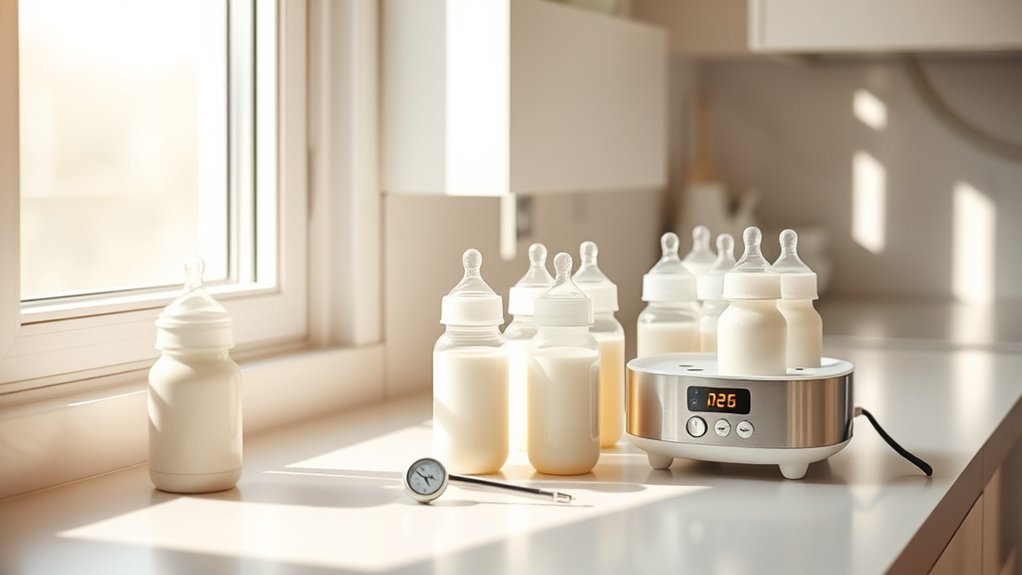
When it comes to warming bottles, your baby’s safety and nutrition are paramount. You want to avoid any risks associated with improper heating methods. It’s vital to choose gentle warming techniques that preserve nutrients and eliminate hot spots. Knowing the right methods and precautions can make a significant difference. Let’s explore the best practices to guarantee every feeding is safe and effective for your little one.
Understanding the Importance of Proper Bottle Warming
When you’re warming a bottle for your little one, it’s crucial to get it right, as improper warming can affect both the quality of the milk and your baby’s comfort.
Using high heat can destroy essential nutrients, while uneven warming may leave hot spots that can burn your baby’s mouth. Quality matters, so always prioritize gentle warming methods like warm water baths or bottle warmers specifically designed for this purpose.
High heat can ruin nutrients and create hot spots. Opt for gentle warming methods like warm water baths or bottle warmers.
Remember, your baby may be sensitive to temperature changes, so test the milk on your wrist before feeding. This guarantees a pleasant experience for your little one and helps establish a positive feeding routine.
Taking these steps not only safeguards your baby’s health but also fosters trust and comfort during feeding times.
Choosing the Right Bottle Warmer
When it comes to choosing the right bottle warmer, understanding the different types available is essential.
You’ll want to contemplate key features that fit your lifestyle and needs, ensuring a smooth feeding experience for your baby.
Let’s explore these options together so you can make an informed decision.
Types of Bottle Warmers
Choosing the right bottle warmer can feel overwhelming, especially with the variety of options available.
To simplify your decision, consider these three main types of bottle warmers:
- Electric Bottle Warmers: These plug into an outlet and heat milk quickly and evenly. They’re perfect for home use.
- Portable Bottle Warmers: Ideal for travel, these battery-operated warmers can heat bottles on the go. They’re compact and convenient for outings.
- Water Bath Warmers: These use warm water to gently heat bottles, minimizing the risk of hot spots. They’re often slower but safer for delicate formulas.
Key Features to Consider
As you explore options for a bottle warmer, it’s essential to contemplate key features that can enhance your experience and meet your needs. Consider aspects like speed, compatibility, and safety to guarantee you choose the best one for your lifestyle.
| Feature | Importance |
|---|---|
| Heating Speed | Quick warming saves you time |
| Size Compatibility | Fits various bottle types |
| Auto Shut-Off | Prevents overheating and hazards |
| Temperature Control | Guarantees milk is warmed safely |
| Portability | Easy to carry for travel |
Avoiding Microwave Heating
Although microwaves offer a quick way to heat bottles, it’s important to steer clear of this method due to safety concerns.
Microwaves may heat bottles quickly, but safety concerns make this method unwise for your little one.
Microwaving can cause uneven heating, leading to hot spots that might scald your little one. Additionally, the plastic used in many bottles can release harmful chemicals when heated.
Here are three reasons to avoid microwave heating:
- Risk of burns: Hot spots can form, making it dangerous for your baby.
- Chemical leaching: Some plastics may release toxins when heated.
- Nutrient loss: Microwaving can alter the nutritional quality of milk or formula.
The Safe Water Bath Method
When it comes to warming bottles safely, the water bath method is a reliable choice.
You’ll need a few basic pieces of equipment and a clear step-by-step process to guarantee everything goes smoothly.
Let’s also highlight some important safety precautions to keep in mind while you warm your baby’s milk.
Equipment Needed
To safely warm bottles using the water bath method, you’ll need a few essential items.
This approach guarantees your baby’s milk reaches the right temperature without the risk of overheating.
Here’s what you’ll need:
- A Large Bowl or Pot: This will hold enough hot water to submerge the bottle without spilling.
- Hot Water: Fill the bowl or pot with hot (not boiling) water, ideally around 120°F (49°C) for safe warming.
- A Thermometer: This helps you check the water temperature, confirming it’s safe and effective for warming.
Having these items on hand makes the process smoother and safer, so you can focus on what really matters—feeding your little one with care and love.
Step-by-Step Process
Warming your baby’s bottle using the safe water bath method is straightforward and effective.
Start by filling a bowl or pot with warm water—make sure it’s not boiling. Next, remove the bottle’s nipple and cap to prevent pressure build-up.
Submerge the bottle in the warm water, making certain the water level is below the cap. Let it sit for about 5 to 10 minutes, checking the temperature occasionally.
Once it’s warmed, gently shake the bottle to evenly distribute the heat. Test the milk on your wrist to confirm it’s comfortable.
This method preserves nutrients while keeping the milk safe for your little one. You’ll have peace of mind knowing you’re providing a gentle warming experience.
Safety Precautions
While using the safe water bath method to warm your baby’s bottle, it’s crucial to follow specific safety precautions.
By taking these steps, you guarantee your baby’s safety and comfort.
- Check the Water Temperature: Make sure the water isn’t boiling. It should be warm but not hot enough to scald.
- Avoid Direct Heat: Never place the bottle directly on the stove or in boiling water, as this can create hot spots and risk burns.
- Test the Milk: Always test the milk’s temperature on your wrist before feeding. It should feel lukewarm, not hot.
Monitoring Temperature Carefully
Monitoring the temperature of warming bottles is essential for guaranteeing your baby’s safety and comfort. Too hot or too cold can lead to discomfort or even burns. To make this process easier, use a thermometer or test the milk on your wrist before feeding.
Here’s a quick reference table to help you:
| Temperature Range | Safety Level |
|---|---|
| Below 98°F (37°C) | Too Cold |
| 98°F – 104°F (37°C – 40°C) | Just Right |
| Above 104°F (40°C) | Too Hot (Dangerous) |
Always remember to shake the bottle gently after warming to distribute the heat evenly. Keeping a close eye on the temperature not only guarantees safety but also provides a comforting experience for your little one.
Cleaning Your Bottle Warmer Regularly
Cleaning your bottle warmer regularly is essential to guarantee it functions properly and maintains a safe environment for your baby’s food.
You’ll need a few simple supplies, like mild soap and a soft cloth, to keep it in top shape.
Importance of Regular Cleaning
Regularly maintaining your bottle warmer is essential to guarantee it functions effectively and safely. Neglecting this routine can lead to buildup of bacteria, which can harm your baby’s health.
Here are three reasons why regular cleaning is vital:
- Hygiene: A clean warmer prevents the growth of harmful bacteria, ensuring your bottle is safe for your little one.
- Efficiency: Regular maintenance keeps the warmer functioning at its best, saving you time and energy when warming bottles.
- Longevity: Cleaning your device can extend its lifespan, making sure it serves you well for years to come.
Cleaning Supplies Needed
To keep your bottle warmer in top shape, having the right cleaning supplies on hand makes the process easier and more effective.
Start with a soft cloth or sponge, which won’t scratch surfaces. You’ll also need a mild dish soap to remove any residue without leaving harsh chemicals behind.
White vinegar is excellent for tackling mineral buildup—just mix it with water for a natural solution. A small brush can help you reach tight spots, ensuring every corner is clean.
Finally, keep some paper towels handy for quick drying.
Regularly cleaning these supplies will save you time and effort in the long run, and it’ll keep your bottle warmer functioning properly for your little one’s needs.
Timing Is Key: How Long to Warm
When it comes to warming bottles, timing plays an essential role in ensuring your baby’s milk reaches the perfect temperature. Warming it too quickly can create hotspots, while warming it too slowly can leave your baby hungry.
Here’s a simple guide to help you:
- Microwave: 15-30 seconds for 4-6 ounces. Always shake well to evenly distribute heat.
- Warm Water Bath: 5-10 minutes in a bowl of warm water. This method is more gentle and helps preserve nutrients.
- Bottle Warmer: 3-5 minutes, depending on the model. Follow the manufacturer’s instructions for best results.
Testing the Milk Temperature
Before feeding your baby, it’s crucial to check the milk temperature to guarantee it’s safe and comfortable for them.
The best way to do this is by applying a few drops to the inside of your wrist. It should feel warm, not hot. If it’s too hot for you, it’s definitely too hot for your little one.
Another method is to gently swirl the bottle and observe the milk’s consistency; if it feels even in temperature, it’s likely ready to go.
Always err on the side of caution—if you’re unsure, let it cool a bit more. This small step can prevent discomfort or burns, ensuring a pleasant feeding experience for both you and your baby.
Keeping Bottles Secure During Warming
Keeping your baby’s bottles secure during warming is essential for a safe and efficient process. When bottles aren’t secure, they can tip over or spill, leading to a mess or even contamination.
Here are three key tips to guarantee they stay put:
- Use a stable surface: Always place bottles on a flat, non-slip surface to reduce the risk of tipping.
- Monitor the warming process: Stay close and keep an eye on the bottles to prevent any accidents.
- Secure lids tightly: Confirm that the lids are on properly to avoid leaks and spills.
Learning From Expert Recommendations
How can you guarantee the safest warming experience for your baby’s bottles? Start by following expert recommendations. They emphasize consistency in temperature and avoiding overheating. Here’s a quick guide to help you out:
| Tip | Description |
|---|---|
| Use a thermometer | Verify the bottle’s temperature is safe. |
| Warm gradually | Heat slowly to preserve nutrients. |
| Test before serving | Always check the temperature on your wrist. |
| Avoid microwave | It can create hot spots in the milk. |
| Follow manufacturer’s guidelines | Stick to specific warming instructions. |
Frequently Asked Questions
Can I Reuse Warmed Milk for Later Feeding?
You shouldn’t reuse warmed milk for later feeding. Bacteria can grow in it after warming. It’s best to discard any leftover milk and prepare a fresh bottle for your baby’s next feeding. Your baby’s safety matters!
What Types of Bottles Are Best for Warming?
For warming, choose bottles made from glass or BPA-free plastic. They distribute heat evenly and retain warmth longer. Avoid thin plastic bottles, as they can warp or leach chemicals when exposed to heat.
Are There Any Signs of Overheating Milk?
If your milk’s steaming hotter than a summer day, it’s likely overheated. Look for signs like bubbling, a burnt smell, or a thick texture. Trust your instincts; if it seems off, toss it.
How Do I Store Leftover Milk Safely?
To store leftover milk safely, refrigerate it immediately in a clean container. Use it within 24 hours, and always check for spoilage before feeding. If in doubt, it’s better to discard it for safety.
Can Bottle Warmers Be Used for Baby Food?
Yes, you can use bottle warmers for baby food. Just make sure you follow the manufacturer’s instructions to prevent overheating and maintain the food’s nutrients. Always check the temperature before serving to your little one.
Conclusion
In the journey of parenthood, warming your baby’s bottle can feel like maneuvering a delicate dance. By following these safety tips, you guarantee each feeding is as nurturing as a mother’s embrace. Remember, gentle warming methods and careful temperature checks are your best allies in preserving nutrients and preventing hot spots. Trust your instincts, stay vigilant, and let each bottle be a step toward a healthy, happy feeding experience. After all, every drop matters in nurturing your little one.
