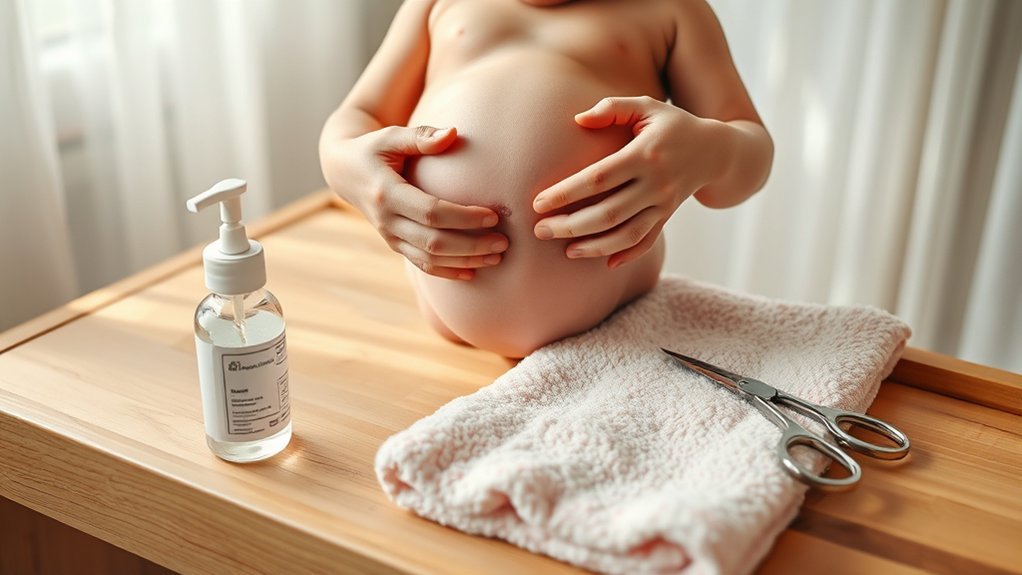
Caring for your baby’s umbilical cord stump is like nurturing a fragile flower; it needs the right conditions to thrive. You might wonder when to start and how to clean it properly, as well as what signs of infection to look for. It’s vital to guarantee this small part of your newborn’s body heals correctly. The journey to understanding proper care begins now, and it’s fundamental for your baby’s well-being.
Understanding the Umbilical Cord Stump
When you bring your newborn home, understanding the umbilical cord stump is essential for their care. This small, dried-out remnant of the umbilical cord typically appears dark and shriveled. It’s normal for the stump to change colors as it heals, evolving from yellowish to brown. You may notice some crusting at the base—this is part of the natural healing process. Keep the area clean and dry, avoiding any lotions or ointments unless advised by your pediatrician. If you see signs of infection, like redness, swelling, or discharge, don’t hesitate to reach out to your healthcare provider. Remember, most stumps fall off within one to three weeks, and your baby’s care routine will soon become easier as they move into this new phase.
When to Start Umbilical Cord Care
After your baby is born, you should start umbilical cord care right away. You’ll want to keep an eye out for any signs of infection and learn the best cleaning techniques to keep the stump healthy. This initial care is essential for your baby’s well-being, so let’s explore what you need to know.
Initial Care After Birth
As soon as your baby is born, you’ll want to start caring for the umbilical cord to promote healing and prevent infection. Follow these initial care steps to guarantee the best outcome for your baby’s cord stump.
| Step | Action |
|---|---|
| Keep it clean | Gently clean the area with a soft cloth. |
| Allow it to dry | Expose the stump to air whenever possible. |
| Dress it properly | If needed, use a loose diaper to avoid irritation. |
These simple actions can make a significant difference in your baby’s comfort. Remember, it’s essential to monitor the cord stump regularly and maintain a clean environment around it. You’re doing great, and your care will help your little one thrive!
Signs of Infection
How can you tell if your baby’s umbilical cord stump is infected? Look for redness, swelling, or a foul odor around the stump. If you notice any discharge, especially if it’s yellow or green, that could indicate an infection. Keep an eye on your baby’s temperature as well—if they develop a fever, it’s essential to consult a healthcare professional. Additionally, if your baby seems unusually fussy or irritable, it might be a sign that something’s not right. Trust your instincts; if you’re concerned, don’t hesitate to reach out to your pediatrician. Early intervention can make a significant difference, ensuring your little one stays healthy and happy. Remember, you’re not alone in this journey—support is always available.
Cleaning Techniques Recommended
If you notice signs of infection around your baby’s umbilical cord stump, it’s important to address the issue promptly. Start cleaning the area daily with a gentle touch. Use a clean, damp cloth or cotton swab with warm water; avoid alcohol or antiseptics, as they can irritate. Gently wipe around the stump, removing any discharge or crust. Pat it dry with a clean, soft cloth, ensuring it stays dry. Always wash your hands before and after handling the stump to prevent introducing bacteria. Allow the stump to air out by folding your baby’s diaper below it to avoid moisture buildup. Keep an eye on the stump; if it’s red, swollen, or has a foul odor, consult your pediatrician for further advice.
Cleaning the Umbilical Cord Stump
Cleaning the umbilical cord stump is essential for preventing infections and promoting healing, so it’s important to approach this task gently and thoughtfully. Start by washing your hands thoroughly with soap and water. Then, use a clean, damp cloth or cotton swab to gently wipe around the stump. Avoid using alcohol or other harsh substances, as these can irritate the area. Make certain to clean any visible debris, but be careful not to pull or tug at the stump itself. After cleaning, allow the area to air dry completely before dressing it, if necessary. Remember, keeping the stump clean and dry helps guarantee a smooth healing process, so check it daily and maintain your routine with care.
Signs of Infection to Watch For
Although caring for your newborn’s umbilical cord stump is vital, it’s equally important to be vigilant for signs of infection. Keeping an eye on the area will help you guarantee your little one stays healthy. Watch for these key symptoms:
Caring for your newborn’s umbilical cord stump is essential; watch for infection signs to ensure their health and comfort.
- Redness or swelling around the stump
- A foul odor emanating from the area
- Persistent discharge, especially if it’s green or yellow
- Fever in your newborn, even if the cord looks fine
- Increased fussiness or irritability
If you notice any of these signs, it’s important to address them promptly. Early detection can make a significant difference in your baby’s comfort and health. Always trust your instincts—if something doesn’t seem right, don’t hesitate to seek advice.
When to Contact a Pediatrician
It’s important to be vigilant about your baby’s umbilical cord care. If you notice any signs of infection, like redness or discharge, or if there’s excessive bleeding, don’t hesitate to contact your pediatrician. Trust your instincts—your baby’s health is always a priority.
Signs of Infection
Recognizing the signs of infection in your baby’s umbilical cord area is essential for their health and well-being. If you notice any of the following symptoms, it’s vital to contact your pediatrician promptly:
- Redness or swelling around the cord
- Foul-smelling discharge or pus
- Warmth in the area surrounding the cord
- Persistent crying or irritability from your baby
- Fever of 100.4°F (38°C) or higher
Trust your instincts as a parent; if something feels off, don’t hesitate to reach out for professional advice. Early detection can make a significant difference in your baby’s recovery. Remember, it’s always better to be cautious when it comes to your little one’s health.
Excessive Bleeding Issues
How can you tell if your baby is experiencing excessive bleeding from the umbilical cord? Look for signs like consistent bleeding that lasts longer than a few minutes or a significant amount of blood soaking through the dressing. If you notice a steady drip or a large clot forming, it’s vital to take action. Excessive bleeding can indicate a problem that needs immediate attention. Trust your instincts; if something feels off, don’t hesitate to contact your pediatrician. They’re there to help you navigate any concerns. Remember, it’s always better to err on the side of caution when it comes to your baby’s health. Keeping an open line of communication with your healthcare provider is essential during this time.
What to Expect as the Stump Heals
As the stump heals, you might notice changes that can be both reassuring and concerning. It’s important to be aware of what’s normal during this process. Here’s what you can expect:
- The stump may shrivel and turn dark, which is a natural part of healing.
- Some dried blood or discharge might be present; this is typically normal.
- A faint odor can develop, but it shouldn’t be strong or foul.
- Redness around the stump is common but watch for spreading redness.
- It should eventually fall off, usually within one to three weeks.
Keep an eye on these signs, and don’t hesitate to reach out to your healthcare provider if you have any concerns. Your baby’s comfort and health are paramount.
Frequently Asked Questions
Can I Use Alcohol on the Umbilical Cord Stump?
No, you shouldn’t use alcohol on the umbilical cord stump. It can irritate the skin and delay healing. Instead, keep the area clean and dry, allowing it to heal naturally for the best results.
How Long Does the Umbilical Cord Stump Usually Take to Fall Off?
The umbilical cord stump usually falls off within one to three weeks after birth. You’ll want to keep it clean and dry, watching for any signs of infection during this healing process. Stay attentive!
Is Bleeding Normal After the Stump Falls Off?
It’s normal to see a bit of bleeding after the stump falls off, but it should be minimal. If you notice excessive bleeding or signs of infection, contact your pediatrician for guidance.
Can I Give My Baby a Bath With the Cord Stump?
You shouldn’t give your baby a bath with the cord stump still attached. It’s best to stick with sponge baths until the stump falls off and the area heals completely to prevent infection.
What Should I Do if the Stump Smells Bad?
If the stump smells bad, gently clean it with a soft cloth and warm water. Keep it dry and exposed to air. If the odor persists or worsens, contact your pediatrician for further advice.
Conclusion
Caring for your baby’s umbilical cord stump might feel challenging, but it’s a natural process that most parents navigate successfully. By following the steps outlined and keeping a close eye on the stump, you’re fostering a healthy healing environment. Remember, the belief that keeping the area covered aids in healing isn’t necessary; fresh air is beneficial. Trust your instincts, and don’t hesitate to reach out to your pediatrician if anything concerns you. You’re doing a great job!
