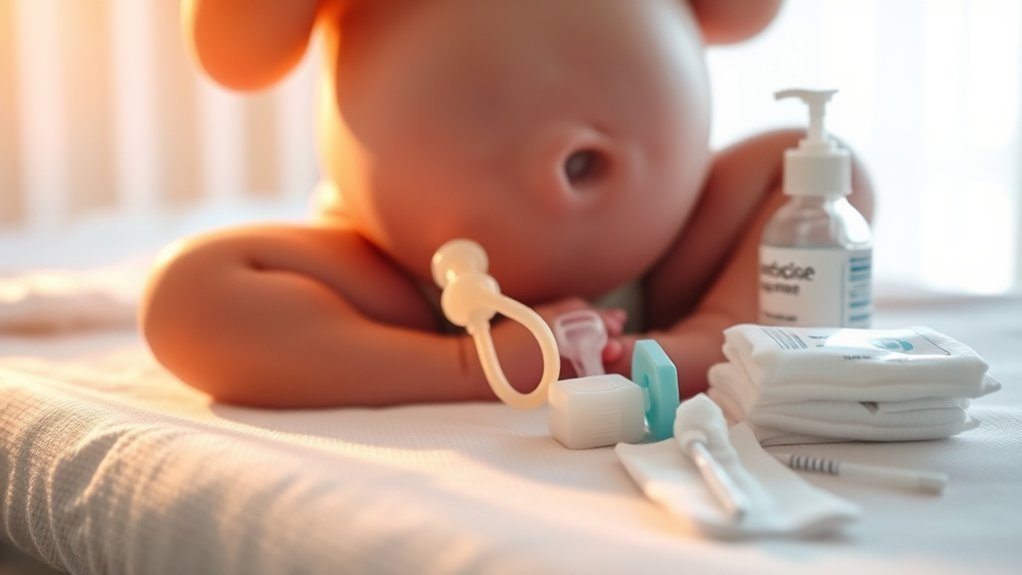
Steering through the world of newborn care often feels like stepping into uncharted territory, especially when it comes to umbilical cord care. This small yet significant remnant of your baby’s prenatal life requires attention and understanding. You might have questions about cleaning, signs of infection, or bathing your baby before it falls off. Addressing these concerns can help guarantee your newborn’s health and comfort during this delicate time. Let’s explore what you need to know.
What Is the Umbilical Cord and Why Is It Important?
The umbilical cord is an essential lifeline that connects a developing fetus to the placenta, providing necessary nutrients and oxygen while removing waste products. This flexible, tube-like structure typically measures about 20 inches in length and contains three blood vessels: two arteries and one vein. The arteries carry deoxygenated blood away from the fetus, while the vein returns oxygenated blood rich in nutrients. Understanding the importance of the umbilical cord helps you appreciate its role in fetal development. It not only supports growth but also safeguards the fetus from potential infections. After birth, the cord is clamped and cut, marking a significant change. Its health during pregnancy is critical for ensuring a healthy start for your newborn.
How Should I Care for the Umbilical Cord Stump?
After the umbilical cord is cut, the remaining stump requires proper care to promote healing and prevent infection. Keep the area clean and dry. Clean the stump gently with mild soap and water during bath time, ensuring you rinse thoroughly. Avoid using alcohol or any ointments unless directed by a healthcare provider.
| Dos | Don’ts |
|---|---|
| Keep the stump dry | Submerge in water |
| Clean gently | Pull or tug at it |
| Watch for signs of infection | Cover with tight bandages |
Monitor the stump for any signs of infection, such as redness or discharge. If you notice anything unusual, contact your pediatrician for guidance. Your attentive care will aid in healing.
When Can I Expect the Cord Stump to Fall Off?
You can typically expect the umbilical cord stump to fall off within one to three weeks after birth. However, several factors can influence this timeline, including your baby’s overall health and how you’ve been caring for the stump. It’s also important to watch for any signs of infection, which may require prompt attention.
Typical Timeline for Healing
Typically, the umbilical cord stump falls off within one to three weeks after birth. During this time, it’s important to keep the area clean and dry to promote healing. You might notice the stump changing color, often turning brown or black as it dries out. This is a normal part of the process and shouldn’t cause alarm.
As you monitor the stump, look for any signs of infection, such as redness, swelling, or foul odor. If you notice these symptoms, it’s best to consult your pediatrician. Most importantly, avoid pulling or manipulating the stump; let it fall off naturally. Once it does, the area may take a few days to fully heal, but you can care for your baby normally during this period.
Factors Influencing Stump Loss
While every baby is unique, several factors can influence when the umbilical cord stump will fall off. One key factor is the baby’s gestational age; premature infants may experience a longer healing process. Additionally, the stump’s care plays a crucial role; keeping it clean and dry can encourage quicker separation. Environmental factors, such as temperature and humidity, can also affect healing. If your baby has a medical condition that impacts healing, such as diabetes, this might prolong stump retention as well. Typically, you can expect the stump to fall off between one to three weeks after birth, but it is important to monitor the area and maintain proper care throughout this period for ideal healing.
Signs of Infections to Watch
How can you tell if your baby’s umbilical cord stump is infected? Look for signs such as redness, swelling, or a foul smell around the stump. If you notice pus or discharge, that’s a concerning indicator too. Your baby might also show signs of discomfort, like excessive crying or fussiness, especially when the area is touched. Fever can be another signal of infection, so monitor your baby’s temperature closely. If you observe any of these symptoms, it’s crucial to contact your pediatrician promptly. Early detection can help prevent complications and guarantee proper treatment. Remember, while some discharge and mild redness can be normal as the stump heals, significant changes should always be addressed with medical advice.
What Should I Do if the Cord Stump Becomes Wet?
If you notice that the cord stump has become wet, it’s important to address the situation promptly to prevent any potential complications. You should gently clean the area with a soft, damp cloth and pat it dry. Avoid using alcohol or other harsh substances, as these can irritate the skin. Confirm that the stump is exposed to air when possible, as this helps it to dry out and heal properly.
Here’s a quick reference table for your convenience:
| Action | Description |
|---|---|
| Clean | Use a soft, damp cloth |
| Dry | Pat the area gently with a towel |
| Expose to Air | Keep the stump uncovered when possible |
Are There Any Signs of Infection I Should Watch For?
After verifying the cord stump is clean and dry, it’s important to monitor it for any signs of infection. Look for redness around the stump, which can indicate irritation or infection. If you notice any swelling or a foul odor emanating from the area, these are also concerning signs. Additionally, watch for any discharge that appears yellow or green, as this may signal an infection. Your baby may also exhibit increased fussiness or a fever, which can be linked to an infection. If you observe any of these symptoms, don’t hesitate to contact your pediatrician for guidance. Early intervention can help prevent complications and verify your baby remains healthy during this healing process.
Can I Give My Baby a Bath Before the Cord Stump Falls Off?
You might wonder if it’s safe to give your baby a bath before the umbilical cord stump falls off. It’s important to understand the guidelines for bathing newborns, as wetting the cord can increase the risk of infection. Let’s explore the best practices to keep your baby safe and comfortable during this time.
Bathing Guidelines for Newborns
Many new parents wonder about the best practices for bathing their newborn, especially when it comes to the umbilical cord stump. It’s important to avoid submerging your baby in water until the stump falls off, which usually happens within one to three weeks. Instead, opt for sponge baths during this period. Use a soft washcloth and warm water to gently clean your baby’s face, neck, and body while avoiding the stump. Keep the umbilical area dry and exposed to air to promote healing. Always make certain your baby is securely supported and never leave them unattended during bath time. Following these guidelines helps protect the cord stump while keeping your baby clean and comfortable.
Risks of Wet Cord
While it’s tempting to give your baby a bath before the umbilical cord stump falls off, doing so can pose several risks. A wet cord stump can create a breeding ground for bacteria, increasing the chance of infection. When the stump is wet, it may not dry out properly, delaying the natural healing process. This prolonged exposure to moisture can also lead to irritation and discomfort for your baby. Instead of a full bath, consider sponge bathing your baby to keep the area clean while keeping the cord stump dry. Always monitor the stump for any signs of infection, such as redness or discharge. Prioritizing the stump’s health will help guarantee a smooth shift as it eventually falls off.
Is It Normal for the Cord Stump to Change Color?
How concerning is it when the cord stump changes color? It’s common for the cord stump to undergo color changes during the healing process. While some variations can be normal, others may warrant your attention.
Here are some typical color changes you might notice:
- Yellow: Indicates normal healing; often due to the presence of pus.
- Brown: A sign of dried blood; usually harmless.
- Green: May suggest a possible infection; monitor for other symptoms.
- Black: Seen as the stump dries out; typically not alarming.
- Red: Could indicate irritation or infection; consult your pediatrician.
Always trust your instincts. If you’re unsure or if the color change is accompanied by other concerning symptoms, don’t hesitate to reach out to your healthcare provider.
What Should I Avoid Doing When Caring for the Umbilical Cord?
When caring for your baby’s umbilical cord, certain practices can hinder the healing process or increase the risk of infection. Avoid covering the cord stump with tight clothing or diapers, as this can trap moisture and bacteria. Don’t use alcohol or other harsh antiseptics; they can irritate the skin and delay healing. Refrain from pulling on the cord stump, even if it seems loose, as this can cause bleeding. Keep the area clean and dry, but don’t submerge your baby in water until the stump falls off. Finally, avoid any products like lotions or powders near the cord stump, as they may introduce irritants. Always consult your pediatrician if you notice any signs of infection or unusual changes.
Frequently Asked Questions
Can I Use Alcohol on the Umbilical Cord Stump?
You shouldn’t use alcohol on the umbilical cord stump. Instead, keep it clean and dry, allowing it to heal naturally. Consult your pediatrician for specific care instructions to guarantee your baby’s comfort and safety.
How Often Should I Check the Cord Stump?
You should check the cord stump daily for any signs of infection, such as redness or discharge. Keeping it clean and dry is essential, so monitor it closely during your baby’s first few weeks.
Is It Safe for Siblings to Touch the Cord Stump?
While it’s tempting for siblings to touch the cord stump, it’s best to keep hands away. Think of it as a fragile flower; gentle care helps it bloom properly, ensuring your baby’s health remains intact.
Will the Cord Stump Leave a Scar?
Yes, the cord stump can leave a small scar once it falls off and heals. Most scars are minimal and fade over time, but caring for the area properly can help minimize any scarring.
Can I Use Baby Lotion Near the Cord Stump?
When it comes to caring for your baby’s umbilical cord stump, it’s best to avoid using baby lotion nearby. Keeping the area clean and dry helps it heal properly, ensuring a smooth recovery without complications.
Conclusion
In conclusion, caring for your baby’s umbilical cord stump is like nurturing a delicate flower; it requires attention and a gentle touch. By keeping the area clean and dry, watching for signs of infection, and allowing nature to take its course, you support your baby’s healthy progression into the world. Remember, if you have any concerns, don’t hesitate to reach out to your pediatrician for guidance. Your peace of mind is just as important as your baby’s well-being.
