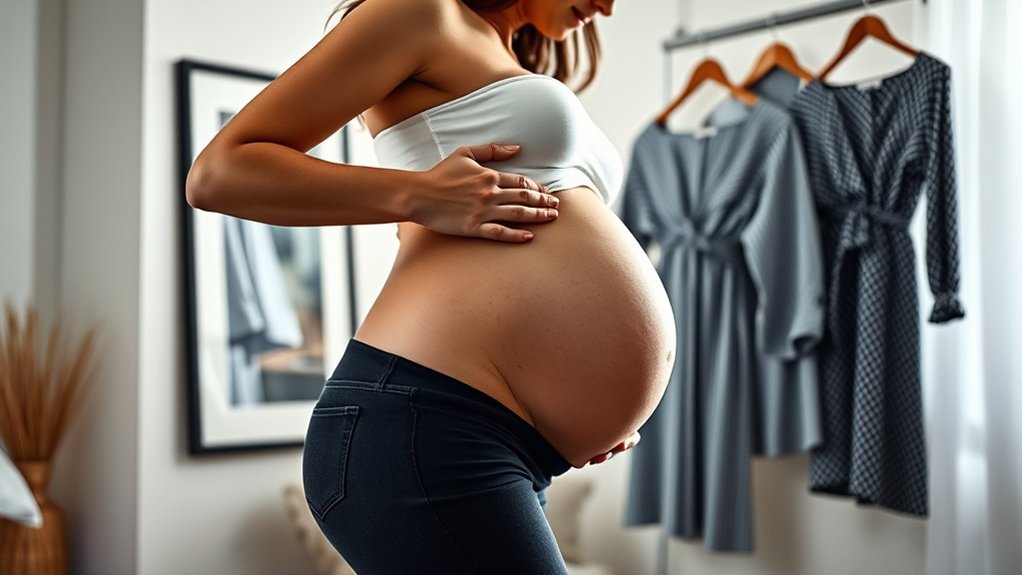
With twins, your normal weight gain depends on your pre-pregnancy BMI, but most people should gain about 37 to 54 pounds total. In the first trimester, you’ll usually gain 4 to 6 pounds. In the second trimester, aim for about 1.5 to 2 pounds per week, then about 1.5 pounds weekly in the third trimester. Hitting at least 24 pounds by 24 weeks is linked to better outcomes, and more guidance can help.
How Much Weight Should You Gain With Twins?

If you’re carrying twins, your recommended weight gain depends on your starting BMI. You should use your body mass index to set an appropriate weight gain target for pregnancy.
If you’re underweight, aim to gain 50 to 62 pounds; if your BMI is normal, target 37 to 54 pounds; if you’re overweight, aim for 31 to 50 pounds.
In the first trimester, you’ll usually gain about 4 to 6 pounds. In the second and third trimesters, expect about 1.5 pounds each week.
Your health care provider can confirm the right weight range for you and monitor your progress. Reaching at least 24 pounds by week 24 is linked with lower preterm labor risk in twins.
A total gain of 35 to 45 pounds is associated with favorable full-term outcomes. Moreover, maintaining a balanced diet during your pregnancy can help support your overall well-being and manage blood sugar levels. Track your weight steadily, and protect your autonomy with evidence-based prenatal care.
Twin Pregnancy Weight Gain by Trimester
During a twin pregnancy, weight gain should follow a trimester-specific pattern to support fetal growth and maternal health.
In the first trimester, you may gain about 4 to 6 pounds total, even if nausea limits intake. If you have a normal BMI, your twin pregnancy weight gain should then accelerate in the second trimester, when weight gain recommendations call for about 1.5 to 2 pounds per week.
In the third trimester, you should usually gain about 1.5 pounds weekly as fetal demands rise. For a healthy pregnancy, aim for a total weight gain of 37 to 54 pounds. Monitoring weight gain is crucial to ensure both maternal and fetal health during this period.
Meeting these targets may require adequate calories per day, individualized to your needs. Use weekly monitoring to track progress, and consult healthcare providers if your pattern differs from expected ranges.
These guidelines help you protect fetal development while preserving your autonomy and clinical safety throughout pregnancy.
How Fast Should Twin Pregnancy Weight Gain Happen?
Twin pregnancy weight gain should be gradual at first and then become steady as the pregnancy advances.
In the first trimester, you’ll usually gain about 4 to 6 pounds as your body adapts to carrying multiples. After that, your twin pregnancy should show a consistent pace of about 1.5 pounds per week in the second trimester and third trimester. This steady weight gain supports fetal growth and helps you reach an expected total weight gain of about 24 pounds by the end of the second trimester. That milestone matters because it’s linked to lowering preterm labor risk and protecting your health. Additionally, regular monitoring of nutritional status is essential to ensure both mother and babies remain healthy throughout the pregnancy.
What Affects Twin Pregnancy Weight Gain?
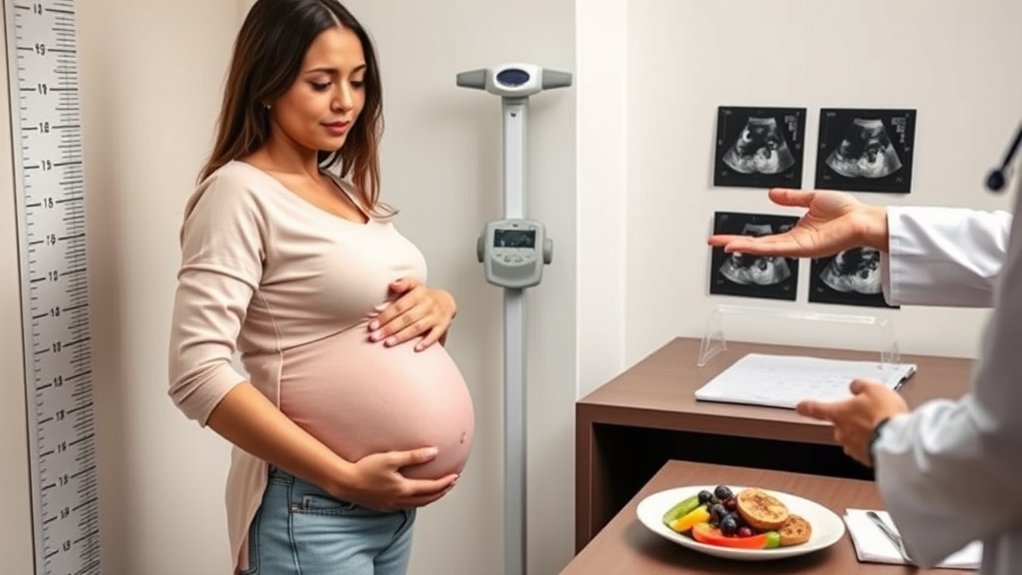
Several factors shape how much weight you gain in a twin pregnancy, and your starting body size is one of the most important. Your pre-pregnancy BMI helps set your target: if you’re normal weight, healthcare providers often advise 37 to 54 pounds total. Hormonal changes raise appetite and metabolic demands, so you may need more calories per day than in a singleton pregnancy. Your height and whether you maintain or lose weight can also affect gestation length and preterm delivery risk. Additionally, understanding the risks associated with obesity can help you make informed choices throughout your pregnancy.
| Factor | Effect |
|---|---|
| Pre-pregnancy BMI | Guides weight gain target |
| Hormonal changes | Increase appetite and demand |
| Calories per day | Support fetal growth |
| Height | May influence gestation length |
| Weight stability | Supports adequate weight gain |
For many full-term twin pregnancies, 35 to 45 lb aligns with favorable outcomes. You can use this range to support liberation through informed, individualized care with healthcare providers.
When to Call Your Doctor About Weight Gain
Call your doctor if your weight gain is falling well below the expected range for twin pregnancy—for example, less than 4 to 6 pounds in the first trimester or about 1.5 pounds per week in the second and third trimesters.
In a twin pregnancy, staying near the recommended amount protects you and both babies. If you have a normal BMI, total gain often falls between 37 and 54 pounds, but your healthcare provider should individualize targets.
Don’t ignore excessive nausea that keeps you from eating enough, especially in the first trimester. You should also call your doctor for rapid weight gain, swelling, high blood pressure, or sudden weight loss, since these can signal complications.
Don’t ignore excessive nausea, rapid weight gain, swelling, high blood pressure, or sudden weight loss—these may signal complications.
Regular check-ins let your healthcare provider adjust your plan, monitor fetal growth, and support your autonomy while keeping care evidence-based. Additionally, specialized healthcare support can help address any concerns regarding your weight gain and overall health during this critical time.
If anything feels off, seek prompt guidance rather than waiting.
Frequently Asked Questions
How Much Weight Do You Gain by Trimester With Twins?
In twin pregnancy, you’ll typically gain 4-6 pounds in the first trimester, about 1.5 pounds weekly after that, reaching 25-30 pounds by the second trimester; seek medical advice, support healthy eating, prenatal exercises, postpartum recovery, planning ahead.
Is It Normal to Gain 50 Lbs During Pregnancy?
Yes—50 lbs can be normal, especially with twins, depending on your BMI and clinician guidance. You should focus on healthy eating, exercise tips, prenatal vitamins, emotional support, postpartum recovery, breastfeeding challenges, twin preparation, pediatric care, sleep strategies, and family dynamics.
How Much Should 32 Week Twins Weigh?
By and large, your 32-week twins should each weigh about 3.5–4.5 pounds, with ultrasound measurements guiding twin growth, fetal development, and weight distribution; monitor maternal nutrition, gestational diabetes, preterm labor, health risks, postpartum recovery, breastfeeding challenges.
How Much Weight Should I Put on a Twin Pregnancy?
You should aim to gain 37–54 pounds with twins, adjusted by BMI. Prioritize twin nutrition, prenatal vitamins, exercise guidelines, gestational diabetes screening, labor preparation, postpartum recovery, breastfeeding twins, emotional support, baby gear, and pediatric care.
Conclusion
Twin pregnancy weight gain isn’t one-size-fits-all, but your care team will track your progress closely. On average, you may gain about 37 to 54 pounds with twins, though your trimester-by-trimester pattern can vary. One helpful statistic: roughly 1 in 3 twin pregnancies end preterm, so steady, appropriate weight gain matters. If you’re gaining too fast, too slowly, or notice sudden changes, call your doctor. Close monitoring helps support both your health and your babies’ growth.
