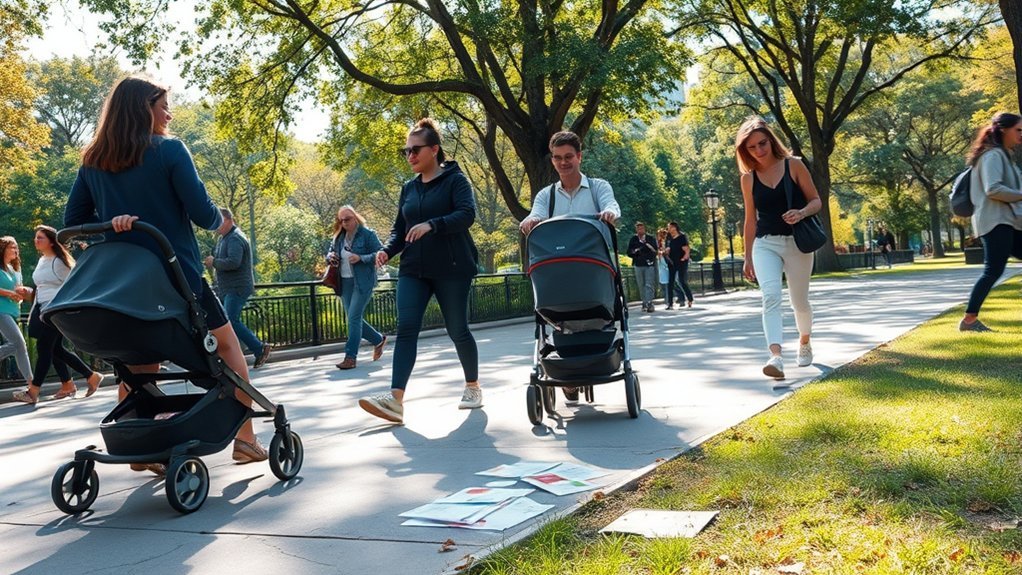
When it comes to travel strollers in the US, several risk factors can compromise your child’s safety. Common design flaws, such as bulky frames and inadequate harness systems, can lead to accidents. Environmental challenges, like uneven terrain, add another layer of complexity. Understanding these issues is essential for any parent. What specific steps can you take to guarantee a safer travel experience for your child?
Common Design Flaws in Travel Strollers
When you’re choosing a travel stroller, it’s essential to be aware of common design flaws that can impact usability and safety.
Many strollers feature bulky frames, making them difficult to maneuver in tight spaces or crowded areas. Poorly designed harness systems can lead to safety issues, as they may not secure your child properly.
Additionally, some strollers lack adequate storage, forcing you to juggle bags while navigating through. Wheels that aren’t durable or well-constructed can lead to instability on uneven surfaces, compromising safety.
Finally, strollers with limited recline options can affect your child’s comfort during naps. By recognizing these flaws, you can make an informed choice that prioritizes your family’s freedom and safety during travels.
Manufacturing Defects and Safety Standards
While many parents prioritize convenience and portability in travel strollers, it’s crucial to take into account manufacturing defects and safety standards that can greatly affect your child’s well-being.
Prioritizing convenience in travel strollers is important, but safety standards must not be overlooked for your child’s well-being.
Understanding these issues can help you make informed decisions:
- Material Quality: Check for non-toxic, durable materials that won’t break down easily.
- Safety Certifications: Look for strollers meeting safety standards set by organizations like ASTM and JPMA.
- Recall History: Research if the model has faced any recalls due to safety concerns.
User Errors and Misuse of Travel Strollers
When using travel strollers, many parents encounter issues due to improper folding techniques, which can lead to damage or safety hazards.
Overloading the stroller beyond its capacity not only compromises stability but can also increase the risk of accidents.
Additionally, ignoring essential safety guidelines may result in injuries that can easily be prevented with proper attention.
Improper Folding Techniques
Improper folding techniques can lead to frustration and potential damage to your travel stroller, so it’s vital to familiarize yourself with the correct methods.
Many parents overlook the importance of mastering the fold, which can result in complications when storing or transporting the stroller.
- Watch for Safety Locks: Confirm all safety mechanisms are engaged before folding.
- Follow Manufacturer Guidelines: Refer to the user manual for specific folding instructions tailored to your stroller model.
- Practice Makes Perfect: Regularly practice folding and unfolding your stroller to build muscle memory.
Overloading Stroller Capacity
Folding your travel stroller correctly is just one part of guaranteeing its longevity and safety; another critical aspect isn’t overloading its capacity.
Each stroller has a specified weight limit, typically ranging from 30 to 50 pounds. Exceeding this limit compromises the stroller’s stability, making it more prone to tipping or malfunctioning.
You might think a little extra weight won’t matter, but even small additions can disrupt balance and increase risk during travel. To guarantee safety, always check the manufacturer’s guidelines before loading your stroller.
By adhering to these limits, you empower yourself to travel confidently, knowing you’re safeguarding your child’s comfort and security while enjoying your journey together.
Ignoring Safety Guidelines
Ignoring safety guidelines can lead to dangerous situations for both you and your child while using a travel stroller.
It’s essential to adhere to these guidelines to guarantee a safe experience.
Here are some common errors to avoid:
- Not securing your child properly: Always use the harness system to keep your child safe and secure.
- Forgetting to check the stroller’s condition: Regularly inspect for any wear or damage that could compromise safety.
- Neglecting weight limits: Exceeding the stroller’s weight capacity can cause instability and increase the risk of accidents.
Lack of Awareness About Safety Features
Many parents aren’t fully aware of the safety features that travel strollers offer, which can lead to potential hazards.
Reading the user manual and understanding manufacturer guidelines is essential for ensuring your child’s safety.
Safety Feature Education
Although travel strollers are designed with several safety features, a surprising number of parents remain unaware of these essential elements.
Understanding these features can empower you to make informed choices and enhance your child’s safety during outings.
- Five-point harness: Keeps your child securely in place.
- Brake system: Prevents unwanted rolling, especially on inclines.
- Stability features: Reduces the risk of tipping over.
User Manual Importance
While it may seem unnecessary, reading the user manual for your travel stroller is vital for understanding the safety features designed to protect your child. Each stroller comes equipped with unique safety mechanisms, like harness systems, braking functions, and weight limits, tailored to enhance your child’s security.
Ignoring these guidelines can lead to improper usage, increasing the risk of accidents. Familiarizing yourself with the manual also helps you identify maintenance needs, ensuring the stroller operates effectively.
It’s important to know how to adjust settings and secure components properly. By taking the time to read and comprehend the user manual, you empower yourself to use the stroller safely and confidently, maximizing your child’s protection during every outing.
Manufacturer Guidelines Awareness
Understanding the manufacturer guidelines for your travel stroller is vital, as a lack of awareness about safety features can jeopardize your child’s safety.
Many parents overlook important details that can guarantee a secure and enjoyable experience. Here are some key points to reflect on:
- Weight Limits: Always check the weight limit to prevent accidents.
- Harness System: Confirm the harness is properly adjusted for your child’s safety.
- Brake Mechanisms: Familiarize yourself with how to use the brakes effectively.
Environmental Factors Affecting Stroller Safety
Environmental factors play an essential role in stroller safety, as conditions like weather, terrain, and urban infrastructure can greatly impact your experience. Here’s a breakdown of how these elements can affect your stroller use:
| Factor | Impact on Safety |
|---|---|
| Weather | Rain can make surfaces slippery; extreme heat can affect both you and your child. |
| Terrain | Uneven or gravel paths can lead to stumbles or spills. |
| Urban Infrastructure | Lack of ramps or sidewalks can create hazards during travel. |
| Visibility | Poor lighting can hinder your ability to navigate safely. |
| Pollution | High pollution levels can affect your child’s health during outdoor strolls. |
Understanding these factors helps you make informed choices, ensuring a safer, more enjoyable experience for both you and your child.
Recommendations for Safer Travel Experiences
To guarantee a safer travel experience with your stroller, start by evaluating your route and the surrounding conditions. Check for potential hazards like uneven terrain or crowded areas.
Here are some recommendations to enhance safety:
- Choose a sturdy stroller: Ascertain it’s designed for travel and can handle diverse environments.
- Practice secure loading: Always pack your stroller correctly, distributing weight evenly to maintain balance.
- Stay aware of your surroundings: Keep an eye out for obstacles, pedestrians, and traffic, adjusting your path as needed.
Frequently Asked Questions
What Age Range Is Suitable for Using Travel Strollers?
You can use travel strollers for children aged six months to around four years. Make certain your child meets the weight and height requirements for safety and comfort while enjoying your adventures together.
How Do I Properly Maintain My Travel Stroller?
Keep your travel stroller clean by wiping it down regularly and checking for loose parts. Lubricate wheels occasionally, store it in a dry place, and inspect straps for wear to guarantee safety and longevity.
Are Travel Strollers Safe for Air Travel?
Travel strollers are generally safe for air travel, but you’ve gotta keep your wits about you. Ascertain they meet airline regulations, and always check for any damage after your journey to guarantee your child’s safety.
What Features Should I Look for in a Travel Stroller?
When choosing a travel stroller, look for lightweight design, compact folding capabilities, safety harness systems, durable materials, and smooth maneuverability. Also, consider storage space and compatibility with car seats for added convenience during your journeys.
Can I Use My Travel Stroller for Jogging?
While it might seem tempting, you can’t use your travel stroller for jogging. Designed for convenience, they lack the stability and safety features needed for running, risking accidents and discomfort for both you and your child.
Conclusion
In the journey of parenthood, think of your travel stroller as your trusty steed. Guarantee it’s well-equipped and free from defects, just as a knight checks their armor before battle. Be aware of its features and the terrain you’ll traverse, as both can be treacherous. By staying vigilant and informed, you can navigate this adventure safely, protecting your little one from the hidden dangers along the way. Let safety be your compass on this expedition.
