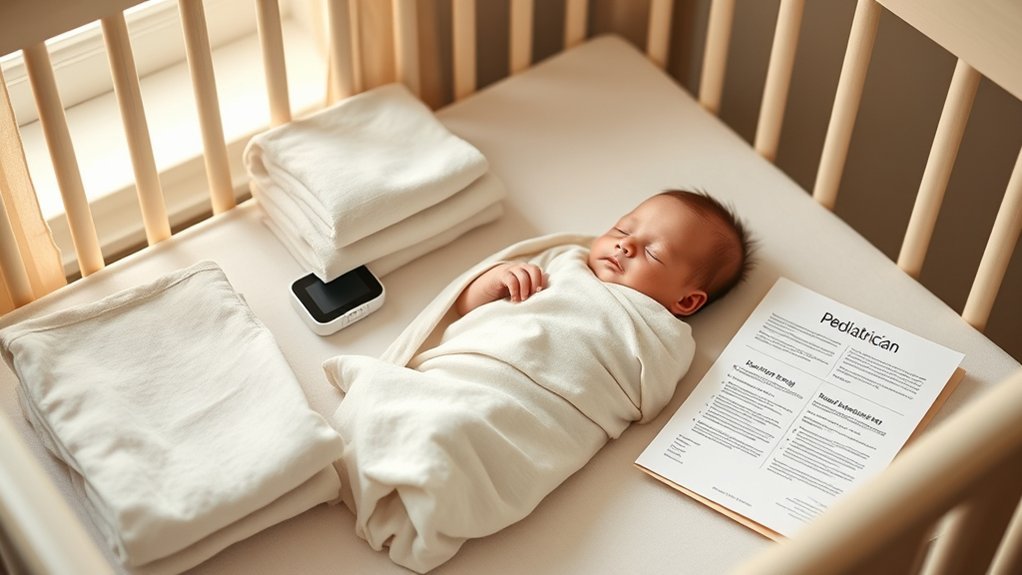
Swaddling means wrapping your baby snugly, but not tightly, in a light blanket to help them feel secure and sleep more calmly. When done correctly, it can reduce the startle reflex and support safer back-sleeping, but it shouldn’t restrict hip movement or cause overheating. Use breathable cotton, keep the chest loose enough for two fingers, and stop swaddling once rolling starts. A few common myths may surprise you, and the details matter.
Is Swaddling Safe for Newborns?
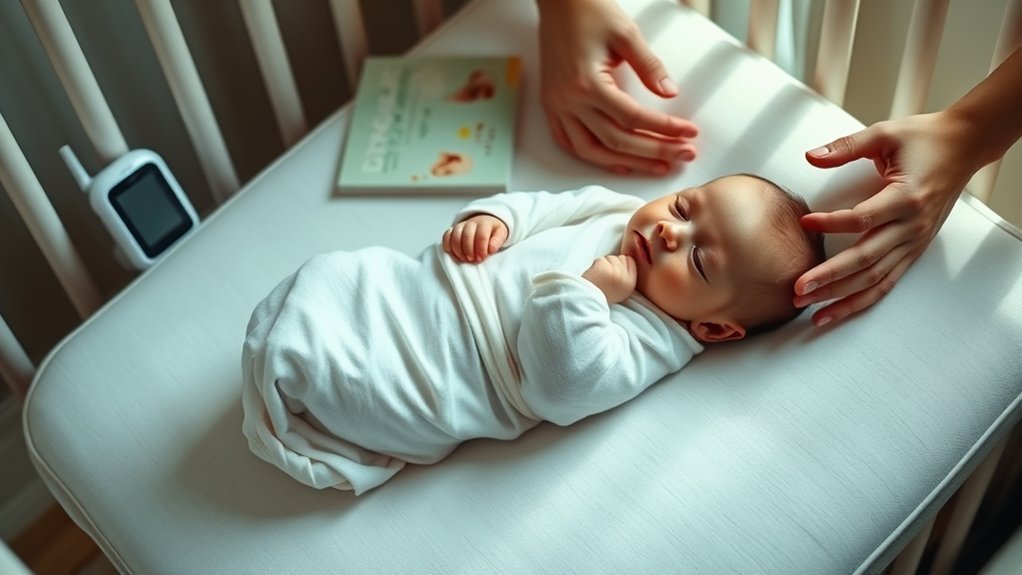
Yes—swaddling is generally safe for newborns when you do it correctly. You can use swaddling to help your baby feel secure, but you should keep it snug, not tight. A proper wrap supports comfort without restricting breathing or hip movement.
The startle reflex can wake newborns, and swaddling may reduce those sudden jerks so sleep isn’t constantly interrupted. Choose breathable fabric and keep the nursery between 68–72°F to lower overheating risk.
Check that your baby’s legs can bend and move freely; this protects healthy hip development and helps avoid hip dysplasia. You should also monitor your baby’s comfort each time you swaddle. Breathable fabrics are essential to ensure your baby stays comfortable and safe while swaddled.
Once your baby can roll over, stop swaddling right away, usually between 2 and 6 months, because continuing then can raise the risk of suffocation and SIDS.
When you follow these guidelines, swaddling can be a safe, evidence-based option for newborns.
Why Parents Swaddle Newborns
You swaddle newborns to recreate the snug, secure feel of the womb, which can help them adjust to life outside the uterus. Swaddling also reduces the startle reflex, so your baby may wake less often and settle more easily. When used correctly, it can support longer, safer sleep and improve rest for both you and your infant. Additionally, using breathable fabrics ensures your baby remains comfortable and reduces the risk of overheating.
Comfort And Security
Swaddling can help newborns feel calm and secure by recreating the snug, contained environment of the womb. You’re giving your baby comfort, security, and a familiar boundary during a period of intense adjustment.
Many newborns respond well because swaddling can reduce overwhelm and support emotional development as they adapt to life outside the uterus. When you use safe swaddling, with hips free to move, you offer a comforting embrace without restricting healthy movement.
Research shows that this practice may improve sleep quality for both you and your infant by reducing fussiness and helping sleep stay more stable. That can mean more rest, more ease, and more freedom for your family.
Soothing The Startle Reflex
Why do parents swaddle newborns? You use swaddling to mimic the womb, helping your baby feel secure while the startle reflex, or Moro reflex, settles. When arms flail, babies can wake abruptly or scratch their faces. A snug wrap reduces those interruptions and supports calmer adjustments.
| Benefit | Effect |
|---|---|
| Startle reflex control | Fewer sudden awakenings |
| Arm containment | Less facial scratching |
| Womb-like pressure | More calm regulation |
| Safe routine | Better adherence |
Many newborns respond quickly, and you may notice more settled babies sleeping. Follow safe swaddling guidelines: keep the swaddle not too tight, leave hips free, and monitor room temperature. This evidence-based practice can lower stress and support safer care without restricting your ability to respond flexibly.
Supporting Better Sleep
A well-fitted swaddle can do more than calm the startle reflex—it can also help newborns sleep more soundly by recreating the snug, secure feel of the womb.
When you use swaddling correctly, you may support better sleep by reducing sudden arm movements that wake your baby. Many swaddled babies settle faster, stay asleep longer, and show more stable baby sleep patterns in the first months.
That extra rest can benefit growth, feeding, and your own recovery. Keep the wrap snug across the torso but loose at the hips, and stop once your baby shows signs of rolling, usually between 2 and 6 months.
Used thoughtfully, swaddling can offer comfort without limiting your baby’s developing freedom.
What Is Swaddling?
Swaddling is a technique where you snugly wrap your newborn in a blanket to help them feel secure and stay warm.
You may choose it because it can reduce the startle reflex and support longer sleep, but the swaddle should stay snug without restricting hip movement. For safety, place your baby on their back, use breathable fabric, and stop swaddling once they begin to roll over. Additionally, swaddling can aid in thermal regulation, helping your baby adjust comfortably to the outside world.
Swaddling Basics
When done correctly, swaddling wraps a newborn snugly in a blanket to recreate the secure, warm feeling of the womb. You use swaddling to support comfort, not control. It can calm the startle reflex, and it may help your baby sleep more steadily.
- Choose breathable fabric.
- Keep the wrap snug, not tight.
- Allow safe hip movement.
- Stop when rolling starts.
Effective swaddling lets you adjust arm position and tension to match your baby’s needs. Safe swaddling practices reduce the risk of overheating, skin irritation, and hip strain.
You should stop swaddling once your baby shows signs of rolling, usually between 2 and 6 months. That boundary protects freedom of movement and lowers risk while preserving the calming benefits of swaddling.
Why Parents Swaddle
Parents often swaddle to help a newborn feel secure, warm, and settled. When you’re swaddling your baby, you’re recreating the womb’s snug support, which can calm crying and support longer sleep.
It also helps dampen the startle reflex, so your baby may wake less often and rest more deeply. Evidence shows that proper swaddling can support safer sleep practices and may reduce the risk of Sudden Infant Death Syndrome by keeping your baby on the back.
Most babies benefit from swaddling from birth until they begin to roll, usually by 2 to 6 months. Choose breathable fabric and allow room for a healthy hip, so comfort doesn’t come at the expense of movement or development.
Safe Swaddling Tips
A safe swaddle wraps your baby snugly in a blanket to recreate the womb’s secure, calming environment while helping limit the startle reflex. Use these safe swaddling tips to support comfort and freedom:
- Choose breathable organic cotton to reduce overheating.
- Keep the fit snug at the chest, never tight at the hips.
- Position the baby’s arms according to your swaddling techniques and your pediatric guidance.
- Check warmth, breathing, and movement often.
Swaddle newborns from birth until they show rolling signs, usually by 2 to 6 months, then stop.
Maintain the nursery at 68–72°F. You’re aiming for secure containment, not restriction.
If your baby seems sweaty, restless, or slips inside the wrap, adjust it right away.
Evidence shows a well-fitted swaddle can calm infants while preserving safety and your peace of mind.
Swaddling Myths Parents Hear Most
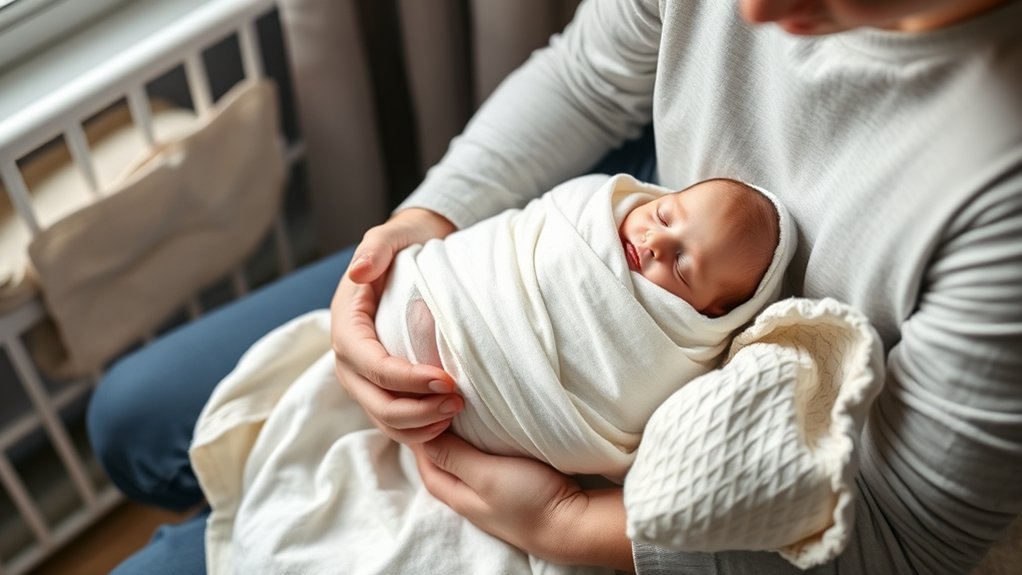
What’re the most common swaddling myths parents hear? You’ll hear that babies need free hands to self-soothe, but swaddling can actually limit the startle reflex and help you sleep better.
Another myth says swaddling causes overheating; with breathable fabrics and a nursery kept at 68–72°F, you can use swaddling safely.
Some people claim it’s uncomfortable, yet many infants settle because the wrap recreates the womb’s secure feel.
Others argue swaddling blocks exploration, but it often reduces sensory overload, giving your baby a calmer start.
You may also hear that swaddling is necessary for every baby. It isn’t. Comfort varies, and some babies rest well without it.
Trust your child’s cues, not pressure from others. Evidence supports swaddling as one tool, not a rule. Additionally, it’s important to monitor baby’s cues for fatigue during swaddling to ensure a positive experience.
How to Swaddle Without Overheating
Keeping your baby comfortable while swaddled starts with the room itself: aim for a nursery temperature of 68–72°F, use a lightweight, breathable fabric like organic cotton with small air holes, and keep layers minimal, especially in warmer weather.
You can swaddle with confidence when you focus on airflow, not bulk. Evidence shows that a stable room, breathable fabrics, and simple clothing lower overheating risk and support safer sleep time. Additionally, ensure that the firm mattress fits snugly in the crib to promote safe sleep practices.
- Keep the nursery at 68–72°F.
- Choose breathable fabrics that let heat escape.
- Dress your baby in one thin layer, or none.
- Check for sweating or flushed skin, then adjust.
During sleep time, swaddle only when your baby rests; give unswaddled playtime when awake to support movement and comfort.
If your baby feels warm, loosen the environment first, then reassess the swaddle. This approach helps you protect rest without losing freedom or ease.
How to Tell If Swaddling Is Too Tight?
How can you tell when a swaddle is too tight? You can check swaddling tightness by making sure you can slip two fingers between the blanket and your baby’s chest. The fit should feel snug, not compressive.
Your baby should still be able to bend the hips and move the legs in a frog-like position; that freedom helps protect normal hip positioning.
Watch for signs that the swaddle isn’t working: fussiness, difficulty breathing, or your baby fighting the wrap. Also inspect the skin. Red marks or redness after unwrapping often mean the swaddle was too tight. If you see these signs, loosen or remove it right away.
Swaddling should support calm, not control. And once your baby starts rolling over, usually between 2 and 6 months, stop swaddling to keep sleep safer and give your baby more freedom. Additionally, ensure you are using soft fabrics that are gentle on delicate skin to avoid irritation.
Does Swaddling Affect Development?

Swaddling can support sensory regulation by calming the startle reflex, which may help you promote longer, more restful sleep.
You should still make sure your baby has free movement during awake time, because natural kicking, reaching, and tummy time support early motor development.
Once your baby shows signs of rolling, you’ll need to stop swaddling so you can keep sleep safe and support the next stage of development. Additionally, incorporating tummy time into your baby’s routine can significantly enhance their motor skills and overall development.
Early Motor Development
When used correctly, swaddling may support early motor development by reducing the startle reflex and helping infants sleep more soundly, which can aid overall growth and regulation.
You can use swaddling as a tool, not a rule, to protect your baby’s emerging movement.
- Keep hips bent and outward.
- Avoid tight wrapping that limits leg motion.
- Stop swaddling when rolling begins, often 2 to 6 months.
- Offer unswaddled playtime for muscle strengthening.
This approach helps you preserve comfort without blocking natural exploration.
Proper swaddling can lower the risk of hip dysplasia while still respecting your infant’s need for movement.
As your baby grows, you’ll want to balance security with freedom, so motor skills can develop in a healthy, evidence-based way.
Sensory Regulation Benefits
Beyond supporting early movement, swaddling can also help your baby regulate sensations in the newborn period. It mimics the womb, giving steady sensory input that many infants find calming and secure. This can support emotional development by reducing overwhelm and helping your baby settle with less distress.
One of the clearest swaddling benefits is limiting the startle reflex, or Moro reflex, which can interrupt sleep and make rest fragmented. When you swaddle correctly, you may also help maintain comfortable body temperature and create a balanced environment for sensory integration.
Research links swaddled sleep with longer sleep periods, which can support growth and recovery. Used safely, swaddling can offer structure without restricting your baby’s need for comfort, calm, and responsive care.
Rolling Milestone Transition
As your baby approaches the rolling milestone, swaddling needs to become a short-term tool rather than a fixed sleep practice. You’re supporting safe sleep by watching for signs that your infant can roll, usually between 2 and 6 months.
The AAP advises stopping swaddling then, because rolling with arms restrained can reduce arousal and raise SIDS risk. Swaddling may still calm the startle reflex, but freedom matters more as development advances.
- Check for rolling cues daily
- Keep hips flexed and outwards
- Use sleep sacks for change
- Stop swaddling once rolling starts
This shift doesn’t hinder development; it protects it. If you want a secure, liberated sleep routine, let movement become the new norm.
Which Fabrics Are Safest for Swaddling?
Breathable fabrics are the safest choice for swaddling because they help regulate your baby’s temperature and lower the risk of overheating. When you choose a swaddle blanket made from breathable materials, you support comfort without sacrificing safety.
Organic cotton is a strong option because it’s soft, hypoallergenic, and free from harsh chemicals, which makes it gentler on sensitive newborn skin. Muslin also works well; its lightweight weave allows air to circulate while still giving your baby a secure, calming wrap.
Organic cotton and muslin are gentle, breathable choices that keep swaddling soft, secure, and comfortable for newborn skin.
You should avoid synthetic fabrics because they can trap heat and moisture, raising discomfort and overheating risk. Check that the fabric feels thin, not bulky, so it can ventilate properly while still holding your baby snugly.
Additionally, using breathable materials can help prevent overheating, ensuring your baby remains comfortable throughout sleep.
With the right cloth, you keep swaddling simple, supportive, and aligned with your baby’s needs.
When to Stop Swaddling Baby
Even with the safest swaddling fabrics, you’ll need to stop swaddling once your baby shows signs of rolling over, which often happens between 2 and 6 months. Knowing when to stop swaddling helps you protect breathing and support your baby’s growing freedom.
Watch for these signs of rolling:
- increased resistance to being wrapped
- kicking or straightening the legs
- trying to roll during sleep
- more arm movement and restlessness
The change from swaddling should respect your baby’s development, not fight it. Stopping swaddling lets your baby move arms and legs naturally, which supports muscle development and coordination. Proper swaddling techniques promote healthy development, ensuring comfort while wrapped.
Follow safe sleep recommendations from the AAP: place your baby on a firm, flat surface and keep the sleep space clear. A sleep sack can ease the shift while still allowing movement, helping you move toward safer, more independent sleep with confidence.
What to Use After Swaddling
Once your baby is ready to stop swaddling, a sleep sack or wearable blanket is often the best next step because it keeps the sleep space secure while allowing free arm and leg movement.
If you’re wondering what to use after swaddling, choose a sleep sack with a snug torso and open arms so your baby can move freely without loose bedding. This supports comfort, independence, and safer sleep.
When your baby shows signs of rolling, usually between 2 and 6 months, moving away from swaddling reduces safety risks linked to restricted movement. Products such as the Sleepy Hugs can help babies who’ve started to roll while preserving a contained feel.
During wake time, give unswaddled play and tummy time to build strength and mobility. You don’t need to trade safety for freedom; you can support both with a well-fitted sleep sack and gradual adjustment. Additionally, incorporating play gyms into your baby’s routine can enhance sensory exploration and motor skills development.
Frequently Asked Questions
What Is the Meaning of Swaddling in the Bible?
In the Bible, swaddling means you’re seeing Biblical symbolism of care, protection, and humility. Historical context shows Cultural practices of wrapping infants securely. You can view it as Parental guidance toward nurturing, safety, and trust.
Why Is Swaddling No Longer Recommended?
You no longer should swaddle once your baby can roll, because swaddling safety drops and Infant sleep risks rise. Evidence shows Developmental concerns and overheating. Use Alternative techniques, like a sleep sack and responsive soothing, instead.
What Does Swaddling Mean?
A snug cocoon, swaddling means you wrap your baby securely in a blanket. You’ll use swaddling techniques to support baby sleep, comfort benefits, and parent tips, while keeping hips loose and movement safe.
What Is the Origin of Swaddling?
Swaddling began in ancient practices around 4000 BC, across Egypt and Greece, where you’d use it for cultural significance and comfort. Today, you can adopt modern adaptations that support health benefits while respecting your choices.
Conclusion
Swaddling can help you soothe your newborn by reducing the startle reflex and promoting sleep, but you should use it safely. One study found that about 1 in 10 swaddled infants slept longer, yet overheating and loose blankets can raise risks. Keep the wrap snug at the chest, loose at the hips, and always place your baby on their back. Stop swaddling once your baby starts rolling, then switch to a sleep sack.
