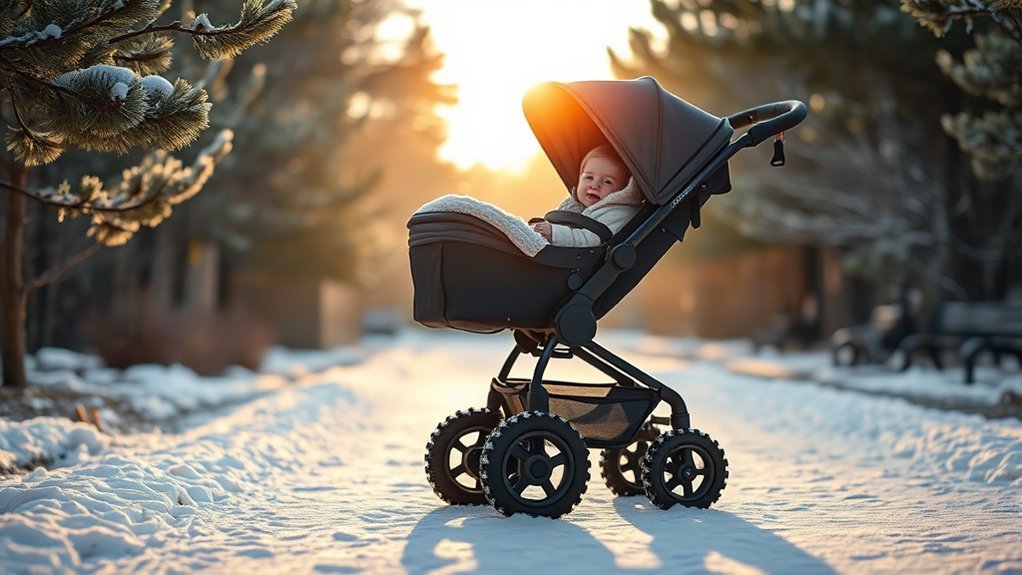
For winter stroller use, you’ll want large air-filled tires, strong suspension, a weather-resistant canopy, and lockable front wheels for control on snow and slush. Jogging strollers like the BOB Revolution Flex 3.0 work well in deep snow, while all-terrain models like the Thule Urban Glide 3 suit icy sidewalks. Keep baby warm with layers, a footmuff, and mittens, and rinse your stroller after salty outings. Keep going for more smart cold-weather tips.
Key Features of a Snow-Ready Stroller
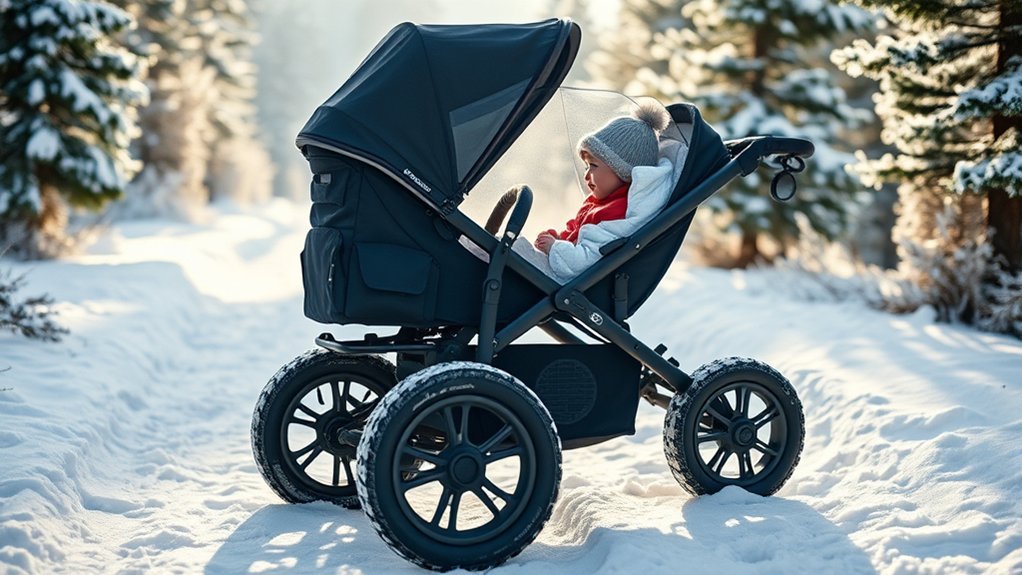
When you’re choosing a snow-ready stroller, look for features that help it handle rough winter conditions with ease. You’ll want large air-filled tires that grip packed snow and offer traction through slush, so you don’t feel stuck or slowed down.
Robust suspension systems matter too, because they soften bumps from icy sidewalks and give your child a smoother ride. Choose weather-resistant canopies that block wind, sleet, and drifting snow, keeping the seat calm and protected.
Robust suspension softens icy bumps, while weather-resistant canopies shield your child from wind, sleet, and drifting snow.
Lockable front wheels add better control when paths get slippery, and they can still swivel when you need easy steering. Durable insulated fabrics help trap warmth and repel moisture, which supports comfort on cold weather outings.
Together, these features make snow-ready strollers more reliable, so you can move with confidence, stay mobile, and enjoy winter without feeling confined by the season.
Best Strollers for Winter by Use Case
The best winter stroller for you depends on how and where you’ll use it. If you face deep snow or rough paths, jogging strollers like the BOB Revolution Flex 3.0 are among the best strollers for snow because their large tires and strong suspension keep you steady.
For icy sidewalks and snowy trails, all-terrain strollers such as the Thule Urban Glide 3 give you traction and shock absorption without slowing you down.
If you mainly move through light to moderate winter conditions, a compact stroller like the Baby Jogger City Mini GT2 offers portability and value.
Need space for more than one child? A wagon stroller like the Veer Cruiser handles slush with airless tires and a roomy frame.
Add stroller accessories like footmuffs and weather shields, and you’ll boost performance while helping baby stays comfortable.
Choose the stroller that matches your route, and winter errands, walks, and outings feel freer and easier.
How to Keep Baby Warm in Winter
Keeping baby warm in winter starts with smart layering, not heavy bulk. Dress your baby in snug long underwear, then add fleece pants and a breathable top so you can adjust easily during stroller rides. A footmuff or bunting bag gives your baby an insulated cocoon in the stroller, and it lets you skip bulky coats that can crowd movement. Keep a blanket in your diaper bag for colder cold weather moments, then add or remove it as needed.
| Layer | Purpose |
|---|---|
| Long underwear | Traps heat close |
| Fleece pants | Adds warmth without weight |
| Footmuff | Insulated stroller comfort |
| Blanket | Extra protection in winter |
| Mittens | Keeps little hands warm |
Choose mittens, not gloves, to help fingers stay together, and use cozy booties or winter boots for feet. Check your baby often; if they feel sweaty or flushed, remove a layer so airflow stays comfortable and safe.
Winter Accessories That Help in the Cold
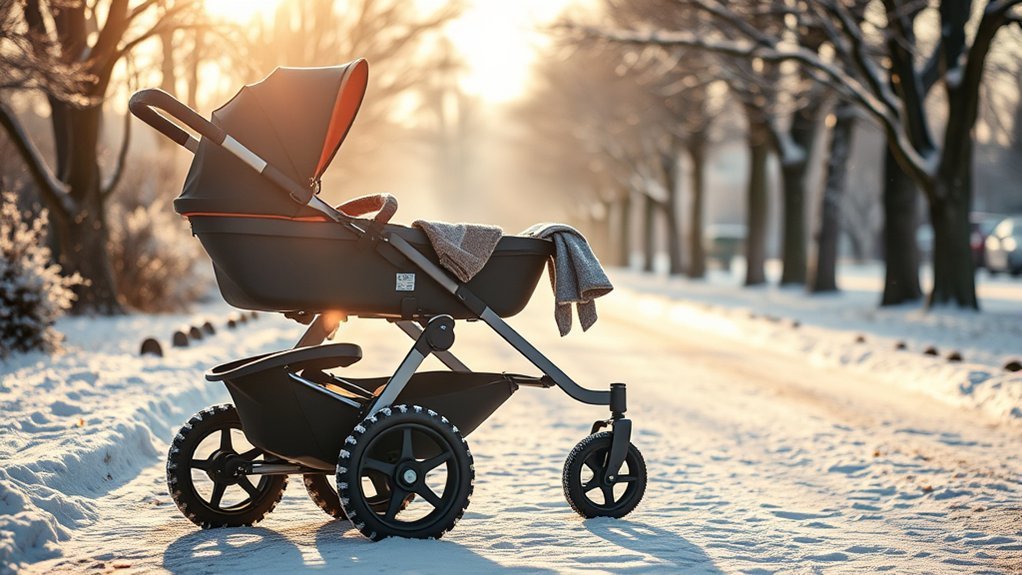
A few well-chosen winter accessories can make stroller outings much easier in cold weather. You can add footmuffs or bunting bags to keep your child warm without bulky coats, so baby gear stays comfortable and free to move.
Weather shields help block wind, sleet, and snow while still letting air flow, and they’re a smart layer when you want reliable protection.
For your own comfort, parent hand muffs or stroller gloves attach to the handlebar, so your hands stay warm and ready without constant glove juggling.
If you’re walking on snow or gravel, all-terrain wheels and tire kits improve traction and help you steer with confidence.
For wagon trips, weather shields create a cozy environment that keeps little riders sheltered during outdoor adventures.
These winter accessories don’t lock you in; they give you more freedom to enjoy the season on your terms.
Stroller Care Tips for Snow, Salt, and Slush
After a snowy outing, rinse your stroller’s wheels and undercarriage with fresh water to wash away salt, slush, and grit before they can cause corrosion or buildup.
These stroller care tips keep your gear ready for the next adventure, so you can move freely through winter without worry. Rinse after use, then dry thoroughly, especially metal parts and fabric, to prevent corrosion and mold.
- Clean seat fabrics and the handlebar with mild soap and water.
- Lubricate components monthly to maintain smooth operation.
- Check tire pressure often for ideal traction on snow and slush.
- Store your stroller indoors once everything’s dry.
A quick reset now saves you hassle later. When you stay on top of snow and slush cleanup, your stroller stays safer, smoother, and easier to handle.
Keep the routine simple, and you’ll protect your investment while enjoying the season with confidence.
Frequently Asked Questions
Which Stroller Brake Type Works Best on Icy Sidewalks?
Foot brakes with strong locking mechanisms usually work best on icy sidewalks, because you can press down quickly for emergency stops. You’ll still want hand brakes, solid ice traction, stroller stability, brake maintenance, and other safety features.
How Do I Store a Stroller After Wet Winter Walks?
Dry your stroller completely, then wipe it clean and perform safety checks. Use stroller maintenance tips, drying techniques, and mold prevention. Store winter accessories and stroller covers indoors, using smart storage solutions to organize space and keep it ready.
Can I Use a Stroller in Deep Snow Safely?
No—you shouldn’t, because deep snow can trap a stroller like quicksand. Check snow stroller safety, winter stroller features, and stroller weight capacity; use deep snow tips, snow traction methods, baby warmth solutions, or winter stroller alternatives.
What Tire Pressure Is Best for Air-Filled Winter Stroller Wheels?
Aim for the tire pressure your stroller maker recommends, usually slightly lower for better traction needs. You’ll improve winter safety, handling snow, and stroller maintenance, while air filled wheels stay stable in cold weather with the right stroller features and winter accessories.
Are Jogging Strollers Good for Winter Errands?
Yes—you can use them for winter errands. You’ll get jogging stroller benefits like sturdy wheels, winter running tips, cold weather gear, stroller accessories, snow traction options, parent reviews, safety features, maneuverability concerns, winter maintenance, and urban vs. rural fit.
Conclusion
When you’re choosing a stroller for winter, you’re really looking for a reliable companion that can handle a little weather drama with ease. With the right tires, canopy, and cozy layers, you’ll help your baby stay snug while you move through snow, slush, and chilly air. Add a few smart accessories and a little upkeep, and you’re set for smoother walks all season. Winter may be brisk, but your outings can still feel calm and comfortable.
