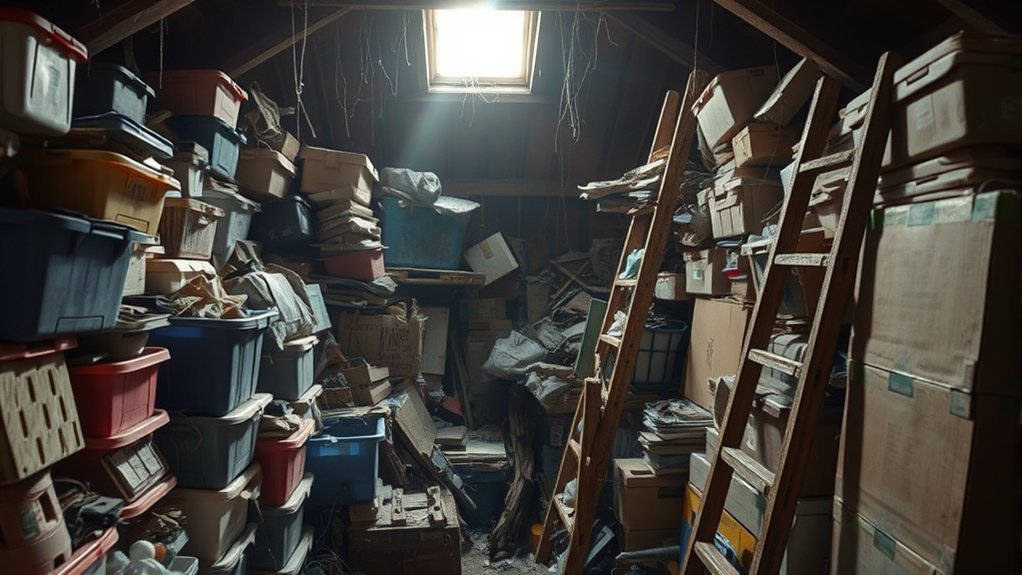
You might say urban living can be a little snug, which often leads to creative storage dilemmas. As you navigate your daily life, impulsive buying and emotional ties to your belongings can pile on the clutter. This accumulation not only complicates your space but also poses health risks, from mold to pests. Understanding these dynamics can help you take control of your environment, but are you prepared for the effective strategies that can transform your space?
Urban Living Constraints and Their Impact on Storage
As urban living spaces become increasingly compact, the challenge of effective storage grows more pressing. You’re likely facing limited square footage, making it essential to optimize every inch.
Start by evaluating your belongings—identify what you truly need and what can go. Consider multifunctional furniture, like ottomans with storage or beds with drawers, to maximize space utility.
Vertical storage solutions, such as shelves and hooks, can free up floor space while keeping your essentials accessible. Also, think about hidden storage options, like under-bed bins or over-the-door organizers.
The Role of Consumer Habits in Accumulation
While consumer habits often drive our purchasing decisions, they also play a significant role in the accumulation of belongings that can overwhelm our living spaces. You mightn’t realize how often emotional triggers, societal pressures, and marketing tactics lead you to buy things you don’t need.
These habits can create clutter that stifles your space and spirit.
- Impulse buys that gather dust
- Unused gifts taking up space
- Sales that encourage over-purchasing
- Sentimental items that weigh you down
- Trends that quickly fade away
Understanding these patterns is essential for breaking free from the cycle of accumulation.
Common Storage Practices That Lead to Risks
Accumulating belongings can lead to poor storage practices that pose various risks to your home and well-being.
Stacking boxes haphazardly is a common mistake; it creates instability and increases the chance of injury. Overloading shelves can compromise structural integrity, leading to collapses. Ignoring ventilation is another risk; it fosters dampness, encouraging mold growth and damaging your items.
Storing items in poorly lit areas can result in accidents, as you may trip over unseen obstacles. Additionally, neglecting to regularly assess your storage can lead to clutter, making it difficult to find essentials when needed.
Health Hazards Associated With Poor Storage Solutions
Poor storage solutions can lead to significant health hazards that often go unnoticed until it’s too late.
When you don’t prioritize organization, you’re exposing yourself to risks that can affect your well-being. Here are some potential dangers:
- Mold growth that can trigger respiratory issues
- Pest infestations posing health risks through contamination
- Injuries from falling objects in disorganized spaces
- Chemical exposure from improperly stored substances
- Increased stress and anxiety due to chaotic environments
Recognizing these hazards is the first step toward a healthier living space.
Strategies for Effective Organization and Risk Mitigation
To create a safer and more organized space, you need to adopt effective strategies that minimize risks and enhance functionality.
Start by decluttering; remove items you no longer use or need. Use clear bins and labels to categorize belongings, making retrieval easy and reducing accidents.
Implement vertical storage solutions to maximize space and keep items off the floor, which can prevent tripping hazards. Regularly maintain your storage areas; check for leaks, pests, or mold that could pose health risks.
Finally, create a routine for revisiting and reorganizing your space, ensuring it evolves with your needs.
Frequently Asked Questions
What Are the Financial Costs of Renting Storage Units in the US?
Renting storage units in the US can cost anywhere from $50 to $300 monthly, depending on size and location. You’ll also face additional fees for insurance, late payments, and administrative costs, impacting your overall budget.
How Do Climate Conditions Affect Storage Needs and Risks?
Extreme temperatures can cause 25% of stored items to deteriorate. You’ll find that humidity and heat impact your storage needs; consequently, choosing climate-controlled units protects your belongings and guarantees they remain in good condition.
What Insurance Options Are Available for Stored Items?
You’ve got several insurance options for stored items, including renters insurance, specialized storage insurance, and homeowner’s insurance endorsements. Each option covers different risks, so evaluate your needs to select the best protection for your belongings.
How Can Technology Improve Storage Solutions?
Technology streamlines storage solutions by integrating smart inventory systems and automation, enhancing efficiency. While traditional methods can be cumbersome, these innovations liberate you from chaos, allowing easier access and better management of your stored items.
What Are the Environmental Impacts of Excessive Storage Consumption?
Excessive storage consumption leads to increased waste and resource depletion, contributing to pollution and climate change. By reducing clutter, you not only clear your space but also lessen environmental impact, promoting sustainability and mindful consumption.
Conclusion
In today’s urban landscape, about 30% of Americans admit they can’t park their cars in their garages due to clutter. This startling statistic highlights the urgent need for effective storage solutions. By understanding the causes of accumulation and implementing smart organization strategies, you can reclaim your space and reduce health risks. Don’t let your belongings overwhelm you; take control of your environment today for a safer, more functional living space.
