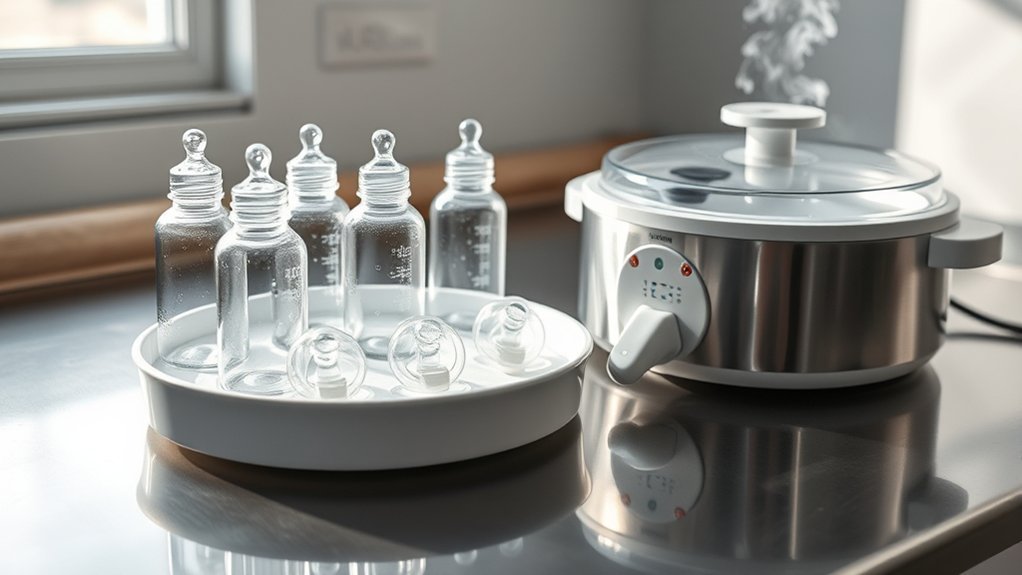
As a parent, ensuring your baby’s safety is a top priority, and that starts with understanding sterilization. This process goes beyond cleaning; it’s about eliminating harmful germs from items your little one uses daily. From bottles to toys, knowing what needs sterilizing and how often can make a significant difference. Curious about the best methods and practices to keep your baby’s environment safe? Let’s explore what you need to know.
Understanding Sterilization: Definition and Importance
Sterilization plays an essential role in maintaining a safe environment for your baby. It’s the process of eliminating harmful microorganisms from baby equipment, ensuring that everything your little one comes into contact with is clean and safe.
You might think of sterilization as a shield against potential illness, as it helps protect your child’s developing immune system.
Whether it’s bottles, pacifiers, or toys, knowing how to properly sterilize these items is crucial. You’ll want to choose methods that suit your lifestyle, whether it’s boiling, steam sterilization, or using chemical solutions.
The Risks of Bacteria and Germs in Infant Equipment
When you use infant equipment, it’s essential to recognize that common bacteria can easily accumulate on surfaces.
These germs pose significant health risks to your little one, potentially leading to infections or illness.
Understanding where these bacteria come from and how they affect your baby can help you take the right precautions to keep them safe.
Common Bacteria Sources
Infants are especially vulnerable to bacteria and germs, and everyday items like bottles, pacifiers, and toys can harbor harmful pathogens.
You mightn’t realize it, but saliva, milk residue, and food particles are prime breeding grounds for bacteria. When you think about it, even the surfaces your baby touches are potential sources of contamination.
Changing tables, high chairs, and diaper bags can collect germs from various environments. It’s essential to remember that your baby’s immune system is still developing, making them susceptible to infections.
Regularly cleaning and sterilizing these items isn’t just a chore; it’s a critical step in ensuring your little one stays healthy. By taking these precautions, you empower yourself to create a safer environment for your child.
Health Risks Explained
Bacteria and germs lurking in your baby’s equipment can pose serious health risks that you shouldn’t overlook.
These pathogens can lead to infections and other health issues affecting your little one’s overall well-being.
- Increased risk of gastrointestinal infections
- Respiratory illnesses from contaminated surfaces
- Skin irritations or infections from unsterilized items
Common Items That Require Sterilization
Sterilization is essential for ensuring the safety of your little ones, as it helps eliminate harmful germs and pathogens. You should prioritize sterilizing common items like baby bottles, nipples, and pacifiers, as these come into direct contact with your infant’s mouth.
Additionally, teething toys and breast pump parts require regular sterilization to prevent bacterial growth. Don’t forget about feeding utensils and any items that drop on the floor; they need attention too!
Even baby carriers and stroller accessories can harbor germs, so give them a thorough clean. By focusing on these everyday items, you can create a safer environment for your child, allowing them to explore and grow without unnecessary health risks.
Keep your little one’s world clean and healthy!
Different Methods of Sterilization
When it comes to keeping your child’s items safe from germs, understanding the various methods of sterilization can make all the difference.
Here are a few methods you can consider:
- Boiling Water: Submerging items in boiling water for 5-10 minutes effectively kills most germs.
- Steam Sterilizers: These devices use steam to sanitize items quickly and efficiently, perfect for busy parents.
- Chemical Solutions: Using sterilizing tablets or solutions can be a convenient option, especially for on-the-go situations.
Each method has its pros and cons, depending on your lifestyle and preferences.
How Often Should You Sterilize Baby Equipment?
When it comes to keeping your baby’s equipment clean, daily sterilization is often the best practice, especially for items like bottles and pacifiers.
You’ll also want to watch for signs that indicate when equipment needs a good cleaning, such as visible grime or a strange odor.
Staying on top of these tasks helps guarantee your little one stays healthy and safe.
Daily Sterilization Practices
While it might seem overwhelming, establishing a daily sterilization routine for your baby’s equipment is essential for their health.
Consistent practices can help you maintain a safe environment for your little one. Here’s what you should focus on:
- Sterilize bottles and nipples after each use.
- Clean toys and pacifiers daily, especially if they’ve touched the floor.
- Regularly sanitize breast pumps and feeding accessories.
Signs Equipment Needs Sterilizing
Knowing how often to sterilize your baby’s equipment can prevent potential health issues.
Look out for signs like visible dirt, sticky residues, or discoloration on bottles and pacifiers. If your baby has been sick, it’s essential to sterilize everything they’ve used to avoid reintroducing germs.
After outdoor adventures, especially in public spaces, give everything a good clean. New items should always be sterilized before their first use—don’t skip this step!
If equipment has been in storage for a while, it’s wise to sterilize before using it again. Regularly check for any wear and tear, as damaged items may harbor bacteria.
Best Practices for Effective Sterilization
Effective sterilization is essential for guaranteeing your child’s health and safety, particularly when it comes to feeding equipment and toys.
Effective sterilization is crucial for ensuring your child’s safety, especially with feeding items and toys.
To achieve effective sterilization, follow these best practices:
- Choose the right method: Whether it’s boiling, using steam, or chemical sterilization, select a method that suits your equipment.
- Clean before sterilizing: Rinse off any food residue or dirt to enhance the effectiveness of the sterilization process.
- Follow manufacturer guidelines: Always adhere to the instructions provided for your specific items to guarantee ideal results.
Tips for Parents on Maintaining a Sterile Environment
To guarantee your child’s environment remains as sterile as possible, it’s important to incorporate consistent cleaning routines into your daily life.
Start by designating specific times each day for cleaning surfaces and toys. Use safe, non-toxic disinfectants to wipe down high-touch areas, like doorknobs and light switches.
Don’t underestimate the power of handwashing—make it a habit for everyone in the household before meals and after playtime.
Regularly launder bedding and soft toys in hot water to eliminate germs. Store sterilized bottles and equipment in a clean, dry place to prevent recontamination.
Finally, keep clutter to a minimum; a tidy space is easier to maintain.
Signs That Equipment Needs to Be Replaced
When it comes to ensuring your child’s safety, recognizing the signs that equipment needs to be replaced is essential. Ignoring these signs can put your little one at risk.
Recognizing when equipment needs replacement is crucial for your child’s safety; ignoring signs can lead to risks.
Here are some indicators to watch for:
- Visible wear and tear: Scratches, cracks, or rust can compromise safety.
- Unusual noises: Squeaks or grinding sounds may signal mechanical issues.
- Frequent malfunctions: If equipment repeatedly fails to function properly, it’s time to evaluate a replacement.
Staying proactive about your equipment’s condition helps maintain a safe environment for your child.
Regularly inspect items like toys, car seats, and high chairs. If you notice any of these signs, don’t hesitate to replace the equipment for your child’s well-being and peace of mind.
Resources and Tools for Parents on Sterilization
Keeping your child’s environment safe goes beyond replacing worn-out equipment; it also involves proper sterilization of items they regularly use. To help you navigate this crucial task, here are some essential resources and tools:
| Resource/Tool | Description | Where to Find |
|---|---|---|
| Steam Sterilizer | Uses steam to kill germs | Baby stores online |
| UV Sterilizing Box | Utilizes UV light for sanitation | Online retailers |
| Sterilizing Wipes | Convenient for quick clean-ups | Supermarkets |
| Boiling Water | Traditional method, effective | Your kitchen |
Frequently Asked Questions
Can I Use Regular Soap and Water Instead of Sterilization?
You can use regular soap and water for cleaning, but it won’t eliminate all harmful germs. For items like baby bottles, sterilization’s important to guarantee safety. It’s best to follow recommended guidelines for ideal protection.
Is It Safe to Sterilize Items in a Microwave?
Yes, it’s safe to sterilize items in a microwave, as long as you use microwave-safe containers and follow guidelines. Ascertain items are clean first, and add water to create steam for effective sterilization.
How Can I Tell if Sterilization Worked Effectively?
How can you be certain your sterilization worked? Check for cloudy or residue-free surfaces, and verify items are cool to touch. Trust your instincts; if something feels off, it’s better to re-sterilize just to be safe.
Are There Any Eco-Friendly Sterilization Methods Available?
Yes, there are eco-friendly sterilization methods available. You can use steam sterilizers, UV light sanitizers, or natural solutions like vinegar and baking soda. These options reduce chemical use while still ensuring effective sterilization for your needs.
What Are the Signs of Equipment Needing Deep Cleaning Versus Sterilization?
You’ll notice signs like visible dirt, stains, or residue indicating it needs deep cleaning. If there’s potential for contamination or it’s used for medical purposes, sterilization becomes essential for ensuring safety and hygiene.
Conclusion
By prioritizing sterilization, you’re not just protecting your baby; you’re investing in their health and peace of mind. Every time you clean a bottle or pacifier, you’re taking an essential step in safeguarding their fragile immune system. But what happens if you miss a step or overlook a detail? The stakes are high, and the potential risks might be lurking closer than you think. Stay vigilant, and keep those little ones safe and sound—because their health is worth it.
