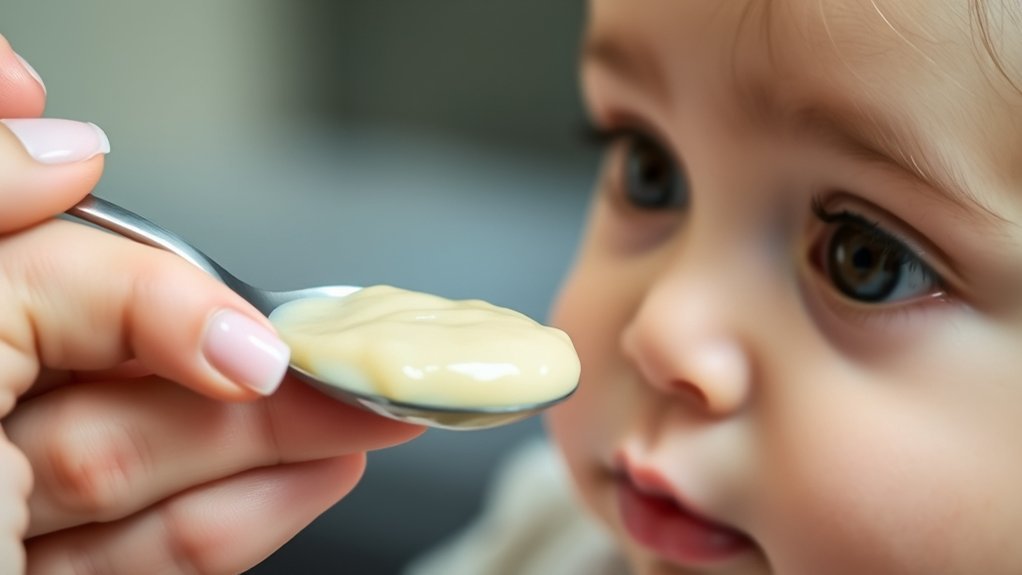
As your infant approaches six months, you might notice specific signs that indicate they’re ready for spoon feeding. These signs, such as good head control and an interest in food, are essential for a smooth shift to solids. Understanding these indicators can help you navigate this important milestone. However, it’s not always straightforward, and challenges may arise. Let’s explore what to look for and how to support your child during this significant phase.
Signs That Indicate Readiness for Spoon Feeding
How can you tell if your baby is ready for spoon feeding? Look for key signs of readiness. Your baby should be able to sit up with minimal support, demonstrating good head and neck control. They may show interest in your food, reaching for it or opening their mouth when they see you eat. Additionally, watch for the disappearance of the tongue-thrust reflex, which typically occurs around six months; this reflex can hinder spoon feeding. You might notice your baby mimicking chewing movements, indicating they’re ready to explore different textures. Finally, they should have the ability to track objects with their eyes, as this shows engagement and readiness for the feeding process. Recognizing these signs can streamline your shift to spoon feeding.
Common Challenges During Spoon Feeding
While shifting to spoon feeding can be an exciting milestone, it often comes with its own set of challenges. You might encounter resistance from your child, who may refuse to open their mouth or push the spoon away. This resistance can stem from unfamiliarity with the new feeding method or simply a desire for independence. Additionally, messiness is a common issue; food may end up on their face, clothes, and surroundings, which can be frustrating. It’s also possible for your child to gag or choke, especially if they’re still adjusting to solid textures. Finally, you might find it difficult to gauge how much food they actually consume, leading to concerns about nutrition. Understanding these challenges can help you navigate this change more effectively.
Tips for Successful Spoon Feeding
To guarantee a smoother changeover to spoon feeding, it’s vital to approach the process with patience and understanding. Start by choosing the right time when your child is calm and hungry. Use a soft, age-appropriate spoon for comfort. Encourage interaction by letting your child explore the food and the spoon.
| Tip | Explanation |
|---|---|
| Maintain Eye Contact | Keep your child engaged and focused. |
| Offer Variety | Introduce different textures and flavors. |
| Be Consistent | Stick to a feeding routine for comfort. |
Celebrate small successes and reassure your child when they show resistance. Remember, every child is unique, and gradual adaptation is key to successful spoon feeding.
Encouraging Independence in Feeding
As your child becomes more comfortable with spoon feeding, fostering independence in feeding is a natural next step. Start by allowing your child to hold the spoon themselves, even if it results in some mess. Encourage them to scoop food from the bowl, guiding them gently when needed. Offer praise for their efforts, reinforcing their confidence and motivation. You can also provide child-friendly utensils designed for small hands. Gradually reduce your assistance as they gain skills, making mealtimes a collaborative experience. Introduce a variety of foods to expand their palate and interest. Remember, patience is key; every child develops at their own pace. By encouraging independence, you’re empowering your child to explore and enjoy the feeding process.
When to Seek Professional Help
How can you tell if your child’s feeding challenges warrant professional help? It’s important to recognize certain signs that may indicate a need for intervention. Consider seeking assistance if:
- Your child consistently refuses to eat a variety of foods, leading to limited nutrition.
- They show signs of distress or anxiety during mealtime, which interferes with their ability to eat.
- You notice significant weight loss or failure to gain weight appropriately for their age.
- They have difficulty swallowing or exhibit choking episodes, raising concerns about safety.
Addressing these issues early can make a significant difference in your child’s development and overall well-being. Don’t hesitate to consult a healthcare professional for guidance tailored to your child’s unique needs.
Frequently Asked Questions
At What Age Should I Introduce Spoon Feeding?
You should introduce spoon feeding around six months of age. At this stage, your baby’s motor skills and digestive system are ready. Pay attention to their cues, and make certain the experience is positive and engaging.
How Long Does It Take to Master Spoon Feeding?
It doesn’t take an eternity, but mastering spoon feeding typically takes several weeks. You’ll notice gradual improvement as your child practices. Patience and encouragement are key, so celebrate every little success along the way!
Can Spoon Feeding Be Done With Purees Only?
Yes, you can use purees for spoon feeding, especially for infants. It’s important to guarantee the consistency is appropriate for their age and developmental stage, promoting safe swallowing and encouraging their acceptance of varied textures later on.
What Utensils Are Best for Spoon Feeding Infants?
Picture tiny hands grasping a gentle, soft-tipped spoon, perfect for tender mouths. Silicone or plastic utensils work best; they’re gentle on gums, easy to grip, and help you navigate this exciting journey of nourishment.
How Do I Clean up After Spoon Feeding Sessions?
After spoon feeding, quickly wipe your baby’s face and hands with a damp cloth. Clean the high chair and surrounding area with soapy water, then sanitize utensils to guarantee a hygienic feeding environment for your infant.
Conclusion
As you commence the journey of spoon feeding, remember that each small triumph is like a stepping stone toward your child’s independence. By paying attention to their signs of readiness and steering through the challenges together, you foster not just nourishment, but a bond built on trust and exploration. If you encounter bumps along the way, don’t hesitate to reach out for guidance. Your child’s feeding journey is a beautiful dance of growth, patience, and love.
