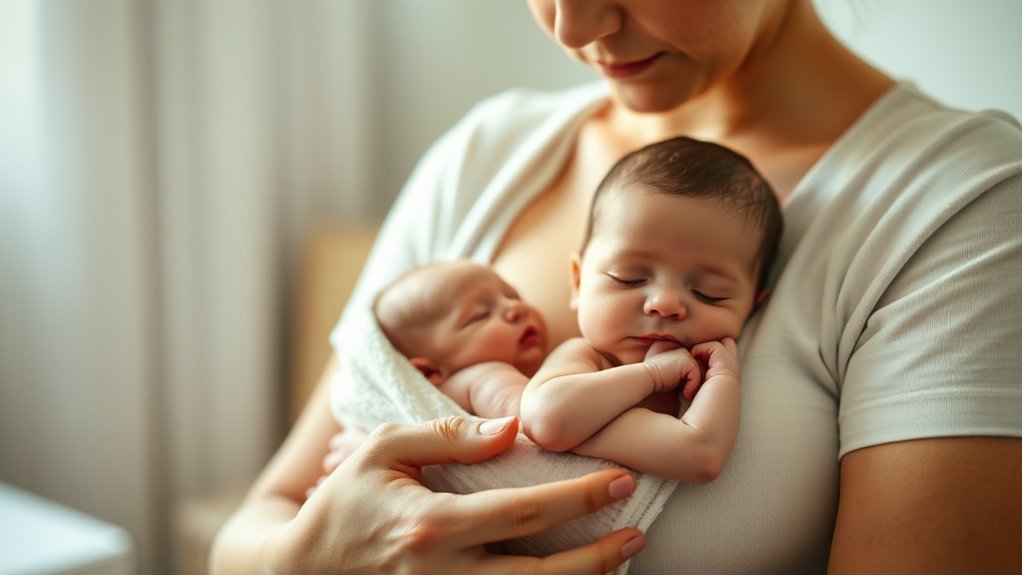
Imagine a new mother, Sarah, who finds solace and joy in holding her newborn son against her chest. This simple act of skin-to-skin contact not only fosters an emotional bond but also promotes the baby’s health. Understanding how to effectively engage in this practice can make a significant difference in your journey as a parent. So, how do you start this essential bonding experience? Let’s explore the steps together.
Understanding the Benefits of Skin-to-Skin Contact
When you hold your baby close, you’re not just enjoying a tender moment; you’re also engaging in skin-to-skin contact, which offers numerous benefits for both you and your little one.
Holding your baby close fosters skin-to-skin contact, enhancing warmth, security, and emotional connection for both of you.
This intimate practice helps regulate your baby’s temperature, heart rate, and breathing, creating a sense of security. It strengthens your bond, fostering emotional connection and trust.
You may notice that skin-to-skin contact can reduce your baby’s stress and crying, promoting calmness and comfort. For you, it can lower stress levels and enhance feelings of joy and fulfillment.
Additionally, this closeness can help with breastfeeding by stimulating milk production. Embracing these moments enriches your experience as a parent while providing essential support for your baby’s development.
Preparing for Skin-to-Skin Sessions
To guarantee a smooth skin-to-skin experience, it’s important to create a comfortable environment for both you and your baby.
Before you begin, take a moment to prepare. Here are a few things to take into account:
- Choose the right time: Pick a moment when your baby is calm, alert, and ready for bonding.
- Gather supplies: Have a soft blanket, a comfortable chair, and any items like a burp cloth within reach.
- Dress appropriately: Wear loose clothing to make skin-to-skin contact easier and guarantee your baby is in a diaper or a light outfit.
Creating a Comfortable Environment
To create a soothing space for skin-to-skin contact, you’ll want to contemplate the temperature and ambiance carefully.
Keeping the room warm and ensuring it’s quiet can help both you and your baby feel relaxed.
A calm atmosphere fosters connection, making this special time even more meaningful.
Ideal Temperature Settings
Creating a comfortable environment for skin-to-skin contact is crucial, and the right temperature plays an important role. You want to make sure that both you and your baby feel cozy and relaxed.
Ideally, aim for a room temperature around 72°F (22°C). Here are some tips to help set the perfect temperature:
- Dress Lightly: Use lightweight clothing for both you and your baby to avoid overheating.
- Use Blankets Wisely: If it’s a bit chilly, a soft blanket can help maintain warmth without being too heavy.
- Monitor Comfort: Keep an eye on how both of you’re feeling; adjust the temperature or clothing as needed.
Quiet, Calm Atmosphere
A quiet, calm atmosphere enhances the experience of skin-to-skin contact and helps both you and your baby relax. To create this serene environment, consider the following elements:
| Element | Suggestions |
|---|---|
| Lighting | Use soft, dim lighting |
| Sound | Play gentle music or nature sounds |
| Temperature | Make certain the room is comfortably warm |
| Distractions | Limit electronic devices nearby |
| Comfort Items | Use soft blankets or pillows |
The Best Positions for Skin-to-Skin Contact
Finding the right positions for skin-to-skin contact can enhance the bonding experience between you and your baby.
Experimenting with different holds can help you discover what feels best for both of you. Here are three effective positions to try:
- Cradle Hold: Gently cradle your baby against your chest, ensuring their head is turned to the side for easy breathing.
- Upright Position: Sit upright with your baby resting against your bare chest, allowing them to feel your heartbeat and warmth.
- Reclined Hold: Lie back comfortably while holding your baby on your chest. This relaxed position promotes calmness for both of you.
Timing and Duration of Skin-to-Skin Interaction
When you prioritize timing and duration for skin-to-skin interaction, you can greatly enhance the bonding experience with your baby. Aim for those first moments after birth, as skin-to-skin contact helps regulate your newborn’s temperature and heart rate. You can start immediately after delivery if possible, continuing for at least an hour.
But don’t worry if that’s not feasible; any time during the first few weeks is beneficial. Try to engage in skin-to-skin contact several times a day, aiming for 30 minutes to an hour each session.
Consistency is key, so make it part of your daily routine. This intimate time fosters emotional connections and promotes breastfeeding, creating a nurturing environment for both you and your baby.
Safety Considerations for Skin-to-Skin Care
While skin-to-skin contact is a beautiful way to bond with your baby, guaranteeing safety during these moments is essential.
You want to create a secure environment that promotes comfort for both you and your little one. Here are some key safety considerations to keep in mind:
- Supervise closely: Always keep an eye on your baby to prevent any accidental falls or injuries.
- Choose a safe surface: Use a firm, flat surface, like a bed or couch, with no soft bedding or pillows that could pose a suffocation risk.
- Dress appropriately: Guarantee both you and your baby are dressed in light clothing, allowing for easy temperature regulation.
Enhancing Bonding Through Skin-to-Skin Contact
Skin-to-skin contact offers incredible benefits for your newborn, helping to strengthen your bond right from the start.
You’ll find that simple techniques, like holding your baby against your chest, can make a significant difference.
Timing and duration matter too, so let’s explore how to make the most of these precious moments together.
Benefits for Newborns
Research shows that skin-to-skin contact offers numerous benefits for newborns, markedly enhancing the bonding experience between parents and their little ones.
When you hold your baby close, you’re not just providing warmth; you’re nurturing essential growth and development.
Here are some key benefits:
- Improved Temperature Regulation: Your body helps keep your newborn at a stable temperature, which is vital for their health.
- Enhanced Emotional Connection: This intimate contact fosters trust and comfort, deepening the bond between you and your baby.
- Boosted Immune System: Skin-to-skin contact can support your newborn’s immune response, helping them fend off infections.
Embrace these moments; they lay the foundation for a loving relationship that lasts a lifetime.
Techniques for Parents
To truly enhance your bond with your newborn, incorporating skin-to-skin contact into your daily routine can make a world of difference. Hold your baby against your bare chest, ensuring they feel your warmth and hear your heartbeat. You can also try cradling your little one in your arms while gently rocking them, or simply sit together in a cozy spot, skin-to-skin, allowing the connection to flourish. These moments are not just soothing; they create lasting memories.
| Technique | Emotion Evoked | Benefits |
|---|---|---|
| Bare chest hold | Love and Security | Enhances bonding |
| Gentle rocking | Comfort and Trust | Promotes relaxation |
| Cozy cuddling | Joy and Connection | Strengthens attachment |
Timing and Duration
The power of timing and duration in skin-to-skin contact can greatly enhance your bond with your newborn. To make the most of these precious moments, consider the following tips:
- Initiate early: Aim for skin-to-skin contact right after birth. This can help stabilize your baby’s temperature and promote breastfeeding.
- Be consistent: Try to incorporate skin-to-skin sessions daily, especially during the first few weeks. Even short sessions can strengthen your connection.
- Allow flexibility: Each baby is different. Pay attention to your newborn’s cues and adapt the duration based on their comfort and needs.
Monitoring Your Baby’s Response and Development
As you engage in skin-to-skin contact with your baby, it’s essential to keep an eye on their responses and developmental milestones. Observing how your baby reacts during these moments can provide valuable insights into their emotional and physical well-being.
| Response Type | What to Look For |
|---|---|
| Physical Reaction | Relaxed body, calm breathing |
| Emotional Response | Eye contact, cooing, or smiling |
| Developmental Milestone | Grasping your finger, turning head |
| Signs of Discomfort | Fidgeting, crying, or stiffening body |
Frequently Asked Questions
Can Skin-To-Skin Contact Help With Breastfeeding Challenges?
Yes, skin-to-skin contact can help with breastfeeding challenges. It promotes bonding, encourages milk production, and helps your baby latch better. This intimate connection eases stress for both you and your little one, fostering a smoother experience.
What Clothing Should Both Parent and Baby Wear During Sessions?
Wear light, breathable clothing to encourage comfort and warmth during skin-to-skin sessions. Studies show that babies regulate body temperature more effectively when parents wear snug, soft fabrics, creating a cozy environment that promotes bonding and breastfeeding.
How Can Partners Participate in Skin-To-Skin Contact?
Partners can actively participate in skin-to-skin contact by holding the baby against their bare chest, encouraging bonding. They can also support the breastfeeding parent, share soothing touches, and engage in quiet, loving interactions together.
Is Skin-To-Skin Contact Safe for Premature Babies?
Yes, skin-to-skin contact is safe for premature babies. It helps regulate their temperature, promotes bonding, and supports feeding. Just make certain you follow your healthcare provider’s guidance to create a safe and nurturing environment for your baby.
Can Pets Be Involved in Skin-To-Skin Interactions?
Absolutely, pets can be part of skin-to-skin interactions, adding warmth like a cozy blanket. Just guarantee both you and your furry friend are comfortable, and always supervise to keep the experience safe and positive.
Conclusion
In embracing skin-to-skin contact, you’re weaving a tapestry of love and connection that nurtures both you and your baby. Each gentle touch is like a thread, binding your hearts and fostering trust. As you navigate this journey together, remember that every moment spent in this intimate embrace strengthens your bond. So, cradle your little one close; in that warmth, you’re not just sharing heat but also the blossoming of a lifelong relationship filled with love and understanding.
