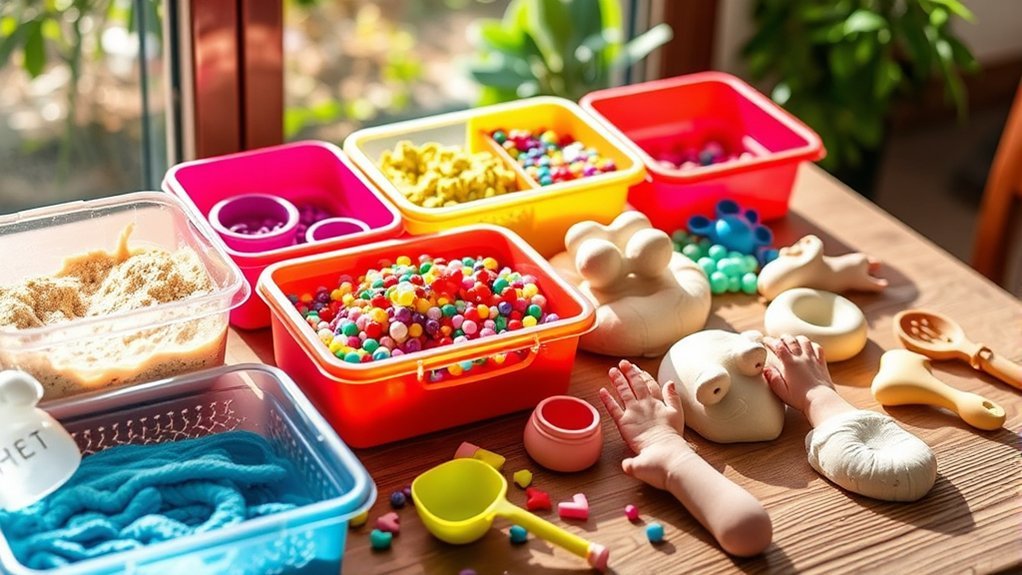
When it comes to sensory play, you’re tapping into a crucial aspect of childhood development. This type of play enhances creativity and critical thinking while strengthening sensory skills. Setting up your own sensory experiences at home is simpler than you might think. With just a few materials and some creativity, you can create engaging environments for exploration. Ready to discover some straightforward steps to get started? Let’s explore the possibilities together.
Benefits of Sensory Play
When you engage in sensory play, you’re not just having fun; you’re also enhancing essential developmental skills. This type of play stimulates your child’s senses—sight, sound, touch, taste, and smell—encouraging brain development and creativity.
Research shows that sensory experiences improve cognitive skills, helping kids learn to problem-solve and think critically. In addition, it fosters emotional regulation as children express feelings through exploration.
Engaging in sensory play can also enhance fine motor skills, as kids manipulate different materials, which is vital for tasks like writing. Social skills flourish too, as they often play alongside others, learning teamwork and communication.
Easy Sensory Bin Ideas
Creating sensory bins is a fantastic way to engage your child’s senses while encouraging exploration and creativity. To start, fill a large container with dry rice or pasta, and add small toys or scoopers for your child to discover.
You can also create a water-themed bin using water beads, plastic sea creatures, and cups for pouring. For a nature-inspired bin, collect leaves, pinecones, and stones, allowing your child to explore textures and scents.
Don’t forget seasonal themes—use dried corn and mini pumpkins in the fall or sand and seashells in the summer. These easy sensory bins stimulate curiosity and fine motor skills, making playtime both fun and educational.
DIY Sensory Activities for Home
You can easily bring sensory experiences into your home with a variety of DIY activities that stimulate your child’s senses and foster creativity.
Start with homemade playdough mixed with essential oils for an aromatic twist. Another fun idea is creating a sensory bag filled with hair gel and small objects, allowing your child to explore textures without the mess.
Sensory bins can be made using rice or beans, where you can hide toys for a playful treasure hunt. You might also try water play in a shallow tub, adding cups and sponges for pouring and squeezing.
Each of these activities encourages exploration and fine motor skills, making learning engaging and enjoyable for your little one right at home.
Outdoor Sensory Play Ideas
When you take sensory play outdoors, you open up a world of exploration and discovery.
A nature scavenger hunt encourages kids to engage with their environment, enhancing their observation skills while promoting physical activity.
Pair that with water and sand play, and you’ve got a perfect combo for sensory stimulation that also fosters creativity and fine motor skills.
Nature Scavenger Hunt
Although many children enjoy structured play, a nature scavenger hunt offers a delightful way to engage their senses while exploring the great outdoors. This hands-on activity encourages observation and curiosity, fostering a love for nature. To get started, create a simple checklist of items for the kids to find.
Here’s a sample list:
| Sight | Sound | Touch |
|---|---|---|
| A colorful leaf | Birds chirping | Smooth stone |
| Flower petals | Rustling leaves | Soft moss |
| A pine cone | Water flowing | Rough bark |
| A feather | Wind in trees | Cool dirt |
As they search, encourage them to describe what they find, deepening their sensory experiences and connection to the environment.
Water and Sand Play
Water and sand play provides a dynamic way for children to explore their senses while developing important motor skills.
Set up a designated outdoor area with bins or tables filled with water and sand. Encourage your child to scoop, pour, and mold the materials, which enhances hand-eye coordination and fine motor skills.
You can introduce tools like cups, shovels, and molds to make it more engaging. Incorporate sensory elements, such as adding food coloring to water or small toys hidden in the sand for a treasure hunt. This not only stimulates curiosity but also promotes imaginative play.
Remember to supervise closely, ensuring safety while allowing your child to experiment and enjoy the tactile experience of water and sand.
Seasonal Sensory Play Inspirations
As the seasons change, so do the sensory experiences you can create for your little ones.
In the fall, you can explore the textures of harvested crops, while winter invites you to craft a wonderland of snow and ice.
Spring brings the vibrant colors and scents of blooming gardens, providing endless opportunities for engaging sensory play.
Fall Harvest Activities
While the vibrant colors and crisp air of fall signal the harvest season, it’s also the perfect time to engage children in sensory play that celebrates nature’s bounty.
Gather items like pumpkins, gourds, and colorful leaves to create an engaging tactile experience. Encourage kids to explore different textures—smooth pumpkins, rough bark, and soft leaves.
You can also set up a sensory bin filled with dried corn, acorns, and hay, allowing children to dig, sift, and discover. Incorporate scents by adding cinnamon sticks or apple slices for olfactory stimulation.
Don’t forget to include a taste-testing station with seasonal fruits like apples or pears. These activities not only enhance sensory skills but also foster a deeper connection to the changing season.
Winter Wonderland Experiences
When the first snowflakes fall, it’s a magical time to plunge into winter sensory play that captivates children’s imaginations.
Create a “snow” bin using fresh, clean snow or cotton balls. Add winter-themed toys like penguins, polar bears, and snowflakes for tactile exploration.
You can also make a sensory ice block by freezing small toys in water, allowing kids to excavate them with warm water or salt.
Another idea is to create a homemade snow dough using flour, baby oil, and glitter for a festive touch.
Encourage creativity by providing tools like scoops, molds, and cookie cutters.
These activities not only boost sensory development but also spark joy and curiosity about the winter season.
Enjoy the frosty fun!
Spring Garden Exploration
Spring breathes new life into gardens, making it the perfect time for sensory play that engages children’s senses and curiosity. You can create a delightful exploration by incorporating different elements from nature. Here’s a simple guide to get started:
| Activity | Sensory Focus |
|---|---|
| Flower Scavenger Hunt | Sight & Smell |
| Soil Texture Exploration | Touch & Smell |
| Colorful Plant Painting | Sight & Creativity |
Encourage kids to feel the textures of leaves, smell fragrant flowers, and observe vibrant colors. This not only enhances their sensory development but also promotes curiosity about the natural world. Confirm they ask questions and make observations to deepen their engagement. Happy exploring!
Tips for Encouraging Sensory Exploration
To foster a rich sensory exploration experience, create an environment that invites curiosity and experimentation.
Create an inviting environment that sparks curiosity and encourages children to explore through sensory experiences.
By incorporating diverse materials and activities, you encourage children to engage their senses fully. Here are three tips to enhance their sensory exploration:
- Variety of Textures: Introduce items like sand, water, and fabric. Each texture offers unique tactile experiences that stimulate learning and creativity.
- Sensory Stations: Set up designated areas for specific activities, like a water play station or a nature corner, allowing children to explore different sensory experiences.
- Encouraging Questions: Prompt curiosity by asking open-ended questions. This fosters critical thinking and allows kids to express their thoughts and feelings about their sensory discoveries.
Emphasizing these elements will cultivate a love for exploration and learning.
Frequently Asked Questions
What Age Group Is Sensory Play Suitable For?
Sensory play’s suitable for children of all ages, from infants to toddlers and beyond. It helps develop motor skills, cognitive abilities, and creativity. You’ll find that engaging in sensory activities can benefit your child immensely.
Are There Any Safety Concerns With Sensory Play Materials?
Absolutely, safety’s essential! Always check materials for choking hazards, non-toxicity, and allergens. Supervise your child during play, ensuring they don’t ingest anything harmful. Isn’t it reassuring to know you can create a safe sensory environment?
How Can I Clean up After Sensory Play Activities?
To clean up after sensory play, gather materials and tools, like wipes or a vacuum. Sort and store items properly. Always check surfaces for residue, ensuring a safe, tidy environment for future activities.
Can Sensory Play Help Children With Special Needs?
Yes, sensory play can greatly benefit children with special needs. It enhances their motor skills, improves focus, and promotes emotional expression. Engaging in these activities fosters social interactions and supports overall development in a fun, interactive way.
How Often Should Sensory Play Be Incorporated Into a Child’s Routine?
Incorporating sensory play into a child’s routine three to five times a week can greatly enhance their development. Regular engagement helps build essential skills, so make it a fun, consistent part of their daily activities.
Conclusion
In the chaos of everyday life, sensory play offers a precious moment of calm and discovery. As your child digs through a bin of rice or splashes in water beads, they’re not just playing; they’re learning, exploring, and growing. While the world outside may rush by, this simple act of engagement fosters creativity and critical thinking. Embrace these sensory experiences, and watch as your child transforms everyday materials into a world of imagination and joy.
