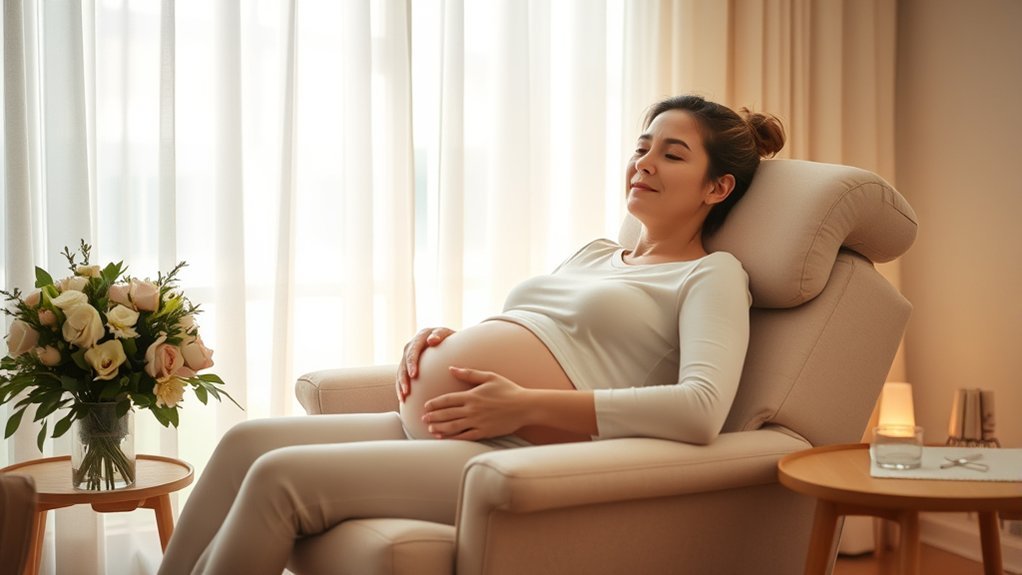
Imagine sinking into a supportive chair, the gentle angle cradling your back while you feel the stress of the day melt away. During pregnancy, finding the right recline angle isn’t just about comfort; it’s essential for your body’s alignment and circulation. As you navigate the physical changes, understanding how to achieve this balance can greatly influence your experience. What strategies can you employ to enhance your comfort and alleviate those nagging aches?
Understanding the Recline Angle and Its Importance
When you’re pregnant, understanding the recline angle becomes essential for your comfort and well-being. The way you position yourself can considerably affect your posture and reduce unnecessary strain on your back and hips.
Understanding the recline angle during pregnancy is crucial for comfort and reducing strain on your back and hips.
A proper recline angle, typically between 30 to 45 degrees, helps improve circulation and alleviate pressure on critical organs. It’s important to adjust your seating or sleeping arrangements to support this angle, especially as your body changes.
Using pillows or specialized pregnancy cushions can enhance your comfort, allowing you to relax effectively. Remember, maintaining this alignment not only benefits you but also supports your growing baby.
Prioritizing the right recline angle can make a noticeable difference in your overall pregnancy experience.
Common Pregnancy-Related Discomforts
As your pregnancy progresses, you’ll likely encounter a range of common discomforts that can affect your daily life. These may include morning sickness, fatigue, and heartburn.
You might also experience swelling in your feet and ankles, as well as frequent urination and mood swings. Back pain and changes in your sleep patterns can further add to your discomfort.
It’s important to listen to your body and address these issues as they arise. You may find relief through rest, hydration, and gentle exercise.
Don’t hesitate to reach out to your healthcare provider for guidance tailored to your specific needs. Remember, you’re not alone in maneuvering through these challenges; support is available to help you through this transformative journey.
How the Right Recline Angle Alleviates Back Pain
Finding the right recline angle can greatly alleviate back pain during pregnancy, especially as your body undergoes various changes.
When you adjust your position, you can relieve pressure on your spine and improve circulation, which helps reduce discomfort. A supportive recline can also encourage proper posture, minimizing strain on your lower back.
By positioning yourself at a favorable angle, you allow your muscles to relax, which can lead to significant pain relief. It’s important to listen to your body and make adjustments as needed, as what feels comfortable can change throughout your pregnancy.
Taking the time to find the best recline angle can enhance your overall well-being and make daily activities more manageable.
Recommended Recline Angles for Optimal Comfort
To guarantee ideal comfort during pregnancy, it’s vital to take into account the right recline angles that support your changing body.
For optimal comfort during pregnancy, it’s crucial to consider the right recline angles that accommodate your evolving body.
A recline angle between 30 to 45 degrees is often recommended, as it allows for better spinal alignment while alleviating pressure on your lower back. This position can help improve circulation, which is essential during pregnancy.
Additionally, using a wedge pillow can enhance this angle, providing extra support for your abdomen.
If you’re sitting for prolonged periods, aim for a recline between 15 to 30 degrees to minimize strain on your back and hips.
Techniques for Adjusting Your Recline Angle
Adjusting your recline angle during pregnancy can considerably enhance your comfort and well-being.
Start by choosing a supportive chair with adjustable features. Use pillows or cushions to find that perfect angle that relieves pressure on your back and hips. When sitting, aim for a 30 to 45-degree angle, as this position helps distribute your weight evenly.
If you’re lying down, elevate your upper body with a wedge pillow or adjust your bed’s incline. Remember to change positions regularly to avoid stiffness.
You can also practice gentle stretching before and after adjusting your angle. Listening to your body is key—if something feels uncomfortable, don’t hesitate to make further adjustments until you feel supported and relaxed.
Benefits of Proper Positioning During Sleep
Proper positioning during sleep can greatly impact your overall comfort and health during pregnancy.
By adopting the right sleep positions, you can enhance your well-being and support your baby’s growth. Here are some benefits you’ll enjoy:
- Reduced Back Pain: Proper alignment can alleviate strain on your back and spine, making it easier to rest.
- Improved Circulation: Sleeping on your side, especially the left, helps enhance blood flow to your heart and your baby.
- Less Heartburn: Certain positions can minimize acid reflux, allowing for a more peaceful night’s sleep.
Prioritizing proper positioning not only contributes to your comfort but also promotes a healthier pregnancy experience.
Make these adjustments to guarantee you and your baby get the rest you both need.
Additional Tips for Enhancing Comfort While Pregnant
To enhance your comfort during pregnancy, it’s crucial to focus on your sleep position and the use of supportive pillows.
Sleeping on your side can help improve circulation and reduce discomfort.
Additionally, strategically placed pillows can provide extra support for your back and belly, making rest more enjoyable.
Proper Sleep Position
While finding a comfortable sleep position during pregnancy can be challenging, prioritizing your comfort is essential for both your well-being and that of your baby.
The right sleep position can help alleviate discomfort and promote better rest. Here are some tips to enhance your sleep experience:
- Sleep on your side: Aim for your left side, as it improves blood circulation to the placenta and baby.
- Use a body pillow: Place it between your knees for added support and to relieve pressure on your hips.
- Elevate your head: A slight incline can ease heartburn and improve breathing.
Supportive Pillows Usage
Finding the right sleep position is just the beginning of ensuring comfort during pregnancy. Supportive pillows can make a significant difference. They help alleviate pressure points and provide essential back and belly support. Here’s how you can utilize different types of pillows effectively:
| Pillow Type | Usage |
|---|---|
| Pregnancy Pillow | Cradle your belly for support |
| Body Pillow | Align your spine and hips |
| Wedge Pillow | Elevate your upper body for comfort |
Experiment with these options to find what feels best for you. Positioning pillows between your legs or under your belly can enhance alignment and relieve discomfort. With the right pillows, you’ll create a more restful sleep environment during this special time.
Frequently Asked Questions
Can I Use a Recliner During Pregnancy?
Yes, you can use a recliner during pregnancy. It can provide comfort and support, especially during the later stages. Just make sure it promotes good posture and doesn’t strain your back or legs.
What Are Signs My Recline Angle Is Incorrect?
If you experience discomfort, pain, or numbness in your legs and back, your recline angle might be incorrect. You should adjust the angle to guarantee proper support and circulation during your rest periods.
Are There Specific Pillows for Better Support?
Imagine sinking into a cloud of comfort; specific pregnancy pillows offer tailored support. They cradle your body, reduce pressure points, and promote proper alignment—ensuring you stay cozy and relaxed through those important months ahead.
How Can I Adjust My Recline Angle in Bed?
To adjust your recline angle in bed, try using adjustable bed frames or wedges. You can also stack pillows behind your back for added support, ensuring you’re comfortable while maintaining proper posture during rest.
Is It Safe to Sleep on My Back While Pregnant?
It’s generally not recommended to sleep on your back during pregnancy. Doing so can compress blood vessels and reduce circulation. Try sleeping on your side, especially your left side, for better comfort and blood flow.
Conclusion
Incorporating the right recline angle into your daily routine can be a game changer during pregnancy. Think of it as finding your perfect cozy nook where both comfort and support embrace you, easing discomfort and nurturing your body. By prioritizing your positioning, you’re not just alleviating pain; you’re creating an environment that fosters relaxation and well-being. Remember, every small adjustment counts, paving the way for a smoother, more enjoyable pregnancy journey.
