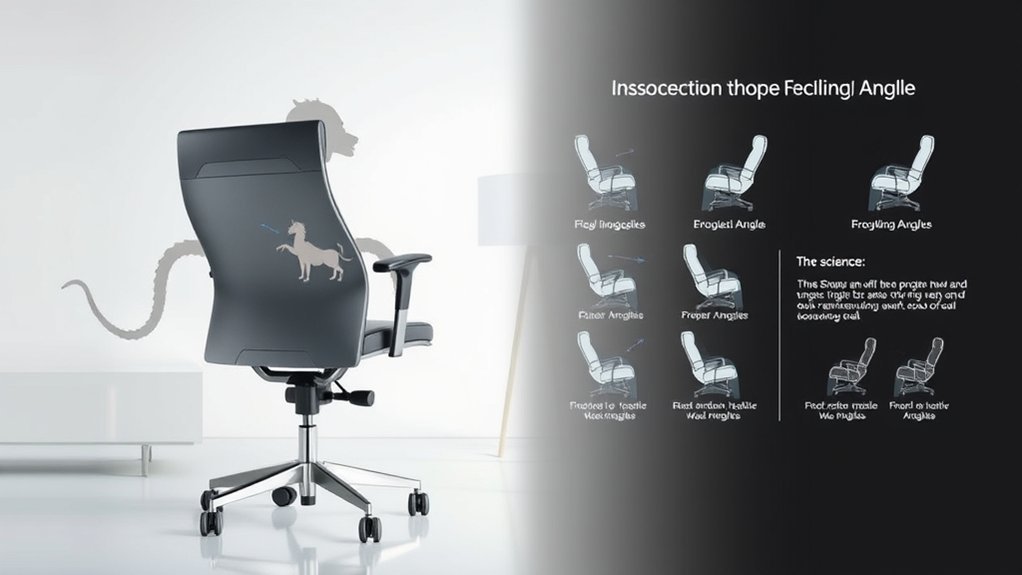
When considering recline angles, you might think a steeper position guarantees comfort, but that’s a common misconception. The relationship between recline angle and relaxation isn’t straightforward. In fact, the ideal angle for your body could vary considerably based on individual factors. Understanding the nuances of how different angles affect your posture and circulation can lead to better choices. What you find comfortable might not be universally true, prompting a deeper exploration into the facts and myths surrounding recline angles.
The Science of Reclining: Understanding the Anatomy
When you recline, your body’s anatomy plays an essential role in how comfortable and supported you feel. The spine’s natural curvature, particularly the lumbar region, influences your posture during reclining.
As you lean back, your pelvis tilts, affecting spinal alignment and the distribution of weight across your body. Your muscles, including those in your back and abdomen, must engage to maintain stability and prevent strain.
Additionally, your joints, particularly in the hips and knees, experience changes in angle and pressure, which can impact overall comfort. Understanding these anatomical factors helps you select furniture that supports your body’s needs, ensuring proper alignment and reducing discomfort.
Common Misconceptions About Recline Angles
How often do we mistakenly believe that a steeper recline always offers better support? This misconception can lead to discomfort during extended sitting.
Here are some common myths about recline angles:
- All steep reclines are comfortable: A deep angle can hinder circulation and create pressure points.
- Reclining reduces back strain: While it can alleviate pressure, the angle must be appropriate for your body type.
- More recline equals better relaxation: Psychological effects vary; some might feel anxious in a reclined position.
- Everyone needs the same recline angle: Individual anatomy and preferences greatly influence comfort levels.
Understanding these misconceptions helps you choose the right angle for your needs, ensuring a better seating experience.
The Ideal Angle for Comfort: Fact or Fiction?
When considering the ideal recline angle for comfort, it’s vital to recognize that best positions can vary markedly from person to person.
While some studies suggest specific angles may enhance rest, your individual preferences often play a more important role in determining comfort.
Understanding this balance can help you find the perfect reclining position for your needs.
Optimal Recline for Rest
Finding the ideal recline angle for rest can greatly influence your comfort and overall well-being. Research suggests that a recline angle between 30 to 45 degrees is generally best for relaxation and support.
Here are some key factors to take into account:
- Spinal Alignment: Make sure your spine remains aligned to prevent discomfort.
- Pressure Distribution: A proper angle helps distribute body weight evenly, reducing pressure points.
- Breathing Ease: A slight recline can improve your airflow, aiding relaxation and sleep quality.
- Muscle Relaxation: An ideal angle encourages muscle relaxation, making it easier to unwind.
Individual Preferences Matter Most
While many guidelines suggest specific recline angles for ideal comfort, personal preferences play an essential role in determining what truly feels best for you.
Comfort isn’t one-size-fits-all; factors like body type, height, and even mood can influence your preferred angle. Research indicates that some individuals may find a 30-degree recline most comfortable, while others lean toward a more upright or fully reclined position.
It’s important to experiment with different angles to discover what works for you. Consider how your back, neck, and legs feel at various inclinations.
Ultimately, your comfort is subjective, so trust your own sensations over generalized recommendations. Finding your ideal recline angle can greatly enhance your relaxation experience.
How Reclining Affects Posture
Reclining can markedly impact your spine alignment, affecting how your body supports itself.
While a comfortable position might feel appealing, it’s essential to balance comfort with adequate support to maintain good posture.
Understanding this relationship can help you make informed choices about how you recline.
Impact on Spine Alignment
As you shift into a reclined position, the angle at which you rest can greatly influence your spine alignment. An optimal recline not only enhances comfort but also promotes better posture.
Here are four key factors to take into account:
- Angle of Recline: A 30-degree angle is often regarded as ideal for maintaining spinal curvature.
- Lumbar Support: Adequate lumbar support helps maintain the natural curve of the lower back.
- Neck Position: Make certain your head and neck are aligned to prevent strain on cervical vertebrae.
- Knee Position: Your knees should be slightly elevated to align the pelvis and reduce pressure on the spine.
Comfort vs. Support Balance
Achieving the right balance between comfort and support is essential for maintaining good posture when reclining. When you recline, your spine’s natural curvature should be supported to prevent strain.
A chair that’s too soft may feel cozy but can lead to slouching, compromising your alignment. Conversely, overly firm seating might provide support but can result in discomfort, causing you to shift positions frequently.
Aim for a recline angle that promotes an open hip angle, ideally between 100 to 110 degrees, to enhance both comfort and support. This angle helps distribute your weight evenly while keeping your spine aligned.
Reclining and Sleep Quality: What the Research Says
While many believe that reclining during sleep enhances rest, research presents a more nuanced picture.
Studies indicate that the angle of recline can influence sleep quality in various ways. Here are some key findings:
- Sleep Duration: Reclining might shorten overall sleep time for some individuals.
- Sleep Stages: Certain reclined positions can disrupt the balance of REM and non-REM sleep.
- Sleep Apnea: For those with sleep apnea, reclining may exacerbate breathing difficulties.
- Comfort Levels: Individual comfort plays a significant role; some may find reclining beneficial, while others don’t.
Understanding these factors can help you make informed choices about your sleeping position, ultimately impacting your overall sleep quality and health.
The Impact of Reclining on Circulation
Reclining can considerably affect circulation, especially if you spend extended periods in a tilted position. When you recline, blood flow can be compromised, leading to potential issues like swelling, discomfort, or even more serious conditions. Understanding how different angles impact your circulation is vital for your overall health.
| Recline Angle | Potential Impact | Recommended Action |
|---|---|---|
| 30° | Moderate blood flow | Short breaks every hour |
| 45° | Reduced circulation | Adjust position frequently |
| 60° | High risk of pooling | Limit duration |
Maintaining proper circulation while reclining isn’t just a comfort issue; it’s essential for your long-term health. Being mindful of your angle can make a significant difference.
Reclining in Different Settings: Home vs. Travel
Whether you’re lounging on your couch at home or enduring a long flight, the setting in which you recline plays an essential role in your comfort and health.
Home and travel environments offer distinct challenges and benefits for reclining. Here are four key considerations:
Home and travel settings present unique challenges and advantages for reclining, influencing your comfort and relaxation.
- Support: Home furniture often provides better back support than airline seats.
- Space: At home, you can adjust your position freely; on a plane, space is limited.
- Duration: Extended reclining at home can promote relaxation, while long flights may lead to discomfort.
- Distractions: Home environments allow for a more controlled atmosphere, whereas travel can introduce noise and movement that disrupt comfort.
Understanding these differences helps you make informed decisions about how to recline effectively in various situations.
Ergonomics and Reclining: Finding the Right Balance
How can you guarantee your reclining position supports both comfort and health? The key lies in understanding the ergonomics of reclining. You want to maintain a neutral spine and distribute your weight evenly. Here’s a quick reference table to help you find the right balance:
| Recline Angle | Benefits | Considerations |
|---|---|---|
| 90° | Upright posture | Less relaxation |
| 120° | Balanced support | May cause pressure points |
| 135° | Ideal comfort & alignment | Risk of sleepiness |
| 150° | Maximum relaxation | Reduced alertness |
Personal Preference: The Role of Individual Comfort
Finding the right reclining position often comes down to personal preference, as comfort varies considerably from person to person. Your ideal angle may depend on several factors.
To help you find what works best for you, consider these key aspects:
- Body Type: Different shapes and sizes can impact how you experience recline angles.
- Posture: Your natural sitting posture influences comfort; a recline that feels good for one may not suit another.
- Activity: Whether you’re reading, watching TV, or napping can dictate what angle feels right.
- Health Conditions: Existing health issues, like back pain, can alter your comfort needs when reclining.
Frequently Asked Questions
Can Reclining Help With Back Pain Relief?
Yes, reclining can help relieve back pain by reducing pressure on the spine and promoting better posture. It allows your muscles to relax, which may alleviate discomfort, especially during long periods of sitting or standing.
Does Reclining Improve Focus During Work or Study?
Reclining’s like adjusting a telescope; it can enhance your focus. Studies show that a slight recline may boost concentration and creativity, allowing your mind to engage more deeply with tasks, improving productivity during work or study.
Is There an Ideal Recline Angle for Gaming?
There isn’t a universally ideal recline angle for gaming; however, most gamers find a 30 to 45-degree angle comfortable. This position balances relaxation and alertness, enhancing both focus and responsiveness during intense gameplay.
How Does Reclining Affect Digestion After Meals?
Reclining after meals can slow digestion. Have you noticed discomfort when lying back too soon? It’s better to stay upright for at least 30 minutes to help your body process food efficiently and avoid issues.
Can Excessive Reclining Lead to Any Health Issues?
Excessive reclining can lead to health issues like poor circulation, increased risk of obesity, and digestive problems. Maintaining an upright position promotes better blood flow, digestion, and overall well-being, so consider your posture throughout the day.
Conclusion
In the quest for the perfect recline, remember that comfort isn’t solely about how far back you lean. Think of it as finding a harmonious balance, where your body feels cradled rather than confined. By embracing the ideal angle of 30 to 45 degrees, you’re nurturing your posture and circulation, leading to a more restful experience. So, as you settle into your seat, let the science guide you to a blissful retreat, where relaxation and well-being intertwine seamlessly.
