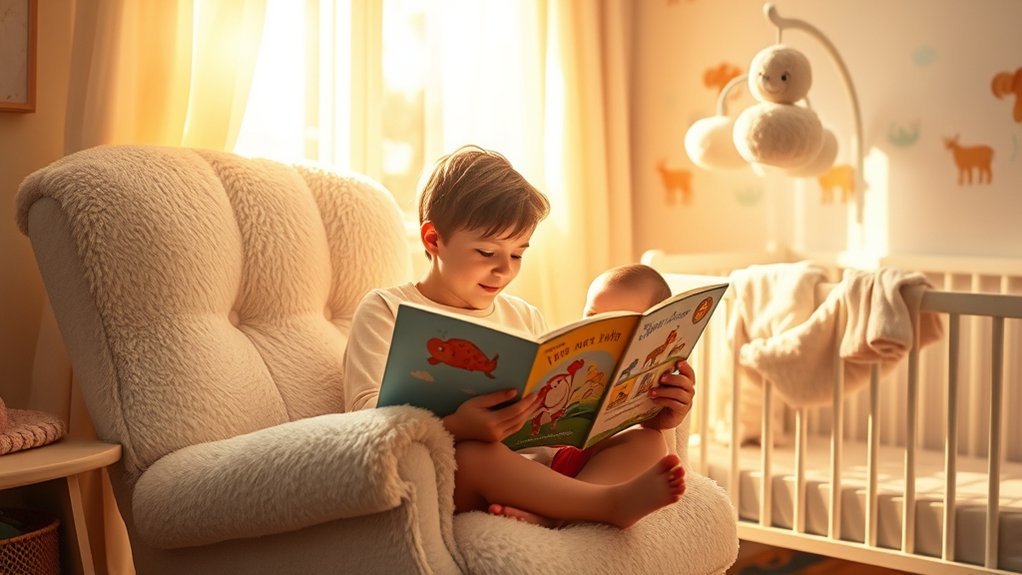
You might think that babies are too young to appreciate stories, but their reactions tell a different story. Observing their smiles, coos, and wide-eyed fascination can be truly enlightening. These joyful interactions not only enhance emotional bonds but also play a vital role in their development. Curious about the specific signs of engagement you can look for? Let’s explore how these moments can shape your baby’s early experiences and skills.
The Joyful Reactions: Smiles and Giggles
When you read to your baby, you’re likely to witness pure joy in their reactions—those delightful smiles and contagious giggles. These responses are crucial for their emotional and cognitive development.
Reading to your baby sparks pure joy, nurturing their emotional and cognitive growth through smiles and giggles.
Research shows that positive interactions during reading can strengthen your bond and boost your baby’s confidence. As they hear the rhythm of your voice and see the colorful pages, they start to associate reading with happiness. This connection fosters a love for books early on.
Plus, each smile and giggle encourages you to read more, reinforcing their learning. Pay attention to their cues; your baby’s joyful reactions indicate engagement and interest, making reading a joyful experience for both of you.
Enjoy these precious moments—they’re more than just fun; they’re important for growth.
Captivated by Colors: Visual Engagement
Colors burst to life on the pages of children’s books, enchanting your baby’s attention and sparking their imagination. Infants are naturally drawn to bright colors, which can stimulate their visual development.
Research shows that vibrant hues not only capture your little one’s gaze but also enhance their cognitive skills as they learn to recognize and differentiate between shades. As you read, you’ll notice their eyes widening and following the illustrations, signaling engagement and curiosity.
Choosing books with high-contrast images can further boost their focus. This visual interaction lays the groundwork for lifelong learning, helping your baby develop essential skills.
Vocal Responses: Coos and Babbling
As you read to your baby, you might notice their delightful coos and babbling, which are essential forms of communication and expression.
These sounds indicate your baby’s engagement and emotional responses to the story. Here are three ways to encourage this vocal interaction:
- Respond: When your baby coos or babbles, mimic their sounds or respond with enthusiasm. This reinforces their attempts to communicate.
- Pause: After a few sentences, pause and give your baby a chance to vocalize. This encourages turn-taking, much like a conversation.
- Vary Your Tone: Use different voices or tones while reading. Babies respond well to varied sounds, stimulating their language development.
Physical Interaction: Reaching and Grabbing
Engaging your baby through physical interaction, like reaching and grabbing, is essential for their development. These actions help strengthen their muscles and enhance coordination.
When you present colorful objects or toys, your baby’s instinct to reach and grab kicks in, fostering fine motor skills. Encourage this behavior by placing toys just out of reach, inviting them to stretch and move. This not only builds physical strength but also boosts their confidence as they achieve small milestones.
As your baby explores different textures and shapes, they’re developing sensory awareness. Celebrate their efforts with smiles and encouragement; it reinforces positive behavior and creates a joyful learning environment.
Developing Attention Span: Focused Listening
While you may think babies have short attention spans, you’re actually laying the groundwork for focused listening through simple activities like reading aloud. Engaging with your little one helps them connect sounds and words, fostering concentration.
Here are a few tips to enhance their attention span:
- Choose Interactive Books: Opt for books with textures or flaps to keep their interest alive.
- Use Expressive Voice: Vary your tone and pace to capture their attention and make the story come alive.
- Limit Distractions: Create a cozy reading space, minimizing noise and interruptions, so your baby can focus.
Frequently Asked Questions
How Often Should I Read to My Baby Each Day?
You should read to your baby daily, ideally 15-30 minutes spread throughout the day. This routine fosters bonding, boosts language skills, and nurtures a love for books early on. Enjoy this special time together!
What Age Is Best to Start Reading to My Baby?
You might think waiting is better, but starting to read to your baby at birth is ideal. Early exposure fosters language skills, bonding, and cognitive development, so grab those books and plunge into storytelling together!
Can Reading Improve My Baby’s Language Skills?
Yes, reading greatly boosts your baby’s language skills. It enhances vocabulary, comprehension, and listening abilities. Engaging with books stimulates their imagination and encourages a love for learning, helping them communicate more effectively as they grow.
Should I Choose Specific Types of Books for My Baby?
Choosing specific types of books for your baby’s development is essential. You’ll want colorful, engaging stories that encourage interaction. Research shows that varied vocabulary and relatable themes enhance language skills and foster a love for reading.
How Can I Make Reading More Interactive for My Baby?
You can make reading interactive by using different voices for characters, asking questions about the pictures, and encouraging your baby to turn pages. This engagement fosters a love for reading and strengthens your bond.
Conclusion
Reading to your baby isn’t just a delightful experience; it’s essential for their development. Did you know that babies who are read to regularly can develop a larger vocabulary by age two? Those smiles, giggles, and coos aren’t just cute—they’re signs of your little one engaging with the world around them. By sharing stories, you’re not only bonding but also laying the groundwork for their language skills and attention span. Keep those pages turning!
