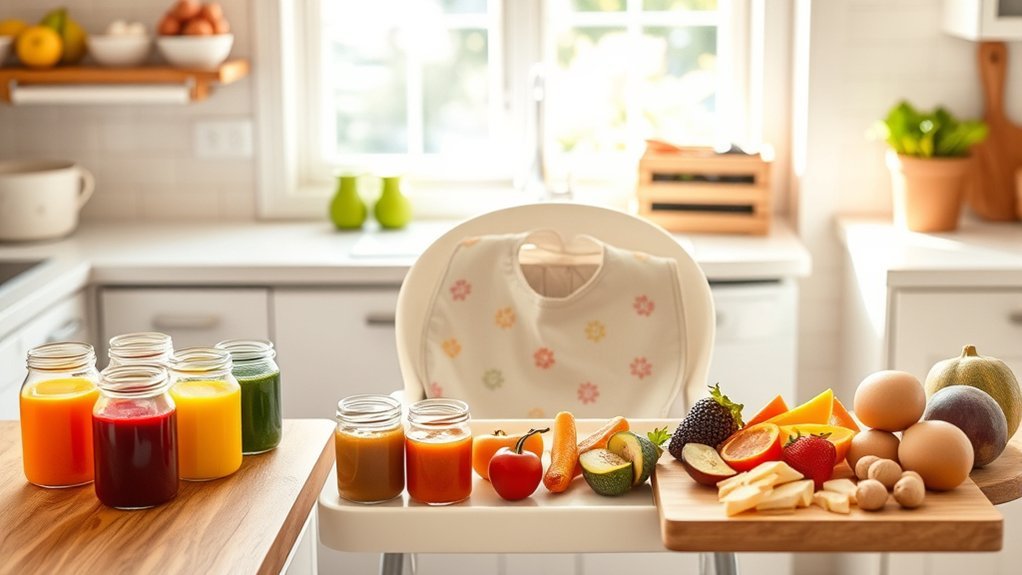
Many parents choose purees as their first feeding method. While this approach can ease your baby into solid foods, baby-led weaning (BLW) offers a different experience that promotes self-feeding and exploration. Understanding the benefits and challenges of both methods can make a real difference in your child’s development. So, how do you decide which path to take for your little one?
Quick Answer
- Purees are smooth, easy to swallow, and great for younger infants or babies just starting solids.
- Baby-led weaning lets babies self-feed whole, soft foods from the start, supporting motor skills and food exploration.
- Both methods are nutritionally valid, and many families use a mix of both.
- The best choice depends on your baby’s readiness, your family’s routine, and your pediatrician’s guidance.
Understanding Purees: Benefits and Considerations
When you introduce purees to your baby’s diet, you’ll find several benefits that can ease the shift to solid foods. Purees are smooth and easy to swallow, which lowers the risk of choking — especially for younger infants. They also let you control texture and flavor, helping your baby develop a taste for different foods.
Nutrition-wise, purees can be packed with vitamins and minerals. Another advantage: introducing purees one ingredient at a time makes it easier to spot food allergies early. Talk to your pediatrician to make sure the timing and approach fit your baby’s individual needs.
The Basics of Baby-Led Weaning
Baby-led weaning (BLW) is a feeding approach where you let your baby self-feed solid foods instead of spoon-feeding purees. This method encourages independence and helps develop your baby’s motor skills and taste preferences. Here’s a closer look at the key benefits of BLW and how it can shape your child’s eating habits.
What Is Baby-Led Weaning?
BLW allows your baby to self-feed, promoting independence and curiosity around food. Unlike traditional spoon-feeding, this method encourages your child to pick up and eat whole pieces of food from the start.
Key aspects of baby-led weaning include:
- Self-Feeding: Your baby picks up food and brings it to their mouth.
- Whole Foods: You offer soft, age-appropriate foods instead of purees.
- Family Meals: Your baby eats what the family eats, which builds social interaction.
- Gradual Introduction: Solids are introduced around six months, in line with developmental readiness.
Getting familiar with these basics will help you decide if BLW is the right fit for your family.
Benefits of Baby-Led Weaning
BLW offers a range of positive outcomes for both babies and parents. First, it promotes independence as your baby learns to self-feed and explore different textures. This approach can also enhance motor skills, improving hand-eye coordination and dexterity.
Research suggests that babies who practice BLW may develop healthier eating habits, as they’re more likely to accept a variety of foods. For parents, it can reduce mealtime stress — no need to prepare separate purees or spoon-feed at every meal. BLW also brings babies into family mealtimes, building early social habits around food. Overall, it can create a positive food environment that supports growth while making meals more enjoyable for everyone.
Nutritional Differences Between Purees and BLW
Both purees and BLW can meet your baby’s nutritional needs, but they do so in different ways. Purees can be packed with nutrients but may limit exposure to varied textures. BLW encourages self-feeding with whole foods, which may support digestion and sensory development over time. Understanding these differences can help you pick the best approach for your baby.
Nutrient Density Comparison
Both methods offer real nutritional value. Here’s how they compare:
- Purees make it easier for babies to digest individual foods, delivering concentrated nutrients in each serving.
- BLW encourages self-feeding with whole foods, which can expose your baby to a wider range of nutrients naturally.
- Purees can be fortified with added nutrients like iron and vitamins, tailored to your baby’s specific needs.
- BLW’s whole food textures may encourage better sensory exploration and openness to different flavors.
Whichever method you choose, the goal is a balanced diet rich in the nutrients your baby needs to grow.
Digestive Development Impact
The feeding method you choose can affect your baby’s digestive development in different ways. Purees tend to ease the shift from milk since they’re simpler to digest and carry a lower choking risk. BLW, on the other hand, exposes your baby to different textures from early on, which can build oral motor skills and support digestion over time.
Some research suggests that babies who practice BLW may adapt more readily to varied food textures, which can support a stronger digestive system down the road. Letting your baby self-feed can also help them tune into their own hunger cues, which lays a solid foundation for healthy eating later in life. Both methods have real benefits for digestive growth.
Preparing Purees: Tips and Techniques
Making purees at home can be a rewarding part of your baby’s feeding journey. A few tips to get it right:
- Choose fresh ingredients: Seasonal fruits and vegetables tend to have better flavor and more nutrients.
- Cook thoroughly: Steam or boil produce until soft to improve digestibility and taste.
- Blend to the right consistency: Use a blender or food processor for a smooth texture, adding water or broth if needed.
- Store properly: Freeze purees in small portions using ice cube trays for easy reheating later.
Getting Started With Baby-Led Weaning
BLW is a hands-on, exploratory way for your baby to discover solid foods while building motor skills. To get started, choose age-appropriate foods that are soft and easy to grasp — steamed vegetables, ripe fruits, or cooked pasta all work well. Aim for finger-sized pieces your baby can pick up on their own.
Most babies are ready to try BLW at around six months old, when they can sit up independently and show clear interest in food. Let your baby feed themselves and explore textures at their own pace. Keep mealtimes relaxed and pressure-free — and expect some mess. That’s part of the process.
Safety Considerations for Both Approaches
Safety is a top priority when introducing solids, no matter which method you use. Both purees and BLW come with specific safety points to keep in mind:
- Always supervise your baby during meals to prevent choking.
- Make sure food is the right size and texture for your baby’s developmental stage.
- Be aware of potential allergens and introduce them one at a time, gradually.
- Keep emergency contacts and a first aid kit on hand, just in case.
How to Transition Between Purees and BLW
As your baby grows more comfortable with eating solids, moving between purees and BLW can be a natural, gradual process. Start by offering soft finger foods alongside purees, letting your baby pick them up and explore. Slowly reduce the amount of puree as they show more interest in feeding themselves.
| Stage | Purees | BLW |
|---|---|---|
| Initial | Smooth, single flavors | Soft, easy-to-grasp foods |
| Intermediate | Chunky purees | Larger pieces of food |
| Advanced | Mixed textures | Variety of family foods |
Personalizing Your Feeding Journey: Finding What Works for You
The right feeding approach is the one that fits your family. To personalize your experience, think through a few key factors:
Feeding your baby is a personalized journey influenced by your family’s lifestyle, culture, and your child’s unique needs.
- Your child’s developmental stage: Assess their readiness for solids or finger foods.
- Family lifestyle: Choose a method that fits your daily routine and social occasions.
- Cultural background: Bring in traditional foods and practices that reflect your family’s roots.
- Health considerations: Talk to a pediatrician if your baby has allergies or specific dietary needs.
Feel free to mix purees and BLW until you find what works best. There’s no one-size-fits-all answer here, and staying flexible as your baby grows and their preferences change is the real key.
Frequently Asked Questions
Can I Mix Purees and BLW in My Feeding Approach?
Yes, you can mix purees and BLW. Combining both methods gives your baby variety and helps them explore textures while making sure they get the nutrients they need for healthy development.
What Age Should I Start Introducing Finger Foods?
Most babies are ready for finger foods around six months. Starting at this stage helps develop motor skills and encourages self-feeding, making mealtimes more engaging for both of you.
How Do I Know if My Baby Is Ready for Solids?
Your baby is likely ready for solids when they can sit up with support, show interest in food, and can move food toward their mouth. This typically happens around six months, though every baby develops at their own pace.
Are There Any Foods to Avoid With Both Methods?
Yes. Avoid honey, whole nuts, and choking hazards like popcorn or hard candies. Also steer clear of high-sugar and high-salt foods, as these can be hard on your baby’s developing palate and overall health.
How Can I Encourage My Baby to Try New Foods?
Offer a variety of textures and flavors, make mealtimes fun, and involve your baby in food preparation when you can. Be patient. Repeated exposure is usually what builds interest and acceptance over time.
Conclusion
Whether you go with purees or baby-led weaning, it all comes down to what fits your family best. Both methods have their strengths, so don’t be afraid to mix and match as you figure things out. Keeping safety a priority throughout will help make the experience positive for both you and your baby. As the saying goes, “there’s more than one way to skin a cat” — so trust your instincts and enjoy the journey together.
