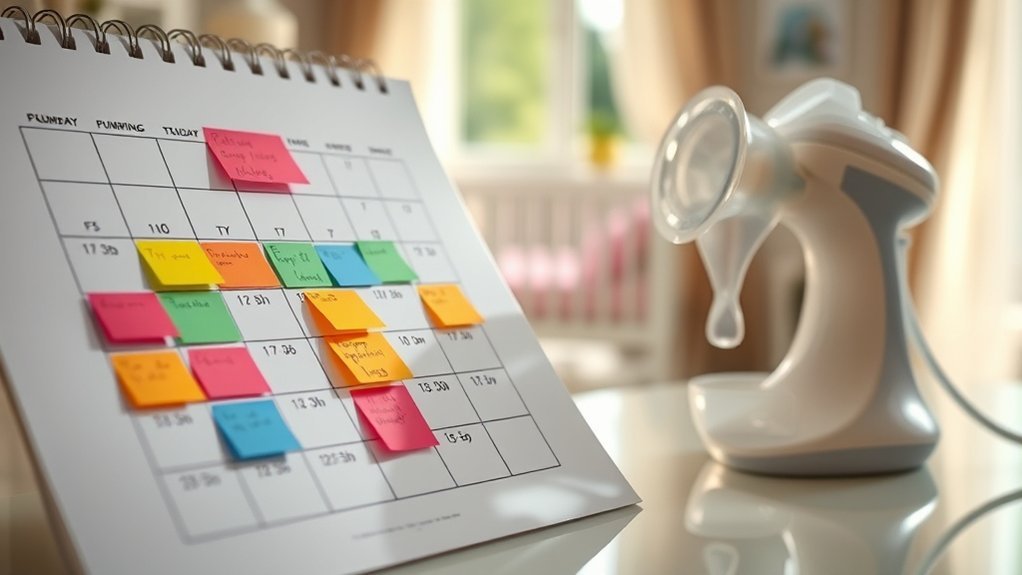
There’s a common belief that sticking to a strict pumping schedule guarantees ideal milk supply. However, this notion often overlooks the importance of individual body cues and needs. Understanding how to balance your routine with your body’s signals could be the key to enhancing your milk flow. So, what factors should you consider to fine-tune your approach and prevent potential setbacks?
Understanding Your Body’s Needs
Understanding your body’s needs is essential for establishing an effective pumping schedule. First, you need to assess your milk supply, which can fluctuate based on factors like hydration, nutrition, and stress levels.
Assessing your milk supply and understanding your body’s needs are key to creating an effective pumping schedule.
Tracking the volume you pump can help you identify patterns in your production. Pay attention to your body’s signals; discomfort or engorgement indicates that you’re not pumping frequently enough. Aim to pump at intervals that mirror your baby’s feeding patterns, typically every two to three hours.
Consider your comfort level, as stress can negatively impact your milk production. Utilize a breast pump that suits your physiology, ensuring proper fit and suction settings to maximize output.
This foundational understanding will guide you toward a successful and productive pumping experience.
Creating a Balanced Pumping Routine
To create a balanced pumping routine, you need to establish consistent timing that aligns with your body’s natural rhythms.
Keep a close eye on your milk production to guarantee you’re meeting your baby’s needs effectively.
As your lifestyle changes, be ready to adjust your pumping schedule to maintain that balance and efficiency.
Establish Consistent Timing
While juggling the demands of breastfeeding and daily life, establishing consistent timing for your pumping sessions can greatly enhance your milk supply and overall efficiency. Aim for a routine that aligns with your baby’s feeding schedule, typically every two to three hours.
By adhering to regular intervals, you signal your body to produce milk more effectively, optimizing your supply. Consider using reminders on your phone or a dedicated pumping log to maintain this schedule.
Additionally, make certain that your pumping environment is conducive to relaxation, which can further improve milk let-down. Consistency not only supports your milk production but also helps you develop a habit that integrates seamlessly into your daily activities, making pumping less of a chore and more of a manageable task.
Monitor Milk Production
Monitoring your milk production is essential for creating a balanced pumping routine that meets both your needs and your baby’s.
To effectively measure your output, track the volume collected during each session. Use a reliable measuring container and record the amounts daily. This data helps identify patterns in your production, revealing peak times and potential dips.
If you notice a consistent decrease, consider reviewing your pumping technique and frequency. Regularly evaluating your milk supply allows you to adjust your routine to optimize output.
Additionally, pay attention to any changes in your baby’s feeding behavior, as they can signal shifts in your production needs. By actively monitoring these factors, you can guarantee a sustainable and efficient pumping schedule.
Adjust for Lifestyle Changes
As your life circumstances evolve, adapting your pumping schedule becomes crucial for maintaining an effective routine.
Consider factors like work commitments, travel plans, and family responsibilities. Analyze your daily activities to identify ideal pumping times that align with these changes.
For instance, if you’ve returned to work, you might need to pump during breaks or adjust your frequency to guarantee adequate milk supply.
Utilize a tracking app to monitor your pumping sessions, which can help you identify patterns and make necessary adjustments.
Consistency is key; try to maintain similar intervals between sessions.
Don’t hesitate to experiment with different schedules to find what works best for you while guaranteeing your milk production meets your baby’s needs.
Incorporating Rest and Recovery
Incorporating rest and recovery into your pumping schedule is essential for maintaining peak performance and preventing burnout. Prioritize designated rest periods, as these allow your body to repair and replenish energy stores, enhancing overall efficiency.
Analyze your workload; if you notice increased fatigue or decreased milk output, it’s a signal to adjust your pumping frequency to include more recovery time. Utilize techniques such as power naps or light stretching during breaks to further aid recovery.
Monitor your mental and physical well-being closely; if stress levels rise, consider implementing longer rest periods. Remember, a well-structured schedule that balances activity and recovery will optimize your pumping experience and safeguard against exhaustion, ultimately leading to sustained productivity and satisfaction.
Hydration and Nutrition Essentials
To guarantee ideal milk production and overall well-being, you must prioritize hydration and nutrition in your pumping schedule. Adequate fluid intake and balanced meals are vital for maintaining energy levels and supporting lactation.
| Nutrient | Importance | Sources |
|---|---|---|
| Water | Essential for milk volume | Water, herbal teas |
| Protein | Supports tissue repair | Lean meats, legumes |
| Healthy Fats | Aids in hormone regulation | Avocados, nuts, olive oil |
| Vitamins & Minerals | Boosts overall health | Fruits, vegetables, whole grains |
Monitoring Progress and Adjusting Schedules
To effectively monitor your pumping progress, track the volumes you produce at each session.
This data allows you to identify patterns and make necessary adjustments to your pumping schedule.
Flexible timing can lead to improved outcomes, ensuring you meet your hydration goals efficiently.
Track Pumping Volumes
As you monitor your pumping volumes, tracking progress becomes essential for adjusting schedules effectively. Regularly record the amount of milk you extract during each session. This data helps identify patterns in your production, allowing you to determine ideal pumping times.
Utilize a consistent method, whether it’s a digital app or a manual log, to guarantee accuracy. Analyze your volumes weekly to spot fluctuations; this can indicate changes in your milk supply or the need for schedule adjustments. If you notice a consistent decrease, consider increasing session frequency or duration.
Conversely, if your volumes are stable or increasing, you might adjust your schedule to maintain efficiency while preventing overproduction. By keeping a close eye on your volumes, you can refine your pumping routine sustainably.
Adjust Timing Flexibly
While you monitor your pumping progress, adjusting your timing flexibly is essential for optimizing milk production. Pay attention to your body’s signals and adapt your schedule as necessary.
If you notice decreased output, consider increasing the frequency of sessions or altering the time of day you pump. Research shows that milk production can vary based on hormonal fluctuations, so timing adjustments can greatly impact results.
Additionally, assess your daily routines and identify peak times when milk flow is stronger. Keeping a detailed log of your pumping sessions will help you identify patterns and make informed decisions.
Recognizing Signs of Overtraining
Recognizing the signs of overtraining is essential for maintaining ideal performance and overall well-being. You should pay close attention to persistent fatigue, mood swings, and decreased motivation, as these can indicate your body is struggling to recover.
Monitor your performance metrics; if you notice a plateau or decline in strength or endurance, that’s a red flag. Additionally, changes in sleep patterns and elevated resting heart rates may signal overtraining.
Be aware of increased susceptibility to injuries and illnesses, which can arise when your immune system is compromised. If you experience these symptoms, consider adjusting your training regimen, incorporating rest days, and focusing on proper nutrition to facilitate recovery.
Prioritizing these factors will help you sustain long-term progress and health.
Frequently Asked Questions
How Does Stress Affect My Pumping Schedule?
Stress can disrupt your pumping schedule by affecting milk production and letdown. When you’re stressed, your body’s hormones fluctuate, making it harder to express effectively, leading to reduced supply and potential missed pumping sessions.
Can I Pump During My Menstrual Cycle?
Yes, you can pump during your menstrual cycle. Think of your body like a finely tuned machine; while hormonal changes might affect milk supply, many find it manageable. Stay hydrated and monitor your comfort levels closely.
What Equipment Do I Need for Effective Pumping?
You’ll need a high-quality breast pump, flanges that fit comfortably, storage bags or bottles, a cooler for transport, and possibly a hands-free pumping bra. Each component guarantees efficient and effective pumping sessions tailored to your needs.
How Do I Manage Pumping While Traveling?
To manage pumping while traveling, plan your schedule around time zones, pack your equipment efficiently, and locate suitable pumping areas. Stay hydrated, maintain a consistent routine, and guarantee you have adequate storage for milk.
Are There Best Times of Day for Pumping?
You’ll find that early morning and late evening are often the best times for pumping. These periods typically coincide with increased milk production, maximizing efficiency while meeting your needs and ensuring a steady supply.
Conclusion
In conclusion, establishing a pumping schedule is much like tuning an instrument; consistency and attention to detail are key. Just as a violinist must adjust their strings for best sound, you must listen to your body and refine your routine. By balancing pumping with rest, hydration, and nutrition, you’ll create a harmonious flow of milk. Remember, monitoring your progress and being adaptable will help you avoid the pitfalls of overtraining, ensuring your efforts resonate beautifully.
