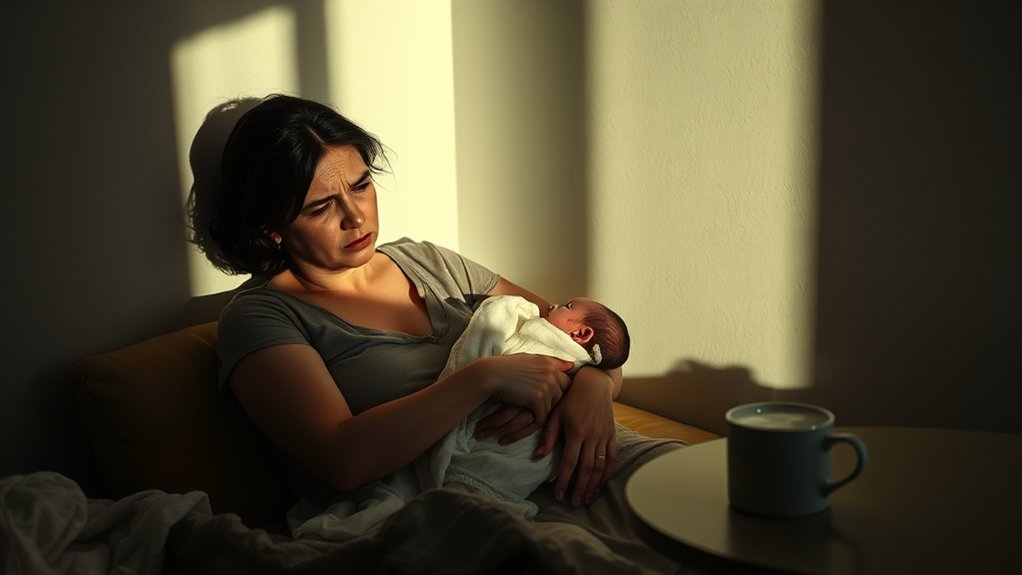
Postpartum anxiety can be overwhelming, leaving you feeling on edge and uncertain. It’s vital to recognize the symptoms and understand what might be causing these feelings. Many new parents share similar concerns, and knowing you’re not alone can be comforting. Let’s explore the signs, causes, and coping strategies so you can better navigate this challenging time and guarantee your well-being and that of your baby. What exactly should you look out for?
What Is Postpartum Anxiety?
Postpartum anxiety is a common yet often overlooked condition that affects many new parents. It’s more than just feeling nervous; it involves persistent worry that can interfere with your daily life.
You might find yourself constantly fearing for your baby’s safety or feeling overwhelmed by the responsibilities of parenthood. This anxiety can also cause physical symptoms like racing heart, shortness of breath, or sleepless nights.
Unlike the “baby blues,” which typically fade within a couple of weeks, postpartum anxiety can linger and impact your ability to bond with your child.
Postpartum anxiety often persists longer than the “baby blues,” affecting your bond with your child.
Recognizing it’s the first step toward seeking help and support. You’re not alone in this journey—many others have faced similar challenges and found ways to cope.
What Are the Symptoms of Postpartum Anxiety?
How can you tell if you’re experiencing postpartum anxiety? You might notice persistent feelings of worry or fear that seem overwhelming. It can feel like you’re constantly on edge or that something bad is about to happen.
Physical symptoms often accompany these feelings, like a racing heart, sweating, or difficulty breathing. You may also struggle with sleep, even when your baby is sleeping, and find it hard to concentrate.
Irritability or mood swings can become common, making daily tasks feel challenging. Additionally, you might avoid situations that trigger your anxiety, isolating yourself from support.
Recognizing these symptoms early can help you seek the care you need, so don’t hesitate to reach out for support if you’re feeling this way.
How Common Is Postpartum Anxiety?
Experiencing anxiety after giving birth is more common than many realize. Studies show that around 10-15% of new mothers face postpartum anxiety, but the actual numbers may be higher, as many women don’t report their feelings.
You might find that anxiety can manifest in various ways, affecting your daily life and parenting experience. It’s important to understand that you’re not alone in this struggle; many women share similar feelings.
The shift into motherhood brings significant changes, and it’s natural to feel overwhelmed at times. Recognizing how common postpartum anxiety is can help you seek support and find effective coping strategies.
What Causes Postpartum Anxiety?
Understanding what causes postpartum anxiety can help you navigate this challenging time more effectively. Various factors contribute to its onset, including hormonal changes, lack of sleep, and overwhelming new responsibilities. You might also experience anxiety if you have a history of mental health conditions or if you’re facing relationship stress.
Here’s a quick overview of some common causes:
| Factor | Description | Impact |
|---|---|---|
| Hormonal Changes | Fluctuations in estrogen and progesterone | Can trigger anxiety symptoms |
| Lack of Sleep | Fatigue from caring for a newborn | Increases stress levels |
| History of Anxiety | Previous mental health issues | Heightens vulnerability |
Recognizing these causes can empower you to seek support and manage your feelings.
How Does Postpartum Anxiety Differ From Postpartum Depression?
Postpartum anxiety and postpartum depression are often confused, but they involve different symptoms and experiences. If you’re dealing with postpartum anxiety, you might feel excessive worry, racing thoughts, or physical symptoms like a racing heart. You may constantly fear something bad happening to you or your baby, leading to overwhelming stress.
On the other hand, postpartum depression typically manifests as persistent sadness, lack of interest in activities, or feelings of hopelessness.
While both conditions can affect your ability to bond with your baby, anxiety often stems from fear and worry, while depression is rooted in emotional pain and fatigue. Recognizing these differences can help you seek appropriate support and care for your mental health.
Who Is at Risk for Developing Postpartum Anxiety?
Who’s most likely to develop postpartum anxiety? You might be at a higher risk if you’ve previously experienced anxiety or depression, either during pregnancy or in past pregnancies.
If you’ve faced significant stressors—like financial worries or relationship issues—those can also contribute to your vulnerability. The shift to motherhood can be overwhelming, and if you don’t have strong support systems in place, it can intensify feelings of anxiety.
Additionally, if you’re a first-time mom, the uncertainties can feel particularly intimidating. It’s important to remember that you’re not alone in this experience.
Recognizing these risk factors can help you seek the support you need and address any feelings of anxiety early on.
How Can Postpartum Anxiety Be Diagnosed?
How can you tell if you’re experiencing postpartum anxiety? To diagnose this condition, your healthcare provider will start by discussing your symptoms and feelings.
You’ll likely be asked about your emotional state, sleep patterns, and daily functioning. Self-assessment tools, like questionnaires, may also be used to help gauge your anxiety levels.
It’s important to be honest about what you’re experiencing, as this aids in an accurate diagnosis. Your doctor may also rule out other conditions, like postpartum depression or medical issues, that could cause similar symptoms.
What Are Some Coping Strategies for Postpartum Anxiety?
Coping with postpartum anxiety can feel overwhelming, but there are effective strategies to help you manage it.
Mindfulness and relaxation techniques can ground you in the present moment, while engaging with a support system can provide the reassurance and understanding you need.
Let’s explore how these approaches can make a difference in your journey.
Mindfulness and Relaxation Techniques
While traversing the challenges of postpartum anxiety, incorporating mindfulness and relaxation techniques can greatly ease your mind and body.
Start with deep breathing exercises; inhale slowly through your nose, hold for a moment, then exhale gently through your mouth. This simple practice helps ground you in the present.
Consider engaging in mindful meditation for a few minutes each day, focusing on your breath and letting go of racing thoughts. Gentle yoga or stretching can also release tension and promote relaxation.
Additionally, taking nature walks allows you to connect with your surroundings while calming your mind.
Support System Engagement
Engaging your support system is essential when managing postpartum anxiety, as having a reliable network can greatly lighten your emotional burden.
Start by reaching out to friends and family who understand your situation. Share your feelings openly; it’s okay to ask for help.
Consider joining a local or online support group where you can connect with others experiencing similar challenges.
Don’t hesitate to lean on your partner for emotional support and practical assistance, like sharing baby duties or household tasks.
Establish a routine that includes time for self-care, and encourage your support system to participate in this.
When Should I Seek Professional Help for Postpartum Anxiety?
How can you tell when postpartum anxiety has crossed the line from manageable to concerning? If you’re feeling overwhelmed, it’s essential to recognize the signs that indicate you should seek professional help. Take a look at this table to assess your situation:
| Symptoms | Frequency | Impact on Daily Life |
|---|---|---|
| Excessive worry | Most days | Difficulty completing tasks |
| Panic attacks | Weekly | Avoiding social situations |
| Sleep disturbances | Ongoing | Fatigue affecting parenting |
| Irritability or anger | Daily | Strained relationships |
If you notice these symptoms escalating or interfering with your life, don’t hesitate to reach out for support. You deserve help and care during this challenging time.
What Treatments Are Available for Postpartum Anxiety?
Recognizing when to seek help for postpartum anxiety is an important step toward finding relief. Treatment options vary and can include therapy, medication, or a combination of both.
Cognitive-behavioral therapy (CBT) is particularly effective, helping you reframe negative thoughts and develop coping strategies. If therapy alone isn’t enough, your doctor might recommend medications such as SSRIs, which can be safe while breastfeeding.
Support groups can also provide comfort and understanding from others who’ve faced similar challenges. Additionally, practicing self-care—like regular exercise, adequate sleep, and healthy nutrition—can greatly improve your mental well-being.
Frequently Asked Questions
Can Postpartum Anxiety Affect My Relationship With My Partner?
Yes, postpartum anxiety can strain your relationship with your partner. It may lead to misunderstandings, emotional distance, or communication issues. Open dialogue and seeking support can help strengthen your connection during this challenging time.
Is Postpartum Anxiety Hereditary or Genetic?
Postpartum anxiety can have a hereditary component. If you have a family history of anxiety or mood disorders, you might be at a higher risk. It’s important to discuss any concerns with your healthcare provider.
How Long Does Postpartum Anxiety Usually Last?
Postpartum anxiety can last anywhere from a few weeks to several months. You might find it gradually fades, but if it lingers, don’t hesitate to reach out for support or professional help. You’re not alone.
Can Postpartum Anxiety Occur With Subsequent Pregnancies?
Yes, postpartum anxiety can occur with subsequent pregnancies. Each experience is unique, so you might feel different symptoms or intensity. It’s important to recognize these feelings and seek support whenever needed. You’re not alone.
Are There Support Groups for Postpartum Anxiety?
Yes, there are support groups for postpartum anxiety. In fact, studies show that about 30% of new moms experience this. Connecting with others can be incredibly helpful, offering understanding and shared experiences during this challenging time.
Conclusion
Maneuvering postpartum anxiety can feel like walking through a dense fog, but you don’t have to do it alone. By recognizing the signs, understanding the causes, and employing effective coping strategies, you can find clarity and restore balance in your life. Remember, reaching out for help is a sign of strength, not weakness. You’re not just a caretaker; you’re also deserving of care. Embrace the journey toward healing, and know that brighter days are just ahead.
