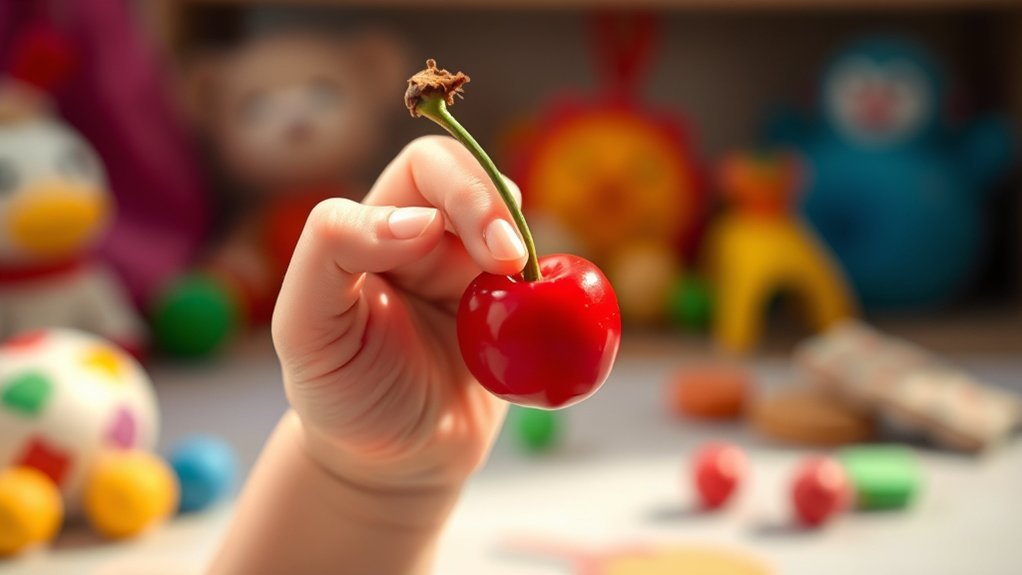
As your child grows, reaching developmental milestones like the pincer grasp can be vital for their motor skills. If you notice any signs of delay, such as difficulty picking up small objects or limited interest in toys, it’s essential to pay attention. Early intervention can make a significant difference. Understanding when to seek professional guidance can be challenging, but recognizing the right indicators is key to supporting your child’s growth effectively.
Understanding the Pincer Grasp Milestone
As your child develops, understanding the pincer grasp milestone is essential, since it marks a significant advancement in their fine motor skills.
This skill typically emerges around 9 to 12 months, allowing your child to pick up small objects between their thumb and forefinger. It’s important for activities like self-feeding, manipulating toys, and developing hand-eye coordination.
You can support this skill by providing appropriate toys and safe, small items for them to practice with. Observe how they use their fingers during play, as this can indicate their progress.
If your child struggles with this milestone beyond the expected timeframe, it might be worth discussing with your pediatrician to rule out any underlying issues. Early intervention can be critical for their development.
Typical Developmental Timeline
Understanding the typical developmental timeline for the pincer grasp can help you gauge your child’s progress and identify any concerns early on.
Generally, you can expect your child to start developing this skill around 8 to 10 months. During this stage, they’ll begin using their thumb and index finger to pick up small objects, showcasing improved hand-eye coordination.
By 10 to 12 months, most children can demonstrate a more refined pincer grasp, allowing them to manipulate and explore objects with greater control. Encouraging play with small items can support this development.
Signs of Delayed Development
While most children develop the pincer grasp by the age of 10 to 12 months, it’s important to recognize signs of delayed development. Early detection can provide support for your child’s growth and skills.
Recognizing signs of delayed pincer grasp development early can significantly support your child’s growth and skills.
Here are some signs to watch for:
- Difficulty picking up small objects or food
- Limited interest in manipulating toys or objects
- Lack of reaching for or grasping items
- Delayed overall motor skills compared to peers
If you notice these signs, don’t hesitate to observe your child’s overall progress.
Remember that each child develops at their own pace, but being proactive can make a difference in ensuring they receive the necessary support for their development.
When to Seek Professional Guidance
If you notice signs of delayed development, it might be time to seek professional guidance. Early intervention can greatly impact your child’s growth, so don’t hesitate to act.
Look for red flags such as difficulty in grasping objects, challenges in coordinating movements, or a lack of interest in play activities that require fine motor skills. Consulting a pediatrician or a child development specialist can provide clarity and direction.
They can assess your child’s abilities and recommend appropriate next steps, whether it’s monitoring progress or initiating therapy. Trust your instincts—your concerns are valid, and addressing them early can pave the way for your child’s success.
Supporting Your Child’s Development
Supporting your child’s development involves actively engaging in their growth through intentional activities and interactions. By fostering a stimulating environment, you can enhance their motor skills, including the pincer grasp, which is essential for later tasks like writing and self-feeding.
Consider these activities to support their development:
- Encourage playtime with small objects to practice grasping.
- Introduce age-appropriate puzzles to enhance problem-solving skills.
- Provide opportunities for finger painting to develop fine motor skills.
- Read regularly to stimulate language and cognitive development.
Being proactive in these areas not only nurtures your child’s physical abilities but also boosts their confidence.
Observing their progress can help you identify when to seek professional guidance if needed.
Frequently Asked Questions
What Is the Pincer Grasp’s Significance in Child Development?
The pincer grasp’s significance in child development lies in its role in fine motor skills. It enhances hand-eye coordination, promotes independence, and lays the foundation for future abilities, like writing and self-feeding.
Can Toys Help Improve My Child’s Pincer Grasp?
Absolutely, toys can be like magical keys, opening your child’s pincer grasp. By engaging with small objects, they practice coordination and strength, enhancing their skills. Choose toys that encourage exploration and manipulation for best development.
Is It Normal for Children to Favor One Hand?
Yes, it’s normal for children to favor one hand as they develop. Most kids show a preference around age two, but it’s crucial to monitor their development to guarantee balanced motor skills.
How Can I Encourage My Child to Practice the Pincer Grasp?
You can encourage your child to practice the pincer grasp by offering small, healthy snacks—about 70% of toddlers develop this skill by 12 months. Engage them with fun, textured toys to enhance their dexterity and coordination.
Are There Any Cultural Differences in Pincer Grasp Development?
Yes, cultural differences can influence pincer grasp development. Some cultures emphasize early fine motor skills through specific play activities, while others may focus on gross motor development first. Your child’s environment plays a vital role in this process.
Conclusion
In the quest for your child’s pincer grasp, it’s amusing how a seemingly small milestone can feel monumental. If you’re noticing delays, don’t hesitate to consult a professional; after all, a tiny grasp can lead to huge strides in development. Embracing early intervention might just turn that seemingly trivial skill into a stepping stone for greater achievements. Remember, it’s often the little things that make the biggest impact, so keep a watchful eye and stay proactive in your child’s growth.
