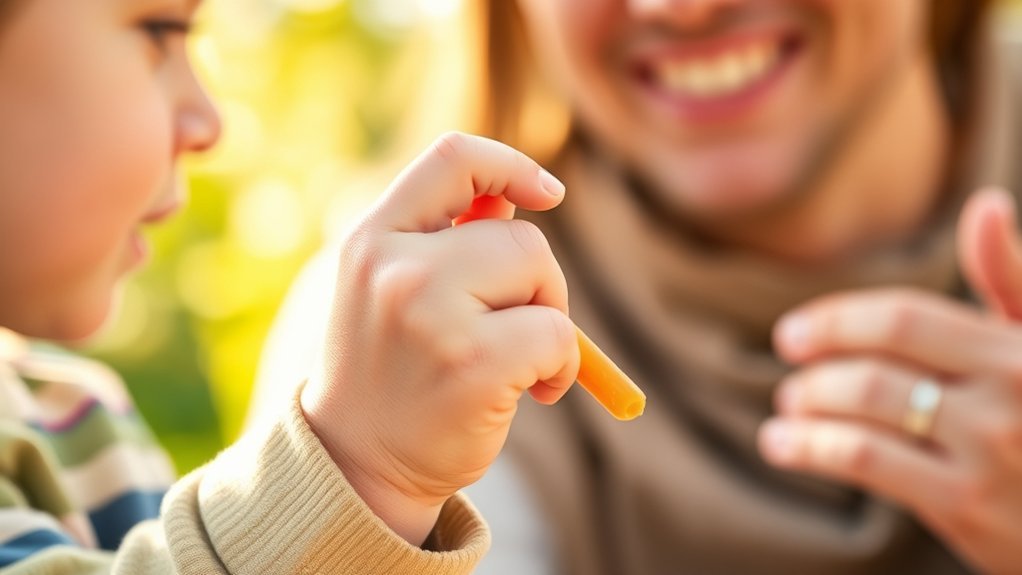
Imagine your child effortlessly picking up a small piece of cereal between their thumb and forefinger—this is the pincer grasp in action. This milestone isn’t just a neat trick; it’s a crucial indicator of their fine motor development. Understanding its significance can help you support your child’s growing independence. What steps can you take to nurture this skill and what should you look out for as they progress?
Understanding the Pincer Grasp: A Key Developmental Milestone
As your child grows, understanding the pincer grasp becomes essential, since it’s a key developmental milestone that indicates their fine motor skills are advancing.
This skill typically emerges around 9 to 12 months, when your little one starts using their thumb and index finger to pick up small objects. Observing this grasp is significant; it reflects their ability to coordinate movements and enhances their independence.
You can encourage this development by providing safe, small items for them to grasp, such as soft blocks or finger foods. Celebrate their successes, as this builds confidence.
The Importance of Fine Motor Skills in Early Childhood
Fine motor skills play an essential role in your child’s overall development, impacting their ability to perform daily tasks and engage in creative activities.
Developmental Milestones Overview
One essential aspect of early childhood development is the mastery of fine motor skills, which typically emerges between the ages of 2 and 5.
During this critical period, your child will refine their ability to use small hand muscles for tasks like grasping objects, manipulating toys, and eventually writing. These milestones are significant because they lay the foundation for more complex skills, such as self-feeding and dressing.
You’ll notice your child’s progress as they move from using a whole-hand grasp to developing a pincer grasp, where they can pick up small items using their thumb and index finger.
Recognizing these milestones helps you support your child’s growth and encourages their independence, ultimately boosting their confidence as they explore the world around them.
Activities to Encourage Skills
Encouraging the development of fine motor skills in young children can greatly enhance their overall growth and independence. Engaging your child in simple activities can make a significant difference.
Consider providing them with playdough to mold and shape, which strengthens their hand muscles. Encourage them to use tweezers or tongs to transfer small objects like beads or pasta, promoting hand-eye coordination.
Additionally, activities like coloring, cutting with safety scissors, or threading beads onto strings enhance their dexterity. Even simple tasks like buttoning shirts or zipping jackets can be effective.
Signs Your Child Is Ready to Develop the Pincer Grasp
As your child grows, you’ll notice key developmental milestones that signal readiness to develop the pincer grasp.
Pay attention to their hand movements; if they’re reaching for and picking up small objects, they’re on the right track.
Encouraging these fine motor skills now can set a solid foundation for their future abilities.
Key Developmental Milestones
Recognizing the key developmental milestones that indicate your child is ready to develop the pincer grasp can set the stage for their fine motor skills.
As a parent, you’ll want to watch for these signs:
- Reaching for Objects: Your child actively reaches for toys or items within their grasp.
- Using Fingers: They begin to use their thumb and index finger to pick up small objects.
- Hand Coordination: You notice improved coordination in their hand movements, such as transferring objects between hands.
- Exploratory Behavior: Your child shows curiosity by picking up and examining various items, demonstrating engagement with their environment.
Observing Hand Movements
While observing your child’s hand movements, you’ll notice distinct signs that indicate their readiness to develop the pincer grasp.
Look for emerging coordination as they begin to bring their thumb and index finger together. You’ll see them reaching for small objects, often using their whole hand initially before refining their technique.
They may also enjoy exploring textures and manipulating items like toys or food, showing curiosity in their surroundings.
Additionally, watch for moments when they transfer objects from one hand to another, demonstrating increased dexterity.
These behaviors highlight their growing fine motor skills. Recognizing these signs can help you understand your child’s development and prepare for the exciting journey of mastering the pincer grasp.
Encouraging Fine Motor Skills
Noticing the signs of your child’s developing fine motor skills opens up opportunities for you to encourage their progress toward mastering the pincer grasp.
Here are some indicators that your child is ready to advance:
- Reaching for objects: They actively stretch their hands towards toys or other items.
- Using fingers to explore: Your child shows curiosity by touching and manipulating various textures.
- Picking up small items: They can grasp small objects like cereal pieces or blocks using their thumb and index finger.
- Imitating actions: They mimic your hand movements, such as pinching or gripping, during play.
Activities to Encourage the Pincer Grasp
Encouraging your child to develop a strong pincer grasp can be both fun and beneficial for their fine motor skills.
Try introducing activities like picking up small objects, such as cheerios or small beads, using their thumb and index finger. You can also create a sensory bin filled with rice or beans, where they can dig and find hidden treasures to grab.
Consider providing playdough for them to squish and roll into small balls, encouraging them to use their fingers effectively.
Finally, using tweezers or tongs to transfer items from one bowl to another can sharpen their grasp.
These engaging activities not only enhance their pincer grasp but also promote hand-eye coordination and concentration.
How the Pincer Grasp Facilitates Independence and Self-Feeding
Mastering the pincer grasp is a significant milestone that opens the door to greater independence for your child, especially when it comes to self-feeding.
Mastering the pincer grasp empowers your child with newfound independence, particularly in self-feeding.
As your child develops this skill, you’ll notice several benefits that promote autonomy:
- Increased Confidence: Self-feeding boosts their self-esteem as they gain control over their eating.
- Fine Motor Skills Development: Practicing the pincer grasp strengthens hand muscles, essential for future tasks.
- Exploration of Food: They’ll experiment with different textures and flavors, fostering a healthy relationship with food.
- Social Skills: Eating independently encourages participation in mealtime conversations and family dynamics.
Supporting your child through this process not only nurtures their independence but also enhances their overall development.
Common Concerns and When to Seek Help
How can you tell if your child is developing their pincer grasp effectively? Watch for their ability to pick up small objects using their thumb and forefinger, typically seen between 9 to 12 months.
If your child struggles to grasp or manipulate toys, it might raise concerns. Delayed development could indicate underlying motor skill challenges. Additionally, if they consistently use their whole hand instead of their fingers, it’s worth discussing with a pediatrician.
Keep an eye on other milestones, too; if they’re not showing progression in self-feeding or playing, it’s a signal to seek help. Early intervention can make a significant difference, so don’t hesitate to reach out for guidance if you’re unsure about their development.
Celebrating Your Child’s Milestones: The Journey Ahead
As your child reaches key developmental milestones, it’s important to recognize and celebrate these achievements, which play a crucial role in their growth and confidence.
Celebrating milestones not only reinforces their efforts but also helps you bond as a family. Here are four ways to make these moments special:
- Document the Journey: Keep a journal or scrapbook that highlights each milestone.
- Create Rituals: Establish fun family traditions to acknowledge achievements, like a special dinner or outing.
- Encourage Reflection: Talk about what they learned or felt when they reached each milestone.
- Offer Praise: Give genuine compliments and support, helping them understand their progress.
These practices strengthen your child’s sense of accomplishment and motivate them for the journey ahead.
Frequently Asked Questions
What Age Do Most Children Develop the Pincer Grasp?
Most children develop the pincer grasp between 8 to 10 months. You’ll notice this skill as they start picking up small objects, which is essential for their fine motor development and independence in daily tasks.
Can a Child Use a Pincer Grasp With Both Hands?
Yes, a child can use a pincer grasp with both hands. Encouraging practice with various objects can enhance their dexterity. It’s important to provide opportunities for exploration, helping them develop fine motor skills effectively.
Is It Normal for Children to Skip the Pincer Grasp?
Yes, it’s normal for some children to skip the pincer grasp. Development varies widely, so focus on their overall motor skills. If you’re concerned, consult a pediatrician for guidance and reassurance.
How Can I Make Mealtime Easier While My Child Learns?
To simplify mealtime while your child learns, offer finger foods that encourage exploration, and create a relaxed atmosphere. Use fun utensils and engage with them, fostering independence while subtly guiding their developing skills.
Are There Toys That Specifically Help Develop the Pincer Grasp?
Yes, toys like small building blocks, pegboards, and tweezers can help develop your child’s pincer grasp. Encourage them to manipulate these items, as it fosters fine motor skills while keeping playtime engaging and fun.
Conclusion
As your child masters the pincer grasp, you’re witnessing the blossoming of their independence—a small seed turning into a strong tree. This skill not only enhances their fine motor abilities but also builds their confidence in performing daily tasks. By nurturing this development with purposeful activities, you’re laying a solid foundation for their future. Remember, every little milestone is a step forward on their unique journey, so celebrate these achievements and stay engaged in their growth.
