
Many expectant mothers may not realize that perineal massage can considerably ease discomfort and anxiety associated with childbirth. If you’re experiencing tension or tightness in your perineal area, it might be time to contemplate this practice. Understanding the signs that indicate a need for perineal massage can enhance your connection with your body and promote relaxation. Discovering the right techniques and timing is essential to maximize its benefits during your pregnancy journey.
Understanding Perineal Massage
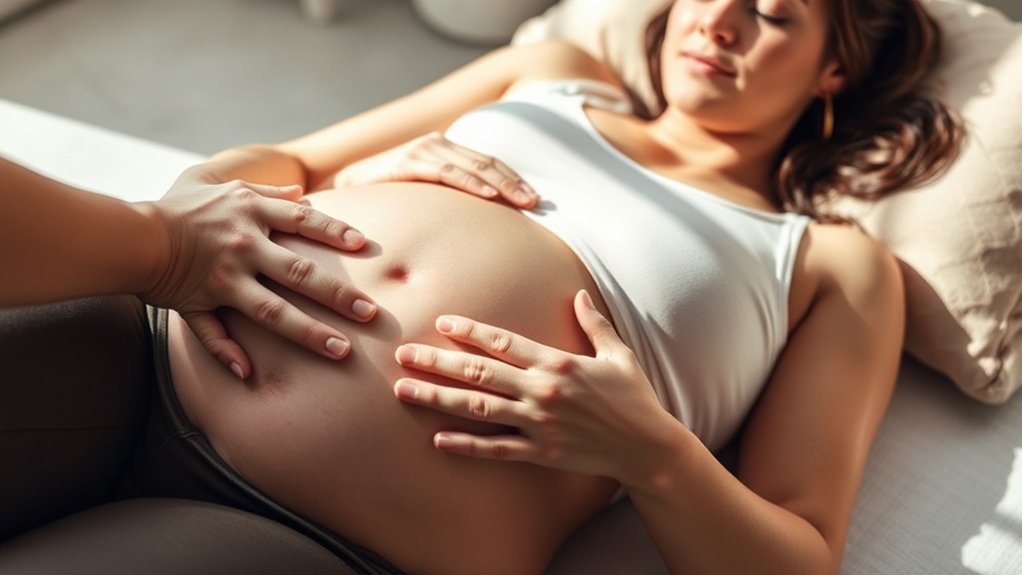
Perineal massage is a technique designed to prepare the perineum—the area between the vagina and anus—for childbirth.
This practice involves gently stretching and massaging the perineum, which can help increase elasticity, reduce the risk of tearing during delivery, and promote a more comfortable birthing experience.
You’ll need to use your fingers to apply gentle pressure, focusing on the skin and muscles in this area. Engaging in perineal massage can also enhance blood circulation, which aids in healing and recovery post-delivery.
Using your fingers for gentle pressure in perineal massage can boost circulation and support healing after childbirth.
It’s a simple yet effective way to support your body as you approach labor. Taking the time to understand this technique can empower you, fostering a sense of control and preparation for the journey ahead.
When to Start Perineal Massage

Knowing when to start perineal massage can make a significant difference in your childbirth preparation.
It’s generally recommended to begin around the 34th week of pregnancy. This timing allows your body to gradually adapt and helps increase flexibility in the perineal area.
Starting too early mightn’t provide the benefits you’re aiming for, while waiting too long could limit your ability to prepare effectively.
Aim for about 5-10 minutes, three to four times a week, to maximize its advantages.
Remember, every pregnancy is unique, so it’s important to listen to your body and consult your healthcare provider for personalized advice.
They can help you determine the best approach based on your specific circumstances and comfort level.
Signs Indicating the Need for Perineal Massage
Recognizing the signs that indicate a need for perineal massage can enhance your childbirth experience. If you experience tension or discomfort in your perineal area, it’s a clear signal that massage might be beneficial.
You may also notice a feeling of tightness or decreased flexibility as your due date approaches. If you’re anxious about tearing during delivery, perineal massage can help alleviate that concern.
Additionally, if you’re preparing for a vaginal birth and want to promote elasticity in the perineum, these signs become even more relevant. Listening to your body is vital; if you feel any of these symptoms, consider incorporating perineal massage into your routine.
This proactive approach can support your comfort and readiness for childbirth.
Techniques for Effective Perineal Massage
When preparing for childbirth, mastering effective perineal massage techniques can make a significant difference in your experience. Start by ensuring your hands are clean and using a water-based lubricant. Sit or lie comfortably, and gently insert your fingers about an inch into the vagina, pressing downward and outward. Gradually stretch the perineum with a firm, but gentle motion.
Here’s a quick reference table for techniques:
| Technique | Description |
|---|---|
| Warm Compress | Apply warmth to the perineum first |
| Finger Stretching | Use fingers to gently stretch |
| Circular Motion | Massage in circular motions |
| Deep Breathing | Breathe deeply to relax the area |
| Consistent Practice | Aim for several times a week |
With practice, these techniques can help prepare your body for childbirth.
Benefits of Perineal Massage for Expectant Mothers
Perineal massage offers numerous benefits for expectant mothers, enhancing both physical comfort and emotional well-being during pregnancy and childbirth.
By regularly practicing perineal massage, you can increase flexibility and elasticity in the perineal area, potentially reducing the risk of tearing during delivery. This technique may also help alleviate discomfort associated with pressure and stretching as your baby grows.
Emotionally, engaging in this practice fosters a deeper connection with your body, promoting relaxation and confidence as you approach labor. Additionally, it can provide you with a sense of control over your birthing experience.
Frequently Asked Questions
Can Perineal Massage Be Performed by a Partner?
Yes, a partner can perform perineal massage. It’s essential to communicate openly about comfort levels and techniques. Together, you can create a supportive environment, enhancing relaxation and intimacy during the process.
Is Perineal Massage Safe During Pregnancy Complications?
If you’re managing pregnancy complications, it’s best to consult a healthcare provider before trying perineal massage. While it might sound like a spa day, safety comes first for you and your baby.
How Long Should Each Perineal Massage Session Last?
Each perineal massage session should last about 5 to 10 minutes. It’s important to listen to your body and adjust the duration as needed, ensuring you feel comfortable and relaxed throughout the process.
What Tools or Products Can Assist With Perineal Massage?
You can use natural oils, such as almond or olive oil, to facilitate smooth gliding during perineal massage. Additionally, specialized massage tools or soft cloths can enhance comfort and effectiveness, making the experience easier for you.
Are There Any Contraindications for Perineal Massage?
Think of your body as a garden; certain conditions can hinder growth. If you’ve had recent surgery, infections, or specific medical conditions, it’s best to avoid perineal massage. Always consult a healthcare professional first.
Conclusion
Incorporating perineal massage into your prenatal routine can be a soothing journey towards childbirth. As you listen to your body’s signals, you may find that this practice not only eases tension but also fosters a deeper connection with your changing self. Why not embrace this opportunity to prepare for the beautiful experience ahead? Remember, consulting your healthcare provider will guarantee you’re on the right path. Your comfort and confidence during delivery can start with a simple touch.
