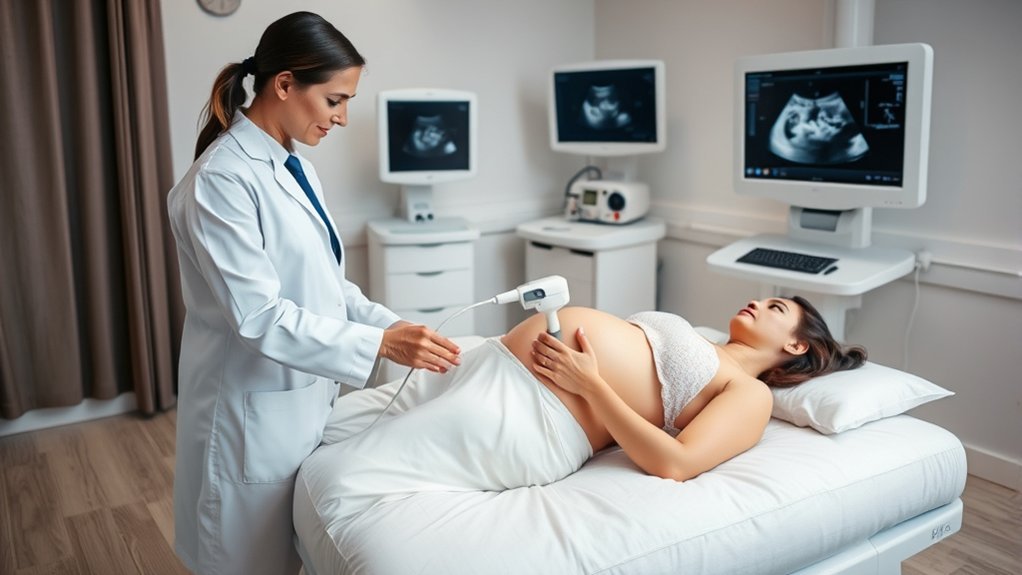
When preparing for your NT scan, it’s crucial to understand the key factors that can influence the accuracy of your results. Timing your appointment correctly, managing your hydration and nutrition, and discussing your medical history with your healthcare provider are all critical steps. Additionally, comfort on the day of the scan and managing any anxiety can greatly enhance your experience. Let’s explore these aspects in detail to guarantee you’re fully prepared for the process ahead.
Understanding the NT Scan Process
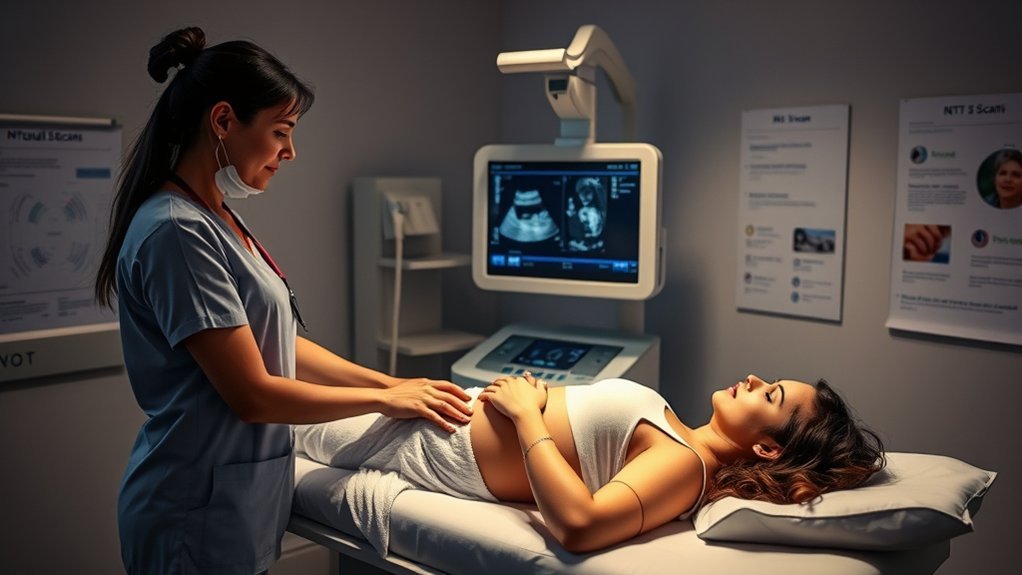
Understanding the NT scan process is vital for expectant parents. The nuchal translucency (NT) scan, typically performed between 11 and 14 weeks of pregnancy, measures the fluid at the back of your baby’s neck. This measurement helps assess the risk of chromosomal abnormalities, such as Down syndrome.
During the scan, you’ll lie on an ultrasound table, and a technician will apply gel to your abdomen before using a transducer to capture images. It’s a non-invasive procedure, and you might even see your baby’s movements on the screen.
While the NT scan provides valuable information, it’s just one part of a thorough prenatal evaluation. Remember, discussing results with your healthcare provider is essential for understanding your options and next steps.
Timing Your Appointment
Timing your appointment for an NT scan is essential for obtaining accurate results.
Ideally, you should schedule the scan between 11 and 14 weeks of pregnancy, as this window enhances the reliability of the measurements.
Proper preparation before your appointment can also greatly impact the testing process, ensuring everything goes smoothly.
Ideal Appointment Window
When you schedule your NT scan appointment, choosing the right time can greatly impact the quality of your results. Ideally, you should book your scan between 11 and 14 weeks of pregnancy. This timing allows for ideal measurement of the nuchal translucency, which is essential for evaluating potential risks.
If you schedule too early or too late, you may not receive the most accurate information. Additionally, make sure that you arrive with a full bladder, as this can enhance image clarity.
It’s also wise to avoid stressful situations before your appointment, as being relaxed can help facilitate better imaging. By selecting the perfect appointment window, you’re taking an essential step towards guaranteeing accurate and reliable results for your NT scan.
Importance of Accuracy
Choosing the right time for your NT scan isn’t just about convenience; it directly influences the accuracy of your results. Scheduling your appointment within the ideal window, typically between 11 and 14 weeks of pregnancy, guarantees that the measurements taken are most reliable.
If you book too early or too late, you risk receiving misleading information about your baby’s health, which can lead to unnecessary anxiety or missed opportunities for intervention.
Additionally, factors like your body mass index and fetal position can affect the scan’s precision. By prioritizing accurate timing, you enhance the likelihood of clear, informative results, allowing you to make well-informed decisions regarding your pregnancy and care.
Preparing for Testing
Scheduling your NT scan at the right moment is essential for obtaining accurate results. Generally, the ideal time for this test is between 11 and 14 weeks of pregnancy. This window allows for the best assessment of nuchal translucency and other markers.
When you make your appointment, consider your healthcare provider’s recommendations and your own schedule to guarantee you’re not rushed or stressed. Remember, being relaxed can contribute to clearer images and a smoother process.
Additionally, it’s wise to avoid any unnecessary activities that could impact your results, such as intense exercise or stressors, prior to your appointment. By planning ahead and choosing the right time, you’re taking an important step toward safeguarding your baby’s health and well-being.
Hydration and Nutrition Before the Scan

Staying hydrated and choosing nutrient-rich foods are essential for your well-being before an NT scan.
Proper hydration helps optimize your body’s functions, while a balanced meal can enhance the accuracy of the results.
Timing your meals effectively also plays a key role in ensuring you’re prepared for the scan.
Importance of Hydration
Although you may not realize it, proper hydration is essential for guaranteeing the accuracy of your NT scan. Staying well-hydrated helps enhance the clarity of the ultrasound images, allowing your healthcare provider to obtain more precise measurements.
When you’re adequately hydrated, your body maintains ideal amniotic fluid levels, which can improve visualization during the scan. Dehydration, on the other hand, may lead to distorted images, making it challenging for your provider to interpret the results accurately.
Aim to drink plenty of water in the days leading up to your scan, and don’t hesitate to ask your healthcare team for specific hydration recommendations.
Prioritizing hydration is a simple yet effective way to support your health and guarantee a successful scan experience.
Nutrient-Rich Foods
Maintaining proper hydration is just one part of preparing for your NT scan; incorporating nutrient-rich foods into your diet can greatly enhance your overall health and well-being during this important time.
Focus on consuming a variety of foods that provide essential vitamins and minerals to support both your body and your baby’s development.
Consider including:
- Leafy greens: Rich in folate, vital for fetal growth.
- Lean proteins: Promote tissue development and provide necessary amino acids.
- Whole grains: Offer energy and fiber, aiding digestion.
Timing Your Meals
Properly timing your meals before the NT scan can considerably impact your hydration and nutrition levels, ensuring you feel your best during the procedure.
Aim to eat a balanced meal about two to three hours prior to the scan. This allows your body to digest and absorb nutrients effectively, optimizing your energy levels.
Stay hydrated by drinking water throughout the day, but avoid excessive intake right before the scan to prevent discomfort. If your healthcare provider recommends fasting, follow their guidelines closely.
Remember, consuming light snacks like fruits or yogurt can help maintain your energy without overwhelming your system.
Discussing Medical History With Your Provider
When you meet with your healthcare provider, discussing your medical history is essential for effective care. Being open and thorough about your past health issues helps guarantee that you receive appropriate recommendations and interventions, especially regarding your NT scan.
Consider sharing the following key points:
- Previous pregnancies: Inform your provider about any complications or outcomes.
- Chronic conditions: Discuss any ongoing health issues, such as diabetes or hypertension, that could impact your care.
- Medications and allergies: List all current medications and any known allergies to avoid potential complications.
Clothing and Comfort for the Day of the Scan
After discussing your medical history, it’s important to contemplate what you’ll wear on the day of your NT scan.
Opt for comfortable, loose-fitting clothing that allows easy access to your abdomen. This will help the technician perform the ultrasound without unnecessary hassle. Avoid wearing dresses or outfits with complicated layers, as these can complicate the process.
Choose loose-fitting clothes for easy abdominal access during your NT scan, avoiding complex layers to simplify the process.
It’s also wise to choose materials that breathe well, especially if you tend to feel anxious or warm.
Consider wearing a supportive bra, as you may be required to lie back for an extended period.
Ultimately, dressing comfortably can make your experience smoother and more pleasant, allowing you to focus on your scan rather than your outfit.
Managing Anxiety and Stress
While it’s natural to feel anxious before your NT scan, managing that stress can greatly improve your experience. Here are some effective strategies to help you cope:
- Practice deep breathing: Focus on slow, deep breaths to lower your heart rate and calm your mind.
- Stay informed: Understanding the procedure can help alleviate fear. Ask your healthcare provider any questions you may have.
- Engage in relaxation techniques: Consider mindfulness or gentle yoga to reduce tension and promote a sense of peace.
Implementing these strategies not only helps in managing anxiety but also prepares you for the scan itself.
Involving Your Partner or Support Person
Involving your partner or support person can greatly enhance your comfort and emotional well-being during the NT scan process. Their presence can provide reassurance and help alleviate anxiety.
Encourage them to accompany you to appointments, as their support can create a calming atmosphere. Discuss your feelings and concerns openly with them, ensuring they understand what you’re experiencing. This communication fosters a stronger bond and helps them provide the specific support you need.
Additionally, consider assigning them roles, such as asking questions or taking notes during discussions with healthcare providers. This involvement can empower both of you, ensuring that you feel more informed and less isolated throughout the process.
What to Expect During the Scan
Understanding what to expect during the NT scan can help ease any apprehensions you might have. This ultrasound, typically performed between 11 and 14 weeks of pregnancy, measures the nuchal translucency—the fluid at the back of your baby’s neck.
Here’s what you can anticipate:
- You’ll lie on an examination table, and a technician will apply gel to your abdomen.
- The technician will use a transducer to capture images of your baby and measure the nuchal fold.
- You may hear your baby’s heartbeat, which can provide reassurance.
The scan usually lasts about 20-30 minutes, and you’ll have the opportunity to see your baby on the screen, making this experience both informative and emotional.
Post-Scan Follow-Up and Next Steps
After your NT scan, it’s fundamental to discuss the results with your healthcare provider to understand what they mean for your pregnancy.
Your provider will explain the findings, including any risk assessments related to chromosomal abnormalities. If results indicate a higher risk, they may recommend additional testing, such as chorionic villus sampling (CVS) or amniocentesis.
It’s essential to ask any questions you have to guarantee you fully comprehend your options and the implications for your pregnancy. Remember, a supportive network is significant, so consider involving your partner or family members in these discussions.
Keep track of your appointments and follow your provider’s guidance for ongoing care and monitoring. Staying informed will help you navigate the next steps confidently.
Frequently Asked Questions
What Is the Cost of an NT Scan Without Insurance?
An NT scan typically costs between $200 and $500 without insurance. Prices may vary by location and facility, so it’s wise to check with local providers for the most accurate quote and potential payment options.
Can I Eat Before My NT Scan?
Yes, you can eat before your NT scan, but it’s best to stick to light meals. Heavy foods might upset your stomach, making the experience less comfortable. Stay hydrated, and follow any specific instructions from your provider.
Does an NT Scan Guarantee a Healthy Pregnancy?
An NT scan doesn’t guarantee a healthy pregnancy, but it helps assess risks for certain conditions. It’s important to discuss results with your healthcare provider for a clearer understanding of your pregnancy’s health status.
Are There Any Risks Associated With the NT Scan?
Yes, there are risks associated with the NT scan. While it’s generally safe, some individuals experience anxiety or discomfort. It’s essential to weigh these factors against the potential benefits for informed decision-making during your pregnancy.
How Does the NT Scan Differ From Other Prenatal Tests?
The NT scan specifically measures nuchal translucency in the fetus, evaluating Down syndrome risk, unlike other prenatal tests that may focus on genetic abnormalities or overall health, providing a unique early insight into potential issues.
Conclusion
As you prepare for your NT scan, think of it as setting sail on a voyage. By timing your appointment right, nourishing your body, and wearing comfortable attire, you’re charting a course for success. Communicating with your healthcare provider and managing stress act as your compass, guiding you through potential uncertainties. Remember, involving a supportive companion is like having a steady hand on deck. With these preparations, you’re ready to navigate this important milestone in your pregnancy journey.
