
Steering through the world of pregnancy can feel like walking through a maze, especially with all the myths surrounding the NT scan. You might think it’s a diagnostic test or that it can detect every possible genetic disorder. However, these beliefs can lead to unnecessary stress and confusion. Let’s clarify the realities of the NT scan and what it truly means for your pregnancy journey.
What Is the Nuchal Translucency Scan?

The Nuchal Translucency (NT) scan is a specialized ultrasound performed during the first trimester of pregnancy, typically between 11 and 14 weeks. This scan measures the fluid at the back of your baby’s neck. A thicker measurement may indicate an increased risk for certain chromosomal conditions, such as Down syndrome.
During the procedure, a trained technician will apply gel to your abdomen and use a transducer to capture images. It’s important to note that the NT scan is a screening tool, not a diagnostic test, meaning it doesn’t provide definitive answers.
Instead, it helps assess risk levels and can guide further testing if necessary. Understanding this scan can help you make informed decisions about your pregnancy.
Myth 1: the NT Scan Is a Diagnostic Test
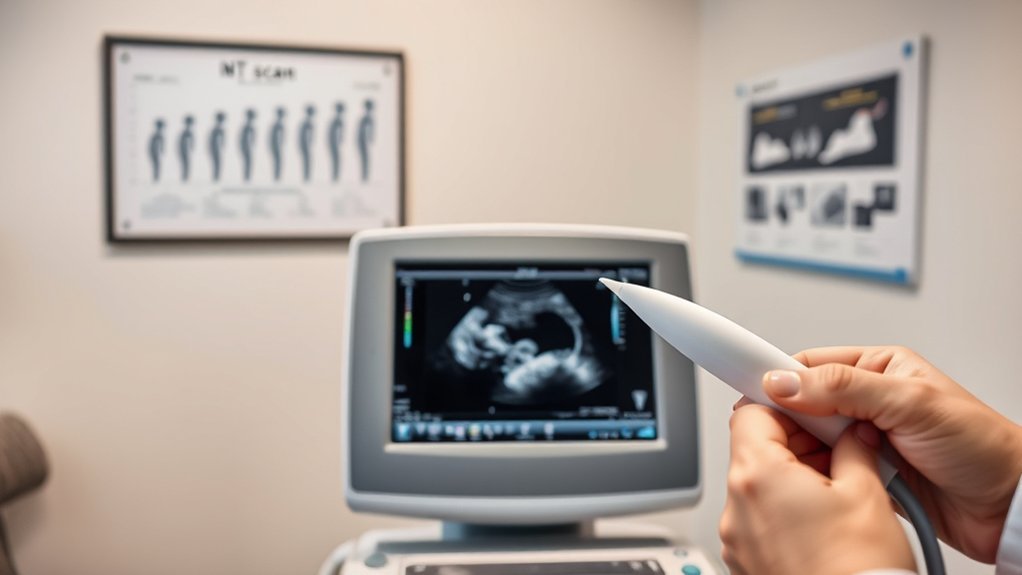
Many expectant parents mistakenly believe that the NT scan serves as a diagnostic test. In reality, it’s a screening tool, not a definitive diagnosis. The scan measures the fluid at the back of your baby’s neck during the first trimester.
While it can indicate a higher risk for certain conditions, it doesn’t confirm any abnormalities. If your results show increased risk, your healthcare provider might recommend further testing, like chorionic villus sampling (CVS) or amniocentesis, which can provide a more accurate diagnosis.
Myth 2: The NT Scan Can Detect All Genetic Disorders

It’s a common misconception that the NT scan can detect all genetic disorders.
In reality, it primarily focuses on specific conditions, such as Down syndrome and certain heart defects.
While it provides valuable information, it doesn’t cover the full spectrum of genetic disorders.
Limited Genetic Detection Scope
While some expect the NT scan to identify all genetic disorders, this isn’t the case. The NT scan primarily assesses the risk for specific conditions, mainly Down syndrome, trisomy 18, and trisomy 13.
It measures the nuchal translucency, a fluid collection at the back of the baby’s neck, along with maternal blood markers. However, it can’t detect other genetic disorders, such as cystic fibrosis or spina bifida.
Understanding this limited scope is essential for you. If you’re concerned about specific genetic conditions, additional testing options are available, like chorionic villus sampling or amniocentesis.
Always discuss your options with your healthcare provider to guarantee you’re making informed decisions about your prenatal care and genetic screening.
Focus on Specific Disorders
Although some might believe the NT scan can identify all genetic disorders, this is a common misconception. The NT scan focuses primarily on specific conditions, particularly Down syndrome, rather than providing an extensive genetic analysis.
It’s important to understand its limitations to avoid unnecessary worry.
Here are three key points to remember:
- Limited Scope: The NT scan primarily screens for chromosomal abnormalities, not all genetic disorders.
- False Sense of Security: Relying solely on this test may lead to overlooking other significant genetic conditions.
- Follow-Up Testing Needed: If abnormalities are detected, further testing is required for a definitive diagnosis.
Understanding these facts will help you make informed choices about prenatal screening and care.
Myth 3: You Can Only Have the NT Scan Early in Pregnancy
Many expectant parents believe they can only have the NT scan during the early stages of pregnancy, but this isn’t true. The nuchal translucency (NT) scan is typically performed between 11 and 14 weeks of gestation.
While this is the most common timeframe, it’s important to know that healthcare providers can conduct the scan later in certain situations. If you missed the initial window, speak with your doctor about your options.
They can guide you on any necessary follow-up tests or alternative screenings. Remember, each pregnancy is unique, so don’t hesitate to ask questions and discuss your concerns with your healthcare provider.
They’re there to help guarantee you and your baby receive the best care possible throughout your pregnancy journey.
Myth 4: A High NT Measurement Means Your Baby Will Have Down Syndrome
A high NT measurement doesn’t automatically mean your baby will have Down syndrome.
It’s important to understand that other factors come into play when evaluating risk.
Thorough screening can provide a clearer picture of your baby’s health.
Understanding NT Measurement Levels
Understanding NT measurement levels is essential for expectant parents managing prenatal screening.
An elevated nuchal translucency (NT) measurement can cause anxiety, but it doesn’t guarantee a diagnosis of Down syndrome or any other condition.
It’s important to remember that NT levels can be influenced by various factors, and many babies with higher NT measurements are born healthy.
Here are three key points to reflect on:
- NT is just one piece of the puzzle, not a definitive answer.
- Many factors contribute to a baby’s health, and NT alone isn’t enough.
- Consult your healthcare provider for personalized advice and next steps.
Stay informed and focus on the full picture to ease your worries during this exciting time.
Other Factors Involved
While it’s easy to jump to conclusions when faced with a high NT measurement, it’s essential to remember that this reading alone doesn’t determine your baby’s health.
Several factors can influence NT levels, including maternal age, gestational age, and even the position of the fetus during the scan. A high NT measurement may be a sign of potential issues, but it’s not a definitive diagnosis for conditions like Down syndrome.
Genetic factors, family history, and other prenatal tests also play an important role in evaluating your baby’s risk.
Always consult your healthcare provider for a thorough understanding of your results. They can help clarify any concerns and guide you through subsequent steps if necessary.
Importance of Comprehensive Screening
Many expectant parents worry when they receive a high NT measurement, assuming it directly indicates their baby will have Down syndrome.
However, it’s important to understand that this measurement is only one piece of a larger puzzle. Thorough screening can provide a clearer picture of your baby’s health and development.
Consider the following:
- Peace of Mind: Thorough screening can reduce anxiety by offering more accurate assessments.
- Informed Decisions: You’ll gain essential information to make decisions that are right for your family’s circumstances.
- Early Intervention: Identifying potential issues early allows for timely support and resources.
Myth 5: the NT Scan Is Invasive and Harmful
Although some people worry that the NT scan is invasive and harmful, it’s actually a non-invasive screening test designed to assess the risk of chromosomal abnormalities in a developing fetus.
This test involves a simple ultrasound and a blood draw, which are both safe and commonly performed during pregnancy. The NT scan measures the nuchal translucency, or fluid at the back of the baby’s neck, and evaluates the mother’s blood to provide important information about potential risks.
Since it doesn’t require any surgical procedures or invasive methods, you can feel confident that the NT scan poses minimal risk to you and your baby.
Many expectant parents find it reassuring, as it offers valuable insights into the health of their pregnancy.
Myth 6: the NT Scan Is Only Necessary for High-Risk Pregnancies
Some people believe the NT scan is only necessary for high-risk pregnancies, but this is a misconception. The NT scan serves a broader purpose and can provide valuable insights for all expectant parents.
Here are a few reasons why it’s important, regardless of risk level:
- Early Detection: It helps identify potential genetic conditions early, allowing for informed decisions.
- Peace of Mind: Knowing you’ve had the scan can ease anxiety about your baby’s health.
- Monitoring Development: It offers a glimpse into your baby’s growth and helps guarantee everything’s on track.
Ultimately, the NT scan is a proactive step for everyone, not just those considered high-risk.
Don’t let myths dictate your pregnancy journey—stay informed!
Understanding the Importance of Follow-Up Testing
While the NT scan provides essential initial insights into your baby’s health, follow-up testing is crucial for confirming any findings and ensuring thorough care.
The NT scan offers valuable insights, but follow-up testing is vital for confirming results and ensuring comprehensive care.
It’s important to remember that the NT scan is just a screening tool, not a definitive diagnosis. If your results indicate a potential issue, follow-up tests like chorionic villus sampling (CVS) or amniocentesis can provide more accurate information.
These tests help identify genetic conditions, allowing you to make informed decisions moving forward. Additionally, follow-up testing can monitor your baby’s development and address any concerns that arise.
By prioritizing these tests, you’re taking proactive steps to safeguard your baby’s health and well-being throughout your pregnancy.
Don’t hesitate to discuss any questions or worries with your healthcare provider.
Frequently Asked Questions
When Is the Best Time to Schedule an NT Scan?
You should schedule your NT scan between 11 and 14 weeks of pregnancy. This timeframe guarantees accurate measurements of the nuchal translucency, helping assess the risk of chromosomal abnormalities for your baby.
What Preparation Is Needed Before the NT Scan?
Before your NT scan, you don’t need special preparations, but wearing comfortable clothing and drinking plenty of water can help. It’s best to arrive with a full bladder for ideal imaging results.
How Accurate Is the NT Scan in Predicting Abnormalities?
The NT scan’s accuracy in predicting abnormalities is about 85-90%. It assesses the risk of chromosomal issues, but it’s not definitive. Follow-up tests are often needed for a more conclusive diagnosis.
Can the NT Scan Be Done Alongside Other Prenatal Tests?
Yes, you can have the NT scan alongside other prenatal tests. Combining it with tests like blood work or ultrasound can provide a more thorough assessment of your baby’s health and risk factors.
What Should I Expect During the NT Scan Procedure?
During the NT scan, you’ll lie on an exam table while a technician applies gel to your abdomen. They’ll use an ultrasound device to visualize your baby, measuring the nuchal translucency. It’s quick and generally painless.
Conclusion
In the journey of pregnancy, understanding the nuchal translucency scan is like traversing a winding path. By debunking common myths, you can illuminate the way forward, ensuring informed choices for your little one’s future. Remember, while the NT scan provides valuable insights, it’s not a crystal ball predicting outcomes. Embrace the uncertainty with knowledge, and don’t hesitate to seek follow-up testing if needed. Your awareness is the compass guiding you through this beautiful adventure.
