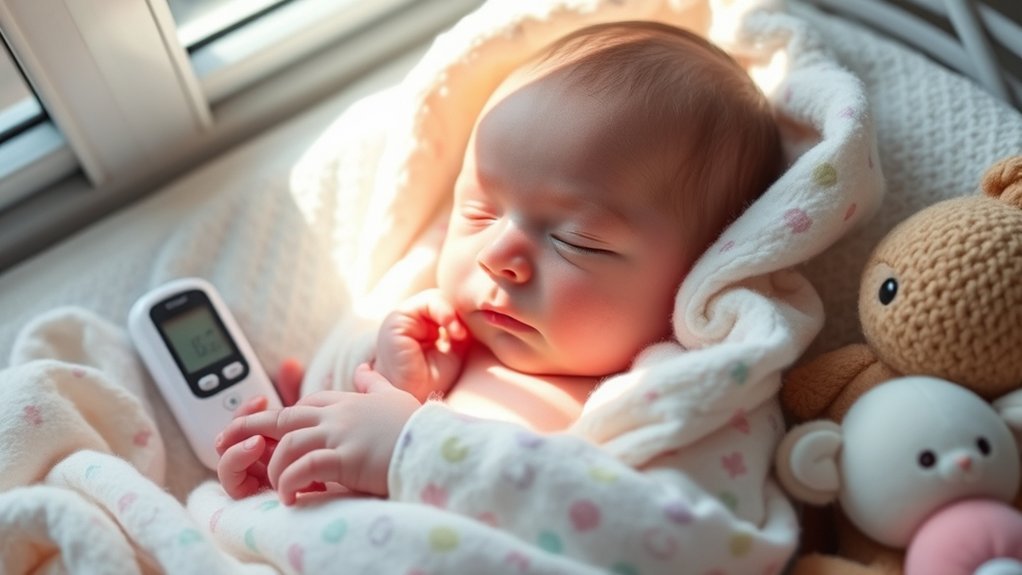
Have you ever wondered how vital a newborn’s temperature is to their overall health? Understanding the normal range of 97.7°F to 100.4°F can help you recognize any signs of fever or hypothermia. These symptoms can manifest in various ways, impacting your baby’s comfort and well-being. It’s essential to know what to look for and when to seek help. So, let’s explore the signs and symptoms that can guide you in caring for your newborn effectively.
Understanding Normal Newborn Temperature Range
When you welcome a newborn into your life, understanding their normal temperature range is crucial for their health and well-being. Typically, a newborn’s normal body temperature ranges from 97.7°F to 100.4°F (36.5°C to 38°C). Keeping track of this range helps you identify potential health issues early. A temperature below 97.7°F may indicate hypothermia, while a temperature above 100.4°F could signal a fever, both of which require immediate attention. Newborns are particularly vulnerable, as they can’t regulate their body temperature as effectively as older children or adults. Monitoring their temperature regularly not only encourages peace of mind but also guarantees that you’re equipped to provide the best care possible during these critical early days.
How to Accurately Measure Your Baby’s Temperature
Measuring your baby’s temperature accurately is essential for monitoring their health. You’ll want to choose the right type of thermometer and use proper techniques to guarantee reliable readings. Let’s explore the various thermometer options and the best practices for taking your newborn’s temperature.
Thermometer Types Overview
Accurate temperature measurement is essential for monitoring your newborn’s health, especially since even slight variations can indicate potential issues. Choosing the right thermometer can help guarantee you get reliable readings. Here’s a quick overview of the common types:
- Digital Thermometers: Fast and accurate; ideal for home use.
- Rectal Thermometers: Considered the gold standard for infants, providing precise readings.
- Axillary Thermometers: Non-invasive, but may be less accurate than rectal measurements.
- Ear Thermometers: Quick but require proper positioning; not always suitable for newborns.
- Forehead (Temporal) Thermometers: Convenient for quick checks, though accuracy can vary.
Understanding these types will help you make an informed choice for your baby’s temperature monitoring.
Proper Measurement Techniques
To guarantee you’re getting the most reliable temperature readings for your newborn, it’s crucial to follow proper measurement techniques. Start by choosing the right thermometer and verify it’s clean. When measuring, place the thermometer in the recommended location, usually under the armpit or rectally for the most accuracy.
Here’s a quick reference:
| Measurement Method | Temperature Range |
|---|---|
| Axillary | 97.6°F to 98.6°F |
| Rectal | 98.6°F to 100.4°F |
| Oral | 98.6°F to 99.5°F |
Wait for the thermometer to beep, and avoid taking readings right after bathing or if your baby has been active. Consistency is key for accurate monitoring of your newborn’s health.
Factors Affecting Newborn Temperature
While many factors can influence a newborn’s temperature, environmental conditions and individual characteristics play critical roles. Understanding these influences helps you maintain your baby’s comfort and health.
- Room Temperature: A warm or cold environment can directly affect your newborn’s body temperature.
- Clothing: The type and amount of clothing can either insulate or expose your baby to temperature changes.
- Activity Level: Increased activity, such as crying or feeding, can elevate a newborn’s temperature.
- Gestational Age: Premature infants may struggle more with temperature regulation than full-term babies.
- Health Status: Underlying medical conditions can also impact your newborn’s ability to maintain a stable temperature.
Symptoms of Fever in Newborns
How can you tell if your newborn has a fever? One of the first signs is an elevated body temperature, typically above 100.4°F (38°C) when measured rectally. You might notice your baby feeling warmer than usual to the touch, especially on their forehead or neck. Other symptoms can include irritability, lethargy, or feeding difficulties. Your newborn may also exhibit unusual crying or seem less responsive than normal. Pay attention to any signs of discomfort, such as arching their back or pulling their legs toward their belly. If you suspect a fever, it’s essential to consult your pediatrician promptly, as timely intervention can help address any underlying issues and guarantee your baby’s well-being.
Symptoms of Hypothermia in Newborns
When your newborn’s body temperature drops too low, you’ll want to be alert to signs of hypothermia. Look for physical symptoms like cold skin, especially on their extremities, and behavioral changes such as increased lethargy or irritability. Recognizing these indicators promptly can help guarantee your baby’s well-being.
Physical Signs to Observe
It’s vital to monitor for physical signs of hypothermia in newborns, as early detection can greatly impact their well-being. When you observe your newborn, keep an eye out for the following signs:
- Cold skin: Feel for coolness, especially on the extremities.
- Shivering: While uncommon in newborns, any tremors should be noted.
- Lethargy: Watch for unusual sleepiness or lack of responsiveness.
- Weak cry: A soft or faint cry may indicate distress.
- Poor feeding: An unwillingness to feed or suckle may be a red flag.
If you notice any of these symptoms, it’s important to seek medical attention promptly. Your newborn’s health is a priority, and timely intervention can make a significant difference.
Behavioral Changes to Note
As you care for your newborn, it’s important to be aware of behavioral changes that may signal hypothermia. If your baby seems unusually lethargic or less responsive than usual, it could be a sign of low body temperature. Watch for signs of irritability or excessive fussiness, which may indicate discomfort. Additionally, if your newborn is feeding poorly or shows a decreased interest in feeding, this could also point to hypothermia. You might notice them having trouble waking up or staying awake, which is concerning. Keep an eye out for shivering or cold, pale skin. Recognizing these behavioral changes early can help you take action and make certain your newborn receives the care they need.
When to Seek Medical Attention for Temperature Changes
While caregivers often monitor a newborn’s temperature, knowing when to seek medical attention for concerning changes is essential. If you notice any of the following signs, don’t hesitate to contact your healthcare provider:
- A rectal temperature of 100.4°F (38°C) or higher
- A rectal temperature below 97°F (36.1°C)
- Persistent fussiness or lethargy
- Difficulty feeding or refusal to eat
- Signs of dehydration, such as dry mouth or fewer wet diapers
Prompt intervention can prevent complications and guarantee your newborn’s health. Always trust your instincts; if something feels off, it’s better to err on the side of caution. Your pediatrician is there to help and guide you through any concerns you may have.
Common Causes of Fever in Newborns
Fever in newborns can arise from various factors, and understanding these common causes is vital for caregivers. Infections are the most frequent culprit, including bacterial, viral, or fungal infections that can affect the respiratory or urinary systems. Sometimes, a newborn might experience a fever due to an inflammatory response to a vaccination. Environmental factors, such as overheating from excessive clothing or a warm room, can also elevate body temperature. Additionally, teething, although less common in very young infants, might lead to slight fever. It’s important to monitor your newborn closely, as early detection of underlying issues can greatly impact their health and well-being. Always consult your pediatrician if you notice a persistent or concerning fever.
Managing a Fever in Newborns
Understanding the causes of fever in newborns helps you respond effectively when your baby is unwell. When managing a fever, it’s essential to take appropriate steps to guarantee your baby’s comfort and safety. Here are some tips to take into account:
- Monitor your baby’s temperature regularly.
- Keep them hydrated with breast milk or formula.
- Dress them in lightweight clothing to prevent overheating.
- Use acetaminophen only if advised by a doctor.
- Consult your pediatrician if the fever persists or if your baby shows other concerning symptoms.
Importance of Regular Temperature Monitoring
Regularly monitoring your newborn’s temperature is essential for ensuring their health and well-being. A stable temperature indicates that your baby is adapting well to the outside world, while fluctuations may signal underlying issues. By keeping track of their temperature, you can quickly identify fever or hypothermia, both of which require immediate attention. It’s vital to recognize that newborns are particularly vulnerable to temperature changes, given their limited ability to regulate their body heat. Regular checks can help you respond promptly to any signs of illness, providing peace of mind. Establishing a routine for temperature monitoring not only aids in your baby’s care but also fosters a deeper connection as you become attuned to their needs.
Frequently Asked Questions
What Is the Ideal Room Temperature for Newborns?
The ideal room temperature for newborns is between 68°F and 72°F (20°C to 22°C). Keeping your baby’s environment within this range helps guarantee comfort and reduces the risk of overheating or hypothermia.
Can Clothing Affect a Newborn’s Temperature?
Yes, clothing can affect a newborn’s temperature. Dressing your baby too warmly or too lightly can lead to overheating or chilling. Always monitor their comfort and adjust layers based on the environment and their needs.
How Often Should I Check My Newborn’s Temperature?
You should check your newborn’s temperature regularly, especially if they seem unwell or after significant changes in environment. Generally, doing so every few hours during illness is advisable, ensuring their comfort and safety.
Are There Any Home Remedies for Newborn Fever?
While there aren’t miracle cures for newborn fever, you can try keeping your baby hydrated, dressing them lightly, and using a cool washcloth on their forehead. Always consult your pediatrician for guidance.
Can Teething Cause a Slight Increase in Temperature?
Yes, teething can cause a slight increase in temperature. It’s usually mild and temporary. If you notice a significant fever or other concerning symptoms, consult your pediatrician to guarantee your baby’s well-being.
Conclusion
In conclusion, understanding your newborn’s temperature range, recognizing signs of fever and hypothermia, and knowing when to seek medical attention are essential for your baby’s health. By measuring their temperature accurately, monitoring for symptoms, and managing any fever, you can guarantee their well-being. Regular temperature checks provide peace of mind and help you act quickly if issues arise. Stay vigilant, stay informed, and prioritize your newborn’s health for a safe start to their life.
