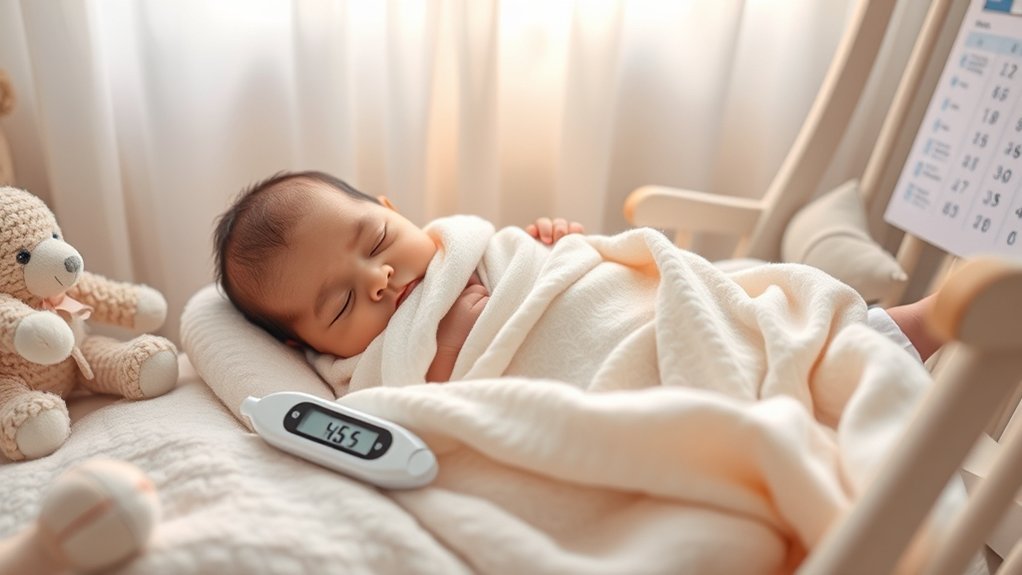
Did you know that a newborn’s temperature can vary greatly based on multiple factors? Understanding the normal temperature range and the influences affecting it is vital for ensuring your baby’s health. Factors like age, feeding methods, and environmental conditions can lead to fluctuations that might signal underlying health issues. It’s essential to monitor these changes closely to identify potential risks. So, what should you be vigilant about when it comes to your newborn’s temperature?
Understanding Normal Temperature Ranges for Newborns
When caring for a newborn, it is crucial to understand their normal temperature ranges, as this can indicate their overall health. A typical temperature for a newborn ranges from 97.7°F to 99.5°F (36.5°C to 37.5°C). Measurements should ideally be taken using a digital thermometer, preferably rectally for accuracy. Temperatures below 97.7°F may suggest hypothermia, while readings above 100.4°F can indicate fever. Both conditions warrant immediate attention. It’s important to monitor your newborn’s temperature regularly, especially if they show signs of illness or discomfort. Remember to check their temperature during various times of the day, as fluctuations can occur. Being aware of these normal ranges helps you respond promptly to any potential health concerns.
Factors Influencing Newborn Temperature
Several factors can influence a newborn’s temperature, and understanding these can help you maintain their health. First, age plays an essential role; a newborn’s temperature may fluctuate during the early days of life. Second, activity level affects body temperature; increased movement can raise it temporarily. Third, feeding methods matter; breastfed infants may exhibit different temperature patterns compared to formula-fed ones. Additionally, metabolic rate varies among newborns, impacting heat production. Finally, underlying health conditions, such as infections or metabolic disorders, can lead to abnormal temperature readings. Monitoring these factors can assist you in identifying potential issues early, ensuring your newborn remains within a normal temperature range for peak health.
The Impact of Environmental Conditions
Although environmental conditions might seem secondary, they greatly influence a newborn’s temperature regulation. Newborns are particularly vulnerable to temperature fluctuations due to their limited ability to generate heat. Understanding these conditions can help you guarantee their well-being:
- Room Temperature: Maintain a stable, comfortable room temperature, ideally between 68°F and 72°F (20°C to 22°C).
- Humidity Levels: High humidity can hinder heat loss, whereas low humidity may lead to dehydration.
- Clothing: Dress your newborn in layers to regulate body heat effectively.
- Direct Sunlight: Avoid exposing your newborn to direct sunlight, as it can elevate their temperature quickly.
- Drafts: Keep your baby away from drafts or cold surfaces, which can lead to hypothermia.
Common Health Issues Affecting Temperature
Understanding the common health issues that affect a newborn’s temperature is essential for ensuring their well-being. Infections, such as bacterial or viral illnesses, can lead to fluctuations in body temperature, often causing it to rise. Hypothermia may result from inadequate thermal protection or exposure to cold environments, impacting a newborn’s ability to regulate their body heat. Additionally, metabolic disorders, such as congenital hypothyroidism, can disrupt temperature regulation. Dehydration can also play a role, as it affects thermoregulation. Finally, certain medications may influence a newborn’s temperature response. Recognizing these health issues allows you to take prompt action and seek medical advice when necessary, ultimately promoting your newborn’s health and stability.
Signs of Fever in Newborns
Monitoring your newborn’s temperature is essential, especially since health issues can lead to fever. Recognizing the signs of fever in your infant is vital for timely intervention. Here are some symptoms to watch for:
- Increased irritability or fussiness
- Lethargy or decreased responsiveness
- Poor feeding or refusal to eat
- Warm or hot skin, particularly on the forehead
- Rapid breathing or heart rate
If you notice these signs, it’s important to check your newborn’s temperature accurately. A fever in a newborn, defined as a temperature above 100.4°F (38°C), can indicate an underlying health issue. Always consult your pediatrician if you suspect your newborn has a fever or if you have any concerns about their health.
Hypothermia: Causes and Precautions
Hypothermia, which occurs when a newborn’s body temperature falls below 97.7°F (36.5°C), can pose serious health risks if not addressed promptly. Understanding the causes and taking precautions is crucial for every caregiver.
| Causes | Precautions |
|---|---|
| Prematurity | Maintain a stable environment |
| Infection | Use appropriate clothing |
| Inadequate feeding | Guarantee proper breastfeeding |
| Exposure to cold | Monitor room temperature |
| Low body fat | Skin-to-skin contact |
Monitoring Newborn Temperature at Home
Since maintaining a stable body temperature is essential for a newborn’s health, caregivers should regularly check their infant’s temperature at home. Using the right techniques can help guarantee accuracy and comfort. Here are some tips for monitoring your newborn’s temperature:
- Use a digital thermometer for precise readings.
- Take the temperature rectally for the most accurate results in infants.
- Verify the thermometer is clean and properly calibrated.
- Measure the temperature at consistent times, preferably during routine checkups.
- Keep your baby comfortable and calm to avoid fluctuations.
When to Seek Medical Attention
If your newborn has a fever over 100.4°F, it’s vital to seek medical attention immediately. Watch for unusual behavioral changes or signs of poor feeding and lethargy, as these can indicate underlying health issues. Early intervention is essential for ensuring your baby’s well-being.
Fever Over 100.4°F
When your newborn’s temperature exceeds 100.4°F, it’s important to assess the situation promptly, as this could indicate a potential infection or other serious health issue. In such cases, you should seek medical attention immediately if your newborn:
- Is under 3 months old
- Shows signs of irritability or lethargy
- Refuses to feed or has poor appetite
- Has a rash or unusual skin changes
- Exhibits difficulty breathing or persistent coughing
Timely medical evaluation is vital for identifying the underlying cause and initiating appropriate treatment. Remember, it’s always better to err on the side of caution when it comes to your newborn’s health. Monitor their temperature frequently and trust your instincts; if something feels off, don’t hesitate to reach out to a healthcare professional.
Unusual Behavioral Changes
Unusual behavioral changes in your newborn can signal potential health issues that require immediate attention. If you notice your baby is excessively irritable, difficult to soothe, or shows signs of extreme lethargy, it’s essential to seek medical advice. Sudden changes in your newborn’s alertness, such as being unusually quiet or unresponsive, can indicate underlying concerns. Additionally, if your infant exhibits a lack of interest in surroundings or fails to engage with you, this can also be alarming. Pay close attention to any drastic shifts in sleeping patterns or abnormal crying episodes. Promptly addressing these changes allows healthcare professionals to assess your newborn’s health and determine if further evaluation or treatment is necessary. Don’t hesitate to reach out if you have concerns.
Poor Feeding or Lethargy
Newborns often require frequent feeding to guarantee proper growth and development, so a noticeable decline in their feeding patterns or lethargy can be concerning. If you observe any of the following signs, it’s vital to seek medical attention promptly:
- Infrequent feeding (less than 8-12 times per day)
- Difficulty latching or sucking during feedings
- Persistent vomiting or spitting up
- Unresponsiveness or lack of alertness
- Decreased urine output (fewer than 3 wet diapers in 24 hours)
These symptoms may indicate underlying health issues that need immediate evaluation. Monitoring your newborn’s feeding habits and energy levels is essential for their health. Don’t hesitate to consult a healthcare professional if you’re worried about their well-being.
Frequently Asked Questions
What Is the Average Temperature Range for Newborns?
The average temperature range for newborns typically falls between 97.7°F and 100.4°F (36.5°C to 38°C). Maintaining this range is essential for their health, so monitor their temperature regularly and consult a pediatrician if necessary.
How Can I Tell if My Newborn Is Too Hot?
If your newborn feels like a warm little oven, check for flushed skin, rapid breathing, or excessive fussiness. Use a digital thermometer to confirm a temperature above 100.4°F, indicating potential overheating.
Do Vaccinations Affect a Newborn’s Temperature?
Yes, vaccinations can temporarily raise your newborn’s temperature. This reaction often indicates their immune system is responding to the vaccine. Monitor their temperature and consult your pediatrician if it remains elevated or causes concern.
Can Clothing Impact My Newborn’s Body Temperature?
Absolutely, clothing can greatly impact your newborn’s body temperature. Overdressing can lead to overheating, while inadequate clothing might cause them to become too cool. Always monitor their comfort and adjust layers accordingly to maintain ideal temperature.
What Are Normal Temperature Fluctuations Throughout the Day?
Normal temperature fluctuations in newborns can range from 97.5°F to 100.4°F (36.4°C to 38°C). Throughout the day, it’s typical for temperatures to vary slightly due to activity, feeding, and environmental conditions.
Conclusion
In conclusion, understanding your newborn’s normal temperature range is vital for their health and well-being. By recognizing the factors that influence temperature and monitoring it regularly, you can help guarantee your baby stays safe. Isn’t it comforting to know that early detection of temperature abnormalities can lead to better outcomes? Remember, if you ever have concerns about your newborn’s temperature, don’t hesitate to reach out to a healthcare professional for guidance.
