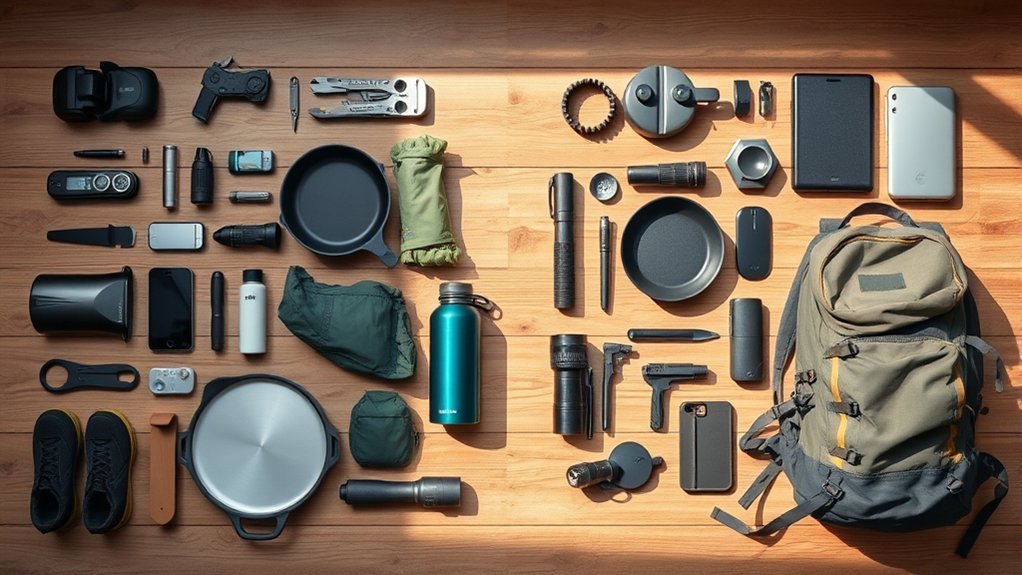
When preparing for a hike, it’s easy to get caught up in the myths surrounding essential gear. You might think that spending more guarantees better performance, or that you need the latest gadgets to navigate effectively. However, understanding what truly matters in your gear can make all the difference. Let’s explore the realities behind clothing, navigation tools, and more, so you can gear up wisely for your next adventure.
Understanding Essential Outdoor Gear
When you venture into the great outdoors, understanding essential gear can make all the difference in your experience.
Start with a reliable backpack; it should fit comfortably and hold your essentials. A good pair of hiking boots is critical, offering support and traction on various terrains.
Don’t forget a weather-appropriate jacket—breathable and waterproof options keep you dry and comfortable. Water purification systems or tablets are important for hydration.
A breathable, waterproof jacket and reliable water purification are key for staying dry and hydrated in the wild.
You’ll also want a first-aid kit tailored to your needs, ensuring safety on the trail. A multi-tool can be invaluable for unexpected situations.
Finally, a map and compass or GPS device will help you navigate confidently. Equip yourself wisely, and you’ll embrace the freedom of the wild!
Common Myths About Hiking Equipment
What misconceptions do you have about hiking equipment? Many people fall for common myths that can lead to unnecessary expenses or poor choices.
Here are a few to keep in mind:
- Expensive gear is always better: High price doesn’t guarantee quality. Many affordable options perform just as well.
- You need the latest technology: New gadgets can be tempting, but often, classic tools work just fine for your needs.
- All hiking boots are the same: Different terrains require different features. Choose boots that match your hiking style and conditions.
The Truth Behind Clothing Choices
Choosing the right clothing for hiking can be just as important as selecting your gear. You want to prioritize comfort, breathability, and moisture-wicking materials. Avoid cotton—it absorbs sweat and can leave you feeling cold and clammy.
Instead, opt for synthetic fabrics or merino wool that regulate temperature and dry quickly. Layers are key; start with a moisture-wicking base layer, add an insulating layer, and finish with a waterproof shell if conditions warrant.
Don’t forget about your extremities; wear moisture-wicking socks and sturdy, breathable footwear for support.
Finally, choose colors that blend with nature, allowing you to connect with your surroundings. With the right clothing, you’ll enhance your hiking experience, feeling free and ready to explore.
Navigational Tools: What You Really Need
While technology offers many options for navigation, understanding the essential tools for hiking remains crucial.
You don’t need the latest gadgets; instead, focus on the basics that empower your outdoor experience. Here’s what you really need:
- Map and Compass: A detailed topographic map and a reliable compass are timeless tools. They help you orient yourself and understand the terrain.
- GPS Device or Smartphone App: While not a replacement for traditional tools, having a GPS can be handy for tracking your route and location.
- Personal Locator Beacon (PLB): In emergencies, a PLB can send distress signals, offering peace of mind as you explore remote areas.
With these tools, you’ll navigate confidently and embrace the freedom of the great outdoors.
Debunking Myths About Cooking Gear
When you’re out in the wilderness, understanding the truth about cooking gear can make or break your culinary experience. Many believe you need an arsenal of expensive tools to cook well, but that’s a myth. A simple pot, a reliable stove, and a multi-tool can handle most situations.
You don’t need a heavy cast-iron skillet; lightweight options work just as effectively. People often think specialized gear is essential, but versatile items save space and weight. Cooking gear doesn’t have to be complex; a few good-quality pieces can empower your outdoor cooking.
Prioritize functionality and ease of use over brand names. With the right mindset and essentials, you can create delicious meals no matter where you are.
First Aid Kits: Size and Contents
Outdoor cooking isn’t the only area where being prepared matters; having the right first aid kit can be a lifesaver in the wilderness.
The size and contents of your kit should match your needs and the length of your trip. A compact kit is great for short hikes, while a larger one is ideal for extended adventures.
Choosing the right first aid kit size ensures you’re prepared for any trip, whether it’s a quick hike or a longer adventure.
Here’s what to include:
- Adhesive bandages and gauze pads for cuts and scrapes
- Antiseptic wipes to clean wounds and prevent infection
- Pain relievers like ibuprofen or acetaminophen for headaches or injuries
Tailoring your first aid kit guarantees you’ll be ready to handle minor emergencies, allowing you to focus on enjoying your adventure with peace of mind.
Shelter and Sleeping Essentials Explained
Choosing the right shelter and sleeping essentials can greatly impact your comfort and safety during outdoor adventures.
First, select a tent that suits your environment—consider weight, space, and weather resistance. A lightweight, three-season tent often balances durability and portability well.
For colder nights, a sleeping bag rated for the expected temperatures is essential; down insulation offers compressibility and warmth. Don’t forget a sleeping pad for insulation from the ground and added comfort.
If you prefer minimalist camping, a hammock can provide a cozy alternative.
Finally, always pack a tarp for extra protection against rain or wind.
Hydration Myths: Water Filters and Bottles
While staying hydrated is essential for any adventure, many misconceptions exist about water filters and bottles that can lead to poor choices. Here are a few myths to clear up:
- All filters remove all contaminants: Not all filters are created equal. Some only target bacteria, while others can handle viruses and chemicals.
- Bottled water is always safer: Bottled water can still be contaminated and often lacks the same filtration standards as portable filters.
- You don’t need a filter in pristine areas: Even in clear streams, harmful pathogens can lurk. Always filter or purify to be safe.
Frequently Asked Questions
How Do I Choose the Right Size Backpack for My Trip?
To choose the right backpack size, measure your torso length and consider your trip’s duration. For day hikes, opt for 20-30 liters; for longer trips, go for 50-70 liters, ensuring comfort and capacity.
Are There Lightweight Alternatives to Traditional Camping Gear?
You can find incredible lightweight alternatives like ultralight tents, sleeping bags, and cooking gear. They’ll make your backpack feel like a feather, freeing you to explore the wild without the burden of heavy gear.
Can I Rent Outdoor Gear Instead of Buying It?
Yes, you can rent outdoor gear instead of buying it. Renting’s cost-effective and lets you try different equipment. It’s a great way to enjoy nature without the commitment of ownership, freeing up your budget for experiences.
What Should I Consider When Purchasing a Multi-Tool?
Picture yourself in the wild, needing a tool at a moment’s notice. When choosing a multi-tool, consider its weight, versatility, durability, and the specific tasks you’ll tackle. A well-chosen tool can liberate your adventures!
How Often Should I Replace My Outdoor Gear?
You should replace your outdoor gear every few years, or sooner if you notice significant wear. Regularly inspect your gear for damage; investing in quality means safety and performance, enhancing your outdoor adventures.
Conclusion
In your hiking adventures, remember that knowledge is your best gear. Trust in reliable, proven tools over flashy, expensive options. Choose clothing that fits your environment, not just the latest trends. Equip yourself with essential navigational aids, and don’t overlook the basics in cooking and first aid. Prioritize practical hydration solutions, and understand the importance of shelter for a good night’s rest. With the right mindset and gear, you can maximize your outdoor experience without breaking the bank.
