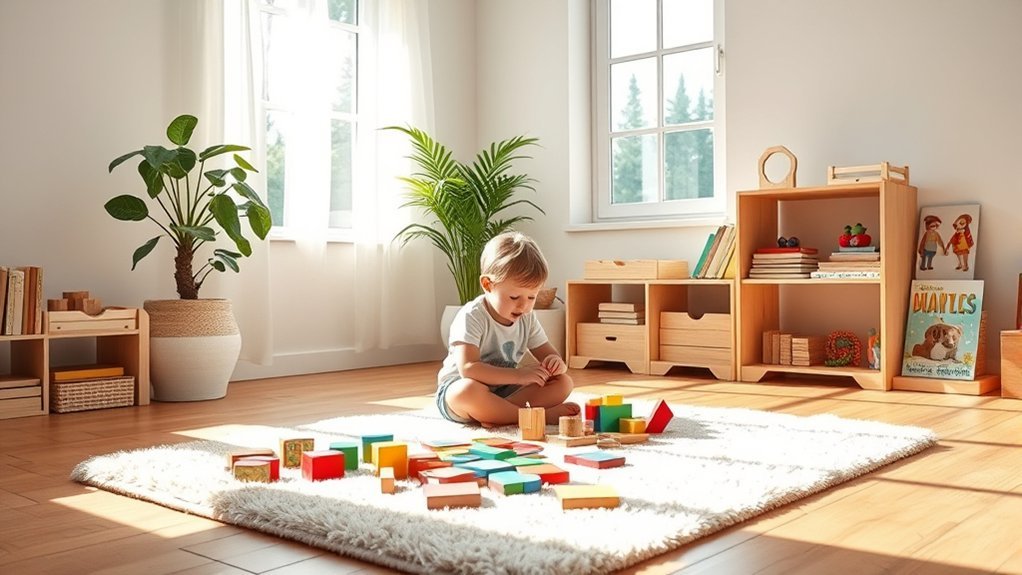
Did you know that children who engage in a Montessori environment often show greater independence and problem-solving skills? Creating a Montessori-inspired space at home can transform your child’s learning experience. By intentionally organizing materials and fostering exploration, you can support their natural curiosity. Let’s explore how to set up this nurturing environment and encourage your child’s growth in ways that resonate with their unique interests and abilities.
Understanding Montessori Principles
While you may be familiar with the basics of Montessori education, understanding its core principles can truly transform your home environment.
At the heart of Montessori is respect for the child’s natural development, allowing them to learn at their own pace. You’ll want to create an atmosphere that encourages exploration and independence, where your child feels empowered to make choices.
Respecting a child’s natural development fosters exploration and independence, empowering them to learn and make their own choices.
Incorporating hands-on materials fosters a deeper understanding of concepts, nurturing their innate curiosity. Observing your child’s interests helps you tailor activities that engage them meaningfully.
Additionally, consider the importance of freedom within limits; offering choices while maintaining boundaries cultivates responsibility.
Preparing the Environment
As you prepare your home environment, think about how to organize learning materials in a way that sparks curiosity.
Create functional spaces that invite exploration and allow your child to move freely.
Organizing Learning Materials
Creating a well-organized space for learning can transform your home into a nurturing environment that fosters independence and exploration.
Start by categorizing materials based on subjects or activities, like art, science, or practical life skills. Use clear bins or shelves to store items, making sure everything is accessible at your child’s height. Label containers with pictures or words to encourage self-directed learning.
Rotate materials regularly to keep interest high and prevent overwhelm. A tidy, inviting space signals to your child that learning is valued and important.
Designing Functional Spaces
An inviting environment encourages children to explore and learn at their own pace. You’ll want to create spaces that are both functional and accessible.
Arrange furniture in a way that allows for movement and interaction. Low shelves filled with engaging materials let your child choose what to focus on, promoting autonomy. Use natural light to enhance the atmosphere, making it warm and welcoming.
Designate areas for different activities, such as reading, art, and construction, ensuring each space is tidy and organized. Incorporate elements of nature, like plants or natural textures, to stimulate curiosity.
Encouraging Independence and Exploration
While you prepare your environment, think about how each element can inspire your child’s independence and curiosity.
Arrange materials within their reach, allowing them to explore freely and make choices. Use open shelving to display toys and tools, giving your child the freedom to select what interests them.
Create inviting spaces for different activities—reading nooks, art corners, or a small kitchen area—encouraging them to engage in diverse experiences.
Keep the area organized yet accessible, so your child feels empowered to tidy up after themselves. Nurturing their sense of ownership fosters confidence, helping them become self-sufficient.
As they navigate their space, observe their interests and adapt the environment to nurture their natural curiosity further.
Choosing the Right Materials
When selecting materials for your Montessori environment, consider what truly nurtures your child’s curiosity and development.
You’ll want to weigh the benefits of natural versus synthetic options, ensuring they align with your child’s age and interests.
Choosing thoughtfully can make all the difference in creating an engaging and supportive space for learning.
Essential Montessori Materials
Choosing the right materials for a Montessori-inspired home environment is essential for fostering your child’s independence and curiosity.
When selecting materials, aim for items that are inviting and promote exploration. Here are some essentials to take into account:
- Wooden puzzles that challenge problem-solving skills while being durable and tactile.
- Textured fabrics that encourage sensory exploration, like soft cotton or silk.
- Real-life tools, such as child-sized kitchen utensils, to spark interest in everyday tasks.
- Nature-inspired decor, including plants or natural materials, to create a calming atmosphere.
Natural vs. Synthetic Options
As you create a Montessori-inspired environment, considering the difference between natural and synthetic materials can greatly impact your child’s experience. Natural materials, like wood and cotton, foster sensory exploration and connection to the earth. In contrast, synthetic options may be less tactile and can sometimes contain chemicals that aren’t ideal for young learners.
Here’s a quick comparison to help you decide:
| Natural Materials | Synthetic Materials |
|---|---|
| Promote sensory play | Often less tactile |
| Environmentally friendly | May contain chemicals |
| Durable and long-lasting | Can wear out quickly |
Age-Appropriate Selection Criteria
Understanding your child’s developmental stage is essential for selecting age-appropriate materials that truly resonate with their needs and interests.
Focus on items that spark curiosity and encourage exploration. Consider these criteria when choosing:
- Safety: Verify materials are non-toxic and free from small parts.
- Complexity: Select activities that match their skill level without causing frustration.
- Interest: Observe what captivates your child’s attention—choose materials that align with those interests.
- Independence: Look for items that promote self-directed learning and problem-solving.
Encouraging Independence
How can you create an environment that nurtures your child’s independence? Start by designing spaces where they can easily access their toys and materials. Low shelves and child-sized furniture empower them to make choices.
Encourage your little one to dress themselves, offering clothes they can manage. You can also provide simple, manageable tasks like watering plants or setting the table. These activities build confidence and reinforce their sense of capability.
Always celebrate their efforts, no matter how small, and offer gentle guidance instead of doing things for them. By fostering a supportive atmosphere, you’ll help your child develop a strong sense of independence, allowing them to explore and learn at their own pace.
Incorporating Practical Life Skills
Incorporating practical life skills into your child’s daily routine can be both rewarding and enriching, as these activities lay the foundation for independence and self-reliance.
Introducing practical life skills into your child’s routine fosters independence and self-reliance while providing enriching experiences.
You’ll notice how engaged your child becomes when they take on these simple tasks:
- Pouring water from a small pitcher into a cup
- Folding napkins for mealtime
- Sweeping the floor with a child-sized broom
- Sorting and matching socks after laundry
Fostering a Love for Learning
As your child gains confidence in practical life skills, you’ll notice their curiosity about the world around them blossoming. Nurturing this curiosity is key to fostering a love for learning. Create an environment rich in exploration, offering materials that captivate their interests.
| Activity | Materials Needed | Learning Outcome |
|---|---|---|
| Nature Walks | Magnifying glass | Observation skills |
| Cooking Together | Ingredients | Math and science concepts |
| Storytelling | Books | Language development |
| Art Projects | Paints and paper | Creativity and expression |
| Gardening | Seeds and soil | Responsibility and patience |
Encourage questions, and celebrate discoveries. Your attentiveness and support will cultivate a lifelong passion for learning, guiding your child to become an enthusiastic explorer of the world.
Frequently Asked Questions
How Do I Handle Resistance to Montessori Activities?
When you face resistance to Montessori activities, try observing your child’s interests. Offer choices, keep sessions short, and create a calm environment. Be patient and encourage exploration, allowing them to engage at their own pace.
Can Montessori Be Applied to Older Children?
Absolutely, Montessori can flourish with older children. Think of it as nurturing a garden; you provide the right environment and watch them explore, learn, and grow independently while developing critical thinking and a love for learning.
What if My Child Prefers Traditional Toys?
If your child prefers traditional toys, embrace their interests while introducing Montessori principles. Encourage open-ended play, balance their toys with engaging materials, and foster exploration, so they feel inspired to learn and grow in their own way.
How Do I Assess My Child’s Progress?
Evaluating your child’s progress is like watching a flower bloom—you notice subtle changes over time. Keep track of their interests and skills, observe their confidence, and celebrate small milestones to nurture their growth and development.
Are There Online Resources for Montessori Activities?
Yes, there are plenty of online resources for Montessori activities. Websites, blogs, and social media groups offer creative ideas and printable materials. You’ll find inspiration to nurture your child’s learning and exploration every day.
Conclusion
As you embrace Montessori at home, remember that each small step you take shapes your child’s journey toward independence. The environment you’ve crafted and the materials you’ve chosen hold the key to revealing their potential. But what happens when you see their eyes light up with discovery? That moment of realization is just the beginning. Keep nurturing that curiosity, and watch as they transform not just their world, but their future, one exploration at a time.
