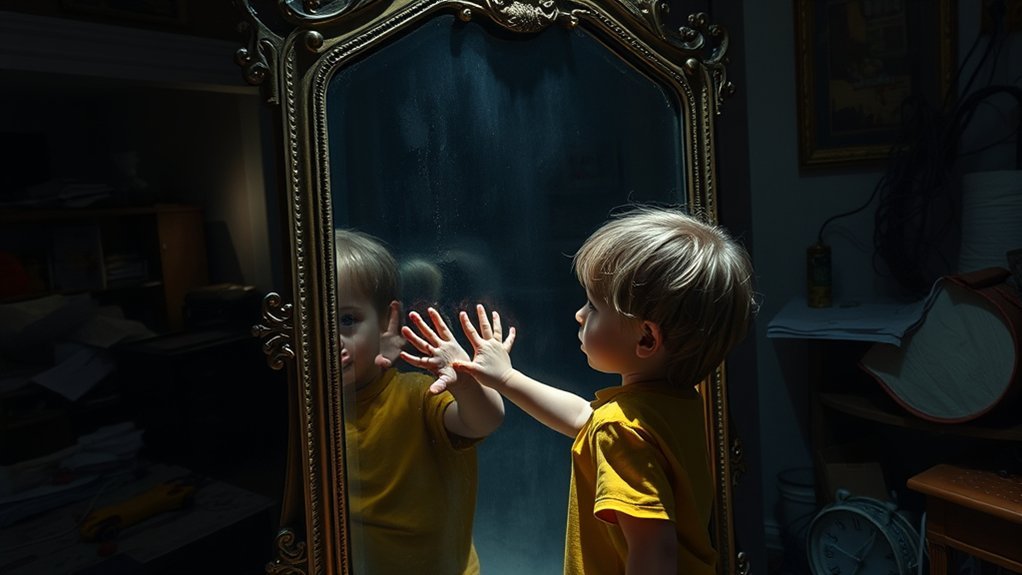
Did you know that over 70% of adolescents report feeling pressure to meet societal beauty standards? This overwhelming influence shapes how you perceive yourself, especially in front of mirrors. The interplay between media portrayal and personal self-image can lead to unhealthy habits and comparisons. What you might not realize is how these pressures intertwine with psychological factors and even mental health disorders, complicating your relationship with reflection.
The Cultural Influence of Mirrors in Society
Mirrors have long been more than just reflective surfaces; they’re powerful cultural symbols that shape how you perceive yourself and the world around you. From ancient civilizations that viewed mirrors as portals to the soul, to modern-day society where they dictate beauty standards, mirrors influence your self-image and confidence.
You might notice how they serve as tools for self-examination, not just physically but also emotionally. In various cultures, mirrors symbolize truth and introspection, prompting you to confront your identity. They often dictate your social interactions, affecting how you present yourself to others.
As you navigate life, consider how these reflective surfaces impact your perceptions and decisions, revealing deeper truths about societal norms and personal beliefs.
Social Media and Its Role in Self-Perception
How does social media shape your self-perception in today’s digital age? It acts as a powerful mirror, reflecting not just images but ideals and lifestyles.
As you scroll through curated feeds, you might compare yourself to influencers and peers, often feeling inadequate. Likes and comments can inflate your self-esteem or diminish it, depending on the response you receive. This constant validation or criticism can lead to a distorted self-image, where worth is measured by online engagement.
Additionally, the pressure to present a perfect version of yourself online may encourage you to filter reality, creating a facade that doesn’t align with your true self.
Ultimately, social media influences how you view yourself, impacting your confidence and self-worth in profound ways.
Psychological Factors Contributing to Mirror Play
While you mightn’t realize it, psychological factors play an essential role in how you engage with the concept of mirror play. Your self-perception, shaped by experiences and beliefs, considerably influences your interactions with mirrors.
For instance, if you seek validation or approval, you might find yourself more drawn to mirror play as a means of self-exploration. Additionally, your emotional state can affect how you view yourself in the mirror, leading to either positive or negative reflections.
Cognitive biases, such as focusing on flaws rather than strengths, can further enhance this experience. Recognizing these psychological influences can help you better understand your motivations and behaviors, ultimately allowing for a healthier relationship with your self-image and mirror interactions.
The Impact of Body Image Issues
Body image issues can profoundly shape your relationship with mirror play, often distorting how you perceive yourself. When you look in the mirror, you might fixate on perceived flaws, leading to a negative feedback loop that reinforces self-doubt.
This significant view can affect your daily life, influencing your choices, from clothing to social interactions. You may find yourself engaging in mirror play more frequently, seeking validation or reassurance, yet leaving feeling dissatisfied.
The disconnect between reality and your self-image can create an unhealthy relationship with reflections, where mirrors become tools for comparison rather than self-acceptance. Recognizing these issues is essential in fostering a healthier mindset, allowing you to embrace your true self beyond mere appearances.
Mental Health Disorders Linked to Mirror Behavior
Many individuals struggling with mental health disorders find their relationship with mirrors greatly impacted. For those with body dysmorphic disorder, mirrors can become sources of obsession, leading to excessive checking or avoidance.
If you’re dealing with anxiety or depression, your self-image might distort, causing discomfort when facing your reflection. Eating disorders often amplify these feelings, as mirrors can trigger unhealthy comparisons and negative self-talk.
Even conditions like obsessive-compulsive disorder can manifest through mirror-related rituals, further complicating your relationship with your reflection. Understanding these connections is essential; recognizing how mental health influences mirror behavior can help you navigate these challenges.
Awareness is the first step toward finding healthier perspectives and coping mechanisms that promote a more positive self-image.
Strategies for Healthy Self-Reflection
To foster a healthier relationship with your reflection, it’s essential to adopt strategies that promote positive self-reflection.
Start by setting aside time each day for quiet contemplation; this helps you process thoughts and feelings without judgment.
Try journaling to articulate your emotions clearly—writing can reveal patterns and insights you might overlook.
Practice mindfulness to stay present, allowing you to acknowledge feelings without dwelling on them.
Engage in positive affirmations, reminding yourself of your strengths and achievements.
Finally, seek feedback from trusted friends or family; their perspectives can provide valuable insights and help you see yourself more objectively.
Frequently Asked Questions
What Age Groups Are Most Affected by Mirror Play Behaviors?
Young children, typically aged 2 to 5, are most affected by mirror play behaviors. During this stage, they explore self-recognition and develop social skills, making it an essential period for engaging with their reflections.
Are There Specific Personality Types Prone to Mirror Play?
You’ll find that individuals with narcissistic or obsessive personality traits may be more prone to mirror play. Their self-reflection often turns into fixation, like a moth drawn to a flame, seeking validation in every reflection.
How Can Family Dynamics Influence Mirror Play Habits?
Family dynamics shape your mirror play habits by influencing emotional expression and self-image. Supportive environments encourage healthy exploration, while critical families might lead to insecurity, prompting you to seek validation through mirrored behaviors.
What Are the Long-Term Effects of Mirror Play on Individuals?
Mirror play can enhance self-awareness and confidence, but excessive engagement might lead to distorted self-image or social withdrawal. You’ll want to balance this activity, ensuring it fosters positive growth without negative long-term consequences.
Can Mirror Play Lead to Physical Health Issues?
Yes, mirror play can lead to physical health issues if excessive. You might experience strain on your muscles and joints, or develop poor posture habits. Balance and coordination could also suffer with prolonged engagement in this activity.
Conclusion
In a world where mirrors reflect not just our faces but our insecurities, it’s essential to break free from their deceptive grasp. By understanding the cultural pressures and psychological factors at play, you can reclaim your self-image and embrace authenticity. Remember, the true reflection lies in how you perceive yourself beyond the glass. Let’s shift the narrative from self-scrutiny to self-acceptance, turning the mirror into a tool for empowerment rather than a trap for comparison.
