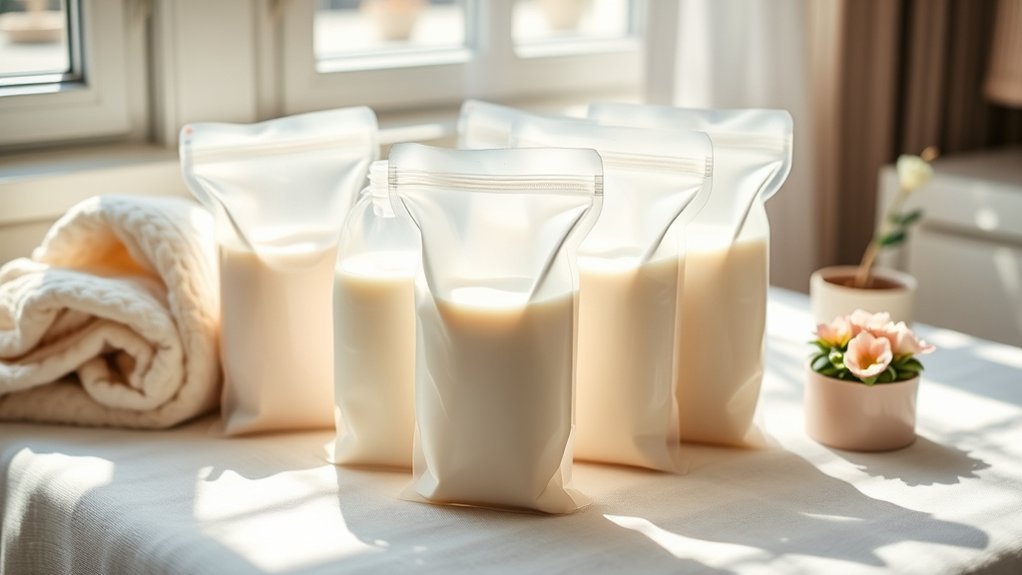
Breastfeeding can be both a rewarding and challenging experience for new mothers. Milk storage bags offer a practical solution to streamline the process of managing breast milk, ensuring safety and convenience. Understanding their role in your breastfeeding journey can greatly impact your comfort and confidence. As you explore the advantages of these bags, you’ll find that they not only simplify storage but also enhance your overall breastfeeding experience.
Understanding the Importance of Breast Milk Storage
Understanding the importance of breast milk storage is vital for new parents who want to provide the best nutrition for their babies. Proper storage techniques not only preserve the milk’s nutritional content but also guarantee its safety for your infant.
You should store breast milk in clean, sterilized containers to minimize bacterial growth. It’s essential to label each container with the date and time of expression, allowing you to use the oldest milk first.
Remember, fresh milk can stay at room temperature for up to four hours, while refrigerated milk lasts about four days. For longer storage, freezing is ideal, extending the milk’s life to six months or more.
Following these guidelines helps you maintain high-quality breast milk for your baby.
Benefits of Using Milk Storage Bags
When you choose to use milk storage bags, you’re opting for a convenient and efficient way to manage breast milk.
These bags offer several benefits that can enhance your breastfeeding experience:
- Space-saving design: They’re designed to lay flat, making it easy to store in your freezer, maximizing space.
- Pre-sterilized: Most bags come pre-sterilized, ensuring your milk remains safe and hygienic without extra preparation.
- Leak-proof seals: The secure closures minimize the risk of leaks, providing peace of mind during storage.
- Easy labeling: Many bags feature space for dates and quantities, helping you track your milk supply effectively.
Using milk storage bags can simplify your routine, allowing you to focus on what matters most—caring for your baby.
Choosing the Right Milk Storage Bags
Selecting the right milk storage bags is essential for guaranteeing your breast milk remains safe and effective for your baby. Here are some key factors to take into account:
| Feature | Importance |
|---|---|
| Material | Choose BPA-free plastic to avoid toxins. |
| Seal Quality | Look for double-seal options to prevent leaks. |
| Size | Select bags that suit your storage needs. |
| Sterilization | Ensure bags are pre-sterilized for safety. |
How to Properly Store and Freeze Breast Milk
Properly storing and freezing breast milk is essential for maintaining its nutritional quality and safety for your baby. Follow these guidelines to guarantee your milk stays fresh:
Properly storing and freezing breast milk is crucial for preserving its quality and ensuring your baby’s safety.
- Use Clean Containers: Store milk in BPA-free plastic bags or glass containers specifically designed for breast milk.
- Label Each Bag: Write the date and time when you expressed the milk to keep track of freshness.
- Leave Space for Expansion: Fill bags only three-quarters full to allow for expansion during freezing.
- Freeze Quickly: Place the milk in the back of the freezer, where the temperature is most consistent, and aim to use it within six months for best quality.
Tips for Thawing and Using Stored Breast Milk
Thawing and using stored breast milk requires careful attention to guarantee safety and preserve its nutritional benefits.
Start by transferring the milk from the freezer to the refrigerator for gradual thawing, which helps maintain quality. If you’re in a hurry, you can place the sealed bag under warm running water or use a warm water bath. Avoid using a microwave, as it can create hot spots and degrade nutrients.
Once thawed, gently swirl the milk to mix, but don’t shake it. Use thawed milk within 24 hours and never refreeze it.
If your baby doesn’t finish a bottle, you can store the leftovers in the fridge for up to two hours. Always prioritize hygiene and follow safe handling practices.
Managing Milk Supply During Pregnancy
Managing your milk supply during pregnancy is essential for ensuring a smooth breastfeeding experience.
You’ll want to understand the basics of milk production, explore techniques to increase your supply, and implement safe storage practices.
This knowledge will empower you to effectively prepare for your breastfeeding journey.
Understanding Milk Production
As you navigate the journey of pregnancy, understanding milk production becomes essential for ensuring a healthy supply for your baby. Your body undergoes several changes that influence milk production, and recognizing these can help you manage your supply effectively.
Here are four key factors to take into account:
- Hormonal Changes: Hormones like prolactin and oxytocin are critical in establishing and maintaining milk production.
- Nutrition: A balanced diet rich in calcium, protein, and healthy fats supports ideal milk synthesis.
- Hydration: Staying well-hydrated is crucial for maintaining a steady milk supply.
- Rest: Adequate rest and stress management contribute to overall milk production efficiency.
Increasing Supply Techniques
While you’re preparing for the arrival of your baby, it’s important to explore effective techniques for increasing milk supply during pregnancy. Here are some strategies you can implement:
| Technique | Description | Benefits |
|---|---|---|
| Frequent Feeding | Nurse or pump every 2-3 hours. | Stimulates milk production. |
| Hydration | Drink plenty of water throughout the day. | Supports overall health and lactation. |
| Nutritional Support | Incorporate a balanced diet rich in protein and healthy fats. | Enhances milk quality and quantity. |
Safe Storage Practices
To guarantee your milk remains safe and nutritious for your baby, it’s essential to adopt proper storage practices during pregnancy. Here are four key guidelines to follow:
- Use Clean Storage Bags: Always opt for BPA-free milk storage bags and verify they’re sterile before use.
- Label Your Bags: Include the date and time of expression on each bag to track freshness.
- Store at the Right Temperature: Keep milk in the back of the refrigerator (32°F to 39°F) or freeze it (0°F or colder) for longer storage.
- Avoid Refreezing: Once thawed, never refreeze milk. Use it within 24 hours for maximum safety.
Following these practices will help you manage your milk supply effectively while confirming your baby’s nutrition.
The Role of Milk Storage Bags in Lactation
Milk storage bags play an essential role in lactation, providing a convenient and hygienic way to store breast milk for later use. They’re designed to preserve the nutritional quality of your milk, ensuring your baby receives the best possible nourishment. By using these bags, you can easily store milk in the freezer or refrigerator, allowing for flexibility in feeding schedules.
| Features | Benefits |
|---|---|
| BPA-free material | Safe for your baby |
| Leak-proof design | Prevents spills and waste |
| Stand-up base | Easy storage and access |
These features make milk storage bags an invaluable tool for breastfeeding mothers, helping you manage your lactation journey with ease and confidence.
Addressing Common Concerns and Myths
When it comes to using milk storage bags during pregnancy, many concerns and misconceptions arise.
You might wonder about the safety of these bags and whether they can affect the quality of your milk.
Let’s clarify these issues to guarantee you feel confident in your choices.
Safety of Storage Bags
Many expectant mothers have concerns about the safety of using storage bags for milk, especially with varying information circulating in the media.
It’s crucial to address these concerns with accurate information. Here are four key points to evaluate:
- BPA-Free Materials: Most storage bags are made from BPA-free plastic, ensuring they’re safe for your baby.
- Sterilization: Many bags are pre-sterilized, reducing the risk of bacteria contamination.
- Freezer Safety: High-quality bags can withstand freezing temperatures without leakage or rupture.
- Labeling: Properly labeling bags with dates helps maintain freshness and safety.
Common Misconceptions Explained
While some expectant mothers worry that using storage bags for milk might pose risks, it’s important to clarify these misconceptions. Many believe that storage bags can leach harmful chemicals into the milk. However, reputable brands use BPA-free materials designed for safe food storage.
Another concern is that milk quality might degrade in bags. In reality, proper storage techniques, like avoiding exposure to heat and sunlight, help maintain freshness.
Some may think that bags are prone to leaks, but high-quality options are durable and secure. Finally, you might hear that bags aren’t environmentally friendly; however, many brands offer recyclable options.
Understanding these facts can help you confidently choose the right storage solution during your pregnancy.
Enhancing Comfort With Efficient Storage Solutions
To enhance your comfort during pregnancy, efficient storage solutions for milk can make a significant difference.
By organizing your milk storage effectively, you can reduce stress and improve accessibility. Here are four key strategies:
- Choose Quality Bags: Opt for BPA-free, leak-proof milk storage bags that are designed for freezing and easy pouring.
- Label Clearly: Use a permanent marker to note the date and volume on each bag, helping you track freshness.
- Organize in the Freezer: Arrange bags vertically in the freezer for easy access and to maximize space.
- Maintain Hygiene: Always wash your hands before handling milk storage bags to guarantee safety for both you and your baby.
Implementing these strategies can lead to a more comfortable and efficient milk storage experience.
Personalizing Your Milk Storage Routine
As you navigate your pregnancy journey, personalizing your milk storage routine can enhance both convenience and peace of mind.
Begin by selecting storage bags that suit your needs—opt for BPA-free options with leak-proof seals. Label each bag with the date and volume to guarantee proper rotation and avoid waste.
Consider portion sizes; storing in smaller bags can help you use just what you need. Organize your freezer by categorizing bags, making it easier to locate your milk quickly.
Regularly check for expiration dates, discarding any older milk to maintain freshness.
Finally, establish a consistent pumping schedule that aligns with your daily routine. By tailoring your approach, you’ll foster a more efficient and stress-free milk storage experience.
Frequently Asked Questions
Can I Reuse Milk Storage Bags After Washing Them?
You shouldn’t reuse milk storage bags after washing them. Even with thorough cleaning, they can harbor bacteria and compromise milk safety. It’s best to use new bags to guarantee your baby’s health remains a top priority.
How Long Can I Store Breast Milk in the Fridge?
You can store breast milk in the fridge for up to four days. Notably, studies show that about 90% of mothers use their milk within this timeframe, ensuring their babies receive fresh, nutritious feedings.
What Are the Signs of Spoiled Breast Milk?
You’ll notice signs of spoiled breast milk if it smells sour, has a strange color, or shows separation. If it tastes off or has a grainy texture, it’s best to discard it immediately.
Can I Mix Fresh and Frozen Breast Milk?
Absolutely, you can mix fresh and frozen breast milk, but make certain the fresh milk is cooled first. This way, you’re blending nutrients like a chef harmonizes flavors, creating a nourishing experience for your baby.
Is It Safe to Store Breast Milk in Glass Containers?
Yes, it’s safe to store breast milk in glass containers. Glass is non-toxic, easy to clean, and doesn’t retain odors. Just make certain the containers are properly sealed and stored in appropriate conditions to maintain freshness.
Conclusion
Incorporating milk storage bags into your breastfeeding routine can greatly enhance your experience. Research shows that 80% of mothers find organized milk storage reduces stress during lactation. By efficiently managing your breast milk, you not only guarantee your baby receives the best nutrition but also enjoy a smoother shift into motherhood. With proper techniques and personalized routines, you can create a supportive environment that fosters both your comfort and your baby’s well-being.
