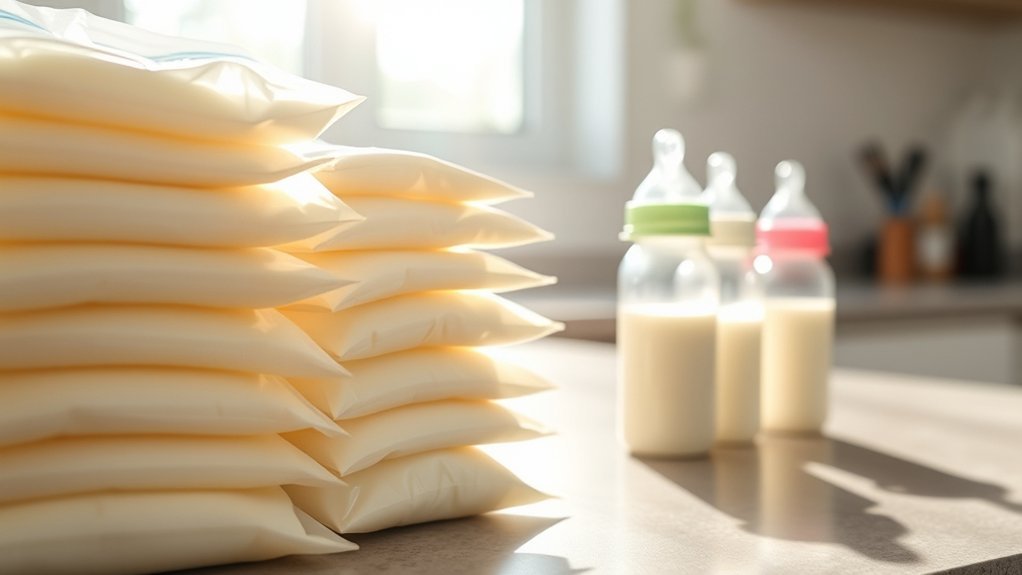
When you’re maneuvering through the challenges of breastfeeding, managing milk supply, and juggling a busy schedule, having the right tools makes all the difference. Milk storage bags are designed to preserve your hard-earned breast milk, keep it safe from contamination, and save precious freezer space. Understanding how to choose and use these bags effectively can transform your breastfeeding experience. But what should you know to guarantee you’re getting the most out of this essential resource?
The Importance of Milk Storage Bags
When you’re juggling the demands of parenthood, having the right tools can make all the difference, and milk storage bags are essential for storing breast milk safely.
These bags provide a convenient and hygienic way to preserve your milk, ensuring it stays fresh for your little one. Unlike regular containers, they’re designed to minimize leaks and reduce the risk of contamination, offering you peace of mind during those busy days.
You can easily label them with dates, helping you keep track of your milk supply. With their compact design, they fit neatly in your freezer, saving space for other essentials.
Choosing the Right Milk Storage Bags
Choosing the right milk storage bags can greatly impact your breastfeeding experience, especially when you’re managing a busy schedule.
Selecting the ideal milk storage bags is crucial for a smooth breastfeeding journey amidst a hectic lifestyle.
With so many options available, it’s essential to take into account a few key factors that can make your life easier. Here are some things to look for:
- Material: Verify the bags are BPA-free and made from durable, food-grade materials.
- Sealing Mechanism: Opt for bags with secure zippers or seals to prevent leaks.
- Capacity: Choose bags that fit your storage needs, whether that’s single or double servings.
- Labeling Area: Look for bags with a writable area for tracking dates and quantities.
Best Practices for Using Milk Storage Bags
After selecting the right milk storage bags, it’s important to use them effectively to guarantee your breast milk stays safe and nutritious.
Start by labeling each bag with the date and time of expression; this helps you keep track of freshness. Fill the bags, leaving some space at the top for expansion during freezing. Always double-check the seals to avoid leaks.
Store bags upright in the freezer, and avoid stacking them until they’re frozen solid to prevent squishing. When defrosting, place the bags in the refrigerator overnight if possible.
Finally, never refreeze thawed milk, as this can compromise its quality. Following these best practices guarantees your milk remains wholesome for your little one.
How to Properly Thaw and Warm Breast Milk
To guarantee your baby’s breast milk retains its nutrients and safety, thawing and warming it correctly is crucial. Here are some practical tips to follow:
Proper thawing and warming of breast milk is essential to preserve its nutrients and ensure your baby’s safety.
- Thaw in the fridge: Move frozen milk to the refrigerator overnight for gradual thawing.
- Warm gently: Use a bottle warmer or place the bag in a bowl of warm water. Avoid microwaves, as they can create hot spots.
- Check the temperature: Always test the milk on your wrist to verify it’s lukewarm, not hot.
- Use promptly: Once thawed, use the milk within 24 hours and don’t refreeze it.
Storing and Organizing Your Milk Supply
A well-organized milk supply can make feeding time smoother and more efficient for both you and your baby.
Start by labeling your milk storage bags with dates and times of pumping, ensuring you use the oldest milk first. Store your bags flat in the freezer to save space and allow for easier stacking.
Consider using a dedicated container or bin in your fridge or freezer to keep everything together. Organize the milk by age, separating freshly pumped milk from previously stored milk. This way, you’ll always know what you have on hand.
Regularly check your supply to prevent waste and maintain freshness. With a bit of organization, you’ll feel more confident about your milk storage and feeding routine.
Tips for Managing Pumping and Feeding Schedules
Managing your pumping and feeding schedules can feel overwhelming, but establishing a routine can make a big difference.
By tracking your milk supply and coordinating feeding times, you’ll find it easier to meet both your and your baby’s needs.
Let’s explore some practical tips to help you stay organized and confident in your feeding journey.
Establishing a Routine
While juggling pumping and feeding schedules may seem overwhelming, establishing a routine can make the process smoother and more manageable.
Here are some practical tips to help you get started:
- Set specific pumping times: Consistency is key; try to pump at the same times each day.
- Coordinate with feedings: Pump right after feeding to keep your supply steady and minimize stress.
- Utilize a calendar: Track your pumping times and feeding sessions to identify patterns and make adjustments.
- Stay flexible: Life happens; don’t stress if you need to change your routine occasionally.
Tracking Milk Supply
Tracking your milk supply can feel intimidating, but with the right approach, it becomes much more manageable. Start by keeping a log of your pumping sessions and the amount you produce. This not only helps you understand your supply but also allows you to identify patterns over time.
Consider using a smartphone app designed for breastfeeding and pumping, which makes tracking simple and organized. Pay attention to your baby’s feeding cues, as they can guide your pumping schedule.
It’s essential to pump consistently, especially if you’re away from your little one. Don’t hesitate to reach out to a lactation consultant if you have questions or concerns.
Coordinating Feeding Times
Coordinating feeding times can be a balancing act, especially when you’re juggling pumping and your baby’s needs.
To make this easier, consider these practical tips:
- Create a schedule: Set regular pumping times that align with your baby’s feeding routine.
- Use timers: Set alarms on your phone to remind you when it’s time to pump or feed.
- Keep it flexible: Babies can be unpredictable, so be ready to adjust your schedule as needed.
- Communicate: If you have a partner or caregiver, keep them in the loop about your pumping and feeding plans.
Frequently Asked Questions
Can I Reuse Milk Storage Bags After Washing Them?
You shouldn’t reuse milk storage bags after washing them. Even if they appear clean, they can harbor bacteria or compromise the milk’s quality. It’s safer and more hygienic to use new bags each time.
How Long Can I Store Milk in the Freezer?
You can store milk in the freezer for up to six months. Just make sure to label the bags with the date. Thaw it in the fridge when you’re ready to use it.
Are Milk Storage Bags Bpa-Free?
Imagine a safe haven for your milk; most milk storage bags are indeed BPA-free. Always check labels to verify you’re protecting your baby’s health while making your life a bit easier in the process.
Can I Store Formula in Milk Storage Bags?
Yes, you can store formula in milk storage bags. Just make certain they’re clean and seal tightly to prevent leaks. Label each bag with the date and contents for easy organization and use later.
Do Milk Storage Bags Come in Different Sizes?
Yes, milk storage bags do come in different sizes. You’ll find options ranging from small to large capacities, allowing you to choose what best suits your needs for storing and organizing your milk efficiently.
Conclusion
In the journey of parenthood, milk storage bags are your steadfast allies, ensuring your precious liquid gold remains safe and accessible. By choosing the right bags and following best practices, you can navigate the intricate dance of breastfeeding with grace and ease. Embrace the art of organization and the rhythm of your pumping schedule, and you’ll find harmony in this beautiful chapter of nurturing. With each bag, you’re not just storing milk; you’re preserving moments of love and connection.
