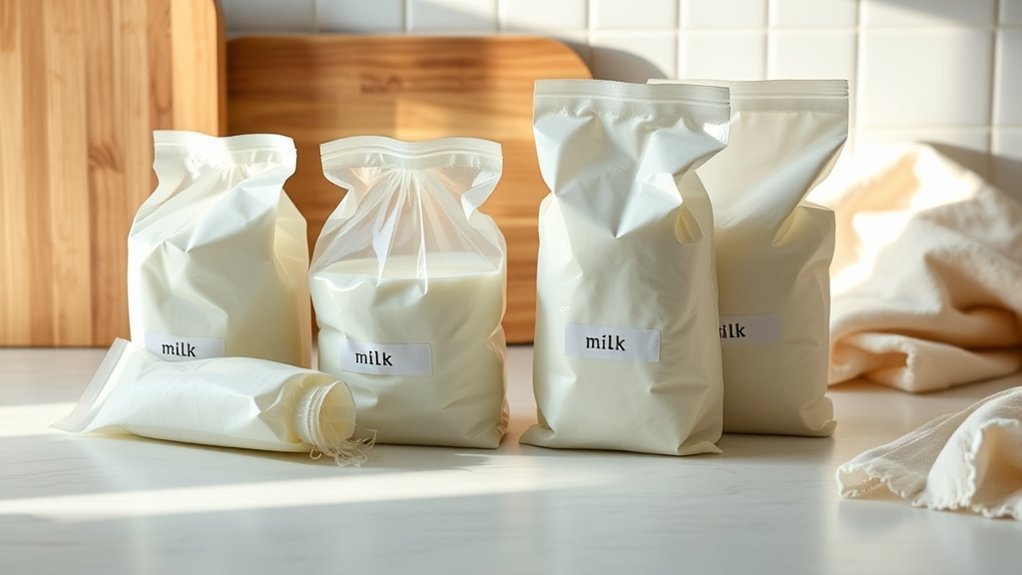
When it comes to using milk storage bags, knowing the do’s and don’ts can make a significant difference in safety and quality. You’ll want to choose the right bags, label them correctly, and understand proper storage techniques. It’s also essential to monitor your milk’s quality over time. But what happens if you accidentally overlook some key practices? Let’s explore how to guarantee your breast milk remains safe and nutritious for your little one.
Choosing the Right Milk Storage Bags
When you’re selecting milk storage bags, it’s essential to contemplate both safety and convenience.
Start by choosing bags made from BPA-free materials to guarantee your milk stays free from harmful chemicals. Look for bags that are durable and leak-proof, as this prevents spills and preserves the quality of your milk.
Consider bags that feature a wide opening for easy filling and pouring, making your experience hassle-free. Additionally, opt for bags with measurement markings, so you can easily track how much milk you have.
Finally, make certain the bags are compatible with your freezer, as some materials may not withstand low temperatures.
Understanding Expiration Dates
Understanding expiration dates is essential for ensuring the safety and quality of your milk.
By recognizing the signs of spoiled milk and employing proper storage techniques, you can prevent potential waste and health risks.
Let’s explore how these factors contribute to maintaining your milk’s freshness.
Importance of Expiration Dates
Expiration dates on milk storage bags are essential for guaranteeing both safety and quality. When you see an expiration date, it helps you determine the freshness of the milk and when it’s best to use it.
Following these dates not only protects you from consuming spoiled milk but also guarantees that your baby receives the best nutrition possible. It’s important to understand that these dates reflect the period during which the milk maintains its ideal flavor and nutrient content.
Signs of Spoiled Milk
How can you tell if milk has gone bad? Spoiled milk can pose health risks, so it is crucial to recognize the signs. Here are a few indicators to watch for:
| Signs | What to Look For |
|---|---|
| Sour Smell | An off or sour odor is a key sign. |
| Change in Texture | Look for lumps or a thicker consistency. |
| Off Taste | A bitter or sour taste indicates spoilage. |
| Discoloration | Any unusual color can be a warning sign. |
| Expiration Date | Always check the date on the carton. |
Trust your senses; if something seems off, it’s better to discard the milk. Staying informed helps you maintain a safe kitchen environment.
Proper Storage Techniques
While you may be tempted to rely solely on the expiration date printed on your milk carton, proper storage techniques play an essential role in guaranteeing its freshness and safety.
First, store your milk in the coldest part of the refrigerator, ideally at 36°F to 38°F (2°C to 3°C). Avoid placing it in the door, as temperatures fluctuate more there. Always keep the cap tightly sealed to prevent contamination and absorb odors.
If you’re using milk storage bags, make sure they’re labeled with the date you filled them. Remember, once opened, milk typically lasts about 5-7 days, even if the expiration date is further out.
Regularly check for spoilage signs, and when in doubt, throw it out to safeguard your health.
Properly Labeling Your Milk
Properly labeling your milk storage bags is essential for maintaining the quality and safety of your breast milk.
Always include the date you pumped the milk, as this helps you track freshness. It’s also a good idea to note the time, especially if your pumping schedule varies. If you have a specific baby’s name or initials to differentiate between multiple children, add that too.
Use waterproof markers or labels to guarantee the information remains legible, even when frozen. Avoid using tape, as it can come off or tear.
Freezing Techniques for Breast Milk
When it comes to freezing breast milk, using the proper filling method is essential to prevent freezer burn and maintain quality.
You’ll also want to follow best practices for thawing to guarantee the milk remains safe and nutritious for your baby.
Let’s explore these techniques to help you store your milk effectively.
Proper Filling Method
To guarantee your frozen breast milk stays safe and nutritious, it’s essential to fill the storage bags correctly.
By following these simple steps, you can help secure the quality of your milk:
- Use clean, sterilized bags specifically designed for milk storage.
- Fill each bag with no more than 4 ounces of milk to allow for expansion.
- Leave at least an inch of space at the top to prevent spills.
- Seal the bags tightly, removing as much air as possible to minimize freezer burn.
- Label each bag with the date and volume for easy tracking.
Thawing Best Practices
Once you’ve successfully filled and frozen your breast milk storage bags, knowing how to thaw them safely is essential for maintaining the milk’s quality and nutritional integrity. Here are some best practices for thawing your milk:
| Method | Time Required | Notes |
|---|---|---|
| Refrigerator | 12 hours | Best method for quality |
| Warm Water Bath | 10-20 minutes | Never boil or microwave |
| Countertop Thawing | 1-2 hours | Use only if consumed soon |
Always avoid rapid thawing techniques like microwaving, as they can create hot spots and destroy nutrients. After thawing, use the milk within 24 hours, and never refreeze thawed milk. Following these practices guarantees your baby gets the best nutrition possible.
Thawing Milk Safely
Though it might be tempting to rush the process, thawing milk safely is crucial for maintaining its quality and preventing bacterial growth. Here are some effective methods you can use:
- Refrigerator Thawing: Place the milk in the fridge for several hours or overnight.
- Cold Water Thawing: Submerge the sealed bag in cold water, changing the water every 30 minutes.
- Microwave Thawing: Use the defrost setting, but watch closely to avoid overheating.
- Thawing on the Counter: Avoid this method as it can lead to unsafe temperatures.
- Use Within 24 Hours: Once thawed, consume the milk within a day to guarantee freshness.
Avoiding Contamination
When it comes to storing milk, preventing contamination is essential for ensuring its safety and quality. Always use clean, sanitized containers when handling milk, and make sure your hands are clean too.
Avoid touching the inside of the milk storage bags, as this can introduce harmful bacteria. If you’re using milk bags, seal them tightly to prevent any exposure to air or contaminants.
Don’t store milk near raw foods in your refrigerator, as cross-contamination can occur. Label your milk bags with dates, and use the oldest ones first to minimize spoilage.
Finally, regularly check for any signs of spoilage or unusual smells, and discard anything that seems off. Following these steps will help you keep your milk safe and fresh.
Storing Milk in the Refrigerator
When storing milk in the refrigerator, it’s essential to keep it at the ideal temperature range of 32°F to 40°F to maintain freshness.
Knowing the shelf life guidelines helps guarantee you enjoy the best quality milk without any spoilage.
Ideal Temperature Range
Maintaining the ideal temperature range for storing milk in the refrigerator is essential for preserving its freshness and safety. You should aim to keep your refrigerator at 32°F to 40°F (0°C to 4°C).
Here are some tips to guarantee your milk stays in the best temperature range:
- Place milk on the middle or lower shelves, not in the door.
- Check the temperature regularly with a thermometer.
- Avoid leaving the refrigerator door open for extended periods.
- Don’t store milk near the back of the fridge, where it can freeze.
- Use an insulated bag when transporting milk to prevent temperature fluctuations.
Shelf Life Guidelines
Understanding shelf life guidelines is essential for ensuring the quality and safety of your milk. When stored in the refrigerator, you should aim to consume pasteurized milk within 7 to 10 days after opening.
If you notice any changes in smell, taste, or appearance, it’s best to discard it. Unopened containers can last up to a week past the printed expiration date, but always check for signs of spoilage.
For ideal freshness, keep your milk at or below 40°F (4°C). If you’re unsure, it’s safer to err on the side of caution.
Reusing Milk Storage Bags
Although reusing milk storage bags can be an eco-friendly choice, it’s essential to approach this practice with caution. Here are some guidelines to keep in mind:
- Inspect for Damage: Check for tears or holes that could compromise the bag’s integrity.
- Clean Thoroughly: Wash the bags with hot, soapy water to eliminate any residue or bacteria.
- Limit Use: Consider reusing bags only a few times to guarantee safety.
- Avoid Strong Odors: Don’t reuse bags that have absorbed strong smells, as they can affect the milk’s flavor.
- Store Properly: Make sure they’re completely dry before storing to prevent mold growth.
Monitoring Milk Quality
Reusing milk storage bags comes with its own set of considerations, but you also need to keep a close eye on the quality of the milk itself. Always check the expiration date and smell the milk before use; any off odors indicate spoilage.
Look for changes in color or texture, as these can signal that the milk isn’t safe to consume. Store your milk properly—keep it at the back of the fridge where temperatures are most consistent.
If you notice any separation, shaking the bag gently can help, but if it doesn’t mix back smoothly, it’s best to discard it. Regular monitoring guarantees you’re providing the best nutrition for your little one while minimizing waste.
Disposing of Expired Milk
When milk has expired, it’s essential to dispose of it properly to guarantee both safety and environmental responsibility.
Here are some guidelines to follow:
- Seal the container: Confirm the milk is securely sealed to prevent spills during disposal.
- Check local regulations: Some areas have specific guidelines for disposing of dairy products.
- Compost if possible: If your community allows, composting can be an eco-friendly option for small amounts.
- Avoid pouring down the drain: This can lead to plumbing issues and environmental damage.
- Use a trash bag: Place the sealed container in a trash bag to minimize odors and leaks.
Frequently Asked Questions
Can I Use Regular Plastic Bags for Milk Storage?
You shouldn’t use regular plastic bags for milk storage. They aren’t designed for food safety and might leak or contaminate your milk. Opt for dedicated milk storage bags to guarantee freshness and safety for your baby.
How Can I Tell if Milk Storage Bags Are Bpa-Free?
Check the packaging or label for “BPA-free” indications. You can also research the brand online or contact the manufacturer directly to confirm their materials. It’s essential to guarantee your storage methods are safe for you and your baby.
Are There Eco-Friendly Options for Milk Storage Bags?
Yes, there are eco-friendly options for milk storage bags. Look for bags made from biodegradable materials or recyclable plastics. These options help reduce environmental impact while keeping your milk safe and fresh.
Can I Microwave Milk Storage Bags for Thawing?
You shouldn’t microwave milk storage bags for thawing. Instead, opt for safer methods like placing the bag in warm water or using the refrigerator, ensuring your milk retains its quality and safety for feeding.
How Should I Clean Reusable Milk Storage Bags?
Think of your reusable milk storage bags as a garden; they need care. Wash them in warm, soapy water, rinse thoroughly, and let them air dry. Avoid harsh chemicals to keep them healthy and safe.
Conclusion
In the journey of nurturing your little one, think of milk storage bags as trusted vessels sailing through the seas of time. By choosing wisely, labeling clearly, and storing correctly, you guarantee the milk remains a nourishing treasure. Avoid the storms of spoilage by monitoring quality and discarding expired milk. With these practices, you can confidently navigate the waves of breastfeeding, providing your child with the best, while preserving the essence of your hard work and love.
