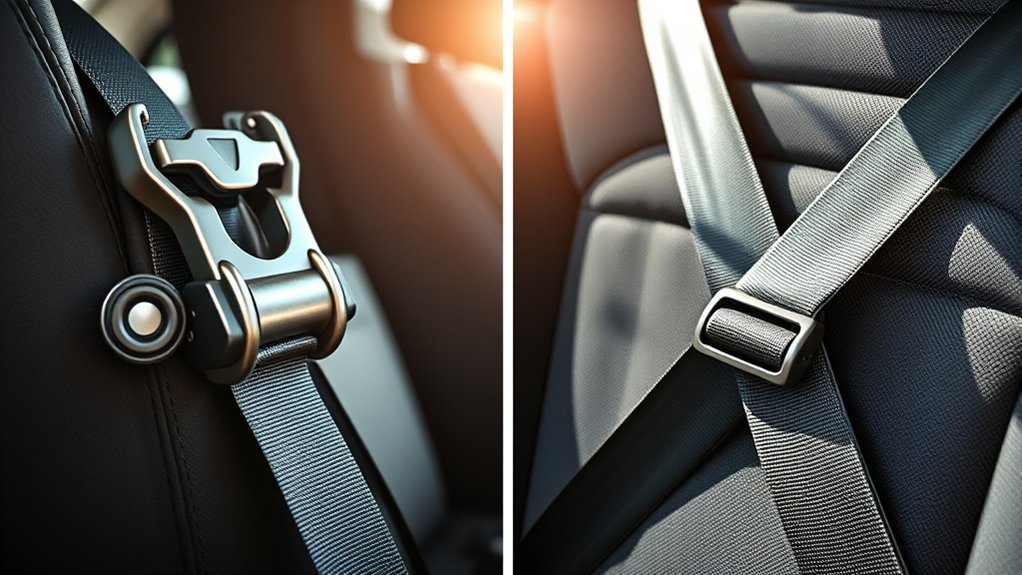
When you’re in your car, strapping your child’s car seat using the LATCH system can seem straightforward, but there are specific steps to follow for safety. You need to check if your vehicle has compatible LATCH anchors and locate them correctly. Alternatively, using the seatbelt method involves threading the belt through the right path and ensuring a tight fit. Which method is best for your situation? Understanding the nuances can make all the difference.
Understanding the LATCH System
When you’re installing a car seat, understanding the LATCH system is essential for guaranteeing your child’s safety.
LATCH stands for Lower Anchors and Tethers for Children. It uses specific anchors in your vehicle to secure the car seat without relying solely on the seatbelt.
Locate the lower anchors, typically found in the seat crack, and verify they’re visible. Attach the car seat’s connectors to these anchors, confirming a snug fit.
If your seat has a top tether, connect it to the designated anchor point on the vehicle’s rear shelf or back of the seat.
Always check the manufacturer’s instructions for both your car seat and vehicle to ensure proper installation. A correctly installed LATCH system can greatly enhance your child’s safety during travel.
Benefits of Using the LATCH System
While some parents might still rely on traditional seatbelts, the LATCH system offers significant advantages that enhance safety and ease of use. Utilizing LATCH makes installation straightforward, reducing the risk of errors. It also allows you to secure your child’s car seat without twisting and tightening seatbelts, which can sometimes be tricky.
Here’s a quick comparison of benefits:
| Benefit | LATCH System | Traditional Seatbelt |
|---|---|---|
| Installation Ease | Simple, lower anchor points | More complex, requires proper threading |
| Safety | Reduces misuse risk | Can be misused easily |
| Compatibility | Standardized for newer cars | Varies by vehicle |
| Adjustability | Fixed anchors | Adjustable straps |
Embracing LATCH can make your car seat experience smoother and safer.
Seatbelt Installation Explained
Although many parents find the LATCH system convenient, understanding how to properly install a car seat using a seatbelt is essential for ensuring your child’s safety.
First, place the car seat in the back seat, facing the rear if it’s an infant seat. Thread the seatbelt through the designated belt path on the car seat, ensuring the belt is flat and not twisted. Buckle the seatbelt and pull the shoulder belt to tighten it.
You should only be able to move the car seat less than an inch side-to-side or front-to-back. Finally, engage the locking mechanism on your seatbelt, if applicable, to secure the installation.
Always double-check your work to make sure the seat is stable and correctly installed.
Advantages of Using Seatbelt Installation
Using seatbelt installation for car seats offers several key advantages that can enhance safety and ease of use.
First, seatbelts are universally available in all vehicles, making them a reliable option no matter what car you drive. This installation method often provides a tighter fit, reducing movement during crashes.
Additionally, using a seatbelt can be simpler for parents who frequently switch car seats between vehicles, as it eliminates the need for specialized anchors.
Furthermore, seatbelt installations help guarantee that the car seat remains secure, as long as you follow the manufacturer’s instructions carefully.
Finally, this method can be easier to adjust when shifting to older children’s seats, providing flexibility as your child grows.
Choosing the Right Method for Your Car Seat
When selecting the right method for securing your car seat, it’s important to take into account various factors that can impact safety and convenience.
Consider the following:
- Car Compatibility: Verify your vehicle is equipped with LATCH anchors for that installation method.
- Ease of Use: Evaluate which method you find easier to install consistently; practice can enhance your confidence.
- Safety Ratings: Look into crash test ratings and recommendations for both LATCH and seatbelt methods.
- Car Seat Type: Some seats are designed specifically for one method, so check your car seat manual for guidance.
Frequently Asked Questions
Can I Use Both LATCH and Seatbelt Simultaneously?
No, you can’t use both LATCH and the seatbelt simultaneously for securing a car seat. Choose one method to guarantee proper installation and safety. Always follow the manufacturer’s guidelines for your specific car seat model.
What if My Car Doesn’t Have a LATCH System?
If your car doesn’t have a latch system, you should use the seatbelt to secure the car seat. Make sure the seatbelt is tight and properly routed through the car seat for maximum safety.
Are LATCH Connectors Universal Across All Car Seats?
No, latch connectors aren’t universal across all car seats. While many seats use similar systems, differences exist. Always check your car seat’s manual to verify compatibility with your vehicle’s latch system for safe installation.
How Often Should I Check My Car Seat Installation?
You should check your car seat installation as often as you change your socks—at least once a month. Make it a habit to verify it’s secure and safe, especially after any long trips or adjustments.
Do LATCH Systems Work in All Vehicle Types?
Latch systems don’t work in all vehicle types. You should check your vehicle’s manual to confirm compatibility. If your car lacks Latch anchors, use the seatbelt method to secure your car seat safely.
Conclusion
When it comes to securing your car seat, both the LATCH system and seatbelt installation offer reliable safety options. The theory that one method is universally better than the other isn’t entirely true; it depends on your vehicle and car seat compatibility. Always check your car seat manual and vehicle guidelines to make the best choice for your situation. Ultimately, choosing the right installation method guarantees your child’s safety on the road, so don’t overlook the details!
