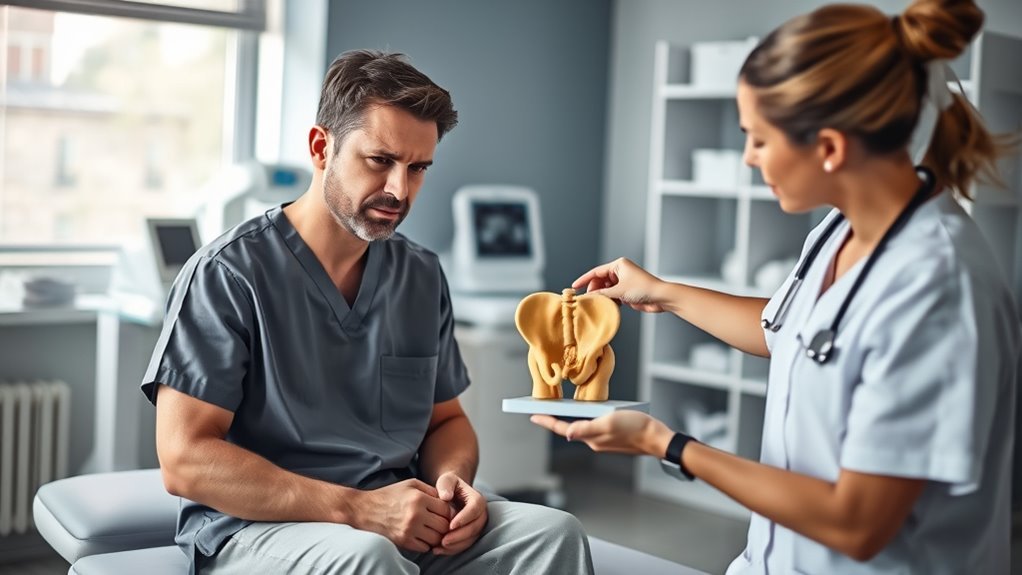
Kegel exercises can strengthen your pelvic floor and help with leakage, prolapse, and postpartum recovery, but you should be careful if you have pelvic pain, urinary urgency without leakage, or soreness from overdoing them. If your muscles feel tight rather than weak, Kegels may worsen symptoms. You should also get guidance after childbirth, pelvic surgery, or if exercises cause pain or bleeding. A pelvic floor specialist can help you choose the right approach and explain more.
What Are Kegel Exercises?
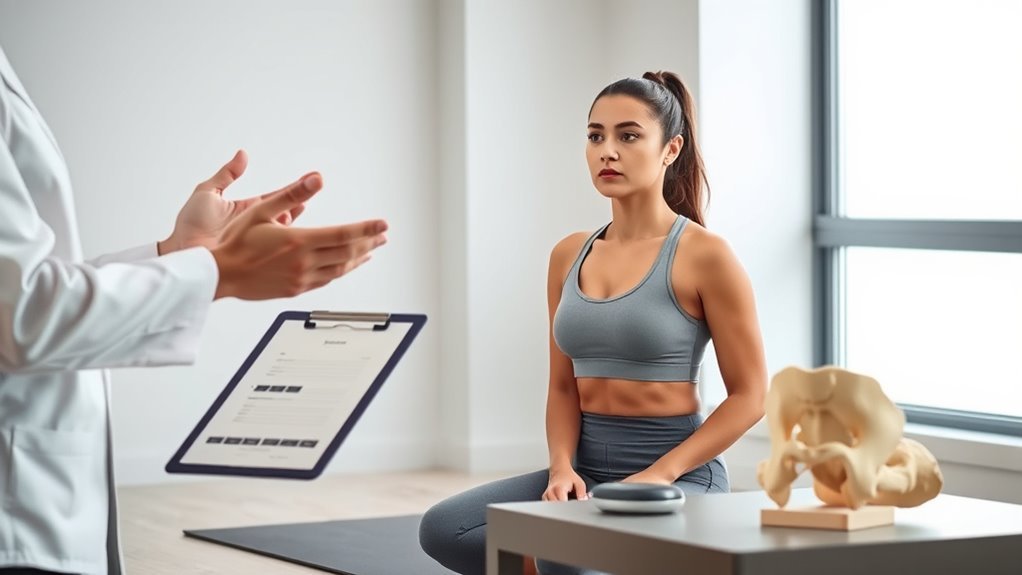
Kegel exercises, or pelvic floor muscle training, are targeted contractions and relaxations of the muscles that support the bladder, rectum, and uterus. You use them to strengthen pelvic floor muscles and improve control over urination and sexual function. They can help reduce urinary incontinence, fecal leakage, and pelvic organ prolapse risk.
To do them correctly, you must identify the right muscles first; some people briefly stop urine flow to locate them, but a pelvic floor therapist can confirm technique and prevent compensation. You can practice in lying, sitting, or standing positions.
Clinically, consistency matters: aim for three sessions daily, and expect measurable change within 3 to 6 weeks if you perform them accurately. These exercises give you direct, practical access to bodily control, which supports autonomy.
Done well, Kegel exercises are simple, private, and effective.
How Kegels Support the Pelvic Floor
Kegel exercises strengthen your pelvic floor muscles, which support the bladder, uterus, and rectum.
This improved muscle tone can help you control urine and stool, especially when abdominal pressure rises.
A stronger pelvic floor can also support core stability and sexual function.
Pelvic Floor Support
Because the pelvic floor acts as a supportive sling for the bladder, rectum, and uterus, targeted Kegel exercises can strengthen these muscles and improve overall pelvic function.
You’re training the pelvic floor to better support pelvic organs, which can reduce the likelihood of urinary incontinence and prolapse, especially after childbirth.
Consistent Kegel exercises also enhance circulation in the region, which may improve sexual response and comfort for both men and women.
As muscle tone improves, you may notice less pelvic pain linked to weakness or dysfunction.
Better pelvic support can also help your core work more efficiently, improving posture and reducing strain on the lower back.
When you practice regularly, you’re building functional strength that supports bodily autonomy and everyday movement.
Bladder And Bowel Control
Strong pelvic floor muscles help the bladder and rectum stay properly supported, which can improve control over both urination and bowel movements.
When you do a Kegel, you target these muscles directly and strengthen the pelvic floor over time. This improved support can reduce urinary incontinence, especially when coughing, lifting, or exercising increases abdominal pressure.
It also helps with bladder control by letting you delay urination more effectively when urges arise. Kegels may further support bowel control by reinforcing the muscles that manage stool passage, which can help if you experience fecal leakage.
Regular practice may also lower the risk of pelvic organ prolapse, preserving function and giving you greater freedom in daily life.
Core And Sexual Function
When you strengthen the pelvic floor with Kegel exercises, you also improve core stability and support for the organs in the pelvis.
You train muscles that help control bladder and bowel function, which can reduce urinary incontinence and protect pelvic health over time.
Strong, well-coordinated pelvic floor muscles also support sexual function by improving blood flow and muscle control, so you may notice greater arousal and more intense orgasms.
If you’re male, consistent practice may also improve erectile function and reduce premature ejaculation.
Weak or overly tight muscles can contribute to pelvic pain and sexual dysfunction, so targeted training matters.
With regular Kegel exercises, you can counter age-related decline and preserve comfort, confidence, and freedom in your body.
Who Kegels Help Most
Kegel exercises help most when pelvic floor weakness is affecting bladder, bowel, or sexual function. If you have urinary incontinence, Kegel exercises can strengthen the pelvic floor and reduce leakage during coughing, lifting, or exercise. If you’re pregnant, you can use them to prepare for birth and support postpartum recovery. If you’re 60 or older, you may also benefit from Kegel exercises because pelvic floor training lowers urinary leakage risk. If you live with a history of prolapse or fecal incontinence, targeted Kegel exercises may help you manage symptoms more effectively. Men can benefit too, especially when age-related pelvic floor decline affects urinary control or sexual function.
| Who benefits | Why |
|---|---|
| Women with leakage | Improve bladder support |
| Pregnant women | Prepare for childbirth |
| Older women | Reduce urinary leakage |
| People with prolapse or fecal incontinence | Support symptom control |
Who Should Be Careful With Kegels?
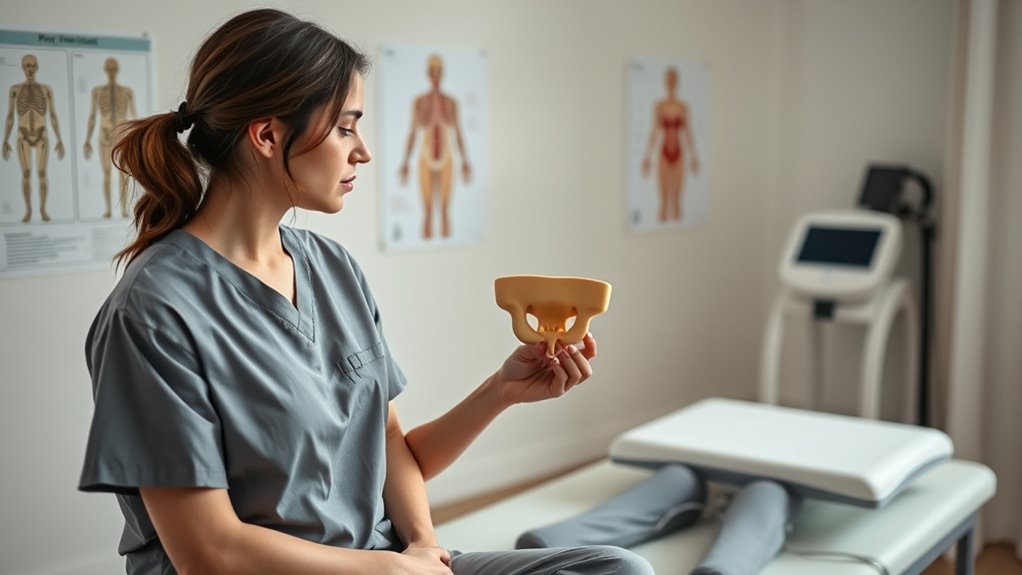
You should be cautious with Kegel exercises if you have pelvic pain, urinary urgency without leakage, or frequent urination that may reflect muscle tension rather than weakness, because strengthening a tight pelvic floor can worsen symptoms.
If you have pelvic floor issues that include pain, spasm, or soreness, Kegel exercises can be contraindications until a clinician evaluates you.
You should also consult medical professionals if you’ve had pelvic floor disorders or recent pelvic surgery, since the wrong approach can aggravate symptoms and delay recovery.
When you’re unsure whether your muscles are weak or overactive, pelvic floor physical therapists can assess function, correct technique, and guide safer alternatives.
If Kegels cause discomfort, stop and seek supervision rather than pushing through.
Your goal isn’t to force control, but to restore freedom with precision.
A tailored plan protects you from unnecessary strain and helps you choose the right exercise for your body’s actual needs.
Can You Do Kegels After Surgery or Childbirth?
After childbirth or surgery, the timing of Kegel exercises depends on how your tissues are healing and whether your pelvic floor needs strengthening or protection. You can reclaim control, but only when your healthcare professional says it’s safe. After childbirth, many patients start once healing is stable; vaginal delivery often means waiting about 6 weeks, and cesarean or pelvic surgery may require longer. During surgical recovery, starting too early can worsen pain or trigger complications, so don’t force it.
| Situation | Usual timing | Caution |
|---|---|---|
| Vaginal birth | Often after 6 weeks | Confirm healing |
| Cesarean birth | Often longer | Protect incision |
| Pelvic surgery | Provider-specific | Avoid strain |
| Pain or bleeding | Stop now | Seek review |
| Unclear recovery | Wait | Ask healthcare professional |
If Kegel exercises hurt, stop immediately. You deserve function without setback, and professional guidance helps you protect healing while restoring pelvic floor strength.
How to Do Kegels
Find the pelvic floor muscles by trying to stop urine flow or keep gas from escaping, then contract those muscles for 3 seconds and relax for 3 seconds.
When you perform Kegels, keep your abdomen, thighs, and buttocks relaxed so you isolate the pelvic floor. Use controlled breathing and avoid straining.
This technique helps you strengthen support for the bladder and may reduce urinary incontinence over time. Build precision first, then increase hold time gradually to 10 seconds over several weeks as your control improves. Aim for clean contractions, not force.
Integrate Kegel exercises into daily routines—while standing, sitting, or waiting—to make practice consistent and independent. A steady routine matters: perform Kegels in multiple brief sets across the day, and maintain form every time.
If you feel pain, pressure, or can’t isolate the pelvic floor, pause and reassess your technique. Consistency, not intensity, gives you durable gains.
How Many Kegels Should You Do?
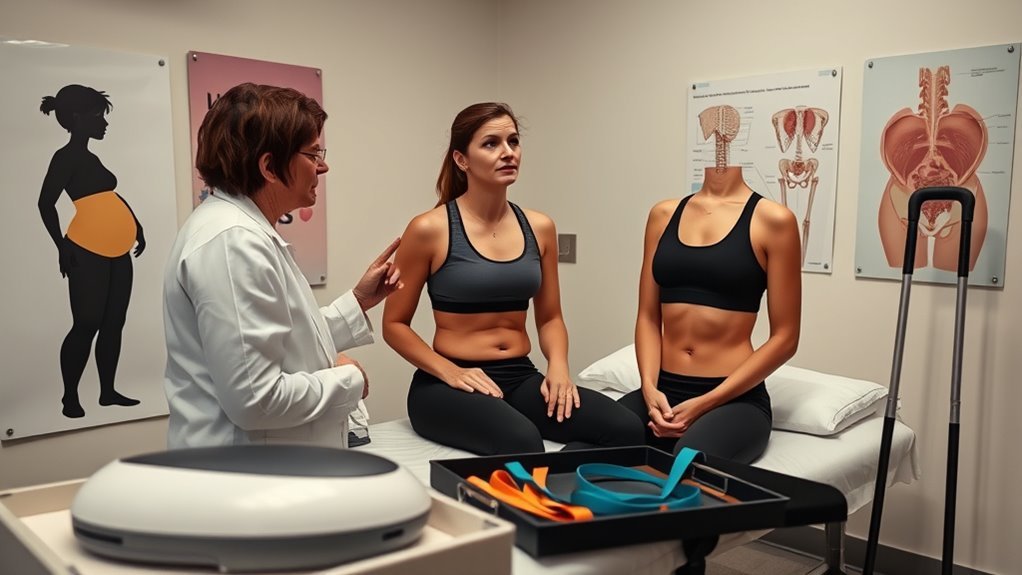
How many Kegels to do depends on consistency and proper technique.
If you’re asking, how many kegels should you do?, start with Kegel exercises in three sets of 10 to 15 contractions each day. Hold each contraction for 3 seconds at first, then build toward 10 seconds as your muscles adapt.
You don’t need to overtrain; steady consistency matters more than volume, and even one set daily can improve bladder control when you keep at it.
Practice lying down, sitting, and standing to find the position that lets you contract cleanly and freely.
Expect measurable change after 3 to 6 weeks of regular work. If you feel strain, reduce the load and reassess.
For a plan matched to your body and goals, consult a healthcare professional.
Kegels for Pelvic Pain and Tight Muscles
If you have pelvic pain, urgency without leakage, or pain during urination, Kegels may worsen your symptoms rather than help.
Tight pelvic floor muscles often need care, not strengthening, especially if prolonged sitting, muscle tension, or prior surgery is involved.
You should seek a pelvic floor physical therapist for a targeted evaluation and treatment plan.
Pelvic Pain Warning Signs
Pelvic pain can be a warning sign that Kegel exercises aren’t appropriate, especially when the pelvic floor is already tense or overworked. If you feel pelvic pain, urinary urgency, or discomfort during intercourse, you may have tight pelvic floor muscles, not weakness. Kegels can worsen soreness and reinforce guarding.
| Sign | Likely meaning | Action |
|---|---|---|
| Pelvic pain | Tension | Stop Kegels |
| Urinary urgency | Overactivity | Seek assessment |
| No leakage | Pain, not weakness | Avoid self-treatment |
| Soreness | Overwork | Use alternatives |
You should consult a pelvic floor physical therapist for a tailored evaluation. They can identify whether you need alternative treatments instead of strengthening. That guidance helps you reclaim comfort without aggravating symptoms.
Tight Muscles Need Care
Tight pelvic floor muscles need a different kind of care, and Kegels can make things worse when pain or overactivity is already present.
If you feel chronic pelvic pain, urgency without leakage, or a persistent sense of tightness, your issue may be muscle tightness, not weakness. In that case, pelvic floor exercises that ask you to tighten or squeeze can overload the muscles that support your bladder, bowel, and pelvic organs.
That overwork can increase soreness, tension, and dysfunction. You shouldn’t start strengthening on your own. Instead, you need a pelvic floor physical therapist who can assess your pattern and tailor care to your body.
With the right approach, you can protect function, reduce pain, and reclaim control without forcing already tense muscles into more strain.
Professional Help Matters
When pelvic pain, urgency without leakage, or frequent urination without leakage is present, Kegel exercises can worsen symptoms instead of helping.
You need a pelvic health professional to assess what’s actually driving the problem. Tightness, not weakness, may be the issue, and your pelvic floor can become more sore if you keep strengthening it without professional guidance.
A pelvic floor physical therapist can evaluate muscle tone, pain patterns, and coordination, then direct you toward supervised care rather than unsupervised home work.
This approach improves technique, supports adherence, and reduces the risk of overworking irritated muscles.
With a clear diagnosis, you get tailored treatment plans that fit your body and restore function with precision.
Liberation starts with knowing when Kegels aren’t the answer.
When to See a Pelvic Floor Specialist?
If Kegel exercises cause soreness, discomfort, pelvic pain, or urinary urgency without leakage, you should stop and consult a pelvic floor specialist. Your pelvic floor may be too tight, not weak, and more Kegel exercises can worsen symptoms.
If Kegels cause pain or urgency, stop—your pelvic floor may be too tight, not weak.
When you feel frequent urination without leakage, you need professional evaluation to distinguish muscle pain from true weakness. If you’ve had pelvic floor disorders or recent pelvic surgery, get guidance before you continue; correct technique matters.
A pelvic floor specialist can assess coordination, strength, and resting tone, then tailor treatment to your body’s needs. If you’re struggling with pain, dysfunction, or persistent discomfort, ask for referral to a pelvic floor physical therapist.
You deserve care that restores control, not exercises that intensify symptoms. With timely evaluation, you can choose safer strategies, reduce pain, and regain confidence in movement, bladder function, and daily life.
Frequently Asked Questions
Do They Finger You During Pelvic Floor Therapy?
Yes, during pelvic floor therapy, you may get an internal exam using a gloved finger. Your therapist uses therapy techniques only with your patient consent, prioritizing personal comfort, therapist qualifications, and accurate assessment.
Does Kegel Exercise Have Any Side Effects?
Yes—if you overdo Kegels, you can develop muscle tension, pelvic pain, or urinary urgency. Your exercise frequency matters. Kegel benefits exist, but common misconceptions can harm pelvic health. Get individualized guidance when symptoms persist.
Are There Downsides to Kegel Exercises?
Yes—Kegels can backfire. If you overdo them, misuse muscles, or ignore pelvic pain, you may worsen tension and urgency. Proper technique, frequency guidelines, and alternative exercises preserve Kegel benefits while correcting common misconceptions.
Why Are Kegels Not Recommended for Everyone?
Kegels aren’t recommended for everyone because you may have Kegel misconceptions; pelvic health needs individualized assessment. If you’ve got pain, tension, or other contraindications awareness, Kegels can worsen symptoms, and alternative therapies may work better.
Conclusion
Kegels can strengthen your pelvic floor, but they’re not a universal fix, and your muscles don’t deserve blind optimism. If you have pelvic pain, tightness, prolapse symptoms, or pain with sex, you should be careful and get assessed before you start squeezing on principle. You’ll get the best results when you match the exercise to the problem, not the trend. If Kegels hurt, worsen symptoms, or feel impossible, see a pelvic floor specialist.
