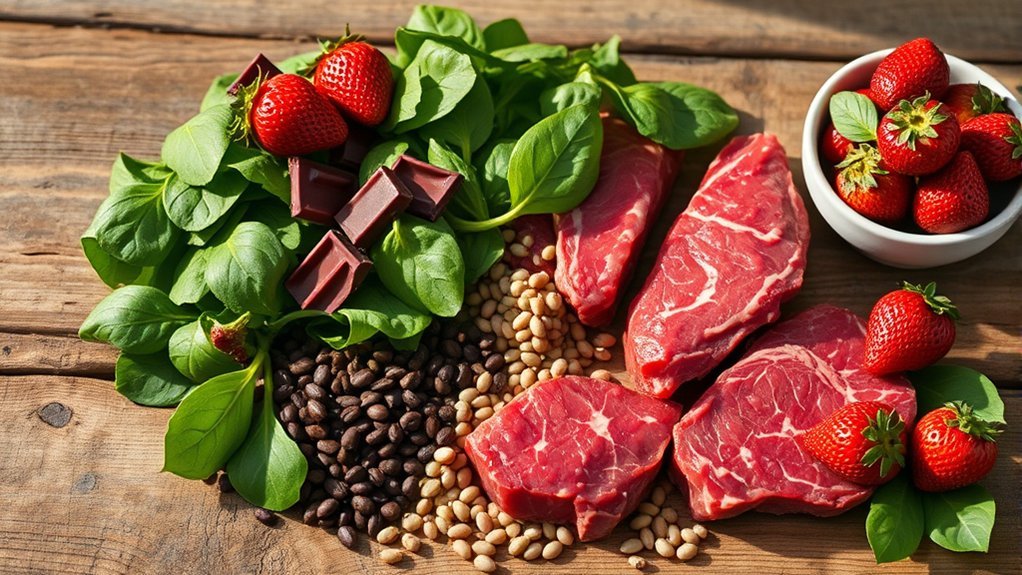
Just as a well-oiled machine needs the right components to function smoothly, your body requires adequate iron for peak health. Iron plays an essential role in transporting oxygen and supporting various bodily functions. However, many overlook the importance of incorporating iron-rich foods into their diets. By understanding the types of iron and how to enhance absorption, you can take proactive steps to prevent deficiencies and maintain your well-being. What specific strategies can you implement to guarantee you’re getting enough iron?
Understanding Iron and Its Importance
Iron is an essential mineral that plays an important role in your body’s overall health. It’s critical for producing hemoglobin, which transports oxygen from your lungs to your tissues. Without adequate iron, you risk developing anemia, leading to fatigue, weakness, and impaired cognitive function. Your body also needs iron for energy metabolism and DNA synthesis. Research shows that a deficiency can compromise your immune system, making you more susceptible to infections. Additionally, iron supports muscle function, enabling you to perform daily activities effectively. It’s important to include iron-rich foods in your diet to maintain ideal health. Understanding iron’s significance helps you make informed dietary choices that promote your well-being and prevent deficiencies. Prioritizing iron can enhance your overall quality of life.
Types of Iron: Heme vs. Non-Heme
When it comes to iron, understanding the two types—heme and non-heme—is essential for optimizing your intake. Heme iron, found in animal products like meat and fish, is more readily absorbed by your body compared to non-heme iron, which is primarily sourced from plant foods. Recognizing these differences can help you make informed dietary choices that enhance your iron levels effectively.
Heme Iron Sources
Heme iron sources play an essential role in your diet, especially if you’re aiming to boost your iron intake efficiently. Found primarily in animal products, heme iron is more readily absorbed by your body compared to its non-heme counterpart. Red meats, poultry, and fish are excellent sources, with beef liver being one of the richest options. Studies indicate that consuming heme iron can greatly improve iron status, particularly in individuals at risk of deficiency. Incorporating these foods into your meals can enhance your overall nutrient absorption. For instance, pairing heme sources with vitamin C-rich foods can further increase iron bioavailability. By prioritizing heme iron sources, you can effectively support your body’s iron needs and combat potential deficiencies.
Non-Heme Iron Sources
While heme iron sources provide significant benefits, non-heme iron also plays an essential role in your diet. Found primarily in plant-based foods, non-heme iron isn’t as easily absorbed by your body as heme iron, but it’s still crucial for maintaining healthy iron levels. Good sources include lentils, beans, tofu, spinach, and fortified cereals. To enhance absorption, pair these foods with vitamin C-rich items like citrus fruits or bell peppers. Additionally, avoid consuming calcium or tannin-rich beverages like tea and coffee at the same meal, as they can inhibit iron absorption. Understanding these factors can help you optimize your non-heme iron intake, ensuring you meet your nutritional needs effectively. Incorporating diverse sources will support your overall health and well-being.
Top Animal Sources of Iron
Several animal sources stand out as excellent providers of iron, essential for maintaining peak health. Red meat, particularly beef and lamb, offers heme iron, which your body absorbs more efficiently than non-heme iron from plant sources. Poultry, especially dark meat chicken and turkey, also delivers significant iron levels. Shellfish, such as oysters, clams, and shrimp, are not only rich in iron but also provide additional nutrients like zinc and vitamin B12, enhancing their health benefits. Fish, including sardines and tuna, contributes to your iron intake while offering omega-3 fatty acids. Incorporating these animal sources into your diet can help prevent iron deficiency and support overall wellness, particularly for individuals with higher iron needs, such as athletes and pregnant women.
Best Plant-Based Sources of Iron
For those following a plant-based diet or looking to boost their iron intake without animal products, numerous plant sources provide substantial amounts of iron. It’s essential to incorporate a variety of these foods to meet your nutritional needs. Here’s a concise overview of some of the best plant-based sources:
| Food | Iron Content (mg) | Serving Size |
|---|---|---|
| Lentils | 3.3 | 1 cup cooked |
| Chickpeas | 4.7 | 1 cup cooked |
| Quinoa | 2.8 | 1 cup cooked |
| Tofu | 3.4 | 1/2 cup firm |
| Spinach | 6.4 | 1 cup cooked |
Including these foods in your meals can greatly enhance your iron levels, ensuring you maintain a healthy diet.
Cooking Methods to Enhance Iron Absorption
To maximize iron absorption from your meals, consider pairing iron-rich foods with vitamin C sources like citrus fruits or bell peppers. Using cast iron cookware can also greatly increase the iron content of your food during cooking. These simple adjustments can enhance your body’s ability to utilize the iron you consume.
Combine With Vitamin C
While you might focus on incorporating iron-rich foods into your diet, pairing them with vitamin C can greatly boost your body’s ability to absorb this essential mineral. Research shows that vitamin C enhances the absorption of non-heme iron, the type found in plant-based foods, by converting it into a form that’s easier for your body to utilize. To maximize this effect, consider combining sources of iron, such as lentils or spinach, with vitamin C-rich foods like oranges, bell peppers, or strawberries. For example, a spinach salad topped with citrus dressing not only tastes great but also increases iron absorption considerably. By making these simple combinations, you can improve your iron levels and overall health effectively.
Use Cast Iron Cookware
Cooking with cast iron cookware is another effective way to enhance iron absorption in your diet. When you prepare acidic foods like tomatoes or citrus-based dishes in cast iron, they can leach small amounts of iron into your meal. Studies suggest that cooking in cast iron can increase the iron content of your food considerably, especially when you use it frequently. This method is particularly beneficial for individuals at risk of iron deficiency, such as vegetarians or pregnant women. Additionally, cast iron cookware is durable and versatile, allowing you to sauté, bake, or even grill. By incorporating cast iron into your cooking routine, you can effortlessly boost your iron intake while enjoying the benefits of healthy, flavorful meals.
Combining Foods for Optimal Iron Intake
Combining certain foods can greatly enhance your body’s ability to absorb iron, which is essential for preventing deficiencies. When you pair iron-rich foods with those that boost absorption, you maximize your nutritional benefits. Here are three effective combinations:
- Vitamin C-rich foods: Pair spinach or lentils with oranges or bell peppers to improve non-heme iron absorption.
- Animal protein: Combine red meat or poultry with grains and legumes for better iron bioavailability.
- Fermented foods: Enjoy sauerkraut or yogurt alongside iron-rich foods to promote gut health, which aids nutrient absorption.
Signs and Symptoms of Iron Deficiency
Many people may not realize they’re experiencing iron deficiency until symptoms become pronounced. Common signs include fatigue, weakness, and pale skin, often stemming from reduced hemoglobin levels in your blood. You might also notice shortness of breath during physical activities, as your body struggles to transport adequate oxygen. Additionally, you could experience dizziness or headaches, indicating insufficient oxygen supply to your brain. Other symptoms include cold hands and feet, brittle nails, or unusual cravings for non-food items, a condition known as pica. If you find yourself frequently feeling tired or unwell, it’s essential to evaluate your iron intake. Early detection enables you to make dietary adjustments before complications arise, promoting better overall health.
Iron Supplements: When and How to Use Them
If you’re struggling with iron deficiency or have been diagnosed with anemia, iron supplements can play an essential role in restoring your iron levels. When considering supplementation, it’s vital to consult a healthcare provider for personalized advice. Here are key points to remember:
- Dosage: Follow the recommended dosage based on your individual needs, often around 100-200 mg of elemental iron daily.
- Timing: Take supplements on an empty stomach to enhance absorption, but if gastrointestinal discomfort occurs, you can take them with food.
- Monitoring: Regularly check your iron levels through blood tests to avoid potential toxicity.
Using iron supplements correctly can greatly improve your energy levels and overall health, so stay informed and proactive in your approach.
Tips for Individuals With Dietary Restrictions
Maneuvering dietary restrictions can pose unique challenges for maintaining adequate iron levels. It’s crucial to identify iron-rich foods that fit your dietary needs. Here’s a quick reference guide:
| Dietary Restriction | Iron-Rich Options |
|---|---|
| Vegetarian | Lentils, chickpeas |
| Vegan | Quinoa, fortified cereals |
| Gluten-Free | Spinach, pumpkin seeds |
| Dairy-Free | Tofu, blackstrap molasses |
Incorporating these foods into your meals can help you meet your iron requirements. Pairing them with vitamin C-rich foods can enhance iron absorption. Regularly monitor your iron levels and consult a healthcare provider to verify you’re meeting your nutritional needs despite any dietary restrictions. Adaptability and creativity in your meal choices are key to success.
Meal Planning Ideas for Increased Iron Intake
To effectively boost your iron intake, strategic meal planning is essential. By incorporating iron-rich foods into your daily diet, you can enhance your health and prevent deficiencies. Here are some meal planning ideas to take into account:
Strategic meal planning with iron-rich foods is key to enhancing health and preventing deficiencies.
- Breakfast: Start your day with fortified cereals or oatmeal topped with nuts and dried fruits, which are both high in iron.
- Lunch: Opt for a spinach salad with chickpeas, quinoa, and a citrus dressing to increase iron absorption.
- Dinner: Prepare lean meats, such as chicken or turkey, paired with a side of lentils and steamed broccoli for a balanced meal.
Frequently Asked Questions
Can Iron Intake Affect Energy Levels and Fatigue?
Yes, your iron intake greatly affects your energy levels. Low iron can lead to fatigue, as iron is essential for oxygen transport in your blood. Ensuring adequate iron can help maintain your energy and reduce tiredness.
What Are the Risks of Excessive Iron Consumption?
Excessive iron consumption can lead to conditions like hemochromatosis, affecting 1 in 200 people. It can cause fatigue, joint pain, and organ damage. Monitoring your intake is essential to avoid these serious health risks.
How Does Caffeine Impact Iron Absorption?
Caffeine can inhibit iron absorption by forming insoluble complexes with iron in your digestive tract. If you consume caffeinated beverages alongside iron-rich meals, you might reduce your body’s ability to absorb essential iron effectively.
Are There Specific Populations at Higher Risk for Iron Deficiency?
Sure, you’ll find that pregnant women, infants, and vegetarians often live on the edge of iron deficiency. Their unique dietary needs and physiological changes make them particularly vulnerable to low iron levels, demanding careful attention to their nutrition.
How Often Should I Check My Iron Levels?
You should check your iron levels at least once a year, or more frequently if you’re at risk for deficiency. Regular monitoring helps guarantee your levels remain adequate and supports overall health and well-being.
Conclusion
Incorporating iron-rich foods into your diet is essential, as the old saying goes, “An ounce of prevention is worth a pound of cure.” By understanding the types of iron and selecting both animal and plant sources, you can greatly boost your iron intake. Remember to pair these foods with vitamin C for better absorption and be mindful of what you consume alongside them. With careful planning and awareness, you can effectively prevent iron deficiency and promote your overall health.
