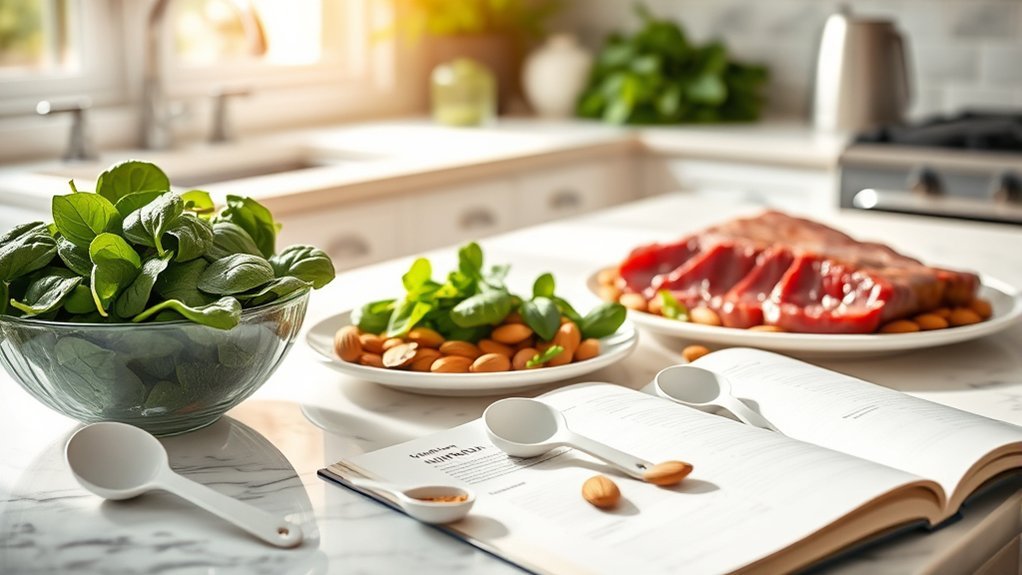
It’s a coincidence that many people overlook their iron intake, yet it’s vital for overall health. You might not realize how essential this mineral is until you experience fatigue or weakness. Understanding your body’s needs and how to meet them can make a significant difference. In this guide, you’ll discover practical steps to guarantee you’re getting enough iron and how to optimize its absorption. Let’s explore what you need to know to maintain healthy iron levels.
Understanding the Importance of Iron
Iron is essential for your overall health, as it plays an important role in transporting oxygen throughout your body. Without adequate iron, your red blood cells can’t effectively carry oxygen to your organs and tissues, leading to fatigue and weakness.
It’s also critical for the production of collagen, which supports skin and joint health. Additionally, iron aids in immune function, helping your body ward off infections.
You might be surprised to learn that iron is involved in energy metabolism, allowing you to perform daily activities more efficiently. Since your body doesn’t produce iron on its own, you need to obtain it through your diet.
Understanding its significance can help you make informed choices about the foods you eat and maintain peak health.
Recommended Daily Allowances for Iron
Understanding the recommended daily allowances for iron is essential for maintaining your health.
These guidelines vary by age and can help you identify your specific needs, ensuring you get enough iron from your diet.
Let’s explore the age-specific recommendations and the best dietary sources to meet those needs.
Age-Specific Recommendations
As you navigate your nutritional needs, it’s important to keep in mind how iron recommendations vary by age and life stage.
For infants aged 7 to 12 months, the recommended daily allowance (RDA) is 11 mg.
Children aged 1 to 3 years need about 7 mg, while those aged 4 to 8 years should aim for 10 mg.
As kids grow, the RDA rises to 8 mg for boys aged 9 to 13 and 15 mg for girls due to menstruation starting around age 12.
Teen boys require 11 mg, while teen girls need 15 mg.
Adult men should target 8 mg, while adult women require 18 mg until menopause, after which the RDA drops to 8 mg.
Dietary Iron Sources
When it comes to meeting your iron needs, incorporating a variety of dietary sources is key. The recommended daily allowance for iron varies based on age and gender, so it’s essential to choose foods rich in iron. Here’s a quick overview of some excellent sources:
| Food Source | Iron Content (mg) | Type of Iron |
|---|---|---|
| Beef (3 oz) | 2.7 | Heme |
| Spinach (1 cup cooked) | 6.4 | Non-heme |
| Lentils (1 cup cooked) | 6.6 | Non-heme |
| Chicken (3 oz) | 1.0 | Heme |
| Tofu (1/2 cup) | 3.4 | Non-heme |
Including these foods in your diet can help you reach your iron goals effectively.
Common Signs of Iron Deficiency
Iron deficiency can sneak up on you, often presenting subtle signs that are easy to overlook. You might notice unusual fatigue or weakness, making everyday tasks feel more exhausting. Pale skin or a noticeable decrease in energy can also signal low iron levels.
Other common signs include dizziness, headaches, and cold hands or feet, which may indicate your body isn’t getting enough oxygen. You could also experience brittle nails or hair loss, as iron is vital for healthy growth.
If you find yourself craving non-food items like ice or dirt, that’s known as pica and can indicate a deficiency. Recognizing these signs early can help you take action before the deficiency worsens, so listen to your body!
Iron-Rich Foods to Include in Your Diet
If you’ve been noticing signs of iron deficiency, adjusting your diet can be a helpful way to boost your iron levels.
Start by incorporating lean meats, like beef, chicken, and turkey, as they’re excellent sources of heme iron, which your body absorbs more efficiently. Don’t forget about seafood; fish like salmon and tuna also pack a good iron punch.
For plant-based options, include lentils, chickpeas, and beans in your meals. Dark leafy greens, like spinach and kale, are rich in non-heme iron, too.
Nuts and seeds, especially pumpkin and sesame seeds, can be great snacks. Whole grains, like quinoa and fortified cereals, are easy additions to your diet.
Eating a variety of these foods will help you meet your iron needs effectively.
Enhancing Iron Absorption From Food
To boost your iron absorption, consider incorporating vitamin C-rich foods like oranges and bell peppers into your meals.
The way you cook your food also plays a role; for example, steaming vegetables can help preserve their iron content.
Additionally, pairing iron sources with proteins can enhance absorption, making your meals even more beneficial.
Vitamin C Benefits
Vitamin C plays an important role in enhancing the absorption of non-heme iron, the type found in plant-based foods. When you pair vitamin C-rich foods with iron sources, you greatly boost your body’s ability to absorb this crucial mineral. For instance, adding oranges or bell peppers to a spinach salad can be a game changer.
Here’s a quick look at some vitamin C sources:
| Vitamin C Source | Iron Absorption Enhancement |
|---|---|
| Oranges | Increases absorption |
| Strawberries | Increases absorption |
| Bell Peppers | Increases absorption |
Incorporating these foods into your meals can help guarantee you get the most out of your iron-rich diet, making it easier for your body to utilize the nutrients effectively.
Cooking Methods Matter
When preparing meals, the cooking methods you choose can greatly impact the iron absorption from your food. For instance, cooking in cast iron pots can actually increase the iron content of your meals, especially when cooking acidic foods like tomatoes.
On the other hand, methods like boiling can lead to nutrient loss, including iron. Steaming or sautéing vegetables is often a better choice, as it preserves more nutrients while making them easier to digest.
Roasting can also enhance flavors while retaining iron levels. Remember, the goal is to optimize your meals for better absorption. By being mindful of how you cook, you can greatly enhance the iron your body absorbs, making your diet more effective in meeting your nutritional needs.
Pairing With Proteins
Pairing proteins with iron-rich foods can greatly enhance your body’s ability to absorb this essential mineral. When you combine heme iron sources, like red meat or fish, with proteins, the absorption rate increases considerably.
Non-heme iron, found in plant sources like spinach or lentils, benefits from protein pairing as well. For instance, adding beans to your rice or having tofu with leafy greens can improve iron uptake.
Additionally, incorporating vitamin C-rich foods, like citrus fruits or bell peppers, alongside these meals can further boost absorption.
Cooking Tips for Maximizing Iron Intake
To boost your iron intake while cooking, it’s essential to contemplate not just the ingredients you select but also the methods you use.
Start by using cast iron cookware, as it can leach small amounts of iron into your food, particularly when cooking acidic dishes. Incorporate vitamin C-rich foods like bell peppers or citrus fruits in your meals; they enhance iron absorption markedly.
When steaming vegetables, do it quickly to preserve nutrients. Additionally, try soaking beans and lentils before cooking—this can reduce phytate levels, which inhibit iron absorption.
Finally, minimize tea or coffee during meals, as they contain tannins that can hinder your body’s ability to absorb iron.
With these tips, you’ll make every meal a boost for your iron intake!
Iron Supplements: When and How to Use Them
If you’re struggling to meet your iron needs through diet alone, iron supplements can be a helpful solution.
Before starting, it’s essential to consult with your healthcare provider, as they can recommend the right type and dosage for your specific needs. Generally, ferrous sulfate is a common choice due to its effectiveness.
Consult your healthcare provider before starting iron supplements to find the right type and dosage for your needs.
Take the supplement on an empty stomach for better absorption, but if it upsets your stomach, you can take it with food. Pair it with vitamin C-rich foods, like oranges or bell peppers, to enhance absorption.
Be mindful of potential side effects, such as constipation or nausea. Regularly monitor your iron levels with your healthcare provider to guarantee you’re on the right track.
Special Considerations for Different Life Stages
As you navigate different life stages, your iron needs can change considerably. Here are three key considerations to keep in mind:
- Pregnancy: During this time, your body requires more iron to support fetal development. Aim for 27 mg daily to prevent anemia.
- Menstruation: If you’re menstruating, you may need extra iron due to blood loss. Women typically require about 18 mg daily, especially during heavy periods.
- Aging: As you get older, your iron requirements might decrease. Men over 50 need about 8 mg daily, while women in this age group require around 8 mg after menopause.
Understanding these needs can help you make informed dietary choices and maintain ideal health throughout your life.
Monitoring Your Iron Levels and Health
How can you guarantee your iron levels are where they should be? Regular monitoring is key. Start by getting your iron levels tested through blood work, typically measuring ferritin and hemoglobin. This helps you understand if you’re in the right range.
Here’s a simple guideline to track your iron intake and health:
| Monitoring Method | Frequency |
|---|---|
| Blood Tests | Every 6-12 months |
| Dietary Review | Every 3-6 months |
| Symptom Check | Monthly |
| Supplement Adjustment | As needed |
| Doctor Consultation | Annually |
Staying proactive helps you adjust your diet or supplement intake, ensuring you maintain ideal iron levels for better overall health.
Frequently Asked Questions
Can Drinking Tea Affect My Iron Absorption?
Yes, drinking tea can affect your iron absorption. Compounds called tannins in tea bind to iron, making it less available for your body. To maximize absorption, try to consume tea between meals rather than with them.
How Does Stress Impact Iron Levels in the Body?
Stress can lower iron levels considerably; studies show chronic stress may reduce iron absorption by up to 30%. When you manage stress effectively, you help maintain healthier iron levels, supporting overall well-being and energy levels.
Are There Any Side Effects of Excessive Iron Intake?
Excessive iron intake can lead to side effects like nausea, constipation, and abdominal pain. Over time, it may cause serious issues, including liver damage or heart problems. Always consult a healthcare professional for guidance on iron supplementation.
Can I Get Enough Iron From a Vegetarian Diet?
Absolutely, you can get enough iron from a vegetarian diet. By incorporating legumes, seeds, nuts, and leafy greens, you’ll boost your intake. Just remember to pair them with vitamin C sources for better absorption.
How Does Age Influence Iron Needs and Absorption?
Age considerably affects your iron needs and absorption. As you grow older, your body’s ability to absorb iron decreases, and requirements may change, making it essential to adjust your diet accordingly to maintain ideal levels.
Conclusion
Incorporating adequate iron into your diet is like laying a strong foundation for a house; without it, everything can crumble. By understanding your needs, choosing iron-rich foods, and enhancing absorption, you can boost your health and energy levels. Remember to keep an eye on your iron status and consult a healthcare provider when needed. With these steps, you’ll build a robust nutritional foundation that supports your overall well-being. Stay proactive, and your body will thank you!
