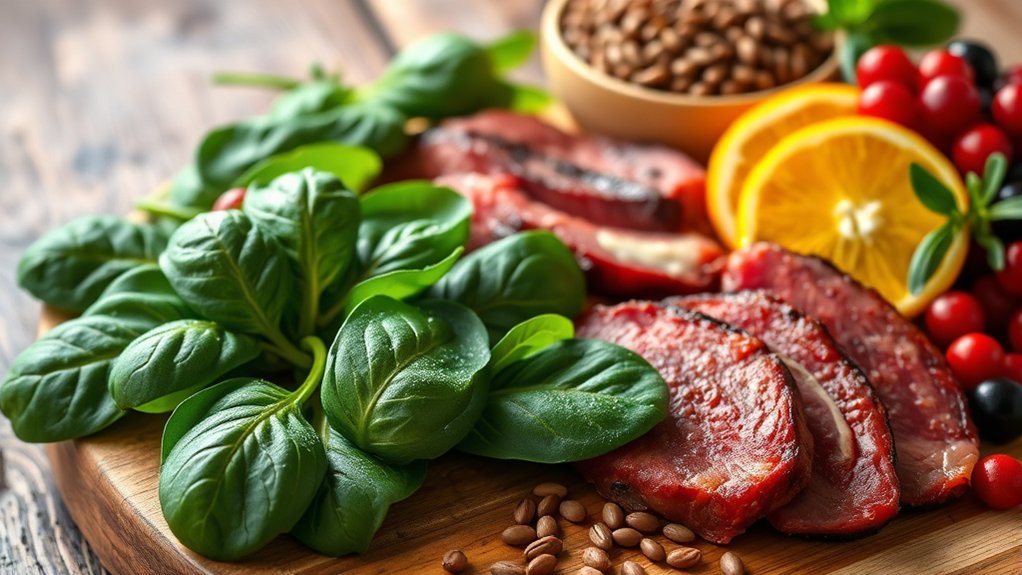
If you’ve ever felt fatigued or noticed pale skin, it might be worth considering your iron intake. Iron plays a crucial role in your body, influencing energy levels and overall health. You may have questions about how much you need, the best sources, or how to enhance absorption. Understanding these factors can help you make better dietary choices. So, what exactly do you need to know about iron and its impact on your well-being?
What Is Iron and Why Is It Important?
Iron is an essential mineral your body needs to function effectively. It plays a significant role in the formation of hemoglobin, which carries oxygen in your blood. Without adequate iron, your body can’t produce enough healthy red blood cells, leading to fatigue and weakness.
Iron also supports your immune system, helping you fight off infections. Additionally, it’s involved in energy production and contributes to cognitive function, affecting your mood and concentration.
While your body requires iron, it can’t produce it on its own, so you must obtain it through your diet. Foods rich in iron include red meat, poultry, fish, beans, and fortified cereals.
Ensuring you get enough iron is essential for maintaining overall health and vitality.
How Much Iron Do I Need Daily?
Determining your daily iron needs is essential for maintaining ideal health. The recommended dietary allowance (RDA) for iron varies based on age, sex, and life stage.
Understanding your daily iron requirements is crucial for optimal health, varying by age, gender, and life stage.
For adult men, it’s about 8 mg per day, while adult women need around 18 mg, primarily due to menstruation. Pregnant women require even more, approximately 27 mg daily, to support fetal development.
If you’re breastfeeding, your needs drop to about 9 mg. Older adults and vegetarians might also need to pay close attention, as iron absorption can differ with diet.
Monitoring your intake helps prevent deficiencies, which can lead to anemia and fatigue. Always consult a healthcare professional to determine your specific needs and tailor your intake accordingly.
What Are the Best Food Sources of Iron?
Are you wondering which foods can boost your iron intake? Eating a variety of iron-rich foods is essential for maintaining healthy levels.
Lean meats, particularly red meat like beef and lamb, are excellent sources of heme iron, which your body absorbs more efficiently. Poultry and fish also contribute to your intake.
If you prefer plant-based options, consider legumes like lentils, beans, and chickpeas, as well as tofu and tempeh. Dark leafy greens, such as spinach and kale, and nuts and seeds can also help.
Don’t forget fortified cereals and whole grains! Pair these foods with vitamin C-rich items like citrus fruits to enhance iron absorption.
Incorporating these sources into your diet can greatly support your iron needs.
What Are the Different Types of Iron?
When it comes to iron, it’s important to understand the two main types: heme and non-heme iron.
Heme iron, found in animal products like meat and fish, is generally absorbed more efficiently by your body.
Non-heme iron, present in plant-based foods, requires a bit more effort for absorption but can still contribute considerably to your overall iron intake.
Heme Iron Sources
While many people focus on iron intake, understanding the different types of iron is essential for optimizing your diet. Heme iron, found in animal products, is more efficiently absorbed by your body compared to non-heme iron from plant sources. Incorporating heme iron can help prevent iron deficiency and support overall health. Here are some common sources:
| Heme Iron Sources | Iron Content (mg per 100g) |
|---|---|
| Beef (ground) | 2.7 |
| Chicken (dark meat) | 2.7 |
| Pork (loin) | 1.0 |
| Fish (salmon) | 0.8 |
| Shellfish (oysters) | 5.7 |
Including these foods in your meals can enhance your iron intake and improve your nutritional balance.
Non-Heme Iron Sources
Non-heme iron, primarily found in plant-based foods, plays an essential role in your overall iron intake, especially for those following vegetarian or vegan diets.
You can find non-heme iron in legumes like lentils and chickpeas, whole grains such as quinoa and brown rice, nuts, seeds, and leafy greens like spinach and kale. Fortified cereals also serve as a great source.
Remember, non-heme iron is less readily absorbed by your body compared to heme iron. To enhance absorption, pair these foods with vitamin C-rich options like citrus fruits, bell peppers, or tomatoes.
Being mindful of your non-heme iron sources can help you maintain ideal iron levels, ensuring your body functions effectively and stays energized.
How Can I Improve Iron Absorption?
To improve your iron absorption, consider pairing iron-rich foods with vitamin C sources like citrus fruits or bell peppers.
It’s also wise to avoid calcium-rich foods during meals, as calcium can hinder iron uptake.
Additionally, cooking with cast iron cookware can increase the iron content of your meals.
Pairing With Vitamin C
When you pair iron-rich foods with vitamin C, you greatly enhance your body’s ability to absorb iron. This synergy is vital, especially if you’re concerned about iron deficiency.
Here are some effective combinations to take into account:
- Spinach and oranges: Enjoy a spinach salad topped with orange slices.
- Red meat and bell peppers: Grill a steak and serve it with a side of sautéed bell peppers.
- Lentils and tomatoes: Cook lentil soup with diced tomatoes for a nutrient boost.
- Tofu and broccoli: Stir-fry tofu with broccoli and drizzle with lemon juice.
Incorporating these pairings into your meals can greatly enhance iron absorption, making it easier for your body to utilize this essential mineral.
Avoiding Calcium-rich Foods
While enhancing your iron absorption, it’s essential to be mindful of calcium-rich foods, as they can inhibit the body’s ability to absorb iron effectively.
Calcium competes with iron for absorption in the intestines, meaning that consuming high-calcium foods or supplements alongside iron sources can reduce the amount of iron your body takes in.
To improve your iron absorption, try to separate calcium intake from iron-rich meals. For instance, if you’re having a spinach salad loaded with iron, save your dairy or calcium-fortified snacks for a couple of hours later.
Additionally, consider opting for non-dairy sources of calcium, like leafy greens or fortified plant milks, which may offer better timing flexibility without compromising your iron intake.
Cooking With Cast Iron
Cooking with cast iron pans can greatly enhance your iron intake, especially if you’re looking to boost your dietary iron levels. When you prepare food in cast iron, some of the iron from the skillet leaches into your meals, providing a natural source of this essential mineral.
To maximize iron absorption, consider these tips:
- Cook Acidic Foods: Use tomatoes or citrus-based recipes, as they help release iron from the pan.
- Cook with Moisture: Braising or stewing can increase iron transfer.
- Avoid Non-stick Sprays: They can create a barrier that limits iron absorption.
- Season Your Skillet: Proper seasoning can enhance both flavor and iron release.
What Are the Symptoms of Iron Deficiency?
How can you tell if you’re experiencing iron deficiency? Common symptoms include fatigue, weakness, and pale skin. You might notice that everyday tasks feel more exhausting than usual.
Additionally, you may experience shortness of breath during physical activities or have a rapid heartbeat. Other signs can include dizziness, headaches, and cold hands or feet.
You might also find yourself craving non-food items, a condition known as pica. If you notice these symptoms, it’s important to consult a healthcare professional for proper diagnosis and treatment.
Early intervention can prevent complications and improve your overall health. Monitoring your iron levels through diet and supplementation is key to maintaining your well-being.
Who Is Most at Risk for Iron Deficiency?
Certain groups of people are more susceptible to iron deficiency due to various factors, including age, gender, and lifestyle. Understanding who’s at risk can help you take preventive measures.
- Women of Childbearing Age: Menstruation increases iron loss, making women particularly vulnerable.
- Pregnant Women: The body’s demand for iron rises considerably during pregnancy to support fetal development.
- Infants and Young Children: Rapid growth requires more iron, and dietary sources may be insufficient.
- Vegetarians and Vegans: Plant-based diets often lack heme iron, which is more readily absorbed than non-heme iron found in plants.
Being aware of these high-risk groups can encourage proactive dietary choices and monitoring for potential iron deficiency.
Can Iron Supplements Help?
Wondering if iron supplements can really make a difference in your health? If you’re experiencing symptoms like fatigue, weakness, or pale skin, they might be worth considering.
Iron supplements can effectively boost your iron levels, especially if you’re iron deficient or at risk for deficiency. Studies show that they can improve energy levels and overall well-being.
However, it’s essential to consult a healthcare provider before starting any supplementation. They can assess your individual needs and recommend the right dosage.
Keep in mind that excessive iron intake can lead to toxicity, so monitoring is vital.
In short, while iron supplements can help, they should be part of a balanced approach to nutrition and health.
What Are Common Myths About Iron Intake?
Despite the benefits of iron supplements for those who are deficient, several myths about iron intake can cloud understanding. Here are some common misconceptions you might encounter:
- Only meat eaters get enough iron: Many plant-based sources, like lentils and spinach, also provide ample iron.
- Iron supplements are always safe: Overconsumption can lead to toxicity; it’s essential to consult a healthcare professional.
- High iron intake guarantees better health: Excessive iron can cause health issues, including heart disease.
- You can’t absorb iron from non-meat sources: Pairing non-heme iron with vitamin C improves absorption considerably.
Understanding these myths can help you make informed decisions about your iron intake.
Frequently Asked Questions
Can Cooking With Cast Iron Increase Iron Content in Food?
Cooking with cast iron can increase the iron content in your food, especially acidic dishes. The longer you cook, the more iron leaches into the food, benefiting those needing additional iron in their diets.
Does Caffeine Affect Iron Absorption?
Caffeine’s like a shadow, dimming iron absorption. When you consume it with iron-rich foods, it can reduce your body’s ability to take in this essential mineral, so timing your drinks can make a difference.
Is There a Difference Between Heme and Non-Heme Iron?
Yes, there’s a difference. Heme iron, found in animal sources, is absorbed more efficiently by your body than non-heme iron, which comes from plant sources. Including both types in your diet enhances overall iron intake.
Can Excessive Iron Intake Be Harmful?
Yes, excessive iron intake can be harmful. It may lead to conditions like hemochromatosis, causing organ damage. Always consult a healthcare professional before greatly increasing your iron consumption to avoid potential health risks.
Are There Any Medications That Interfere With Iron Absorption?
Certain medications, like antacids and some antibiotics, can block your body’s ability to absorb iron effectively. It’s vital you consult your healthcare provider to guarantee ideal iron levels while taking any medication.
Conclusion
To sum up, prioritizing proper iron intake can pave the path to vibrant vitality. By understanding your daily needs, selecting superb sources, and enhancing absorption, you can combat cunning deficiency. Stay vigilant for symptoms and consider supplements if necessary, but don’t let myths mislead you. Embrace iron with informed choices, and you’ll fuel your body for flourishing health. Remember, a well-rounded diet is your best defense against iron deficiency and its potential pitfalls.
