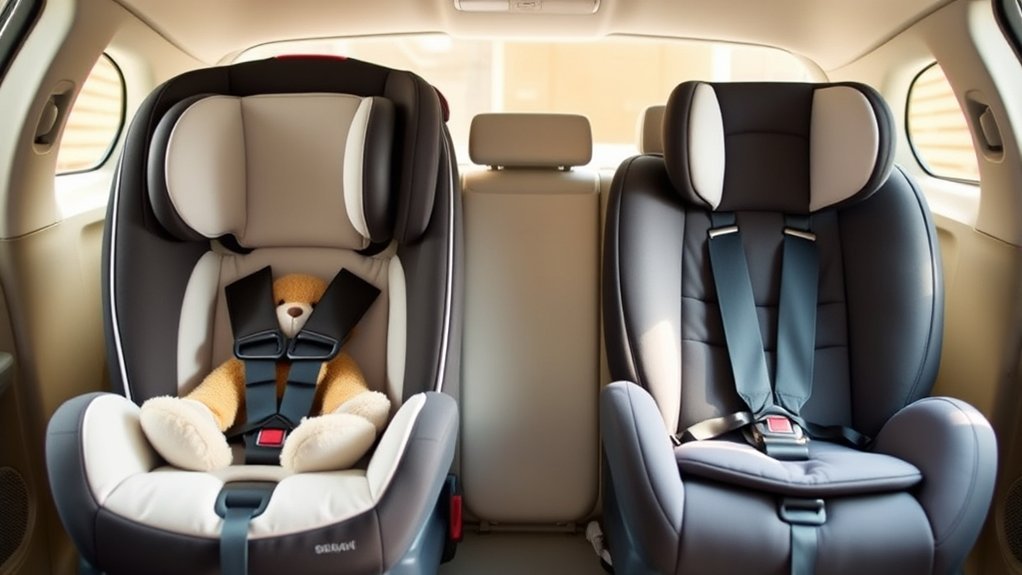
When it comes to car safety, understanding the differences between infant and convertible seats is essential. You need to be aware of the specific symptoms and signs that indicate when your child is ready to make the change. This isn’t just about age; weight and height play significant roles too. Recognizing these factors will help guarantee your child’s safety on the road. So, what should you look for to determine if it’s time to switch?
Understanding Infant Car Seats
When it comes to keeping your newborn safe during travel, understanding infant car seats is vital.
These seats are specifically designed for babies weighing up to 35 or 40 pounds and up to 32 inches tall. They offer essential support, guaranteeing your baby’s head, neck, and spine are properly aligned.
Infant car seats provide vital support for babies up to 40 pounds, ensuring proper alignment of their head, neck, and spine.
You’ll find that infant car seats use a five-point harness system, providing maximum security during rides. It’s important to install the seat correctly, either using the seatbelt or LATCH system, to enhance safety.
Additionally, always position the seat in the rear-facing position, as this greatly reduces injury risk in a crash.
Familiarizing yourself with your car seat’s guidelines and features will help guarantee your baby’s safety on every journey.
Key Features of Convertible Car Seats
While infant car seats are essential for newborns, convertible car seats offer flexibility for growing children. These seats shift from rear-facing to forward-facing, accommodating a wider age range.
One key feature is the adjustable harness system, allowing you to customize the fit as your child grows. Many convertible seats also include easy-to-use recline positions, enhancing comfort for your little one.
Additionally, look for a seat with a high weight limit, ensuring it lasts through multiple growth stages. Safety is paramount, so check for features like side-impact protection and energy-absorbing foam.
Finally, consider models with machine-washable covers for practicality. With these features, convertible car seats provide both safety and convenience for your family.
Age and Weight Considerations
Choosing the right car seat involves understanding the age and weight requirements for your child. Infant car seats typically accommodate newborns up to 30 pounds and 30 inches tall. On the other hand, convertible seats can be used from infancy through toddlerhood, often supporting children up to 65 pounds. It’s crucial to match your child’s size to the appropriate seat to guarantee safety.
| Car Seat Type | Age & Weight Limits |
|---|---|
| Infant Car Seat | Birth to 30 lbs, 30 in |
| Convertible Seat | Birth to 65 lbs |
| Forward-Facing | 22-65 lbs |
| Booster Seat | 40-100 lbs |
Always check the manufacturer’s guidelines for the most accurate information.
Signs Your Child Is Ready for a Convertible Seat
As your child grows, knowing when to shift to a convertible seat is essential.
Pay attention to age and weight guidelines, as well as height limit considerations, to guarantee safety.
Additionally, recognizing developmental milestones can help you decide if your child is ready for this important change.
Age and Weight Guidelines
When your child reaches specific age and weight milestones, it’s vital to contemplate moving them to a convertible car seat.
Typically, you should consider this change when your child is:
- At least one year old
- Weighing over 20 pounds
- Outgrowing their infant seat’s weight or height limit
These guidelines guarantee that your child is physically ready for a more spacious seat that can accommodate their growth.
It’s important to follow both the seat manufacturer’s recommendations and your child’s development.
By making this switch at the right time, you’ll enhance their safety and comfort during car rides.
Always remember to keep your child in a rear-facing position as long as possible for maximum protection.
Height Limit Considerations
If your child’s head is nearing the top of their infant seat, it’s a clear indication that they may be ready for a convertible car seat. Height limits are essential for your child’s safety; exceeding these limits can compromise protection during a crash. Most infant seats have a height limit of around 29 to 32 inches.
| Infant Seat Height | Convertible Seat Height |
|---|---|
| 29-32 inches | 40-50 inches |
| Outgrown by head | Safe in convertible |
| Check manufacturer | Follow guidelines |
| Change needed | Guarantee proper fit |
Monitor your child’s growth, and when they’re close to these limits, it’s time to reflect on a convertible seat for enhanced safety and comfort.
Developmental Milestones Achieved
Recognizing developmental milestones can help you determine when it’s time to switch to a convertible car seat.
Look for these signs indicating your child is ready:
- Head and Neck Control: Your child should have strong control over their head and neck, able to hold it up steadily without support.
- Weight and Height Appropriateness: Verify your child meets the weight and height requirements specified by the convertible seat manufacturer.
- Sitting Up Independently: Your child should be able to sit up unassisted for short periods, demonstrating core strength and stability.
When you notice these milestones, it’s a good time to make the change.
Always prioritize safety by reviewing the seat’s installation guidelines and recommendations for your child’s age and size.
Safety Standards for Car Seats
Although car seats are designed to protect your child in the event of a crash, understanding the safety standards that govern these devices is essential for guaranteeing their effectiveness. Compliance with regulations like FMVSS 213 guarantees that seats meet critical safety benchmarks.
Here’s a quick overview of key safety features:
| Feature | Description | Importance |
|---|---|---|
| Crash Testing | Rigorous tests simulate real-life accidents | Guarantees reliability under stress |
| Harness System | Multi-point harnesses secure your child | Prevents ejection during a collision |
| Side Impact Protection | Additional padding for side impacts | Reduces injury risk in side crashes |
| Ease of Installation | Clear guidelines for proper setup | Secures ideal safety performance |
Comfort and Convenience Factors
When considering comfort and convenience factors, you’ll want to think about the ease of installation, portability, and the weight of the car seat.
An infant seat often allows for quick transfers between the car and stroller, while convertible seats may offer more adjustability and features as your child grows.
Understanding these aspects can greatly enhance your experience in choosing the right car seat.
Ease of Installation
Installing a car seat can be a challenging task for many parents, but the ease of installation varies greatly between infant and convertible seats.
Infant seats often come with a base that remains in your car, making it simpler to click the seat in and out. Convertible seats, however, usually require more adjustments and can be heavier to maneuver.
Here are some factors to take into account when evaluating installation ease:
- Base vs. No Base: Infant seats typically have a base for easier installation.
- Latch System: Many seats now offer LATCH systems for straightforward attachment.
- Indicators: Look for seats with clear leveling indicators to guarantee proper installation.
Ultimately, ease of installation can greatly impact your experience when securing your child’s safety.
Portability and Weight
Portability and weight are essential factors to evaluate when choosing between infant and convertible car seats.
Infant seats typically weigh less, making them easier to carry from the car to your destination. Their lightweight design allows you to transport your sleeping baby without waking them, which is a significant convenience.
In contrast, convertible seats tend to be bulkier and heavier, designed for extended use as they shift from rear to forward-facing. While they offer longevity, their weight can make them cumbersome to move between vehicles.
If you’re frequently on the go or need to switch cars often, an infant seat may be more practical.
Ultimately, consider how often you’ll need to carry the seat and your lifestyle when making your decision.
Adjustability and Features
While both infant and convertible car seats prioritize safety, their adjustability and features can profoundly impact comfort and convenience.
When choosing between the two, consider these essential factors:
- Harness System: Convertible seats often come with multiple harness positions, accommodating your growing child.
- Recline Options: Many convertible seats offer adjustable recline angles for better positioning, making rides more comfortable for your little one.
- Ease of Installation: Look for features like LATCH systems or built-in lock-offs that simplify the installation process.
Transitioning Between Car Seat Types
As your child grows, knowing when to change between car seat types is essential for their safety and comfort.
Typically, you should switch from an infant seat to a convertible seat when your baby surpasses the weight or height limit of their current seat, which is usually around 30 to 35 pounds.
Look for signs such as their head nearing the top of the infant seat or difficulty fitting comfortably.
When you change, make sure the convertible seat is properly installed and adjusted to fit your child’s size.
Remember to keep your child rear-facing as long as possible, ideally until age two or until they exceed the seat’s limits.
Regularly check for updates on safety guidelines to make sure you’re making informed decisions.
Frequently Asked Questions
Can I Use a Convertible Seat From Birth?
Yes, you can use a convertible seat from birth if it’s designed for newborns. Just confirm it’s properly installed and meets safety standards. Always check the manufacturer’s guidelines for weight and height limits before use.
How Do I Clean Car Seats Properly?
To clean car seats properly, remove the cover and vacuum debris. Use mild soap and water to spot clean stains. Rinse thoroughly and air dry completely before reassembling to guarantee hygiene and safety.
Are There Travel Restrictions for Car Seats?
Yes, there’re travel restrictions for car seats. Airlines often require specific dimensions and approval for checked baggage. Make sure to check your airline’s policy before traveling, as rules can vary considerably between carriers.
What Is the Lifespan of a Car Seat?
A car seat typically has a lifespan of six to ten years, depending on the manufacturer. Check the label for specific expiration dates, and replace it if it’s been involved in a crash or shows wear.
Can I Install a Car Seat Without a Base?
Yes, you can install a car seat without a base. Most seats allow for a seatbelt installation. Just make sure you follow the manufacturer’s instructions for secure placement and proper angle for your child’s safety.
Conclusion
In summary, knowing when to shift from an infant car seat to a convertible seat is essential for your child’s safety and comfort. Keep an eye out for signs like reaching weight or height limits, or if they’re over one year old and weigh more than 20 pounds. After all, isn’t it better to be proactive than reactive when it comes to your child’s well-being? Make the switch when the time is right, and guarantee every ride is a safe one.
