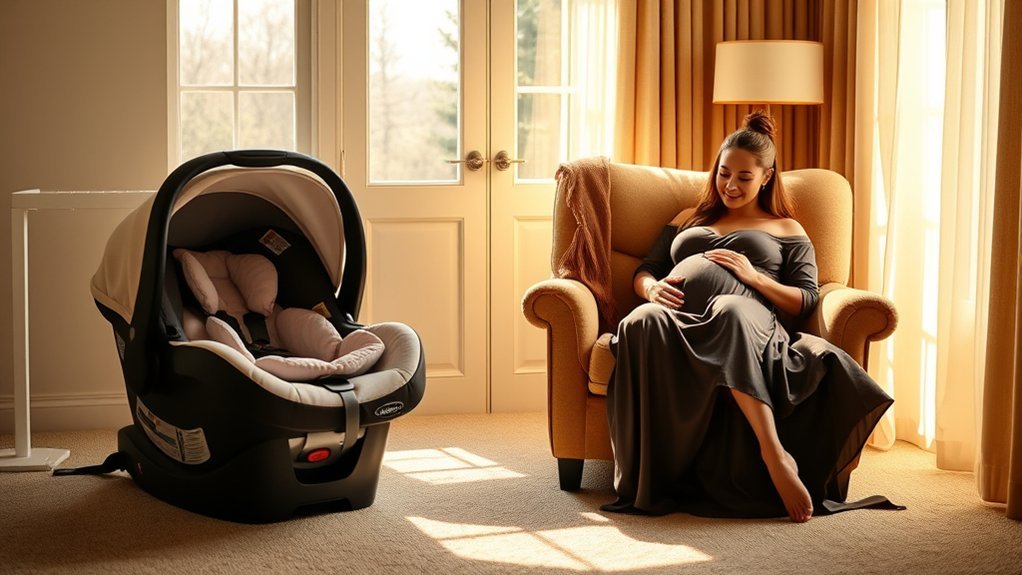
Imagine struggling to lift a bulky convertible car seat while maneuvering a crowded parking lot during your last trimester. The choice between infant and convertible car seats can greatly impact your comfort and ease of use as you prepare for your new arrival. Understanding the features and benefits of each option is vital, especially when considering safety and convenience for both you and your baby. Which one will truly meet your needs?
Understanding Infant Car Seats: Features and Benefits
When it comes to ensuring your baby’s safety during travel, understanding infant car seats is essential. These seats are specifically designed for newborns and infants, offering a secure fit and ideal protection during car rides.
One key feature is the rear-facing position, which greatly reduces the risk of injury in a crash. Most infant car seats have a five-point harness system that keeps your baby snug and secure.
They’re also lightweight, making it easier for you to transfer your baby in and out of the car. Additionally, many models come with a base that stays installed in your vehicle, allowing for easy click-in and click-out convenience.
Exploring Convertible Car Seats: Versatility and Functionality
While you may be focused on your baby’s immediate safety, convertible car seats offer a long-term solution that grows with your child.
These seats shift from rear-facing for infants to forward-facing for toddlers, accommodating children up to 65 pounds or more. Their versatility means you won’t need to purchase a new seat as your child grows, ultimately saving you money.
Additionally, many convertible seats feature adjustable harness systems and recline options, ensuring your child’s comfort during travel. Installation is often simplified with user-friendly features, so you can secure the seat correctly with confidence.
Safety Considerations: Protecting Your Baby During Travel
As you prepare for your baby’s arrival, understanding the safety considerations for travel is crucial to guarantee their protection on the road.
First, always use a rear-facing car seat, as it supports your baby’s head, neck, and spine during a crash. Research shows that this position reduces the risk of severe injury by up to 80%. Ascertain the car seat meets safety standards set by the National Highway Traffic Safety Administration.
Always use a rear-facing car seat to protect your baby’s head, neck, and spine, reducing severe injury risk by up to 80%.
Secure the seat tightly, and check the harness system for proper fit. Additionally, avoid placing the car seat in the front seat, especially if your vehicle has an airbag.
Always buckle your baby in before driving, and never leave them unattended in a vehicle. Safety measures like these are essential for every journey.
Comfort for Expecting Mothers: Evaluating Ease of Use
Choosing the right car seat isn’t just about your baby’s safety; it also impacts the comfort and convenience for expecting mothers. The ease of use is essential during pregnancy, as physical discomfort can make installation and adjustments challenging.
Look for features like lightweight designs, simple buckling systems, and easy-to-follow instructions. Many seats now come with adjustable bases and one-hand release mechanisms, which can be a game-changer when you’re balancing your growing belly.
Consider how easily you can get your baby in and out while maintaining your own stability. Remember, a car seat that’s user-friendly reduces stress and enhances your overall experience, making your travels smoother during this important time in your life.
Making the Right Choice: Factors to Consider Before Buying
When you’re preparing for the arrival of your little one, selecting the right car seat can feel overwhelming, but focusing on key factors can simplify the decision-making process.
First, consider your lifestyle. If you frequently take short trips, an infant seat may be ideal. However, if you plan to use it for several years, a convertible seat offers longevity.
Consider your lifestyle when choosing a car seat: an infant seat suits short trips, while a convertible seat provides long-term use.
Safety ratings are essential—look for seats that meet or exceed safety standards. Comfort is also important; guarantee the seat has adequate padding and support for your baby.
Finally, think about installation ease; a seat that fits securely in your car can save you time and stress.
Frequently Asked Questions
How Do Infant and Convertible Seats Impact Pregnancy Discomfort?
Infant and convertible seats can impact your pregnancy discomfort by affecting your posture and support. You might feel increased back pain or pressure if the seat isn’t properly adjusted to accommodate your growing belly.
Can Using a Car Seat Cause Back Pain During Pregnancy?
Sure, using a car seat can definitely cause back pain during pregnancy. Poor posture or prolonged sitting can strain your back. Adjusting seat position and taking breaks can help alleviate discomfort while you’re on the road.
What Seat Position Is Safest for Pregnant Drivers?
The safest seat position for pregnant drivers is to adjust the seat back at a slight angle, ensuring your back is supported and the seat is far enough from the steering wheel to avoid injury during an accident.
Are There Specific Car Seat Brands Recommended for Pregnant Women?
There aren’t specific brands tailored for pregnant women, but look for car seats with excellent safety ratings and adjustable features. Prioritize comfort and ease of use to guarantee a safe and enjoyable driving experience for you.
How Often Should I Adjust My Car Seat During Pregnancy?
You should adjust your car seat regularly during pregnancy, especially as your body changes. Make sure it provides proper support and comfort. Check the angle and distance from the steering wheel frequently for ideal safety.
Conclusion
Ultimately, choosing between an infant and convertible car seat during pregnancy hinges on your unique needs. For instance, if you often run errands and need to transfer your baby quickly, an infant car seat might be best. Imagine Sarah, who found peace of mind with her lightweight infant seat, allowing her to navigate grocery store trips easily. Prioritize comfort and safety by evaluating options that fit your lifestyle, ensuring both you and your baby travel securely and stress-free.
