
For infant massage, choose a warm, quiet time when your baby is alert and content, often after a bath or diaper change. Use gentle, rhythmic strokes on the arms, legs, and back, and stop if your baby seems uncomfortable. Avoid the belly button until it heals, any rash or injury, and firm pressure. Use baby-safe oil or lotion. With a calm routine, you can support bonding, sleep, and comfort while learning a few helpful techniques.
How to Set Up a Safe Massage Time
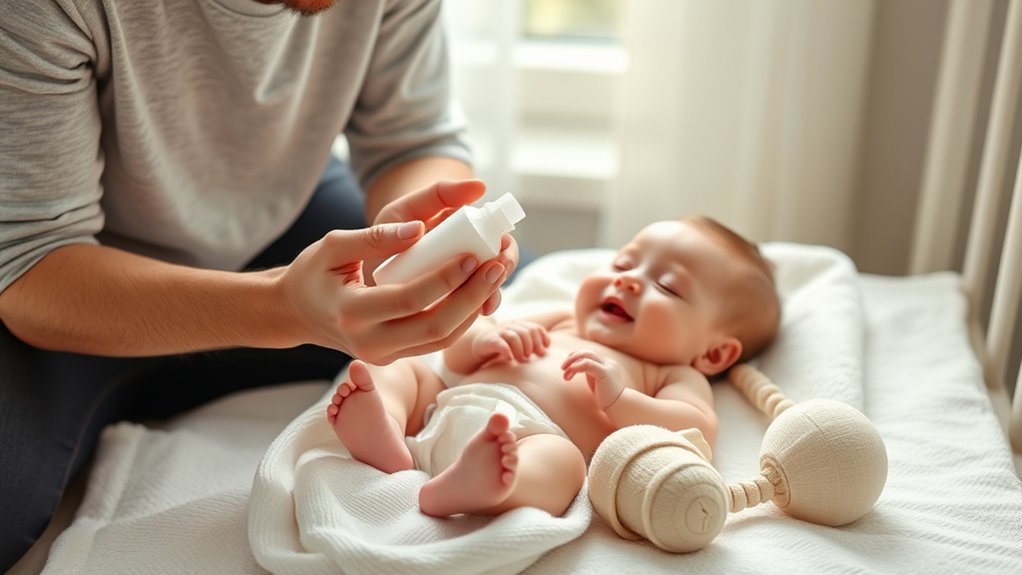
Start by choosing a calm, warm room with minimal distractions so your baby can settle into a soothing environment. Keep lighting soft and silence phones so you can focus on your baby’s cues.
Place baby massage oil or gentle lotion, free from parabens and dyes, within reach, along with towels and clean clothes, so you won’t need to step away.
Massage works best when your baby is awake, alert, and content, often after a diaper change or bath. A warm room supports comfort, and brief skin-to-skin contact can help your baby relax before you begin. Intentional tummy time is also beneficial for calming and engaging your baby.
Massage works best when your baby is awake, alert, and content, in a warm, calming environment.
Watch for signs that massage helps, such as softening body tone or steady breathing. If your baby seems uncomfortable, pause and try later.
Stay flexible with timing and length; you’re not following a rigid schedule. You’re creating a safe, calming environment that supports connection and freedom for both of you.
Baby Massage Do’s: Gentle Strokes That Work
Use gentle, rhythmic strokes to help your baby relax and feel secure. These baby massage techniques work best when you move with confidence and respond to your baby’s cues.
In a warm environment with soft lighting and quiet music, begin with light, soothing touch on the arms, legs, and back. Use baby oil or lotion if you want smoother motion, then make small circles on the chest and tummy.
The “I Love You” pattern can support the digestive system and deepen bonding. Keep your pressure soft and steady; gentle strokes should calm, not stimulate.
You can fold massage into a routine after bath time or after diaper changes, so it feels predictable and comforting.
Watch for relaxed hands, soft breathing, and calm eye contact. When you follow your baby’s signals, you help your baby feel safe, supported, and free to settle into the moment. This nurturing approach can also enhance emotional well-being, positively influencing your baby’s physical health.
Baby Massage Don’ts: Areas and Moves to Avoid
When you massage your baby, avoid the belly button area until it has fully healed, since pressure there can cause irritation and discomfort.
In baby massage, these don’ts help you protect delicate skin and support comfort. Avoid firm pressure anywhere; use gentle strokes only, so your baby stays relaxed and secure.
Don’t massage over rashes, skin conditions, or any injury, because rubbing can worsen inflammation or pain.
Also avoid sensitive areas like the head and neck, which need extra caution and minimal handling.
Skip adult oils and lotions, too; they may contain fragrances, allergens, or irritants that don’t belong on infant skin. Choose products made for babies, or massage with clean hands if needed. Additionally, baby acne is a common condition that can appear during the early weeks, so be mindful of any skin changes while massaging.
8 Simple Tips for a Calmer Baby Massage
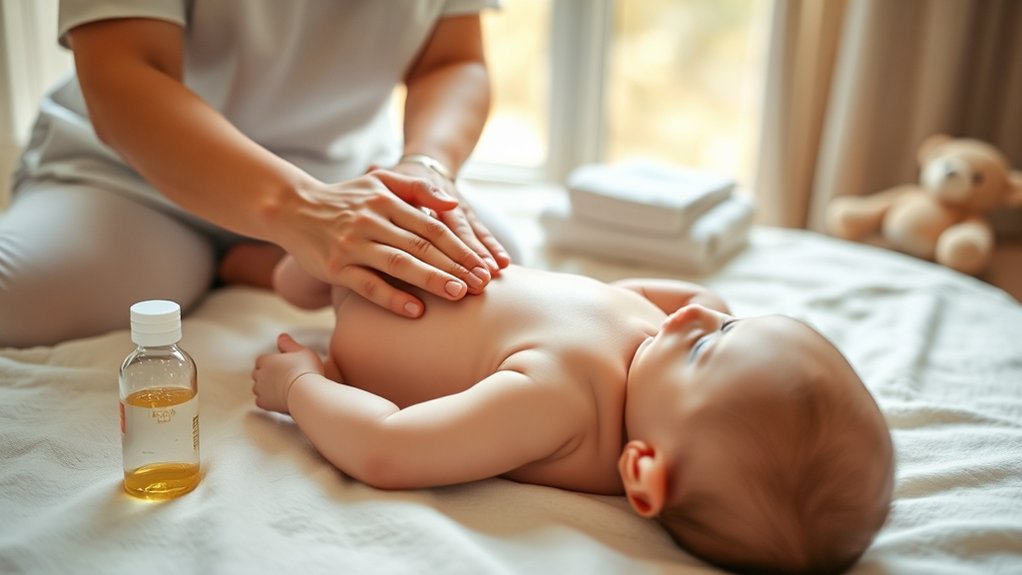
To help your baby stay calm during massage, choose a time when they’re relaxed and alert, not right after a feeding or during fussiness.
Choose a calm, alert time for massage, not right after feeding or when your baby is fussy.
Set a quiet environment with dim light and soft music so your baby can settle.
Wash your hands, trim your nails, and warm a small amount of safe oil before you begin.
Use gentle massage techniques with light, steady strokes; firm pressure isn’t needed.
Move slowly and keep your touch consistent so the baby can predict what comes next.
Watch cues closely: relaxed limbs, soft eye contact, and cooing suggest comfort, while squirming, turning away, or crying means you should pause or stop.
If your baby seems unsettled, adjust the environment or shorten the massage.
You don’t need elaborate routines—just calm attention, respectful pacing, and gentle care. Additionally, incorporating tummy time into your baby’s daily routine can further enhance their overall comfort and development.
These simple steps help you soothe your baby while keeping the experience practical, safe, and freeing for you both.
Why Baby Massage Helps Your Baby
Once you’ve found the right time and setting, infant massage can do more than calm the moment—it can support your baby’s overall well-being.
With baby massage, you use gentle massage to help soothe tension, encourage emotional bonding, and strengthen your bond with your baby through skin-to-skin contact and eye contact.
The benefits of baby massage also include reducing stress: your touch can trigger endorphins, helping both you and your baby feel more secure and settled.
Regular massage may help your baby’s tummy by easing gas, colic, and constipation, which can reduce fussiness and improve comfort.
It can also help your baby sleep better by creating a predictable, calming bedtime routine.
Over time, this routine may support your baby’s immune system by lowering stress and promoting rest. Additionally, incorporating tummy time into your routine can further enhance your baby’s development and comfort.
When you massage with confidence and care, you create a practical, freeing way to nurture connection, comfort, and resilience.
Frequently Asked Questions
When Should I Avoid Massaging My Baby Completely?
You should avoid massage completely when your baby has fever symptoms, recent vaccinations, injury concerns, respiratory issues, digestive problems, severe skin sensitivities, premature infancy, or sleep disturbances; colicky babies with mood fluctuations need pediatric guidance first.
How Long Should a Baby Massage Session Last?
You should aim for 10–15 minutes, adjusting to your baby’s cues. That supports baby massage benefits, parent baby bonding, and gentle touch importance in a calming massage environment with ideal room temperature.
Can I Use Lotion or Oil During Baby Massage?
Yes, you can use lotion or oil, if you choose baby-safe lotion types and gentle oil benefits. Check skin sensitivity, allergy checks, and temperature considerations, use careful application methods, timing tips, then provide soothing post massage care.
Is It Safe to Massage a Baby After Feeding?
Usually, yes, after feeding you can massage, but wait 20–30 minutes. Check baby body language, use light massage pressure levels, and keep a calm environment. This supports baby massage benefits, parental bonding, and soothing techniques.
What Signs Mean My Baby Wants the Massage to Stop?
Stop the massage if your baby shows crying signals, squirming movements, turning away, loss of interest, or irritability signs. Watch facial expressions, eye contact, fist clenching, arching back, and body language; you’ll respond calmly and safely.
Conclusion
By making baby massage a calm, consistent part of your routine, you can support relaxation, bonding, and better sleep. One study found that massage may help premature infants gain weight faster, underscoring its potential benefits. Keep your touch gentle, avoid sensitive areas, and watch your baby’s cues so you can stop if they seem unsettled. With a safe setup and a few simple do’s and don’ts, you’ll help make each session soothing and beneficial.
