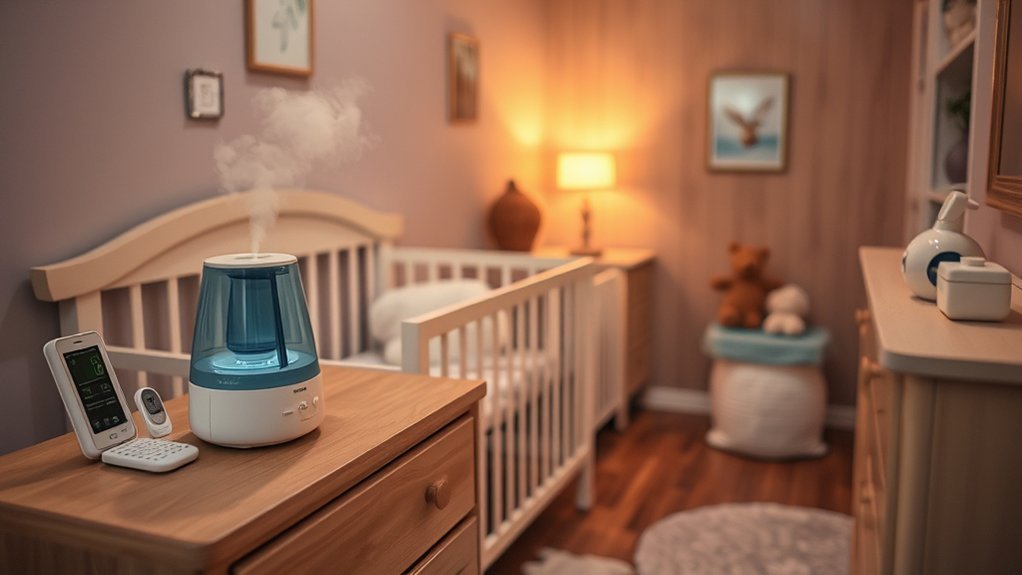
Use a cool-mist humidifier in your baby’s room because it lowers burn risk and is usually safest. Keep humidity between 35% and 50%, and use a hygrometer to monitor it. Place the unit at least 3 feet from the crib on a stable surface, and keep cords out of reach. Use distilled or filtered water, empty the tank daily, and clean it often to prevent mold and bacteria. More details can help you use it safely.
Cool-Mist vs. Vaporizer: Which Is Safer?
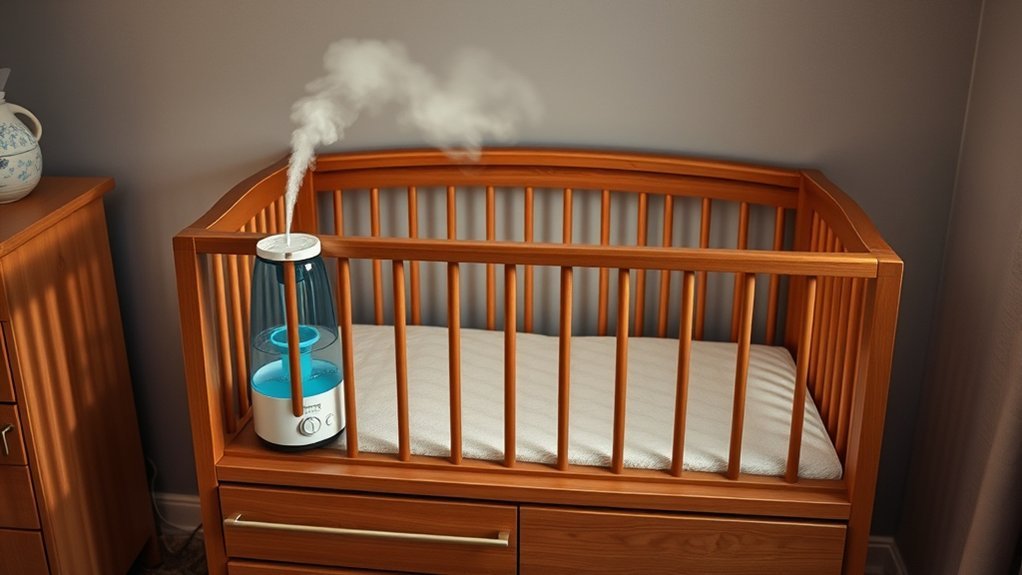
When safety is the priority, cool-mist humidifiers are generally the better choice for a baby’s room. The American Academy of Pediatrics recommends them because they lower burn risk compared with a vaporizer that produces hot steam.
You can choose impeller, evaporative, or ultrasonic humidifiers, but you should evaluate safe use carefully. Vaporizers may kill germs by boiling water, yet they can cause serious burns if a child touches them or they sit near sleeping areas.
Ultrasonic humidifiers run quietly and use less energy, but they can aerosolize bacteria and minerals, creating health risks. Regular maintenance is essential to prevent contamination in either device, and you should follow cleaning instructions exactly. For your baby’s room, favor cool-mist humidifiers, because they support safer, more liberated caregiving without the heat-related hazards of steam. Additionally, maintaining a healthy environment is crucial for your baby’s well-being, similar to how proper weight management during pregnancy supports fetal health.
Why Cool-Mist Humidifiers Are Usually Best
Cool-mist humidifiers are usually the best choice for a baby’s room because the American Academy of Pediatrics recommends them and they avoid the burn hazards linked to hot steam vaporizers. You get safer moisture output, which supports safety in your baby’s room without exposing curious hands to hot surfaces.
By keeping humidity in the ideal humidity levels of 35-50%, you can help limit respiratory issues and reduce dust mite exposure. Cool-mist humidifiers may also ease nasal congestion while staying cool to the touch.
Keeping humidity at 35–50% can help reduce respiratory issues, dust mites, and nasal congestion.
You can choose impeller, evaporative, or ultrasonic models; each disperses moisture differently, but all aim for cooler air. For the best results, you need consistent maintenance. That means regular cleaning, filter replacement when needed, and careful water reservoir care.
If you skip maintenance, mold and bacteria growth can occur and undermine the benefit. When you use a clean cool-mist humidifier, you support comfort and better breathing with less risk.
When a Vaporizer Is Worth Considering
You might consider a vaporizer when your baby has a cold and steam could help loosen mucus and soothe irritated airways.
Because vaporizers boil water, they reduce germ risk in the steam, but they also create burn hazards that require careful placement out of your baby’s reach.
You should weigh these risks with your pediatrician before using one.
Steam Benefits
Steam from a vaporizer can be helpful during a baby’s cold or severe congestion, since boiling water kills germs and produces a germ-free mist that may loosen mucus and make breathing easier. Use vaporizers only when pediatricians suggest them for significant congestion, and monitor your baby’s environment closely.
| Benefit | Evidence | Use |
|---|---|---|
| steam | may ease mucus | short periods |
| vaporizers | warm mist | supervised use |
| germs | boiled water reduces them | fill with clean water |
| maintenance | limits bacterial growth | clean regularly |
| safe use | supports comfort | follow guidance |
You should still respect burn risk from hot steam, so keep the unit away from the crib. Routine maintenance matters because bacteria can multiply in neglected tanks.
Burn Safety
Although vaporizers can briefly ease cold symptoms by producing germ-free steam, they also carry a significant burn risk in a baby’s room because the water is boiled. You should treat any humidifier decision as a safety question first.
The AAP recommends cool-mist units instead, because they remove the burn hazard. If you do use vaporizers, keep them out of reach, with secure placement at least 3 feet from the crib or play area.
Monitor the steam closely, since unattended output can cause accidental burns. Choose models with automatic shut-off and follow all safety precautions.
For most families, a cool-mist humidifier offers safer relief and more freedom from worry. Use vaporizers only when you can control exposure, supervise use, and protect your baby from burns.
How to Place a Baby Humidifier Safely
Place the humidifier at least 3 feet away from the crib or play area to reduce moisture exposure and, with warm-mist models, lower the risk of burns.
You should position the humidifier on a stable surface that’s flat and water-resistant, so you don’t invite tipping or spills.
Keep cords secured and out of reach; this helps you prevent strangulation hazards and protects your child’s freedom to move safely.
Avoid corners and enclosed spaces, because they restrict air circulation and can raise humidity beyond what’s healthy.
- Check distance from the crib.
- Verify the surface is stable.
- Secure cords and clear obstructions.
- Inspect the area for tripping hazards.
You should keep the floor around the unit clear and reassess placement routinely.
Good placement supports safe use by limiting moisture exposure, preserving air circulation, and reducing avoidable injury risks.
What Water Should You Use?
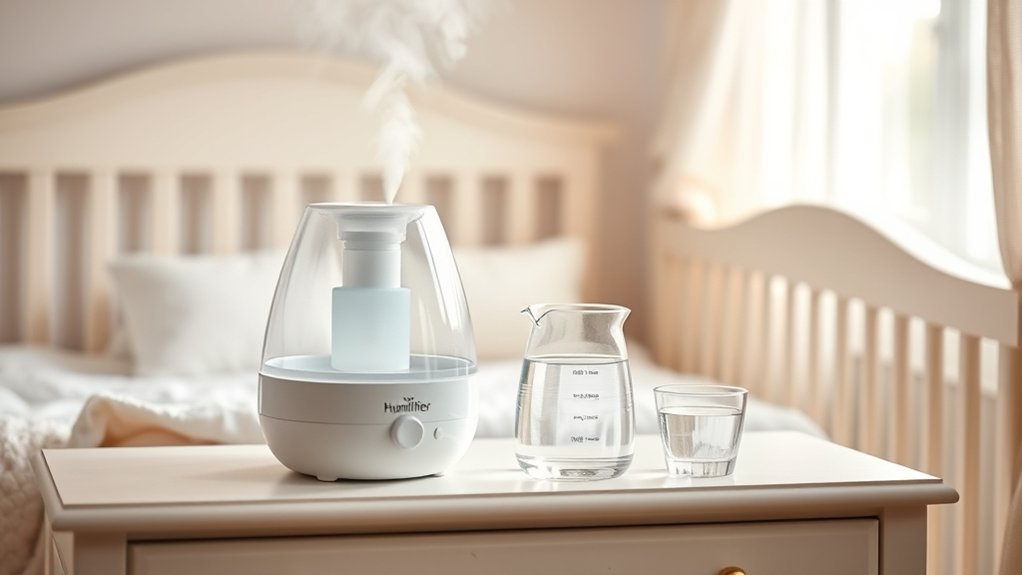
Use distilled or filtered water in your baby’s humidifier whenever possible, because it helps reduce mineral buildup and limits the release of particles into the air. You can use tap water if needed, but it may add minerals and contaminants that irritate your baby’s respiratory system. Keep the water clean, additive-free, and free of medications or essential oils. Check the water reservoir daily, and don’t let water sit stagnant, since that can support bacterial growth. Additionally, ensuring a balanced diet during pregnancy can boost maternal health, which indirectly benefits the baby’s environment.
| Water choice | Clinical note |
|---|---|
| Distilled water | Best for safe use and lower mineral buildup |
| Filtered water | Acceptable if clean and additive-free |
| Tap water | May be safe, but can irritate the respiratory system |
| Medicated/oiled water | Avoid; may trigger reactions |
How to Clean a Humidifier Safely
Once you’ve chosen clean, additive-free water, the next step is keeping the humidifier itself sanitary. To clean the humidifier safely, you should act routinely and decisively, because stagnant moisture can prevent mold and bacterial growth. Use distilled or filtered water during use to reduce mineral residue and white dust.
- Empty the tank daily and scrub humidifier components with a clean brush, then dry them fully.
- Every 1-2 days, wash all parts to support peak performance and protect air quality.
- Periodically soak the tank and parts in a 10% bleach solution, then rinse thoroughly so no disinfectant remains.
- Inspect and replace filters or wicks in evaporative models, following manufacturer guidelines exactly.
When you maintain each part with care, you reduce contamination risks and keep the device working as intended.
This routine isn’t restrictive; it helps you protect your baby’s space with evidence-based, practical control.
What Humidity Level Is Best for Babies?
The ideal humidity level for a baby’s room is generally between 35% and 50%, which can support comfortable breathing and help prevent dry skin. For babies, this range is the ideal humidity because it may also lower risk of respiratory infections and ease cold symptoms. Use a hygrometer for monitoring, since your humidifier can only help if you keep humidity levels steady.
| Range | Effect | Action |
|---|---|---|
| 35%–50% | Comfortable breathing | Maintain this target |
| Above 50% | Excess humidity, mold growth | Reduce output |
| Below 35% | Dry air | Add moisture |
Keep cleaning your humidifier regularly so it works safely and doesn’t add contaminants. Avoid chasing very high humidity; excess humidity can support mold growth and dust mites, which may worsen allergies or asthma. You can protect your child’s room without overcorrecting.
When Should You Stop Using It?
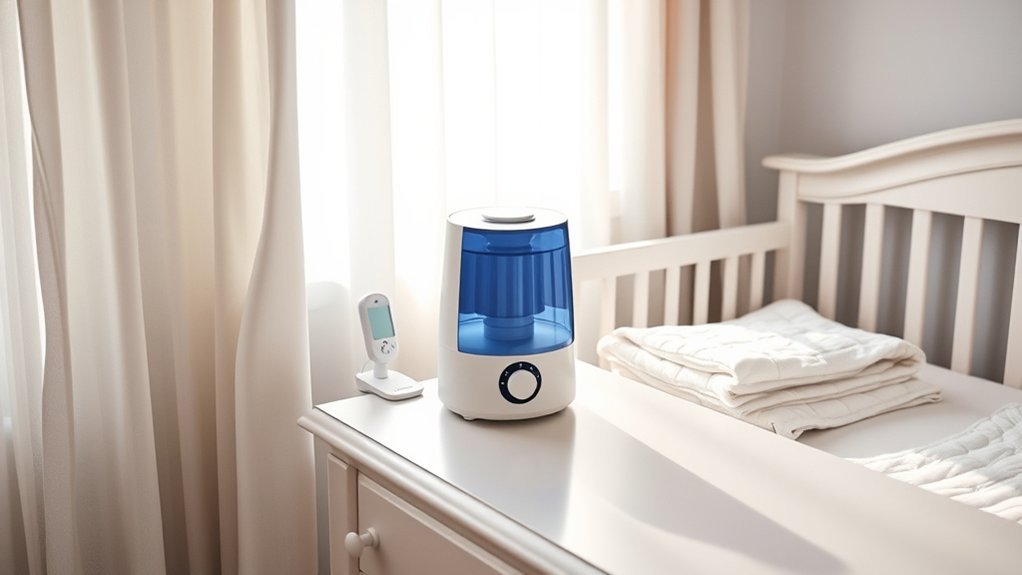
You should stop using a humidifier when your baby’s room stays above 50% humidity, since excess moisture can encourage mold growth and dust mites and may worsen allergies or breathing symptoms. Track humidity levels with a hygrometer; for safe use, keep readings in the ideal range of 35-50%.
Stop using a humidifier when the room stays above 50% humidity to prevent mold and breathing issues.
- Stop using it if the room stays humid.
- Stop if your child coughs, wheezes, or has more congestion.
- Stop and consult a pediatrician if respiratory issues keep returning.
- Stop during warmer months if outdoor air already adds enough moisture.
This cautious approach helps you protect your child’s airway while avoiding unnecessary humidity.
You don’t need to keep the humidifier running out of habit. Use data, watch symptoms, and let the environment guide your decision.
When the air is already balanced, stepping back can support safer breathing and reduce the risk of hidden dampness.
Frequently Asked Questions
Is It Safe to Use a Humidifier in a Baby’s Room?
Yes, you can use a humidifier safely if you choose cool-mist humidifier types, keep ideal humidity, follow maintenance tips, note noise levels, use smart placement strategies, verify safety features, avoid essential oils, and follow pediatrician recommendations; common misconceptions persist.
Should You Use a Humidifier if You Have RSV?
Yes, you can use one for RSV symptoms; a cool-mist model may improve air quality and moisture levels, but check Humidifier types, safety features, cleaning tips, usage duration, room temperature, and pediatrician recommendations.
Will a Humidifier Help With a Sore Throat in the Morning?
Yes, a humidifier can help your sore throat by easing dry air, reducing throat irritation, and improving breathing ease. You may get morning relief, better sleep quality, and less nasal congestion; keep humidity moderate for safety.
Will a Humidifier Help Dry Skin?
Yes, a humidifier can help dry skin by improving skin hydration and moisture levels; you may notice humidifier benefits, less skin irritation, and better sleep quality. It won’t treat allergy relief, nasal congestion, or respiratory health.
Conclusion
Choosing the right humidifier can help your baby breathe easier, but safety comes first. You should usually stick with a cool-mist model, place it well away from the crib, and use clean water with regular cleaning to limit germs and mineral buildup. Keep indoor humidity in the 30% to 50% range, and stop using the humidifier when symptoms improve. When in doubt, talk with your pediatrician—better safe than sorry.
