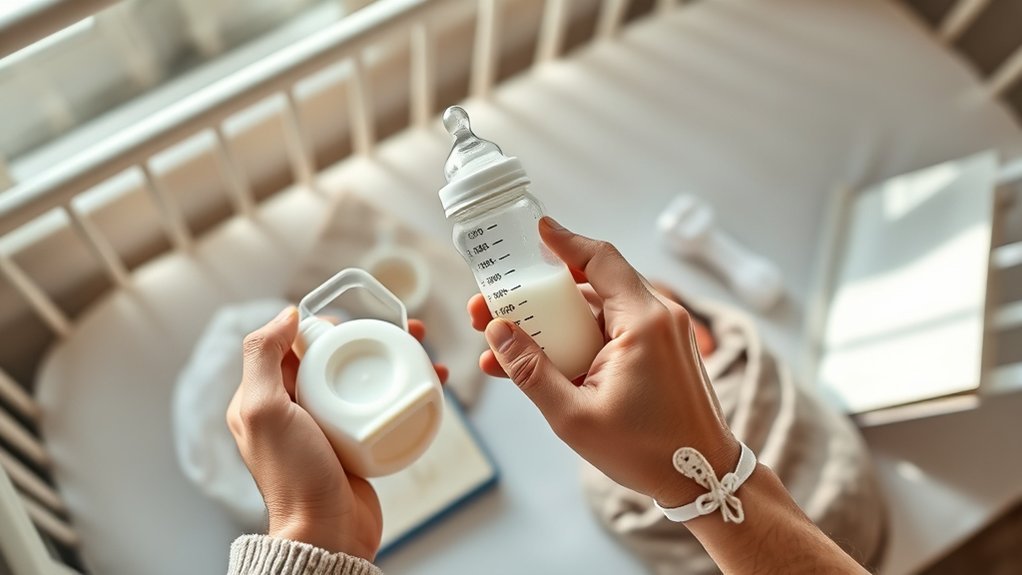
You can track baby feeding ounces by logging each bottle, nursing session, and pumping amount in one simple app or notebook. Measure bottle feeds with ounce markings, and note the time, amount, and any hunger cues. For breastfeeding, record which side you used and how long your baby nursed. Don’t forget wet diapers, solids, and weight checks. Share the log with caregivers, and you’ll start spotting patterns that make feeding feel easier.
How to Track Baby Feeding Ounces

Tracking baby feeding ounces gets easier when you keep everything in one simple system. Use a baby tracker app like Baby Tracker or Glow Baby so you can track feedings without juggling notes. Log the time, ounces consumed, and whether you’re following a feeding schedule or responding to cues.
If you’re breastfeeding, note the side used and duration so you can see patterns and keep intake balanced. For bottles, enter the amount of formula or expressed milk right away to support your baby’s health and nutrition.
Over time, you’ll spot feeding frequency trends that help you feel more confident and less tied down by guesswork. Staying informed about children’s online activities can empower you to create a supportive environment as your baby grows. Review your records often, and bring them to checkups so your healthcare provider can assess growth and feeding adequacy.
Over time, you’ll spot feeding trends that build confidence and replace guesswork with calm, clear routines.
You’re not chasing perfection here; you’re creating clarity, freedom, and a calmer rhythm for you and your baby.
Measure Ounces for Bottle Feeds
Use a bottle with ounce markings, or a standard measuring bottle, so you can fill each feed with the amount your baby actually needs. This simple step helps you measure accurately and frees you from guesswork.
| Feeding stage | Ounces to start |
|---|---|
| Newborn | 2-3 |
| Growing baby | More as needed |
| Every session | Record exact ounces |
| Every 2-3 hours | Check hunger cues |
When you track each bottle, you’ll spot patterns and adjust with confidence. If your baby seems still hungry, offer a little more next time; if not, you can ease back. For breastfed babies who also take bottles, label pumped milk with the measured ounces so you know what’s available and fresh. Parents don’t need perfection here—just steady, honest numbers. That clarity helps you support feeding without pressure, and it gives you a practical way to see whether your baby’s intake is on track. Remember, accurate measurements are key to enhancing formula effectiveness and ensuring your baby’s nutritional needs are met.
Log Breastfeeding and Pumped Milk
When you breastfeed, note which side you used and how long your baby fed so you can spot patterns and preferences. If you pump, record the ounces you collect each time so you can keep track of intake more easily. A simple feeding tracker app can help you log both and feel more confident about your baby’s routine. Additionally, using tracking feeds can enhance your ability to analyze your baby’s feeding habits over time.
Log Nursing Sides
A simple note about which breast you used at each feeding can make a big difference in understanding your baby’s patterns. When you log nursing sides, you can track breastfeeding more clearly and see whether one side feels fuller or is used more often.
Add the session length too; it helps you track breastfeeding efficiency and feeding patterns without guesswork. Over time, these notes support your baby’s growth by showing how often they eat and whether feeds seem satisfying.
If you notice lopsided use, discomfort, or slow progress, that’s useful information to bring to medical advice. You’re not being fussy—you’re protecting your freedom to notice what works, trust your observations, and make sure your baby gets adequate nutrition with confidence and care.
Record Pumped Milk Oz
Record the ounces you pump after each session so you can keep a clear picture of your baby’s intake and your milk supply.
As a new parent, you can track your baby’s feedings without guesswork by logging each bottle, too. Write down the total pumped milk, the time, and the date on each bag or container so you stay organized and protect freshness.
A feeding tracker app can help you record session length, ounces your baby drinks, and any changes over time.
When you monitor these details, you’ll spot feeding patterns sooner and notice if supply shifts. That knowledge can feel freeing, because you’re not carrying this alone—you’re building a simple system that supports your baby and helps you trust your own care.
Track Diapers, Solids, and Growth
Keep a simple daily log of wet and dirty diapers, since those changes are one of the clearest signs your baby is getting enough milk; by day six, you’ll usually want to see about 6–8 wet diapers and 3–4 dirty diapers.
When you track diapers, note each wet and dirty diaper change so you can judge feeding adequacy and spot diaper rash early.
As you add solids, write down new foods and any reaction, so you can monitor allergies and keep meals balanced while your baby moves beyond milk.
At pediatrician visits, measure weight and length to follow baby’s growth; many babies regain lost weight by two weeks.
Use a growth chart to see trends over time, not just one number.
Trust the data, not pressure from others.
If something looks off, you can ask for support without losing your sense of freedom.
Share a Feeding App With Caregivers

You can make feeding easier by setting up shared access in a tracker app so you and your caregivers can both log ounces and times right away.
When everyone updates the same app, you’ll get a clearer picture of your baby’s feeding patterns and avoid missed or duplicate feedings.
To keep things smooth, agree on simple logging habits and turn on notifications so everyone stays in sync. This practice can help you tune into hunger and satiety cues and ensure your baby is getting the right amount of nourishment.
Shared Access Setup
When you share a baby feeding app with caregivers, everyone can log bottles, nursing sessions, diaper changes, and sleep in real time, which helps keep baby’s routine clear and consistent. Most baby app tools make shared access simple: create a family account, invite people by email, then set permissions for collaborative tracking. | Step | What you do |
| — | — |
|---|---|
| 1 | Open sharing settings |
| 2 | Add caregiver emails |
| 3 | Confirm dual access |
| 4 | Review the feeding log |
| 5 | Turn on notifications and reminders |
With feeding schedules visible to all, you can reduce mix-ups and breathe easier. You’re not tied to constant texting, and everyone stays informed without extra effort. Shared access also keeps your records organized for pediatric visits, so you can answer questions with confidence and protect your baby’s care.
Dual Logging Benefits
Once your sharing setup is in place, dual logging makes day-to-day feeding much easier.
With feeding tracker apps, you and your caregivers can enter bottles, breastfeeds, and ounces in real time, so everyone stays aligned without extra calls or guesswork. This kind of collaboration reduces confusion and strengthens communication, especially during busy shifts or sleepless nights.
Because each update feeds into one shared feeding history, you can review intake quickly and identify patterns that might matter for growth, sleep, or feeding concerns.
Many apps, including options like Huckleberry, support this shared approach, helping you stay organized without duplicating effort.
You don’t have to carry the whole load alone; shared logging gives you more freedom, clearer records, and steadier support.
Caregiver Sync Tips
Sharing a feeding app with caregivers can take a lot of pressure off your shoulders. With caregiver sync tips, you can let multiple caregivers use feeding tracker apps like Huckleberry or Glow Baby so everyone follows the same feeding schedule. That shared access keeps your routine steady and your mind lighter.
| Tip | Why it helps | Result |
|---|---|---|
| Turn on notifications | Reminds everyone on time | Fewer missed feeds |
| Log in real time | Keeps entries current | Accurate records |
| Review together | Shows patterns clearly | Thorough view |
Ask each caregiver to update the log right after a feed. That simple habit builds trust, cuts confusion, and supports your baby’s nutrition. When you visit the pediatrician, you’ll have clear data ready, and you won’t have to carry this alone.
Find Feeding Patterns Over Time
As you log each feeding, you can start to spot patterns that reveal your baby’s hunger cues, usual intake, and daily rhythm.
Track Your Baby’s Feedings with feeding tracker apps so you can review feeding amounts and notice when your baby tends to eat more or less. That data can support your baby’s growth and help you feel less guesswork and more confidence.
Newborn sleep often shifts alongside feeding needs, so watch how longer rests or fussier evenings affect ounces.
- Note daily totals and compare them with the usual 24-32 ounces.
- Watch for spikes or dips that may point to a growth spurt.
- Share clear logs with credible sources, like your pediatrician, when questions come up.
Additionally, analyzing metrics effectively can help you understand how feeding patterns impact your baby’s overall development.
Frequently Asked Questions
What Is the 5 3 3 Rule for Babies?
You’d use the 5-3-3 rule to guide feeding schedules: about 5 ounces at 1–2 months, 6–7 at 3 months, and 8 at 6 months, while watching hunger cues, growth milestones, and feeding frequency.
How to Track Newborn Feeding?
You can track newborn feeding by logging each feeding schedule, amount, and breastfeeding time with tracking tools, while watching hunger cues, diaper output, feeding frequency, and growth patterns; parent resources can reassure you too.
What Is the 3 6 9 Rule for Babies?
You follow 3-6-9: about 24 ounces at three months, 30 at six, 36 at nine. For example, Maya adjusted feeding schedules, bottle sizes, and breastfeeding tips around growth milestones, hunger cues, formula types, sleep patterns.
How to Know How Many Ounces to Feed a Newborn?
You’ll usually start with 1.5-3 ounces, then watch feeding cues and your newborn appetite. Use an ounce calculator, follow formula guidelines, breastfeeding tips, feeding frequency, and growth tracking, and adjust as your baby grows.
Conclusion
Tracking baby feeding ounces doesn’t have to feel overwhelming. If you think every missed ounce matters, test that idea against the bigger picture: steady diaper counts, growth, and your baby’s cues usually tell the real story. Use a simple app or notebook, update it consistently, and share it with caregivers so everyone stays on the same page. When you notice patterns over time, you’ll feel more confident, and your baby’s feeding rhythm will make more sense.
