
Give your newborn a sponge bath 2–3 times a week until the umbilical stump falls off. Gather warm water, mild baby soap, two washcloths, towels, and fresh clothes. Keep the room warm, leave the diaper on, and wash one area at a time, starting with the face and eyes. Clean skin folds, keep the stump dry, then pat dry and dress your baby. With a few simple steps, you can keep bath time safe and calm while learning more along the way.
How Often Should You Give a Newborn Sponge Bath?

Until your newborn’s umbilical cord stump falls off, which usually happens within 1 to 2 weeks after birth, sponge baths are the safest option for keeping your baby clean.
You don’t need to bathe your baby every day; for most newborns, a sponge bath three times a week is enough to support hygiene without drying delicate skin.
Focus on the face, neck, and diaper area, since these spots collect the most moisture and residue. Use warm water on a warm, flat surface so your baby stays comfortable and secure during each sponge bath.
Keep the umbilical cord area dry and avoid rubbing it. A clean diaper helps you maintain freshness between baths.
If the cord stump hasn’t detached by two weeks, contact your healthcare provider for guidance.
This gentle routine supports your baby’s comfort while protecting their skin and respecting your care choices.
What You Need for a Newborn Sponge Bath
To make a newborn sponge bath smooth and comfortable, gather everything you need before you start. Set out a large bowl of warm water, ideally around 100°F (38°C), so the baby’s sponge bath feels soothing.
Place two clean towels nearby: one for the baby to lie on and one to wrap around them between washes. Keep two washcloths ready, too—one for gentle soaping and one for rinsing. Choose mild baby soap that cleans without irritating delicate skin.
Have a clean diaper and fresh clothing within reach for an easy finish after the bath. If the umbilical area still needs care, keep the space dry and uncovered as directed.
When you prepare in advance, you support a calm, efficient routine and give your newborn comfort, cleanliness, and dignity throughout the bath.
How to Keep Your Newborn Warm and Safe
Keep your newborn cozy by warming the room to about 75°F (24°C) before you begin the sponge bath. This gentle temperature helps keep your baby from chilling and supports safety throughout bath time.
Place your newborn on a safe, flat surface, and keep one hand on the baby at all times. Cover the body with a soft towel, uncovering only the area you’re washing so your newborn stays warm and calm.
Before you start, check the water temperature with your inner wrist; it should feel warm, around 100°F (38°C), never hot. That simple check protects delicate skin and supports comfort.
When the sponge bath ends, dry your baby well, then dress them in a shirt and diaper. Add a receiving blanket if needed to keep your baby cozy.
With these steps, you can protect your newborn’s warmth and safety without losing the freedom to care with confidence and ease.
How to Give a Newborn Sponge Bath Step by Step

Start by undressing your newborn, leaving only the diaper on, and lay your baby on a soft towel in a warm room. A sponge bath works best when you move calmly and keep your baby warm throughout.
Use a damp washcloth or cotton ball to wash your baby’s face, working gently and using a separate cotton ball for each eye. Clean the ears and neck with mild baby soap if needed, then rinse with a clean, damp washcloth.
Wash one limb at a time, giving special attention to creases, and gently pat each area dry. For umbilical cord care, keep the stump clean and dry and avoid soaking it until it falls off.
Continue with the rest of the body, then check that every fold is clean and dry before redressing. Your newborn baby deserves care that’s careful, respectful, and freeing, so you can nurture them with confidence.
How to Clean the Eyes, Face, and Hair
Begin with the eyes: use a damp cotton ball to gently wipe from the nose outward, and use a fresh cotton ball for each eye to help prevent cross-contamination.
Then use a soft washcloth to wipe your baby’s face, including the mouth, nose, and skin folds, so you remove milk residue or saliva without rubbing. If you’re cleaning your baby’s eyes or mouth, stay gentle and steady.
Next, wet the hair with the washcloth and add a small amount of mild baby shampoo. Gently massage the scalp with your fingertips, and avoid letting suds run toward the eyes.
Rinse the shampoo thoroughly with a clean, damp washcloth until no bubbles remain. This helps prevent irritation and keeps the baby comfortable.
When you finish, pat the hair dry with a soft towel. Keep the baby warm throughout by exposing only the area you’re washing. Your calm, careful touch supports a clean, protected, and relaxed start, aligning with the importance of nutrition for overall health and development.
How to Wash Your Baby’s Body and Diaper Area
Gently wash your baby’s body with a damp, soapy washcloth, cleaning the arms, legs, and torso while keeping them warm under a towel and uncovering only one section at a time.
Use sponge baths to wash each area gently, and pay close attention to skin folds at the neck, armpits, and between fingers and toes. These spaces can trap moisture, so clean them well and pat them dry as you go.
For the diaper area, wipe from front to back with a clean washcloth, opening the creases so you can remove stool and urine residue. Use mild soap only if needed, then rinse with a fresh damp cloth to prevent irritation.
Afterward, finish drying with a soft towel, including every crease. If the skin looks dry, apply a small amount of unscented moisturizer to the dry spots, but avoid the umbilical cord area until it’s fully healed.
How to Care for the Umbilical Cord Stump
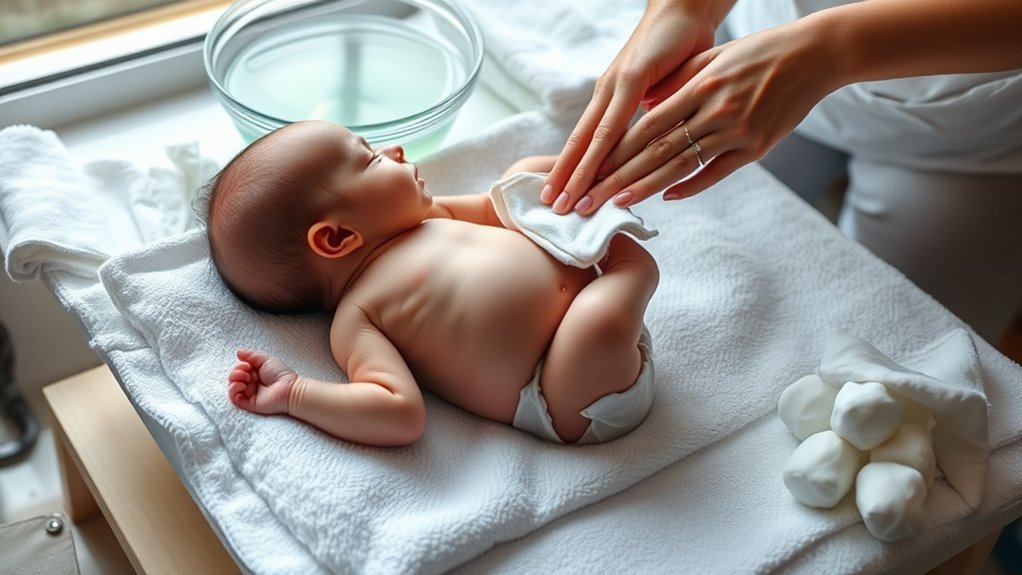
Gently clean your baby’s umbilical cord stump with a cotton round or square, and don’t put soap directly on it.
Keep the area dry and let it air out as much as possible, folding the diaper below the stump so it doesn’t stay moist.
Wash your hands before and after you touch it, and watch for redness, swelling, or discharge.
Cord Stump Cleaning
While you sponge bathe your newborn, clean around the umbilical cord stump with a cotton round or square and keep the area dry to help prevent infection. Dress baby in a shirt and diaper, leaving the stump uncovered. Use a gentle touch during each sponge bath.
- Wet only the washcloth, not the umbilical cord stump.
- Clean the skin around it with a cotton round.
- Monitor for redness, swelling, or discharge.
- Call your pediatrician if you notice these signs or if it hasn’t fallen off by two weeks.
Your baby’s cord stump usually detaches in 5 to 15 days. Staying calm and attentive helps you care for this small healing area with confidence.
Keeping It Dry
Keeping your newborn’s cord stump dry helps it heal and lowers the risk of infection. For keeping it dry, fold the diaper below the umbilical cord stump so you don’t trap moisture.
Let it stay exposed to air whenever possible; air circulation supports the healing process and helps the stump fall off naturally. You can clean around the base with a damp cotton round or square, then pat it dry—don’t soak it.
Monitor the stump each day for signs of infection, including redness, swelling, or discharge. If you notice anything unusual, contact your healthcare provider promptly.
Most stumps detach in 1 to 2 weeks. If yours hasn’t come off by two weeks, ask for guidance. Gentle care protects your baby and your peace.
How to Dry, Moisturize, and Dress Your Newborn
After the sponge bath, dry your newborn thoroughly with a hooded towel, paying close attention to skin creases and folds so moisture doesn’t linger. Use a soft, gentle towel to protect delicate skin and preserve warmth.
- Pat, don’t rub, until your baby’s skin feels fully dry.
- Check behind the neck, under the arms, and in the diaper area.
- If skin looks dry, moisturize with an unscented lotion, applying a thin layer to dry spots.
- Wrap your baby in a receiving blanket, then dress them in soft, breathable clothes once they’re dry.
This calm routine helps your baby stay comfortable and secure while you move at your own pace. It’s particularly important to ensure your baby’s skin remains healthy and hydrated, especially during postpartum hemorrhoid recovery.
Keep your touch gentle and steady; dressing can become quiet bonding time.
When you choose warmth, softness, and simple care, you support your newborn’s comfort without adding unnecessary products or pressure.
Frequently Asked Questions
How to Properly Sponge Bathe a Newborn?
You’ll sponge bathe your newborn with sponge bath essentials, prioritizing bathing safety, newborn skin care, and a calm bath time routine. Use warm water, gentle cleansing, protect the diaper area, repeat by bathing frequency, and add soothing techniques for bonding moments.
What Are the 5 Steps of Newborn Care?
You’ll guide five essentials: newborn hygiene, diaper changing, cord care, feeding schedule, and sleep patterns; add baby massage, skin care, temperature regulation, developmental milestones, and bonding activities. You’re nurturing calm, safe, thriving care.
How to Bathe a Newborn Step by Step?
You bathe your newborn gently with sponge bath essentials, warm water, and mild soap, following safe bathing practices, newborn hygiene tips, and bath water temperature checks. Keep a calming bath environment, use careful drying techniques, and follow bathing frequency guidelines.
When Can I Start a Sponge Bath for a Newborn?
You can start a sponge bath once you’re home, usually 1–2 weeks old, until the umbilical cord falls off. Keep water warm, use gentle bathing products, and follow parent tips for newborn hygiene, skin care, baby comfort, and bathing safety.
Conclusion
By following these steps, you can give your newborn a sponge bath safely and calmly until the umbilical cord stump falls off. Keep baths brief and warm, and remember that newborns usually only need bathing about 2 to 3 times a week. That small statistic shows how little bathing your baby really needs. With a soft touch and a steady routine, you’ll help keep your baby clean, comfortable, and protected during these first delicate weeks.
