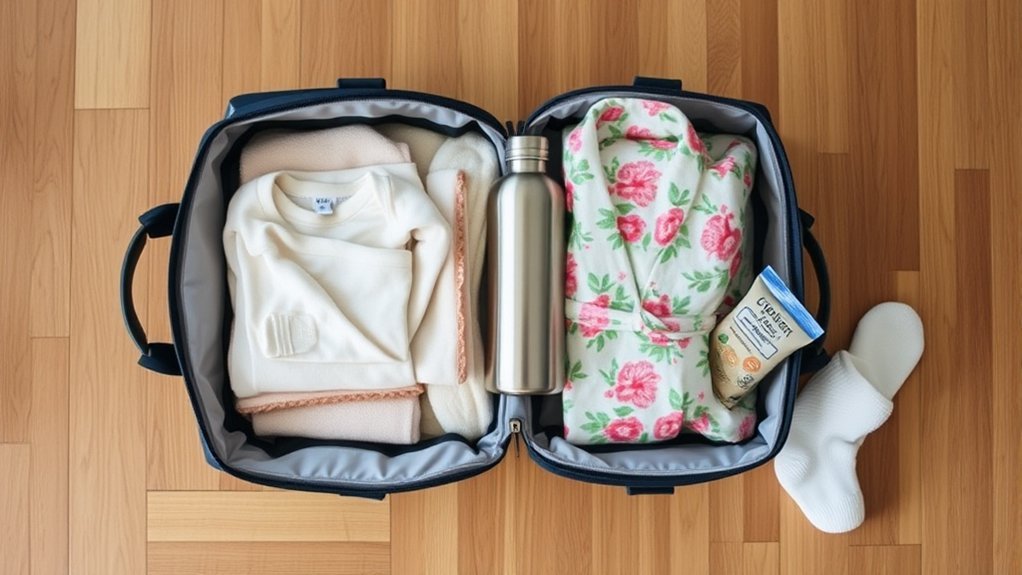
Packing your hospital bag is like preparing for a journey where the destination is both exciting and unpredictable. It’s essential to guarantee you have everything you need for both you and your baby. From clothing to comfort items, each detail matters. If you’re unsure about what to include or how to stay organized, the following guide will help you navigate this important task effectively.
Essential Items for Mom
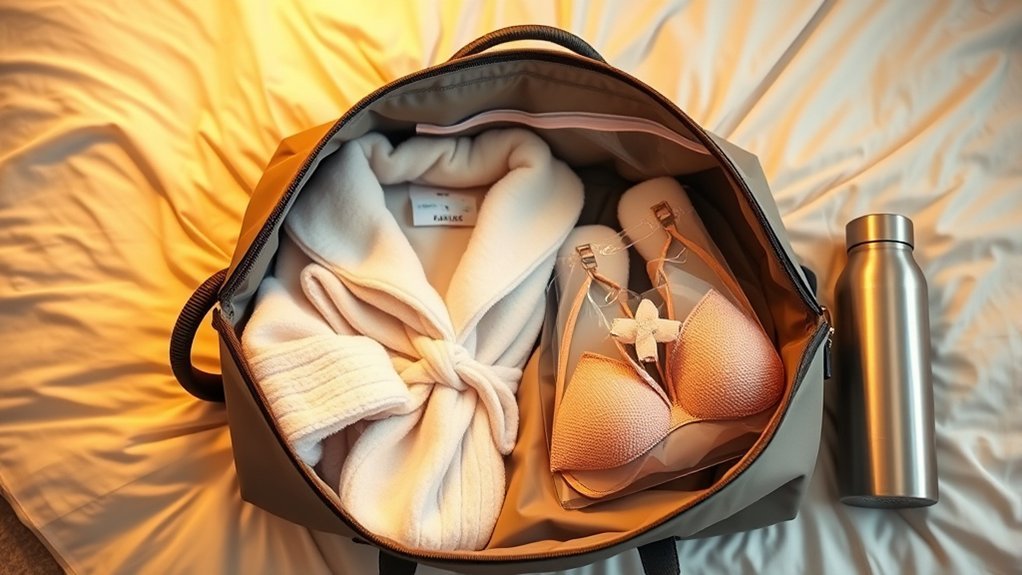
When packing your hospital bag, it’s essential to include important items that cater specifically to your needs as a new mom.
Start with comfortable clothing, like loose-fitting pajamas or nightgowns, to help you feel more at ease during your stay. Don’t forget a robe and slippers for added comfort.
Personal hygiene products, such as toothpaste, a toothbrush, and deodorant, are critical for your self-care. Bring maternity pads and any medications you might need.
A phone charger is important for staying connected with loved ones.
Finally, consider including your favorite snacks and a water bottle to keep you nourished and hydrated.
These essentials will guarantee you feel more comfortable and prepared for your hospital experience.
Must-Have Items for Baby
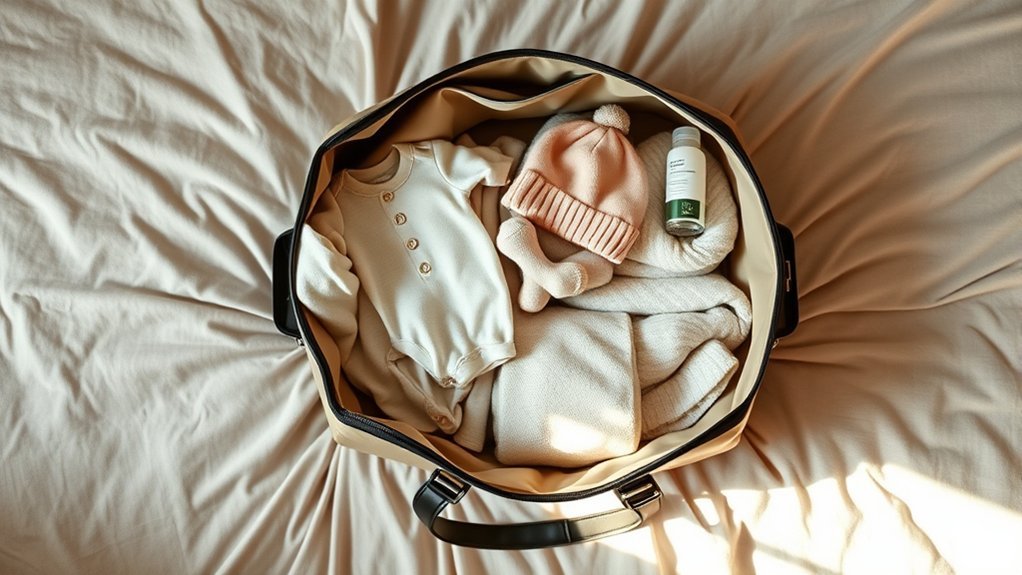
While you’re packing for yourself, don’t overlook the must-have items for your baby. First, include a few newborn-sized outfits, as hospitals often provide these for your little one, but having your own can be comforting.
Don’t forget a soft blanket for warmth and swaddling. Bring a hat to keep your baby’s head cozy, as they can lose heat quickly.
It’s essential to pack a pacifier if you plan to use one, as well as diapers and wipes, although hospitals usually provide these.
A going-home outfit is important too—choose something easy to put on.
Finally, consider a car seat, as you’ll need it to transport your baby safely when it’s time to leave the hospital.
Comfort and Convenience: Clothing and Accessories

Packing the right clothing and accessories for your hospital stay can greatly enhance your comfort and convenience. Choose loose-fitting, breathable clothing, such as a nightgown or pajamas, to guarantee ease while moving around.
Consider packing a robe and slippers for warmth and comfort during your stay. Don’t forget to bring a few pairs of comfortable underwear, as well as nursing bras if you plan to breastfeed.
Additionally, pack a lightweight blanket or shawl for extra coziness. Personal items like lip balm, lotion, and a hairbrush can make a significant difference.
Finally, a phone charger and a book or magazine can help keep you entertained during downtimes. Prioritize comfort to make your hospital experience as pleasant as possible.
Important Documents and Supplies
Alongside your clothing and accessories, gathering important documents and supplies is essential for a smooth hospital experience.
Having the right paperwork on hand can make the admission process quicker and less stressful. Here’s a checklist of vital items to include:
- Identification: Bring your driver’s license or another form of ID.
- Insurance Information: Have your insurance card and any necessary pre-authorization documents.
- Birth Plan: If you’ve created a birth plan, include a few copies for your medical team.
- Medical Records: Gather any relevant medical history or records that might be required.
Tips for Packing Your Hospital Bag
When preparing your hospital bag, it’s essential to contemplate both comfort and practicality to guarantee you have everything you need during your stay.
Start by creating a checklist of must-haves, including clothing, toiletries, and any comfort items like a favorite pillow or blanket. Opt for loose, breathable clothing to ensure ease during recovery.
Create a checklist of essentials like clothing and toiletries, and pack comfort items for a smoother recovery.
Don’t forget chargers for your devices and snacks to keep your energy up. Consider packing items that will keep you entertained, such as books or magazines.
If you’re bringing a partner, include their essentials too. Finally, double-check your hospital’s specific guidelines, as some items may not be permitted.
With careful planning, you’ll feel more at ease during your hospital experience.
Frequently Asked Questions
How Early Should I Pack My Hospital Bag?
You should pack your hospital bag around 34 to 36 weeks into your pregnancy. This guarantees you’re prepared for any unexpected early arrivals and can focus on your health and comfort when the time comes.
Can I Bring My Own Pillows and Blankets?
Yes, you can bring your own pillows and blankets. They’ll provide extra comfort during your stay. Just make sure they fit in your bag and are easy to transport when you head to the hospital.
What if I Forget Something Important?
If you forget something important, don’t worry! Most hospitals provide essentials, and you can ask family or friends to bring what you need. Keeping a checklist handy can help prevent future oversights during preparation.
Are Snacks Allowed in the Hospital?
Yes, snacks are generally allowed in the hospital. However, it’s best to check with your healthcare provider regarding any dietary restrictions. Bringing your favorite snacks can help keep you comfortable during your stay.
Do I Need to Pack Items for Hospital Staff?
You don’t need to pack items for hospital staff; they’re well-equipped for your care. Focus on your essentials instead. Just bring personal items that’ll make your stay comfortable and support your recovery journey.
Conclusion
Packing your hospital bag is like preparing for a journey—you don’t want to forget anything crucial. Just as a traveler checks their itinerary, make certain you’ve included all essentials for both you and your baby. Remember, a well-prepared bag can make your hospital stay smoother, just like having a map can guide you through unfamiliar territory. By following this step-by-step guide, you’ll be ready to embrace this exciting new chapter with confidence and ease.
